Understanding Moisture Detection During Property Assessments
Understanding Moisture Detection During Property Assessments
You’ve found the perfect home. The location’s great, the price is right, and you can already picture your furniture in that sunny living room. But there’s something lurking behind those walls that could turn your dream purchase into a costly nightmare: hidden moisture problems.
Moisture issues affect thousands of Australian homes, from beachside properties battling salt air to mountain retreats dealing with condensation. The tricky part? Many moisture problems remain invisible until they’ve already caused significant damage to timber frames, insulation, and internal structures.
Why Moisture Detection Matters More Than You Think
Water damage doesn’t announce itself with flashing lights. A small roof leak might drip into wall cavities for months before you notice that telltale stain on the ceiling. By then, timber studs could be rotting, insulation might be compromised, and mould spores could be spreading through your home’s ventilation system.
Professional assessments use moisture detection equipment to identify problems before they become visible. These tools can detect elevated moisture levels in walls, floors, and ceilings, revealing issues that might cost tens of thousands to repair if left unchecked.
The financial implications are staggering. Remedial work for extensive moisture damage often exceeds $50,000, and that’s before considering temporary accommodation costs while repairs are completed.
How Modern Moisture Detection Actually Works
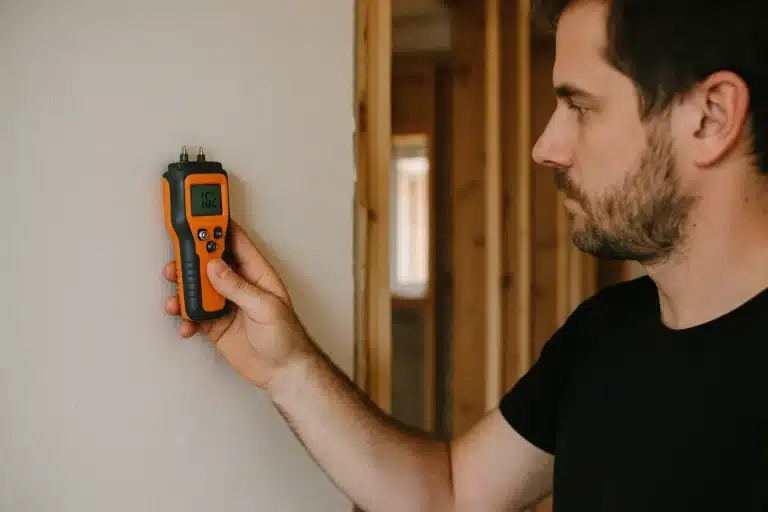
Today’s moisture detection technology goes far beyond the basic visual inspection your grandfather might have relied on. Professional-grade moisture meters use electrical conductivity to measure water content in various materials.
Pin-type meters insert small probes directly into materials like timber or plasterboard, providing precise readings of moisture content. Non-invasive scanners detect moisture through electromagnetic fields, allowing assessment without damaging finished surfaces.
Regional Moisture Challenges Across Australia
Sydney’s coastal climate creates unique challenges with salt-laden air that accelerates corrosion and penetrating damp. Harbour-side properties often experience moisture ingress through poorly sealed windows and doors, while older homes in suburbs like Paddington struggle with rising damp through sandstone foundations.
Melbourne’s variable weather patterns create perfect conditions for condensation problems. The city’s mix of hot summers and cold winters, combined with high humidity during seasonal changes, often leads to moisture buildup in roof spaces and subfloor areas of heritage homes.
Perth properties face different issues entirely. The city’s limestone-based soils and Mediterranean climate create challenges with ground moisture during winter months. Many homes experience seasonal moisture problems that disappear during dry summers, making detection timing critical.
Adelaide’s clay soils expand and contract with moisture changes, often creating cracks in foundations that allow water penetration. The city’s older housing stock frequently shows moisture problems around bathroom and laundry areas where original waterproofing has failed.
What Professional Assessment Teams Actually Look For
Experienced assessment teams know exactly where moisture problems typically hide. Bathroom and kitchen areas receive intense scrutiny, particularly around tile joints, shower recesses, and under sink areas where minor leaks can cause major damage over time.
Roof spaces often reveal moisture problems that homeowners never suspect. Poor ventilation combined with temperature differentials can create condensation issues, while blocked gutters or damaged roof tiles allow direct water entry.
Subfloor areas in raised homes frequently harbour moisture problems. Poor drainage, inadequate ventilation, or damaged damp-proof courses can create persistently damp conditions that affect floor joists and bearer timbers.
The Technology Behind Modern Assessment Tools
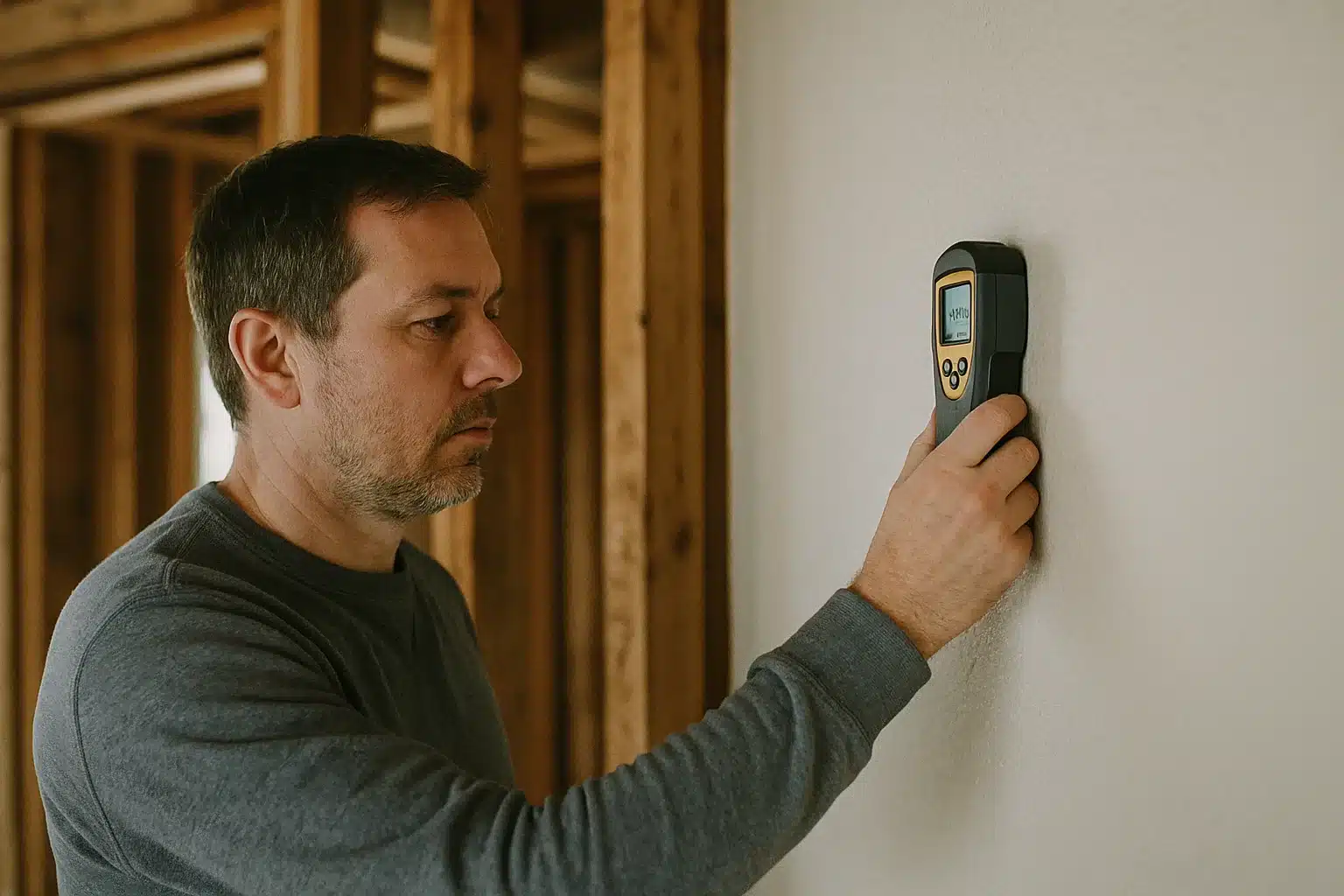
Professional moisture assessment relies on multiple detection methods working together. Capacitive meters measure moisture in the top layers of materials without surface penetration, ideal for finished walls and floors where drilling holes isn’t practical.
Resistance-based meters provide deeper readings by measuring how easily electrical current flows through materials. Higher moisture content increases conductivity, providing accurate measurements of water content in structural timbers.
Environmental monitoring tools track humidity levels, temperature, and air circulation patterns. These readings help identify conditions that promote mould growth or ongoing moisture problems, even when surfaces appear dry.
Reading the Warning Signs Yourself
While professional assessment provides the most accurate picture, homeowners can spot potential problems before calling in experts. Musty odours, particularly in bathrooms, laundries, or cupboards, often indicate hidden moisture problems.
Paint bubbling or wallpaper peeling usually signals moisture penetration from behind. Water stains on ceilings or walls mark obvious problem areas, but remember that moisture can travel considerable distances from its source.
High humidity levels throughout the home, condensation on windows during mild weather, or persistent mould growth despite regular cleaning all suggest underlying moisture issues requiring professional investigation.
The building codes provide specific requirements for moisture management in Australian homes, though these standards have evolved significantly over recent decades.
When Assessment Results Reveal Problems
Discovery of moisture issues doesn’t necessarily mean walking away from a property purchase. Understanding the scope and source of problems helps buyers make informed decisions about proceeding with negotiations.
Minor moisture issues in isolated areas often require straightforward repairs. A leaking shower waste or damaged window seal might cost a few thousand dollars to fix properly. However, widespread moisture penetration through building envelope failures can indicate much more serious problems.
Assessment reports should clearly identify moisture sources, affected areas, and potential repair approaches. This information becomes valuable for negotiating purchase prices or requesting vendor repairs before settlement.
Professional Expertise Makes the Difference
Managing Director Morgan Kircher brings over two decades of building expertise to moisture assessment challenges. His experience identifying hidden moisture problems has saved countless clients from expensive post-purchase discoveries.
Our team’s 150 years of combined industry experience means we understand how Australian homes fail over time. We know where to look for problems, how to interpret moisture readings accurately, and when minor issues might indicate larger structural concerns.
This depth of knowledge proves invaluable when assessing older homes where building techniques and materials differ significantly from modern construction standards.
Understanding Moisture Detection During Property Assessments
Moisture detection represents one of the most valuable aspects of professional property assessment. While you can’t see moisture hiding behind walls or under floors, the right detection equipment reveals problems that could affect your family’s health and your property investment for years to come.
Related Articles
- Reading and Understanding Your Property Assessment Report
- Asbestos in Australian Homes: Identification and Safety Guide
- Understanding Structural Movement in Australian Homes
- Common Building Defects Found in Australian Home Inspections

Alert Building Inspections – Australia
Alert Building Inspections provides professional building reports throughout Australia, delivered within 24-48 hours. Ready to protect your property investment?
Book an inspection | View our services | Read more property advice
