Building Inspection Tasmania
BUILDING REPORT TASMANIA
Residential & Commercial Building Reports
An on-site or over-the-phone verbal overview for time-critical decisions. Useful when you need an answer before an auction, a deadline, or a multi-offer situation.
Pre-purchase inspections occur before you make an offer or after acceptance, giving you crucial information about the property’s condition before you finalise your investment.
TESTING
Same-day on-site meth screening at your property. You'll know whether contamination is present before you commit to the purchase.
A pest inspection checks accessible areas of an Australian property for termites, borers, fungal decay and conditions that attract timber pests.
A Comprehensive Inspection Beyond the Surface
A professional building inspection gives buyers across Tasmania a clear view of the property before signing the contract. Alert Building Inspections identifies visible defects, moisture concerns, structural issues and maintenance requirements for homes in Tasmania.
Our pre purchase building inspection covers safely accessible areas inside and outside the building. Photographs, direct explanations and practical recommendations help you understand the property’s condition, complete your due diligence and prepare for any work it may need.
+
+
Building Reports for Tasmanian Properties
Effective building inspections across Tasmania must account for the state’s cooler climate, regular rainfall, and varied housing stock. Older timber and weatherboard homes may have subfloor moisture, limited ventilation, timber decay or ageing roofing. Properties exposed to coastal conditions can also show corrosion and exterior deterioration.
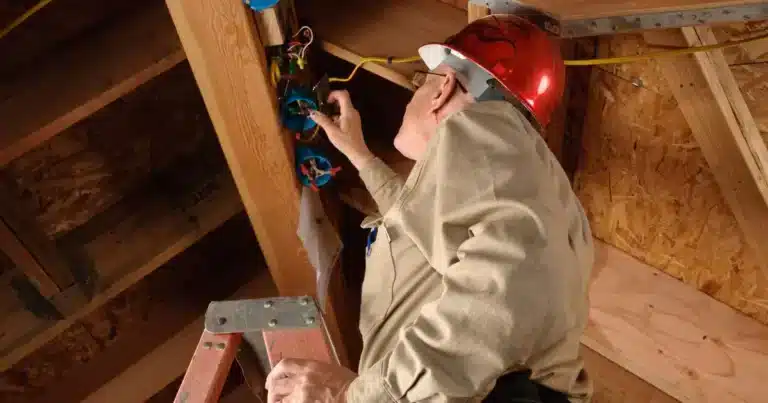
Your building inspector assesses visible structural elements, cladding, wet areas, roofing, drainage, windows and surrounding site features. The inspector completes moisture testing around common water-entry points. A pest inspection can identify signs of borers, termites and timber damage in accessible areas. Newer homes are also worth checking, as incomplete work and construction defects are not limited to older properties.

Use the Building Report to Plan Your Next Step
Your pre-purchase building inspection gives Tasmanian buyers a practical record of the property’s visible condition. Significant defects are separated from minor maintenance, helping you understand what needs prompt action and what you can budget for over time.
Alert Building Inspections are available to explain the findings after your report arrives. The information can help you negotiate the price, request repairs, arrange specialist advice or reconsider a property carrying more risk than expected. Book your building inspection in Tasmania so you have time to review the findings before finance or contract conditions expire.
Why Choose Alert Building Inspections?
Our building inspections help Tasmanian buyers make informed decisions using practical advice from experienced building professionals.
- Trade-qualified team: Our building inspectors understand how Australian properties are constructed and how defects develop.
- Thorough inspection scope: We assess accessible interiors, exteriors, roofing, roof spaces, subfloors, and site features.
- Australian Standards: Every building inspection follows the AS 4349.1-2007 reporting standard.
- Accepted by all banks: Written reports provide supporting documentation for finance and purchase conditions.
- Full indemnity insurance: Professional cover provides added protection throughout the inspection process.
- Fast turnaround: Reports are delivered within 24–48 hours of the inspection.
- Written and verbal options: Select a detailed report or a verbal overview for urgent property decisions.
- Additional checks: Add pest inspections and meth testing for broader due diligence.

Our Working Process
Book
Confirm
Inspect
Report
WRITTEN BUILDING INSPECTION
Professional and Reliable Inspection reports to AS4349.1 reporting Standards
METH TESTING TASMANIA
Same-day onsite testing with building inspection throughout Tasmania
VERBAL BUILDING INSPECTION
On site or over the phone verbal overview for time critical decisions




Frequently Asked Questions
How much does a building inspection cost in Tasmania?
Our pre-purchase building inspection and written report starts from $499 plus GST; a verbal building inspection report starts from $299 plus GST; meth testing starts from $279 plus GST; and pest inspection reports start from $599 plus GST. The main factors in the price are the property’s location and travel distance, along with its size, age, and construction.
Distance matters more in Tasmania than in most states, because the population is spread across the south, the north and the north-west, and a rural or coastal property can be a long drive from the nearest inspector. We quote a fixed price upfront, so there are no surprises. Send the property address through our contact form, and we will confirm your price and the earliest available time. Full details are on our services page, and our guide to building inspection costs explains what you are actually paying for.
What does a Tasmania building inspection cover?
Every pre-purchase inspection covers all safely accessible areas of the property:
- Interior — walls, ceilings, floors, windows, doors, joinery, wet areas and kitchen
- Subfloor — foundations, stumps, ventilation and plumbing, where access is available
- Roof space — roof framing, insulation, wiring and the underside of the roof covering
- Roof exterior — roof cladding, fixings, flashings, gutters and downpipes
- Exterior — cladding, window and door frames, garages, decks, paving, fencing and drainage
- Moisture — metered testing around wet areas and other high-risk points
Your inspector will also note any major defects, safety hazards, and items that need further investigation. Areas that cannot be safely accessed — such as a subfloor with too little clearance to crawl into, which is common on old Tasmanian timber cottages — are recorded as limitations in the report, so you always know what was and was not inspected. Every inspection follows the Australian Standard for pre-purchase inspections, AS 4349.1-2007. For a walkthrough of the appointment itself, see what to expect during a pre-purchase building inspection.
What will my Tasmania building report look like?
Your report will be clear, photographic and easy to act on. We group findings into major defects, minor defects, and maintenance items, and illustrate each with photos so you can see exactly what we found rather than take our word for it. You get plain English rather than trade jargon, an honest summary, and practical recommendations on what needs attention and how urgent it is.
We deliver reports within 24 to 48 hours of the inspection, and you are welcome to call your inspector to talk through anything in it — which is useful on an old Tasmanian home, where the judgement call between character and cost is often the whole question. See reading and understanding your property assessment report.
Where do you inspect in Tasmania?
We inspect properties across the state, not just in one city — and Tasmania is not a single market, which is worth understanding before you buy. Housing, climate and the ground all change as you move around the island.
Dedicated pages include Hobart in the south, with Bellerive, Glenorchy and Howrah in the greater Hobart area, and Launceston and Newstead in the north. If your property is outside those areas — on the north-west coast, the east coast, the Midlands or a rural block — send the address through and we will confirm straight away whether we can cover it and what the travel means for price.
Two practical points about a state this size. First, a rural or remote property takes longer to inspect because travel is part of the day, and access to sheds, outbuildings, and the underside of a house on a sloping or overgrown block takes time. Second, we book inspections with travel in mind, so if you are working to a finance date or a contract condition, tell us the deadline when you make contact, and we will be upfront about whether we can meet it.
Why does the age of Tasmania’s housing stock matter?
Because Tasmania has the oldest housing stock in the country. ABS data shows around 23 per cent of Tasmanian homes were built before 1955 — the highest proportion of any state or territory — and Tasmania also has the highest proportion of timber homes in the nation, at roughly 32 per cent. Hobart’s building eras run from Old Colonial and Georgian in the early 1800s through Victorian and Federation, so much of the state’s housing predates the construction methods, materials, and building standards we use today.
That has three consequences for a buyer, and they're why a Tasmania inspection isn't a formality.
Materials behave differently. Older Tasmanian homes were built with lime mortars rather than cement, solid masonry or timber framing rather than cavity construction, and little or no damp-proof course. Those materials can be perfectly sound, but you need to understand them rather than judge them by modern assumptions — cement repointing on a soft historic mortar, for example, is a well-known way to trap moisture and cause damage rather than prevent it.
Timber is everywhere, and timber moves and decays. With a third of homes timber-built, weatherboards, subfloor timbers, stumps, window joinery and framing are all central to the building’s condition. In a wet, cool climate, decay is the most realistic timber risk you will meet here.
The building stock performs poorly on energy. Building research describes Tasmanian housing as having a particularly low energy rating, largely because of when it was built — little insulation, single glazing, draughty joinery, and unheated subfloors. That is not a defect as such, but it drives the condensation and mould problems covered below, and it is a real ongoing cost.
None of this means an old Tasmanian home is a bad buy. It means the inspection needs to be done by someone who knows how those buildings were put together, because the defects that matter are the ones specific to their age and materials. See what older homes hide from buyers.
Are there termites in Tasmania?
Tasmania is genuinely the exception in Australia, and it is worth understanding the difference before you decide what to order.
Termite risk in Australia increases as you go north, with the highest risk in the subtropics and tropics. CSIRO’s national hazard mapping puts Tasmania in the lowest category of any state — negligible, where the categories run negligible, low, medium and high. Only four species of termite are known in Tasmania, and CSIRO reported that they appear unable to attack sound, dry timber. In its national survey, even the century-old terrace houses surveyed in Tasmania had not been attacked.
What that does and does not mean. It does not mean there is no timber risk in Tasmania — it means the risk is different. The termites that occur here are dampwood termites, which attack timber that is already damp or decaying, so they follow decay rather than cause it. Our cool, wet climate keeps timber wet, which is exactly the condition they need. Along with termites, a Tasmanian timber home is exposed to borers and fungal decay, which are the timber problems you are more likely to encounter here.
So a pest inspection on a Tasmanian property is still worth having, but it is finding something different from a mainland one. It establishes the condition of the subfloor timbers, stumps, and framing you cannot see yourself, and identifies the damp and decay that let timber pests in. Where activity is found, managing it is a separate matter governed by AS 3660.2 for existing buildings.
Our pest inspection reports start from $599 plus GST and follow the timber pest inspection standard, AS 4349.3, covering all accessible areas for termites, borers, and fungal decay, along with the conditions that attract them. On an older timber home in Tasmania, that is a genuinely useful inspection rather than a box-ticking one. See what a building and pest inspection covers and termite activity signs every Australian home owner should know.
How does Tasmania’s climate affect a property?
More than a single weather description suggests, because Tasmania’s rainfall varies enormously across a relatively small island. Hobart averages around 620 mm a year, while much of western Tasmania receives over 2,000 mm and some areas exceed 3,500 mm; the north-west coast runs around 1,000 mm and rises as you move inland. So two properties two hours apart can face completely different moisture loads, and the inspection should reflect where the house actually is.
The climate is cool and temperate, and the building stock — as above, the oldest in the country and low on energy performance — is not well set up for it. That produces two recurring problems.
Condensation and mould. Warm, moist air from cooking, showering, heating and drying clothes condenses on cold surfaces, and in a Tasmanian home those cold surfaces are everywhere: single-glazed windows, south-facing walls, cornices, wardrobe back walls and unheated subfloors. Mould follows. It is a bigger issue here than the temperature alone would suggest, precisely because insulation and ventilation are so often inadequate in older housing.
Water getting in and staying in. Sustained rainfall finds failed flashings, cracked render, deteriorated roof fixings, blocked gutters and failed wet-area waterproofing. In older timber homes, water that gets in tends not to dry out quickly, which is what drives the decay risk.
Every inspection includes non-invasive moisture-meter testing around wet areas and other high-risk points, and where we find elevated readings, the report explains the likely source and what further investigation is needed. The key distinction for a buyer is between water getting in and moisture being generated inside — they look similar, require completely different fixes, and treating one as the other is an expensive mistake. See understanding moisture detection during property assessments.
Do I need a building inspection on a rural or lifestyle block?
Yes, and if anything, it matters more, because a rural property carries risks a suburban one does not. Tasmanian rural and lifestyle blocks often come with a set of buildings and services that all need assessing separately from the house.
Beyond the dwelling itself, we look at the outbuildings — sheds, barns, workshops and old farm structures are frequently in poor condition, and their framing, roofing and footings are worth knowing about. We look at access, including driveways, culverts, crossings and steep or unsealed sections. And we look at the site, including drainage, retaining structures, dams and watercourses, retaining and earthworks, and any evidence of landslip or erosion on sloping ground.
It is also worth being clear about what a standard building inspection does not cover on a rural property. It is not a septic or wastewater assessment, a water quality or tank test, an electrical or plumbing compliance inspection, or a bushfire assessment — those are separate specialist reports. We will tell you what falls outside our scope and when a specialist report is the right call, rather than leaving you to assume it was covered. On a rural purchase, it is usually worth budgeting for more than one report.
Is bushfire a consideration when buying in Tasmania?
Yes, and its scale surprises most buyers. Approximately 98 per cent of Tasmania’s land area is designated as bushfire-prone — the Tasmania Fire Service worked with all 29 councils to map it statewide, and it is now part of the planning schemes.
A bushfire-prone area is land within the boundary of a bushfire-prone area shown on a planning scheme overlay — or, where there is no overlay, land within 100 metres of an area of bushfire-prone vegetation of one hectare or more. So a property does not need to be in the bush to fall inside it.
For a buyer, the practical consequences are these:
- Construction standards depend on the site. A building’s required bushfire resistance is set by its Bushfire Attack Level (BAL), assessed under AS 3959:2018, which depends on the vegetation, the slope, and the distance to it.
- The higher levels are not off-the-shelf. At BAL-40 and BAL-FZ, construction must be certified by a site-specific performance solution rather than standard deemed-to-satisfy measures — and at those levels, occupants' ability to shelter during a fire is known to be limited, which is why the rules tighten.
- There can be management obligations. Development in a bushfire-prone area may require a bushfire hazard management plan prepared and certified by an accredited Bushfire Hazard Practitioner, covering the hazard management area, firefighting water supply and access.
- Alterations and additions can trigger requirements too, not just new builds.
One honest limitation on our scope. A building inspection is not a bushfire assessment. We are not accredited to determine a BAL or certify a bushfire hazard management plan, and we do not do it. What we can do is identify what we can see of a property’s construction and condition, and flag where a bushfire-related report looks necessary. If you are buying on a bush block, a hillside property or a rural lot, checking the bushfire status and whether a certified plan exists is worth doing early — and if the answer is unclear, the right person to ask is an accredited Bushfire Hazard Practitioner or the council. See when to order a building inspection before you buy.
Is asbestos a concern in older Tasmanian homes?
Yes, and it is worth taking seriously here specifically. Tasmania has a strong history of both asbestos manufacture and its use in construction, and a large share of the state’s housing was built while those materials were commonly used. As a rule of thumb, assume any home built before 1990 contains asbestos cement products — commonly known as “fibro” — unless evidence shows otherwise. It can be found in wall and ceiling sheeting, eaves and soffits, wet-area linings, roof sheeting, fencing, and sometimes in insulation.
Asbestos-containing materials are not inherently dangerous while they are intact and undisturbed. They become a real risk when they are cut, sanded, drilled, broken or allowed to deteriorate — which is why the combination of an old Tasmanian house and a renovation plan is the situation that most needs care. A weathered or damaged fibro sheet on an old shed or eave, or sheeting behind bathroom tiles, is exactly the kind of thing you need to identify before demolition starts, not during it.
Our inspectors identify materials likely to contain asbestos and flag them in the report, but we do not test — sampling is a separate service carried out by a licensed asbestos assessor, and we will tell you when that is the right next step. See asbestos in Australian homes: identification and safety guide and asbestos timelines in Australian homes.
What common defects are found during building inspections in Tasmania?
The most common findings on Tasmanian properties are:
- Timber decay — rotten subfloor timbers, stumps, weatherboards, window sills and door joinery, driven by the wet, cool climate and the state’s high proportion of timber homes
- Subfloor defects — poor ventilation, low clearance, damp ground beneath the floor, and deteriorated or unbraced stumps
- Condensation and mould — cold surfaces, single glazing, poor ventilation and little insulation in older homes
- Rising damp — in older masonry, where there is no effective damp-proof course and external ground levels have been raised
- Roof and gutter defects — deteriorated roof cladding, perished fixings, failed flashings, blocked gutters and overflowing downpipes
- External joinery and cladding — failed paintwork letting water into timber, perished putty and glazing, deteriorated weatherboards
- Coastal corrosion — in exposed coastal areas, where salt air corrodes fixings, flashings, lintels and balustrades
- Asbestos-containing materials — in wet areas, eaves and cement sheeting in homes built before 1990
- Non-compliant or unapproved building work — including unpermitted extensions, carports, conversions and replaced windows
- Outbuilding and site issues — on rural and lifestyle blocks, deteriorated sheds and farm structures, and drainage, access and earthworks problems
- Safety hazards — unsafe balustrades, stairs, glazing, and electrical or gas fittings
Our guide to common building defects found in Australian home inspections covers each of these in more detail.
Do I need a building inspection for a new home in Tasmania?
Yes. New and recently built homes can still have defects, including incomplete work, work that does not meet the required standards, and problems that only show up after the first winter. In Tasmania, that first winter is a real test — sustained rainfall onto exposed elevations, water finding its way past flashings and seals, wet-area waterproofing that was never quite right, and drainage that does not cope with the site.
Two Tasmanian-specific points are worth adding. First, if the property is in a bushfire-prone area — and as above, that is most of the state — then a new build has to be constructed to the BAL determined for that site, and as-built construction matters, not just the design. Second, on a cool-climate build, insulation, ventilation, and heating deserve more attention than they would in a warmer state: a home that is under-insulated, poorly ventilated, or has no mechanical extraction in the bathroom and kitchen will produce condensation and mould regardless of how well it is built.
Problems like these typically reveal themselves in the months after handover, and an inspection before settlement gives you the chance to have them rectified while they are still the builder’s responsibility. A practical inspection during construction is worth considering as well as the final one, because much of what later fails is hidden once linings go on. Our guide to planning your new home construction timeline in Australia shows where the inspections fit into the build.
How long does a building inspection take in Tasmania, and when will I get the report?
Most residential inspections take one to two hours, depending on the property’s size, age and construction, and how accessible the subfloor and roof space are. A large heritage home, a rural property with outbuildings, or a house with limited subfloor access can take considerably longer — and on a remote property, travel is part of the day. We would rather spend the time than rush a section. Your written report follows within 24 to 48 hours of the inspection. If you are working to a finance deadline or a contract condition, ask about a verbal summary on the day so you are not waiting on the written report to make a decision.
Can I attend the building inspection?
Yes, and we encourage it. Attending gives you the chance to see the issues for yourself, ask questions on the spot, and understand how serious each one really is — which is particularly useful in an older Tasmanian home, where the difference between period character and an expensive problem is often a judgement call best made with the wall in front of you. If you cannot attend — because you are interstate, overseas, or simply short on time — your inspector will call you through the findings, and everything is documented in the report with photos.
Are your Tasmania building inspectors qualified?
All of our inspectors are trade-qualified builders with hands-on construction experience, not just trained observers. That matters in Tasmania more than most places, because the building stock is among the oldest in the country and a third of it is timber. Understanding how lime-mortared masonry, balloon-framed timber walls, stumps, and weatherboards were actually built — and how they fail — lets an inspector tell the difference between a cosmetic crack and a structural problem. Every inspection follows the Australian Standard for pre-purchase inspections (AS 4349.1-2007), each inspector carries professional indemnity insurance, and all major banks accept our reports. You can meet them on our team page.
What is a builders report, and is it the same as a building inspection?
Yes — they are the same thing under two different names. “Builders report” is the term most people use in conversation and in some parts of Australia, while “pre-purchase building inspection” is the formal description used in the Australian Standard (AS 4349.1-2007). Whichever you ask for, you get the same thorough, non-invasive, trade-qualified inspection of the property’s condition, and the same written report. If a lender, conveyancer, or real estate agent tells you you need a builder's report, this is what they mean.
What is the difference between a building inspection and a pre-listing inspection?
A pre-purchase building inspection is ordered by the buyer to find out what they are buying before they commit. A pre-listing inspection is the same inspection the seller orders before going to market, so they know what will come up, can fix what is worth fixing, and can price the property with their eyes open. Both follow the same Australian Standard and produce the same style of report. We carry out both across Tasmania.
What happens if the Tasmania report finds significant defects?
The report gives you the facts you need to make a decision rather than a recommendation to walk away. Depending on what is found and how the property is priced, buyers commonly use a report to negotiate a lower price, ask the vendor to complete repairs before settlement, obtain a specialist assessment — a structural engineer, an asbestos assessor, an accredited Bushfire Hazard Practitioner, or a septic or water specialist on a rural block — or withdraw if the risk is unacceptable.
Your rights to withdraw depend on the conditions in your contract, so seek legal advice before acting on that option. If you are comparing inspectors, how to choose the right building inspector sets out what actually matters. Our inspectors remain available to talk through the findings after delivery — a report is only useful if you understand it.
