Building Inspection Christies Beach
BUILDING REPORT CHRISTIES BEACH
Residential & Commercial Building Reports
Our Working Process
Book
Confirm
Inspect
Report
An on-site or over-the-phone verbal overview for time-critical decisions. Useful when you need an answer before an auction, a deadline, or a multi-offer situation.
Pre-purchase inspections occur before you make an offer or after acceptance, giving you crucial information about the property’s condition before you finalise your investment.
TESTING
Same-day on-site meth screening at your property. You'll know whether contamination is present before you commit to the purchase.
A pest inspection checks accessible areas of an Australian property for termites, borers, fungal decay and conditions that attract timber pests.
Builders Report Christies Beach
What Our Inspectors Typically Find
Christies Beach sits 30 kilometres south of the Adelaide CBD on Gulf St Vincent, where the coastal environment is the defining factor in every building inspection. The suburb's housing splits into two distinct eras — original 1950s/60s beach dwellings and newer infill townhouse developments — and each presents its own defect profile.
The older stock began as holiday shacks on land subdivided in the 1920s. Many were later enclosed and extended into permanent homes, and the roof geometry often reveals that piecemeal history. Junctions between original and added roof planes are frequent leak points, especially where flashings at valley intersections were installed with materials no longer compatible with newer roofing.
Older double-brick homes rely on the cavity for moisture management, but on a coastal block, that cavity traps salt-laden water blown in through weepholes and damaged pointing. Over time, this deteriorates wall ties and the inner face of the outer leaf — something invisible from the outside but detectable with thermal imaging as cool zones where insulation has been compromised. External walls facing south and west consistently show the most advanced weathering from prevailing salt spray.
The newer medium-density townhouse developments bring a different set of concerns. Built on smaller infill lots, they often suffer from reduced setbacks and compromised drainage. On a wet-day inspection, stormwater from adjoining roofs frequently discharges onto paved courtyards without adequate fall, or into narrow side passages where water sits against the slab edge.
The fill compaction under these slabs is a recurring variable; many sites sit on the moderately reactive red-brown clays of the Pooraka Formation, and differential movement can appear within the first few years if the engineer's slab preparation specification was not followed precisely.
Roofs across both eras suffer the same coastal curse. Original galvanised steel sheeting on older homes is often perforated around fasteners and ridge capping. Newer colourbond and zincalume roofs still look presentable but show early tea-staining at cut edges and exposed screw ends — a precursor to structural loss. Gutters on both types accumulate windblown beach sand, which holds moisture against the metal and accelerates joint failure.
Internally, older Christies Beach homes regularly show rising salt damp in masonry walls, particularly on the beach-facing side where subfloor ventilation has been restricted by later landscaping. Softened skirting board bases, powdery mortar joints, and paint blistering at the 300–600 mm mark are the classic signs. Timber-framed homes from the same era often contain asbestos-cement sheeting in wet areas, kitchen splashbacks, and external cladding — a remediation cost consideration for any renovation.
+
+
BUILDING INSPECTOR CHRISTIES BEACH
24-48 Hour Report Delivery Guaranteed
Looking for a Building Inspector in Christies Beach? Our trade-qualified inspectors provide thorough building reports within 24-48 hours, combining speed with meticulous attention to detail.
Our building inspection service is perfect for time-sensitive property purchases. Each inspector carries professional indemnity insurance and brings deep knowledge of your local market and common building challenges. All inspections comply with AS 4349.1-2007 standards for comprehensive, reliable assessments.
Property buyers rely on our inspection expertise for accurate, actionable assessments. Every report delivers a complete structural evaluation, weather-tightness analysis, and maintenance requirements—giving you the information you need to make confident purchasing decisions on schedule.

PRE PURCHASE BUILDING INSPECTION CHRISTIES BEACH
Investing in property is a major financial commitment—a Pre Purchase Building Inspection protects that investment. Our comprehensive reports are prepared by inspectors with extensive knowledge and experience of the local market.
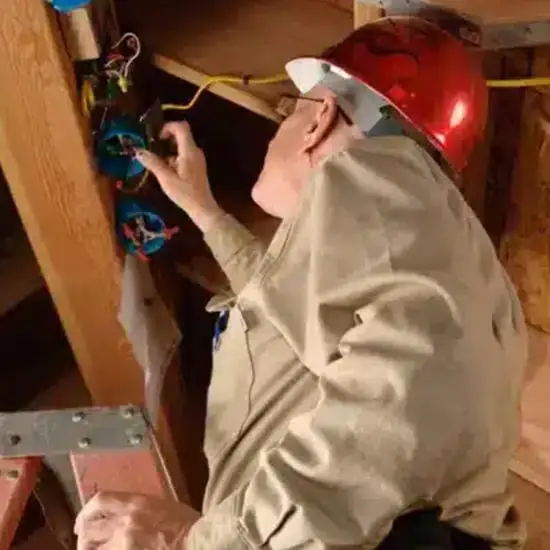
Pre Purchase Building Inspections go beyond basic assessments. Each property receives a thorough evaluation from the foundation through the roof structure. Our trade-qualified inspectors assess structural components, weathertightness systems, electrical installations, and plumbing infrastructure in accordance with AS 4349.1-2007.
Schedule your Pre-Purchase Building Inspection to receive your report within 24-48 hours. Every report includes moisture testing results, structural analysis, and detailed documentation to support confident property negotiations.
WRITTEN BUILDING INSPECTION
Professional and Reliable Inspection reports to AS4349.1 reporting Standards
METH TESTING
Same-day onsite testing with your building inspection in all suburbs
VERBAL BUILDING INSPECTION
On site or over the phone verbal overview for time critical decisions




Christies Beach's Unique Building Challenges
The Witton Bluff Factor
Witton Bluff is the defining geographical feature of Christies Beach — a prominent headland that shapes the microclimate and erosion risk for properties at the southern end of the suburb. Homes along the Esplanade near the bluff sit on elevated ground underlain by Tertiary sediments and capped by calcareous coastal sands. The bluff has been actively eroding for years, and the $6.7 million boardwalk and seawall completed in 2025 was a direct response to cliff recession that brought public infrastructure close to the edge.
The question for property buyers is whether individual homes on the bluff top have been affected by the gradual loss of lateral support that precedes major failure. Stepped cracking in brick fences, cracks in paved driveways, and doors that stick during dry periods can all signal ground movement behind the cliff edge, even where the house appears adequately set back.
Further north, a different risk dominates: storm surge and tidal inundation. The groyne at the Christies Beach boat ramp, installed in 2005 and renewed in 2024, illustrates the dynamic nature of sand movement along this coastline. Homes with low floor levels or slab-on-ground garages are vulnerable during king tide and storm-surge events, which are becoming more frequent along the Gulf St Vincent. The June 2026 severe weather event that triggered SES callouts tested the adequacy of drainage on Esplanade properties. Buyers near the high-water mark should verify that overland flow paths are maintained and stormwater connections include backflow prevention.
The Housing Trust Legacy
A scattered but significant number of South Australian Housing Trust homes built between the 1960s and early 1980s remain in Christies Beach. These were built to cost-economy specifications, with slab-on-ground foundations, brick-veneer walls, and trussed roofs. The relevance to an inspection is practical rather than reputational: these slabs were not always dosed with salt-reducing additives that later became standard, and the external brickwork was frequently painted — a finish that traps moisture against the brick as the paint degrades, accelerating salt damp. Many of these properties sit on larger blocks now being acquired for townhouse redevelopment.
The Renovated Shack Trap
The most Christies Beach-specific inspection scenario is the thoroughly renovated original beach shack — a timber-framed cottage from the 1950s that has been reclad, rewired, and fitted with a modern interior. These can present beautifully, but the original wall framing was never treated to current standards. In a coastal environment, the framing has been cyclically wet and dry for decades. Subtle indicators tell the story: nail heads rusting through internal linings, undulations in wall surfaces that track stud movement, and floor levels that are no longer true despite new coverings.
Recent Inspection Example
A 1960s double-brick home on Gulf View Road, two blocks from the beach, had freshly painted interiors and new carpet throughout. The inspection found a moisture reading of 38% at the base of the rear wall — active rising salt damp, not residual moisture from a past leak.
The vendor had installed a new kitchen without addressing the damp-proof course, and the bottom 200 mm of the plasterboard in the laundry was soft to the point of failure—estimated remediation: $18,000 for chemical DPC injection, replastering, and replacing affected framing.
The buyers negotiated $22,000 off the price and proceeded.
We offer building inspections across Australia — Sydney, Melbourne, Perth, Adelaide, Canberra, Tasmania and Darwin.
Adelaide locations include: Craigmore, Davoren Park, Elizabeth, Glenelg, Golden Grove, Hallett Cove, Ingle Farm, Mawson Lakes and Morphett Vale.
