An on-site or over-the-phone verbal overview for time-critical decisions. Useful when you need an answer before an auction, a deadline, or a multi-offer situation.
Pre-purchase inspections occur before you make an offer or after acceptance, giving you crucial information about the property’s condition before you finalise your investment.
Same-day on-site meth screening at your property. You'll know whether contamination is present before you commit to the purchase.
A pest inspection checks accessible areas of an Australian property for termites, borers, fungal decay and conditions that attract timber pests.
Hallett Cove sits 22 kilometres south of Adelaide on a coast where the geology is world-famous, and the building conditions are unlike those in any other suburb. It was carved from grazing land in the 1970s and 1980s, its development shaped by a conservation battle that saved the glacial pavements and the Amphitheatre from bulldozers. The result is a coastal suburb where homes sit on a geological patchwork of shallow siltstone and quartzite bedrock, high-plasticity clay pockets, and fill placed over levelled land. The ground under each property varies dramatically from one street to the next.
The defining feature is the shallow bedrock. A 1973 geological investigation of the proposed subdivision recorded siltstone and quartzite bedrock at shallow depths across most of the area, with slopes ranging from 2 to 27 degrees. On homes where foundations bear on or near this bedrock, slab performance is generally excellent — stable, non-reactive ground with firm bearing.
However, the investigation also identified pockets of high-plasticity clay in parts of the subdivision, and on these sites, the reactive clay swells and contracts seasonally. Homes built to the standard 1970s slab specification on clay can show diagonal cracking in brick veneer, slab-edge cracks in garages, and doors that have been repeatedly adjusted. The contrast between a home on bedrock and one three streets away on clay can be striking.
The coastal environment drives consistent weathering across both ground types. Salt spray reaches every external surface, and on 1970s and 1980s homes, the original metal roof sheeting often shows edge corrosion at flashings, gutters, and fasteners. The prevailing south-west wind means western and southern roof planes consistently show more advanced corrosion. Roof penetrations — plumbing vents, flues, aerial mounts — are frequent leak points because original flashings were not designed for this coastline's salt exposure.
The proximity of the Hallett Cove Conservation Park creates specific maintenance considerations for properties along the cliff edge and park boundary. The park is a no-development zone, so the vegetation line is closer to homes than in a standard suburban setting.
Mature eucalypts and native shrubs create a continuous layer of leaf litter in gutters and provide habitat for possums and birds. More significantly, the park is a natural wildlife corridor, and termite activity is higher than in suburbs without adjoining conservation land. Termite inspections are particularly important here.
The housing stock is predominantly brick-veneer on concrete slabs with concrete-tile roofs, built by a range of private builders during the 1970s and 1980s development waves. The concrete tiles are holding up well, but ridge capping mortar on roofs built before the mid-1980s is often failing, particularly on northern and western elevations where thermal cycling is greatest.
+
+
24-48 Hour Report Delivery Guaranteed
Looking for a Building Inspector in Hallett Cove? Our trade-qualified inspectors provide thorough building reports within 24-48 hours, combining speed with meticulous attention to detail.
Our building inspection service is perfect for time-sensitive property purchases. Each inspector carries professional indemnity insurance and brings deep knowledge of your local market and common building challenges. All inspections comply with AS 4349.1-2007 standards for comprehensive, reliable assessments.
Property buyers rely on our inspection expertise for accurate, actionable assessments. Every report delivers a complete structural evaluation, weather-tightness analysis, and maintenance requirements—giving you the information you need to make confident purchasing decisions on schedule.

Investing in property is a major financial commitment—a Pre Purchase Building Inspection protects that investment. Our comprehensive reports are prepared by inspectors with extensive knowledge and experience of the local market.
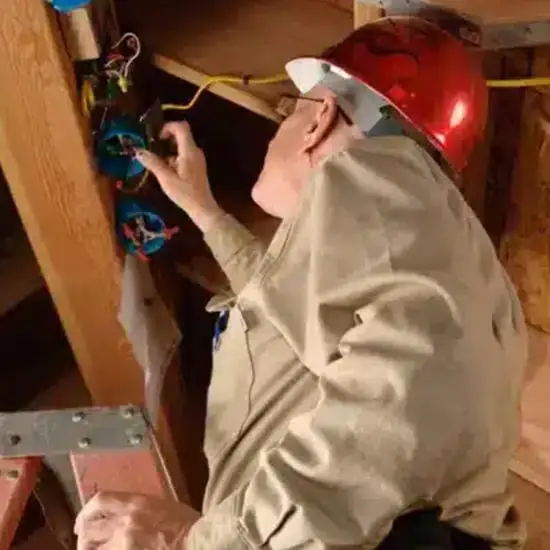
Pre Purchase Building Inspections go beyond basic assessments. Each property receives a thorough evaluation from the foundation through the roof structure. Our trade-qualified inspectors assess structural components, weathertightness systems, electrical installations, and plumbing infrastructure in accordance with AS 4349.1-2007.
Schedule your Pre-Purchase Building Inspection to receive your report within 24-48 hours. Every report includes moisture testing results, structural analysis, and detailed documentation to support confident property negotiations.
Professional and Reliable Inspection reports to AS4349.1 reporting Standards
Same-day onsite testing with your building inspection in all suburbs
On site or over the phone verbal overview for time critical decisions




The most distinctive inspection challenge in Hallett Cove is determining which geological condition applies to the specific property. Shallow siltstone and quartzite bedrock provide excellent foundation conditions, but the high-plasticity clay pockets mapped in the original subdivision investigation create the opposite. These clay pockets are not uniformly distributed — they occur in specific areas, and two homes on the same street can have different foundation performance if they straddle a geological boundary.
The original soil test reports from the 1970s subdivision application are still relevant, and a search of the property's development application history can reveal whether a site-specific investigation was conducted. Visible evidence is often the first indicator: homes on bedrock rarely show significant cracking in brickwork, while homes on clay show diagonal crack patterns around window and door openings. Where a property shows moderate cracking but neighbouring homes are sound, the geological boundary is the likely explanation.
Homes along the cliff edge overlooking the Conservation Park and Gulf St Vincent have inspection priorities that do not apply further inland. The cliff is composed of Permian glacial sediments overlying Precambrian siltstone, and while it has been stable for decades, the coastal erosion management strategy identifies pockets of higher risk. The primary concern for cliff-top properties is not the house falling into the ocean — the Conservation Park is a substantial buffer — but the behaviour of the ground immediately behind the cliff edge.
In prolonged rainfall, increased groundwater can accelerate erosion at the cliff face, manifesting as gradual ground movement at the rear of properties within the buffer zone. Stepped cracking in rear retaining walls, misaligned fences, and surface cracking in paved areas near the cliff edge are all worth noting.
Properties backing directly onto the Conservation Park face specific maintenance challenges. The park is managed for biodiversity, so vegetation control is limited to the removal of invasive species. Overhanging branches deposit leaf litter onto roofs and into gutters, and shaded ground beneath the tree canopy at the rear stays damp longer, creating favourable conditions for termites.
The park also supports common brushtail possums, which are protected under South Australian law. Possums regularly enter roof spaces through gaps at the fascia line, and once established, they cause damage to insulation, electrical wiring, and roof truss framing by saturating them with urine. Possum droppings in the roof space are one of the most common findings on properties adjoining the park.
A 1978 brick veneer home on the eastern side of the suburb, away from the cliff, was inspected for a purchaser. The home had been owner-occupied for 40 years and was well-maintained. The roof space inspection revealed moderate ridge capping mortar failure on the northern elevation, with water staining on the ceiling lining below.
The subfloor inspection found a termite working trail in the bearer at the south-west corner, where a downpipe discharge had kept the soil moist against the foundation. The moisture meter at the base of the rear wall registered 28% — elevated but not critical.
The recommended treatment included ridge capping repair, downpipe drainage extension, a termite treatment and monitoring program, and improved subfloor ventilation—with an estimated cost of $9,500.
We offer building inspections across Australia — Sydney, Melbourne, Perth, Adelaide, Canberra, Tasmania and Darwin.
Adelaide locations include: Christies Beach, Craigmore, Davoren Park, Elizabeth, Glenelg, Golden Grove, Ingle Farm, Mawson Lakes and Morphett Vale.

Copyright © 2016- Alert Building Inspections