Building Inspection Ingle Farm
BUILDING REPORT INGLE FARM
Residential & Commercial Building Reports
Our Working Process
Book
Confirm
Inspect
Report
An on-site or over-the-phone verbal overview for time-critical decisions. Useful when you need an answer before an auction, a deadline, or a multi-offer situation.
Pre-purchase inspections occur before you make an offer or after acceptance, giving you crucial information about the property’s condition before you finalise your investment.
TESTING
Same-day on-site meth screening at your property. You'll know whether contamination is present before you commit to the purchase.
A pest inspection checks accessible areas of an Australian property for termites, borers, fungal decay and conditions that attract timber pests.
Builders Report Ingle Farm
What Our Inspectors Typically Find
Ingle Farm sits 12 kilometres north-east of the Adelaide CBD at the base of the Mount Lofty foothills — a suburb built in a concentrated push between 1965 and 1975 when the South Australian Housing Trust acquired 730 acres from the Rowe family's farm and constructed 2,500 homes. The result is one of Adelaide's most uniform post-war suburbs: single-storey brick-veneer dwellings on concrete slabs, laid out on grid-patterned streets. For an inspector, the uniformity means the defects are also uniform, driven overwhelmingly by one factor — the ground.
Ingle Farm sits on the Keswick Clay formation, a high-plasticity marine clay among the most reactive in the Adelaide metropolitan area. The surface soil across much of the suburb is Black Earth overlying Keswick Clay at depth, and this combination produces ground movements that can exceed 75 millimetres during severe drought-wet cycles. On Housing Trust slabs designed to the cost-minimised standards of the mid-1960s, this movement expresses as a predictable defect pattern.
Diagonal stepped cracking in brickwork above window, and door openings is the most common finding, typically 1 to 3 millimetres at the widest point. Internal wall linings show a history of repair — tape and filler applied and re-cracked, sometimes multiple times. Doors planed at the bottom to clear the floor, then re-planed as movement changed direction, are another reliable indicator.
The original slab specification did not include articulation joints. Slabs were reinforced with light steel mesh and designed as a continuous raft, meaning stress concentrates at the weakest points — the corners of openings. The crack pattern is so consistent that an inspector can often predict which rooms will show cracking before entering the house.
Subfloor ventilation is a persistent problem. Original perimeter ventilation openings have been compromised on many properties by driveways poured up to the slab, garden beds mounded against walls, pathways laid without vent clearance, and render applied over original brickwork. The result is a damp subfloor environment that promotes timber decay and termite activity.
The roof stock is predominantly concrete tile on timber trusses, original to the 1965-1975 period. The tiles are generally serviceable, but the roof battens — untreated Pinus radiata with standard galvanised nails — are approaching the end of their life. Ridge capping mortar failure is near-universal on roofs that have not been re-pointed, with thermal cycling on the northern plane causing cracks and separation. Water tracking beneath the ridge capping shows as ceiling staining in the roof space below.
Waterproofing in the original wet areas was minimal. The standard Housing Trust bathroom of this era had a tile-over-screed shower base with no separate membrane, and the bath was a pressed steel unit set into a timber frame. After five decades, the shower screed in many homes is saturated, and moisture migration into the adjacent wall framing and floor sheeting is common. These bathrooms are functional but close to the end of their waterproofing life, and a full bathroom renovation should be expected within the next decade.
+
+
BUILDING INSPECTOR INGLE FARM
24-48 Hour Report Delivery Guaranteed
Looking for a Building Inspector in Ingle Farm? Our trade-qualified inspectors provide thorough building reports within 24-48 hours, combining speed with meticulous attention to detail.
Our building inspection service is perfect for time-sensitive property purchases. Each inspector carries professional indemnity insurance and brings deep knowledge of your local market and common building challenges. All inspections comply with AS 4349.1-2007 standards for comprehensive, reliable assessments.
Property buyers rely on our inspection expertise for accurate, actionable assessments. Every report delivers a complete structural evaluation, weather-tightness analysis, and maintenance requirements—giving you the information you need to make confident purchasing decisions on schedule.

PRE PURCHASE BUILDING INSPECTION INGLE FARM
Investing in property is a major financial commitment—a Pre Purchase Building Inspection protects that investment. Our comprehensive reports are prepared by inspectors with extensive knowledge and experience of the local market.
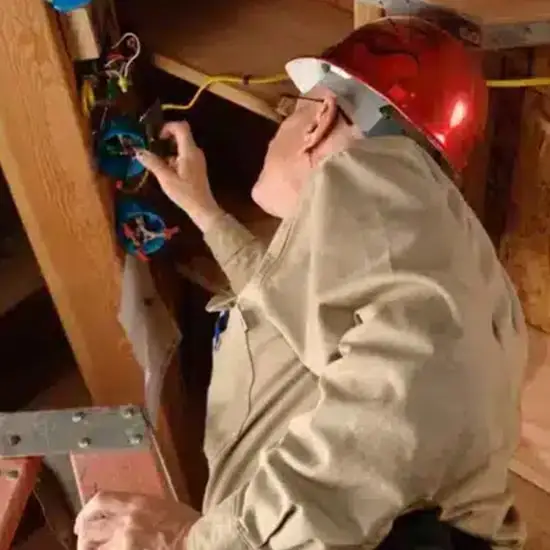
Pre Purchase Building Inspections go beyond basic assessments. Each property receives a thorough evaluation from the foundation through the roof structure. Our trade-qualified inspectors assess structural components, weathertightness systems, electrical installations, and plumbing infrastructure in accordance with AS 4349.1-2007.
Schedule your Pre-Purchase Building Inspection to receive your report within 24-48 hours. Every report includes moisture testing results, structural analysis, and detailed documentation to support confident property negotiations.
WRITTEN BUILDING INSPECTION
Professional and Reliable Inspection reports to AS4349.1 reporting Standards
METH TESTING
Same-day onsite testing with your building inspection in all suburbs
VERBAL BUILDING INSPECTION
On site or over the phone verbal overview for time critical decisions




Ingle Farm's Unique Building Challenges
The Keswick Clay Movement Cycle
Ingle Farm's location on Keswick Clay places it in the zone where soil reactivity is most aggressive. Black Earth surface layer cracks open in dry weather and closes when wet, while the deep Keswick Clay responds to moisture changes over a longer cycle. In dry years, clay shrinks, and slab edges settle, producing cracking that is most visible in summer. When a wet cycle follows, clay swells and the slab lifts, closing existing cracks and opening new ones. A single inspection provides only a snapshot. Our reports always note seasonal context and recommend re-inspection after extreme weather.
The Missing Articulation Joints
The absence of articulation joints in the original design is the single flaw that amplifies all other defects. An articulation joint allows the wall to accommodate movement without transferring stress into masonry. In Ingle Farm, where soil movement is significant and the slab is rigid, the brick veneer cracks at predictable locations: window and door corners, the garage-to-house junction, and slab corners.
Retrofitting joints is invasive — cutting through brickwork, installing a flexible backing rod and sealant, and making good internal linings — at $3,000 to $6,000 per joint. Most owners do not undertake this work, so cracking continues and is managed through maintaining consistent soil moisture around the slab.
The Service Life Calculation
The housing stock is now 50 to 60 years old, with several major elements nearing the end of their life: roof battens, ridge capping mortar, damp-proof course, bathroom waterproofing, and electrical installations. A 55-year-old concrete tile roof may have battens that need replacement within five to ten years, costing $8,000 to $15,000. We recommend a 10-year maintenance plan that prioritises the roof structure, damp-proof course, and subfloor ventilation.
Recent Inspection Example
A 1967 Housing Trust home on a standard 600-square-metre block was inspected for a first-home buyer. The brick veneer showed stepped cracking above the lounge room window at 2.5 millimetres, and the same crack pattern was present above the kitchen window at a slightly smaller width.
The subfloor vents on the southern elevation were partially blocked by a garden bed built up to within 50 millimetres of the vent openings. The roof space inspection revealed ridge capping mortar failure on both the northern and western roof planes, with water staining on the ceiling lining below the northern ridge. The moisture meter at the base of the bathroom wall registered 32%, indicating active moisture in the shower screed.
Estimated remediation: $22,000, including ridge capping replacement, subfloor vent clearance and drainage correction, bathroom waterproofing, and crack monitoring with a recommendation to revisit after one full seasonal cycle.
We offer building inspections across Australia — Sydney, Melbourne, Perth, Adelaide, Canberra, Tasmania and Darwin.
Adelaide locations include: Christies Beach, Craigmore, Davoren Park, Elizabeth, Glenelg, Golden Grove, Hallett Cove, Mawson Lakes and Morphett Vale.
