Building Inspection Elizabeth
BUILDING REPORT ELIZABETH
Residential & Commercial Building Reports
Our Working Process
Book
Confirm
Inspect
Report
An on-site or over-the-phone verbal overview for time-critical decisions. Useful when you need an answer before an auction, a deadline, or a multi-offer situation.
Pre-purchase inspections occur before you make an offer or after acceptance, giving you crucial information about the property’s condition before you finalise your investment.
TESTING
Same-day on-site meth screening at your property. You'll know whether contamination is present before you commit to the purchase.
A pest inspection checks accessible areas of an Australian property for termites, borers, fungal decay and conditions that attract timber pests.
Builders Report Elizabeth
What Our Inspectors Typically Find
Elizabeth was Australia's postwar promise rendered in brick and tile — a planned satellite city on 3,000 acres of former farmland 24 kilometres north of Adelaide, designed to house the workforce for Holden, the Weapons Research Establishment, and the factories that followed. Between 1955 and 1965, the South Australian Housing Trust built roughly 1,000 homes a year here, working through 15 standard plans with mirror-image variations and a choice of roofing materials. The result is a suburb where the housing stock is unusually consistent in age and construction method, yet surprisingly varied in condition because of how those homes were finished and extended over seven decades.
The original Elizabeth houses were delivered as shells. The Trust built the structure — brick or Mount Gambier stone cavity walls, a concrete slab or timber floor, a tiled or corrugated roof, and basic wet areas — but internal finishes, partitions, and later extensions were completed by owners as budgets allowed. Two houses built from the same plan on the same street can be in radically different structural conditions today, depending on how the owner-finishing was done. The absence of original documentation for owner-completed work is a recurring challenge during inspections.
The most significant structural issue is foundation movement on reactive clay. Elizabeth sits on the Port Adelaide Embayment deposits, where the clay profile ranges from Class H1 to H2 under AS 2870. The original Trust slabs were designed to a cost-efficient 1950s specification, and those on reactive soil pockets have developed the characteristic damage: stepped cracking in the Mount Gambier stone or brick outer skin at window and door corners, diagonal slab cracks in garages and laundries, and doors that have been packed and planed repeatedly.
The stone outer skin behaves differently from brick under movement. Mount Gambier stone is a softer, more porous limestone that cracks along the mortar joints rather than through the stone itself, making the cracking pattern wider and more visually dramatic than on equivalent brickwork, even when the actual movement is comparable.
The roof stock is a mix of concrete tiles, terracotta tiles, and corrugated galvanised iron or asbestos-cement sheeting — the variety was how the Trust achieved visual diversity across the 15 plans. The corrugated asbestos-cement roofs are now 60 to 70 years old and approaching the end of life, with surface friability and fastener corrosion. Terracotta and concrete tile roofs hold up better structurally, but original battens — untreated pine fixed with standard nails — are the weak point. Sarking was not always installed, particularly on earlier builds.
Termite activity is a genuine concern in Elizabeth and the broader northern Adelaide region. The combination of a high water table in the Port Adelaide Embayment, untreated timber in original framing, and mature gardens creates favourable conditions for subterranean termites. The suspended timber floors in earlier Elizabeth plans are particularly vulnerable, as the subfloor space is often confined and poorly ventilated.
+
+
BUILDING INSPECTOR ELIZABETH
24-48 Hour Report Delivery Guaranteed
Looking for a Building Inspector in Elizabeth? Our trade-qualified inspectors provide thorough building reports within 24-48 hours, combining speed with meticulous attention to detail.
Our building inspection service is perfect for time-sensitive property purchases. Each inspector carries professional indemnity insurance and brings deep knowledge of your local market and common building challenges. All inspections comply with AS 4349.1-2007 standards for comprehensive, reliable assessments.
Property buyers rely on our inspection expertise for accurate, actionable assessments. Every report delivers a complete structural evaluation, weather-tightness analysis, and maintenance requirements—giving you the information you need to make confident purchasing decisions on schedule.

PRE PURCHASE BUILDING INSPECTION ELIZABETH
Investing in property is a major financial commitment—a Pre Purchase Building Inspection protects that investment. Our comprehensive reports are prepared by inspectors with extensive knowledge and experience of the local market.
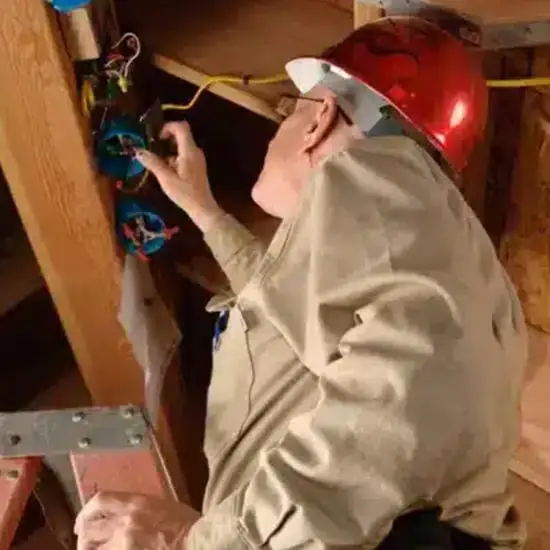
Pre Purchase Building Inspections go beyond basic assessments. Each property receives a thorough evaluation from the foundation through the roof structure. Our trade-qualified inspectors assess structural components, weathertightness systems, electrical installations, and plumbing infrastructure in accordance with AS 4349.1-2007.
Schedule your Pre-Purchase Building Inspection to receive your report within 24-48 hours. Every report includes moisture testing results, structural analysis, and detailed documentation to support confident property negotiations.
WRITTEN BUILDING INSPECTION
Professional and Reliable Inspection reports to AS4349.1 reporting Standards
METH TESTING
Same-day onsite testing with your building inspection in all suburbs
VERBAL BUILDING INSPECTION
On site or over the phone verbal overview for time critical decisions




Elizabeth's Unique Building Challenges
The Shell Home Legacy
The Trust's decision to sell Elizabeth homes as unfinished shells was a practical policy — it kept prices down and let owners finish interiors to their own standard over time — but it created an inspection challenge specific to this suburb. The original Trust contract covered the structure, external cladding, roof, plumbing rough-in, and one basic bathroom and kitchen. Everything else — internal wall linings, floor coverings, additional partitions, carports, veranda enclosures, and most electrical fit-out — was the owner's responsibility. The quality of that work ranges from professional to rudimentary.
Our inspectors regularly find partition walls framed without proper connection to the slab or trusses, wiring run on the wall surface rather than within the cavity, and floor coverings laid directly over concrete without a moisture barrier. The absence of as-built drawings for owner-completed portions means every concealed space must be treated as unknown territory.
Mount Gambier Stone Performance
The stone is softer and more porous than fired clay brick and absorbs moisture more readily. In wet winters, the outer face can become saturated. During subsequent dry periods, salt-laden moisture is drawn to the surface, where it crystallises, causing the stone face to spall or delaminate. This is noticeable on the lower courses, where splash-back is constant, and on the north and west elevations, where the wetting-and-drying cycle is most rapid. Homes where the stone has been painted — a common modification from the 1970s — trap moisture behind the paint film, accelerating deterioration. The pointing mortar is softer than modern cement mixes, and over six decades, it can erode to a depth where stones lack lateral restraint.
The Holden Transition
Elizabeth was built for Holden, and the closure of the vehicle assembly plant in 2017 was the most significant event in the suburb's history. For inspectors, the effect is visible in the housing market. The Lionsgate Business Park on the former Holden site has brought new activity, and rezoning of nearby land is introducing new homes to a suburb built in a single concentrated decade.
Elizabeth now has three housing tiers: original Trust homes continuously maintained, original Trust homes that experienced deferred maintenance during the post-Holden downturn and are now being renovated, and brand-new homes on formerly industrial land. The middle tier requires the most careful inspection — the period of reduced maintenance often coincides with the roof, paint, and damp-proof course reaching the end of life.
Recent Inspection Example
A 1960 Trust-built home on Frobisher Road, clad in Mount Gambier stone, was under contract for sale after being tenanted for 12 years. The roof was corrugated asbestos-cement with surface deterioration on the northern plane and several fastener heads that had rusted through.
The stone outer skin had been painted in the 1990s, and the paint was failing on the western elevation, with the stone face behind it spalling in patches. The subfloor inspection revealed active termite activity at the end of a bearer at the rear of the house, where a leaking downpipe had kept the soil moist for an extended period.
Estimated remediation: $32,000 for roof replacement, stone restoration and repainting, termite treatment and bearer replacement, and drainage correction.
We offer building inspections across Australia — Sydney, Melbourne, Perth, Adelaide, Canberra, Tasmania and Darwin.
Adelaide locations include: Christies Beach, Craigmore, Davoren Park, Glenelg, Golden Grove, Hallett Cove, Ingle Farm, Mawson Lakes and Morphett Vale.
