
Building Inspection Davoren Park
BUILDING REPORT DAVOREN PARK
Residential & Commercial Building Reports
Our Working Process
Book
Confirm
Inspect
Report
An on-site or over-the-phone verbal overview for time-critical decisions. Useful when you need an answer before an auction, a deadline, or a multi-offer situation.
Pre-purchase inspections occur before you make an offer or after acceptance, giving you crucial information about the property’s condition before you finalise your investment.
TESTING
Same-day on-site meth screening at your property. You'll know whether contamination is present before you commit to the purchase.
A pest inspection checks accessible areas of an Australian property for termites, borers, fungal decay and conditions that attract timber pests.
Builders Report Davoren Park
What Our Inspectors Typically Find
Davoren Park sits on the flat northern Adelaide Plains, 24 kilometres from the city, where the ground never stops moving. The suburb was laid out in the early 1960s as an extension of the satellite city of Elizabeth, purpose-built by the South Australian Housing Trust to house workers from the Holden plant and surrounding factories. The housing stock is overwhelmingly single-storey detached homes on concrete slabs, built in waves through the 1960s and 1970s using the Trust's standardised brick-veneer-and-tile specification. The fundamental challenges here are driven not by topography or coastal exposure, but by what is happening under the slab.
The defining defect is foundation movement from reactive clay. Davoren Park sits on the Port Adelaide Embayment deposits — Quaternary alluvial and estuarine clays classified as Class H1 or H2 under AS 2870. These clays absorb significant moisture in winter and swell, then dry and shrink in summer, creating a seasonal ground movement cycle that can exceed 75 millimetres in severe years.
On Housing Trust slabs designed to the cost-minimised standards of the 1960s, this movement goes into the structure. The characteristic damage is 45-degree corner cracking in brickwork at window and door openings, coupled with cracks radiating from slab corners where reinforcement was minimal. In homes where the slab has endured active movement for fifty years, the internal linings show a telltale map of repaired and reopened cracks.
Flat-block drainage is another persistent issue. The Adelaide Plains here are so level that achieving adequate fall away from the slab requires careful grading, and on many original lots, the finish levels were set with only a token slope. Over the decades, garden beds have been built up against the slab, pathways have settled, and original drainage paths have been blocked. Water sits against the foundation for days after heavy rain, adding to the seasonal moisture load. During a wet-day inspection, the northern and western slab-edge perimeter is often damp — not from a leak, but from groundwater held against the concrete by poor grading.
Roofs are predominantly concrete tile on timber trusses, original to the 1960s and 1970s. The tiles are serviceable, but the underlying structure is ageing. Original battens were fixed with short-term nails rather than corrosion-resistant fasteners, and fixings can let go on the northern roof plane where thermal cycling is extreme. Sarking is typically the original bitumen-coated building paper, now brittle and frequently torn at the eaves. Ridge capping is almost always compromised, with cracked mortar allowing water to track, resulting in staining on ceiling linings in the roof space.
Internally, the most significant concern is moisture and mould. The original floor plan typically included a small bathroom with a tile-over-screed shower and no separate waterproof membrane. After fifty years, the screed is often saturated, with moisture migrating laterally into adjacent wall framing. In updated bathrooms, renovation quality varies — some received proper membranes, others were tiled directly over the old screed. The combination of inadequate subfloor ventilation and poor natural ventilation creates conditions where mould in wardrobes, behind furniture, and in the roof space is more common than not.
+
+
BUILDING INSPECTOR DAVOREN PARK
24-48 Hour Report Delivery Guaranteed
Looking for a Building Inspector in Davoren Park? Our trade-qualified inspectors provide thorough building reports within 24-48 hours, combining speed with meticulous attention to detail.
Our building inspection service is perfect for time-sensitive property purchases. Each inspector carries professional indemnity insurance and brings deep knowledge of your local market and common building challenges. All inspections comply with AS 4349.1-2007 standards for comprehensive, reliable assessments.
Property buyers rely on our inspection expertise for accurate, actionable assessments. Every report delivers a complete structural evaluation, weather-tightness analysis, and maintenance requirements—giving you the information you need to make confident purchasing decisions on schedule.

PRE PURCHASE BUILDING INSPECTION DAVOREN PARK
Investing in property is a major financial commitment—a Pre Purchase Building Inspection protects that investment. Our comprehensive reports are prepared by inspectors with extensive knowledge and experience of the local market.
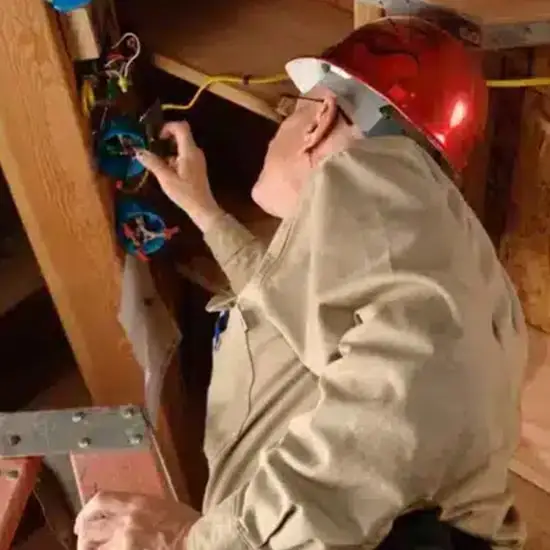
Pre Purchase Building Inspections go beyond basic assessments. Each property receives a thorough evaluation from the foundation through the roof structure. Our trade-qualified inspectors assess structural components, weathertightness systems, electrical installations, and plumbing infrastructure in accordance with AS 4349.1-2007.
Schedule your Pre-Purchase Building Inspection to receive your report within 24-48 hours. Every report includes moisture testing results, structural analysis, and detailed documentation to support confident property negotiations.
WRITTEN BUILDING INSPECTION
Professional and Reliable Inspection reports to AS4349.1 reporting Standards
METH TESTING
Same-day onsite testing with your building inspection in all suburbs
VERBAL BUILDING INSPECTION
On site or over the phone verbal overview for time critical decisions




Davoren Park's Unique Building Challenges
The Playford Alive Effect
Davoren Park is in the middle of one of Australia's largest urban renewal projects. Playford Alive, running since 2008, has involved the renovation of hundreds of public housing dwellings, the demolition of others, and the construction of new homes on former Housing Trust land. For an inspector, this creates a unique spectrum: housing conditions ranging from untouched 1962 originals to brand-new 7-star energy-rated homes.
The critical point is that renovated Housing Trust homes from the early renewal phases were brought up to standards current at the time, not necessarily to today's requirements. Some received new kitchens and bathrooms but retained the original slab and roofing. Others were reclad and rewired but kept the original drainage layout. Renovation quality varies because different contractors worked on different phases, and the waterproofing standards are inconsistent. A pre-purchase inspection on a renovated Davoren Park home should focus on whether the renovation addressed below-ground issues — slab condition, damp-proof course, and stormwater — or was purely cosmetic.
The Former Tidal Plain Soil Chemistry
The Port Adelaide Embayment clays have a distinguishing characteristic: they are saline at depth. The alluvial and estuarine origins mean that soluble salts are present in the soil profile. When the water table rises after heavy rain, these salts can be drawn into the slab and masonry through capillary action. The result is a chemical reaction between the salts and the cement matrix that attacks the concrete slab edge and lower brick courses. Affected concrete becomes friable and powdery at the surface, and brick mortar crumbles. This is most often seen in garages, where the slab is exposed, and in external brickwork at the rear, where ground level may have been raised.
Original Roof Batten Lifespan
With the housing stock 55 to 65 years old, the timber roof battens are reaching the end of their life. These were typically Pinus radiata, untreated, fixed with galvanised nails, corroding for decades. Batten ends resting on the top plate are vulnerable — they sit where moisture wicks up from the masonry and where roof flashing leaks concentrate. Over time, the timber softens and loses its capacity to transfer roof load. In extreme cases, a batten end can separate from its fixing, leaving tiles supported only by interlock. This defect is invisible from the outside and difficult to detect without close inspection. Our inspectors specifically probe batten ends along the northern and western roof edges, where weather exposure is greatest.
Recent Inspection Example
A 1964 Housing Trust home on a 600-square-metre block was inspected before auction. The exterior had been recently painted, and the roof appeared tidy. The roof space revealed three active leaks: one at a ridge capping junction, one where a plumbing vent flashing had never been sealed, and one at the western verge where the batten end had pulled away from the truss.
The slab had a 5-millimetre diagonal crack at the laundry door corner, and the moisture meter at the rear wall base registered 35% after a dry week — indicating chronic groundwater seepage. A 2015 bathroom renovation had tiled over the original screed without a membrane, and the adjacent bedroom wall lining was soft at the base.
Estimated remediation: $28,000 for slab underpinning, roof batten replacement, bathroom rebuild, and drainage.
We offer building inspections across Australia — Sydney, Melbourne, Perth, Adelaide, Canberra, Tasmania and Darwin.
Adelaide locations include: Christies Beach, Craigmore, Elizabeth, Glenelg, Golden Grove, Hallett Cove, Ingle Farm, Mawson Lakes and Morphett Vale.
