An on-site or over-the-phone verbal overview for time-critical decisions. Useful when you need an answer before an auction, a deadline, or a multi-offer situation.
Pre-purchase inspections occur before you make an offer or after acceptance, giving you crucial information about the property’s condition before you finalise your investment.
Same-day on-site meth screening at your property. You'll know whether contamination is present before you commit to the purchase.
A pest inspection checks accessible areas of an Australian property for termites, borers, fungal decay and conditions that attract timber pests.
Hobart is Australia's second-oldest capital, and its building stock reflects that history. The housing mix spans Colonial Georgian cottages and townhouses from the 1820s and 1830s, Victorian terrace rows and merchant residences, Federation-era bungalows and villas, inter-war Californian bungalows and Art Deco flats, post-war weatherboard and brick homes, and contemporary infill apartments concentrated in the city fringe and waterfront precincts.
The inspection picture is shaped less by a single dominant era and more by the interaction between age, terrain, and geology, which varies significantly from one street to the next.
Moisture-related defects are the most common finding across all eras, but the mechanism shifts with the building's age and construction type. In the colonial and Victorian stone-and-brick stock — concentrated in Battery Point, the city centre, West Hobart, and North Hobart — rising damp and salt attack are pervasive. These buildings were laid on shallow footings directly onto clay or sandy soils without damp-proof courses, and the dense Tasmanian sandstone and sandstock brickwork draws moisture from the ground by capillary action.
Salt in the groundwater, particularly near the Derwent estuary, crystallises on the wall surface as moisture evaporates, gradually fretting the masonry and destroying the internal plaster. We regularly see salt efflorescence extending a metre or more above floor level in ground-floor walls.
In the Federation and inter-war housing that covers much of Hobart's middle ring — South Hobart, Sandy Bay, Lenah Valley, and parts of New Town — the defect profile shifts to roof and subfloor performance. Roofs are typically made of terracotta tiles or corrugated metal, and after a century of Tasmanian weather, the original roof plumbing is often fatigued.
We commonly find corroded valley lines, perished bedding and pointing on ridge cappings, and flashings around chimneys and roof penetrations that have been patched multiple times rather than replaced as a system. The subfloor environment, particularly on Hobart's sloping streets, is frequently compromised by inadequate ventilation, ground moisture wicking into unlined subfloor spaces, and later additions that have enclosed original airflow paths.
The underlying geology of Hobart introduces a layer of variability that is uncommon in mainland capital cities. The city sits on Jurassic dolerite, overlain in many areas by clay soils derived from weathering of the dolerite, with pockets of alluvial deposits along the Derwent foreshore and in reclaimed areas.
Foundation conditions can change markedly within a single property boundary — a house may have one corner on shallow dolerite rock and another on deep reactive clay, producing differential movement that manifests as stepped cracking in brickwork, binding doors and windows, and uneven floors. This pattern is so common in Hobart that local geotechnical engineers routinely advise multiple test holes per site to capture lateral variability.
The standout risk we flag most often in Hobart is the convergence of heritage-era construction — unreinforced stone and brickwork, lime mortars, no damp-proofing, and timber subfloor framing — with a climate that delivers sustained winter moisture and a geology that produces variable foundation performance over short distances.
A colonial or Victorian building in Hobart that has survived 150-plus years has done so because its site drainage, roof plumbing, and subfloor environment have been actively managed. When those systems have been neglected or compromised by insensitive alterations, the deterioration can accelerate surprisingly quickly.
+
+
24-48 Hour Report Delivery Guaranteed
Looking for a Building Inspector in Hobart? Our trade-qualified inspectors provide thorough building reports within 24-48 hours, combining speed with meticulous attention to detail.
Our building inspection service is perfect for time-sensitive property purchases. Each inspector carries professional indemnity insurance and brings deep knowledge of your local market and common building challenges. All inspections comply with AS 4349.1-2007 standards for comprehensive, reliable assessments.
Property buyers rely on our inspection expertise for accurate, actionable assessments. Every report delivers a complete structural evaluation, weather-tightness analysis, and maintenance requirements—giving you the information you need to make confident purchasing decisions on schedule.
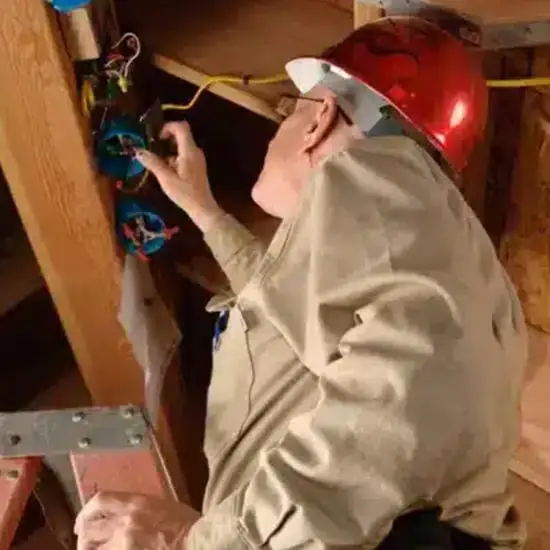

Investing in property is a major financial commitment—a Pre Purchase Building Inspection protects that investment. Our comprehensive reports are prepared by inspectors with extensive knowledge and experience of the local market.
Pre Purchase Building Inspections go beyond basic assessments. Each property receives a thorough evaluation from the foundation through the roof structure. Our trade-qualified inspectors assess structural components, weathertightness systems, electrical installations, and plumbing infrastructure in accordance with AS 4349.1-2007.
Schedule your Pre-Purchase Building Inspection to receive your report within 24-48 hours. Every report includes moisture testing results, structural analysis, and detailed documentation to support confident property negotiations.
Professional and Reliable Inspection reports to AS4349.1 reporting Standards
Same-day onsite testing with your building inspection in all suburbs
On site or over the phone verbal overview for time critical decisions




Hobart's building inspection landscape is unlike most capitals because it combines a deep colonial building stock, steep topography, complex dolerite geology, and extensive heritage overlay coverage. Each factor interacts to produce scenarios unusual in a younger or flatter city.
Hobart's oldest surviving buildings — from the Georgian cottages of Battery Point to the sandstone warehouses of Salamanca Place — were built with materials fundamentally different from those used in modern construction. The dominant stone is locally quarried sandstone laid in lime mortar on shallow footings, with lime-plastered sandstock brick walls and timber joists set into the masonry.
Sandstone is durable in dry conditions but vulnerable to surface delamination when trapped moisture freezes during winter nights. Lime mortar is softer than cement by design, allowing moisture to evaporate from joints. When cement-rich mortars have been used for repointing, the harder mortar traps moisture and accelerates decay at the interface.
Timber joists and roof framing are native hardwoods that perform well in dry conditions but develop decay when subfloor conditions or roof leaks go unaddressed. Moisture management determines whether these buildings last another century or require major intervention.
Hobart's topography — rising steeply from the Derwent toward the foothills of kunanyi / Mount Wellington — creates specific challenges. Many properties sit on cut-and-fill sites where the footprint straddles original ground and engineered fill, with differential movement where fill settles differently from natural ground.
The mountain massif also creates a significant rainfall gradient: properties on the lower slopes receive more rainfall than those near the Derwent, affecting roof drainage, subfloor moisture, and external finish weathering. Steeper terrain plus higher rainfall make stormwater management more demanding than on flat, drier land.
Hobart has one of the most extensive heritage overlay systems in Australia. The Local Historic Heritage Code covers multiple precincts — Battery Point, West Hobart, North Hobart, parts of Sandy Bay, and the city centre — as well as individually listed properties on the Tasmanian Heritage Register.
A large proportion of older housing is subject to controls governing exterior alterations, window replacements, re-roofing, fence changes, and painting of previously unpainted masonry. Battery Point has the strictest controls, and renovations require allowances for heritage assessment timelines and for the repair of original materials rather than their replacement.
We regularly find unauthorised work — aluminium windows in timber-framed precincts, Colorbond roofs where the original was slate or terracotta, and cement repointing in lime-mortar buildings — creating compliance issues at resale.
Example: Stone cottage in Battery Point with cement repointing and rising damp
We inspected a small Georgian stone cottage on a narrow Battery Point lane, built around 1840. Internal plaster on the ground floor showed extensive salt damage and fretting extending approximately 900 millimetres above floor level, with moisture readings exceeding 20 per cent at the wall base. The ground level had been raised by paving and a garden bed built up, bridging the original stone footing.
External pointing was a cement-rich mortar, visibly denser than the original lime mortar. The interior had been cosmetically refreshed, but the underlying damp and salt migration were actively progressing. Remediation would require removing the cement pointing, lowering ground levels, installing drainage, and addressing internal salt damage with poulticing and breathable replastering — work costing $25,000 to $35,000, not including heritage consulting and Council approvals.
In Hobart, the inspection value is determined by assessing how original materials respond to site conditions. Stone, brick, lime mortar, and timber perform well if kept dry and repaired in a compatible manner. When moisture intrusion or incompatible repairs go unaddressed, deterioration progresses steadily.
Our pre-purchase building inspection and written report starts from $499 plus GST; a verbal building inspection report starts from $299 plus GST; meth testing starts from $279 plus GST; and pest inspection reports start from $599 plus GST. The main factors in the price are the property’s location and travel distance, along with its size, age, and construction. Hobart’s terrain matters: a house on a steep hillside takes longer to inspect than a level one nearer the city, and a large heritage home with a complex roof takes even longer. We’ll quote a fixed price upfront, so there are no surprises. Send the property address through our contact form, and we will confirm your price and the earliest available time. Full details are on our services page, and our guide to building inspection costs explains what you are actually paying for.
Every pre-purchase inspection covers all safely accessible areas of the property:
Your inspector will also note any major defects, safety hazards, and items that need further investigation. Areas that cannot be safely accessed — such as a subfloor with too little clearance to crawl into, which is a real possibility on an old Hobart cottage — are recorded as limitations in the report, so you always know what was and was not inspected. Every inspection follows the Australian Standard for pre-purchase inspections, AS 4349.1-2007. For a walkthrough of the appointment itself, see what to expect during a pre-purchase building inspection.
Your report will be clear, photographic and easy to act on. We group findings into major defects, minor defects, and maintenance items, and illustrate each with photos so you can see exactly what we found rather than take our word for it. You get plain English rather than trade jargon, an honest summary, and practical recommendations on what needs attention and how urgent it is. We deliver reports within 24 to 48 hours of the inspection, and you are welcome to call your inspector to talk through anything in it. See reading and understanding your property assessment report.
This is the one question where Hobart genuinely differs from the mainland, and it is worth understanding before you decide. Tasmania has the lowest termite risk in Australia — CSIRO rates it as the only state with negligible risk — and only four termite species are known here, none of which is known to attack sound, dry timber. In CSIRO’s national survey, even the century-old terrace houses in Tasmania had not been attacked.
That is not the same as saying there is no timber risk, and that is what matters for an older Hobart home. The termites that do occur here are dampwood termites, which attack timber that is already damp or decaying. So the timber problem you are most likely to meet in Hobart is decay — rotten stumps, subfloor timbers, weatherboards, window and door joinery — with dampwood termites following the decay rather than causing it, in a cool, wet climate that is a far more realistic risk than the subterranean termites that do most of the damage on the mainland.
The practical answer: a pest inspection is still worth having on any older Hobart property, but it is looking for something different here. Rather than a nation-leading termite hazard, it checks for decay, damp, and the conditions that feed them — and because our climate keeps timber wet, that is a genuinely useful inspection. It is also the only way to properly establish the condition of subfloor timbers and stumps that you cannot see yourself. Our pest inspection reports start from $599 plus GST and cover all accessible areas, together with the conditions that attract timber pests. See what a building and pest inspection covers, and the termite activity signs every Australian homeowner should know.
These are the two most common causes of damp in Hobart homes; they are often confused, and they require completely different solutions — so getting the diagnosis right matters.
Rising damp comes up from the ground. Most pre-war Hobart buildings have no effective damp-proof course, and the problem is often made worse when the ground level is raised after construction — a paved driveway, a path, or a garden bed built up above the original level. Damp then wicks up through the masonry, carrying dissolved salts. You see it low on the wall, usually within the first metre above the floor, with tide marks, powdery salt deposits, flaking plaster and a musty smell. Salt attack is the give-away: the plaster itself breaks down, not just the paint.
Condensation comes from inside the house. Hobart’s climate is cool and wet, and many older homes have little insulation, single glazing and no mechanical ventilation in the bathroom or kitchen. Warm, moist air from cooking, showering, heating and drying clothes settles on cold surfaces — particularly south-facing walls, cornices, window reveals and wardrobe back walls — and mould follows. It is highest on cold surfaces and in corners with poor air movement, not concentrated at the base of a wall.
We meter every moisture reading, not guess it, and the pattern of high readings usually tells us what's going on. The two problems can also occur together in an old house, which is exactly when an informed diagnosis saves you money — treating condensation as rising damp leads to expensive, unnecessary damp-course work. See our guide to understanding moisture detection during property assessments and what older homes hide from buyers.
A heritage listing doesn’t stop you from buying or inspecting the property, and it is not a reason to walk away. It governs what you can change later, with real cost and planning implications you should understand before you commit.
Hobart has one of the most extensive heritage overlay systems in Australia. Depending on where the property sits, exterior alterations, window replacements, re-roofing, repainting in some cases, and even some landscaping may require council approval, and work on a listed building often needs to use matching materials and be done by trades who know how to handle them. That typically means lime mortars rather than cement, traditional joinery rather than aluminium, and specialist advice — all of which cost more than the equivalent work on an unlisted house.
Two things follow for a buyer. First, unapproved past alterations are common on old Hobart homes, and they are worth knowing about: a carport, an extension, a converted verandah or a replaced window that was never approved can become your problem at settlement or at your next council interaction. Second, if you are buying with renovation plans in mind, it’s worth checking with council what will actually be permitted before you buy, not after. Our inspection will identify and report unapproved or non-compliant building work where we find it. For what else tends to surface in older housing stock, see what older homes hide from buyers.
Yes, and it is worth taking seriously in Tasmania specifically. Tasmania has a strong history of both asbestos manufacture and its use in construction, and many of Hobart’s homes were built before the material was phased out. As a rule of thumb, assume any home built before 1990 contains asbestos cement products — commonly known as “fibro” — unless evidence shows otherwise. It can show up in wall and ceiling sheeting, eaves and soffits, wet-area linings, roof sheeting, fencing, and sometimes in insulation.
Asbestos-containing materials are not inherently dangerous when intact and undisturbed. They become a real risk when they are cut, sanded, drilled, broken or allowed to deteriorate. That is why an inspection matters before you renovate, and why it matters on a purchase: a weathered or damaged fibro sheet on an old shed or eave is exactly the kind of thing that needs identifying and handling properly rather than being discovered halfway through a demolition.
A Hobart-area precedent is worth knowing about. Loose-fill insulation was found in a former Housing Tasmania home at Gagebrook, on Hobart’s northern fringe, which prompted a review of former public housing properties before sale. Homes Tasmania’s own advice to anyone buying a former social housing home is to talk to a builder about asbestos first, because registered builders understand how to deal with it. Our inspectors identify materials likely to contain asbestos and flag them in the report, but we do not test — sampling is a separate service carried out by a licensed asbestos assessor, and we will tell you when that is the right next step. See asbestos in Australian homes: identification and safety guide and asbestos timelines in Australian homes.
The most common findings on Hobart properties are:
Our guide to common building defects found in Australian home inspections covers each of these in more detail.
Yes. New and recently built homes can still have defects, including incomplete work, work that does not meet the required standards, and problems that only show up after the first winter. In Hobart, that first winter is a real test — heavy rain driven onto exposed elevations, water finding its way past flashings and seals, wet-area waterproofing that was never quite right, and drainage that doesn’t cope with the site. Problems like these typically reveal themselves in the months after handover, and an inspection before settlement gives you the chance to have them rectified. At the same time, they are still the builder’s responsibility.
A practical inspection during construction is worth considering as well as the final one, because much of what later fails is hidden once linings go on. Our guide to planning your new home construction timeline in Australia shows where the inspections fit into the build.
Most residential inspections take between one and two hours, depending on the property’s size, age and construction, and how accessible the subfloor and roof space are. A large heritage home, or a hillside property with limited access to the underside of the floor, can take longer — we would rather spend the time than rush a section. Your written report follows within 24 to 48 hours. If you are working to an auction, a finance deadline or a cooling-off period, ask about a verbal summary on the day so you are not waiting on the written report to make a decision.
Yes, and we encourage it. Attending gives you the chance to see the issues for yourself, ask questions on the spot, and understand how serious each one really is — which is particularly useful in an older Hobart home, where the difference between “character” and “expensive” is often a judgement call. If you cannot attend — because you are interstate, overseas, or simply short on time — your inspector will call you through the findings, and everything is documented in the report with photos.
All of our inspectors are trade-qualified builders with hands-on construction experience, not just trained observers. That means they understand how a building is actually put together, and can read a crack, a stain or a damp patch in the context of the materials and the climate that produced it — which on colonial sandstone and lime mortar is a different judgement from the one you would make on a modern brick veneer home. Every inspection follows the Australian Standard for pre-purchase inspections (AS 4349.1-2007), each inspector carries professional indemnity insurance, and all major banks accept our reports. You can meet them on our team page.
Yes — they are the same thing under two different names. “Builders report” is the term most people use in conversation and in some parts of Australia, while “pre-purchase building inspection” is the formal description used in the Australian Standard (AS 4349.1-2007). Whichever you ask for, you get the same thorough, non-invasive, trade-qualified inspection of the property’s condition, and the same written report. If a lender, conveyancer, or real estate agent tells you you need a builder’s report, this is what they mean.
The buyer orders a pre-purchase building inspection to find out what they are buying before they commit. A pre-listing inspection is the same inspection the seller orders before going to market, so they know what will come up, can fix what is worth fixing, and can price the property with their eyes open. Both follow the same Australian Standard and produce the same style of report. We carry out both in Hobart and across southern Tasmania.
We inspect properties across Hobart and southern Tasmania, and further north. Suburbs and towns with their own dedicated pages include Bellerive, Glenorchy and Howrah on the eastern shore, and Launceston and Newstead in the north. If your suburb isn’t listed, send through your address, and we will confirm straight away. We also inspect right around Australia, with locally based, trade-qualified inspectors in Sydney, Melbourne, Perth, Adelaide, Canberra, Darwin and Tasmania.
The report gives you the facts you need to decide, not a recommendation to walk away. Depending on what is found and how the property is priced, buyers commonly use a report to negotiate a lower price, ask the vendor to complete repairs before settlement, obtain a specialist assessment — a structural engineer, or an asbestos or damp specialist — or withdraw if the risk is unacceptable. Your rights to withdraw depend on the conditions in your contract, so seek legal advice before acting on that option. If you are comparing inspectors, our guide on how to choose the right building inspector sets out what actually matters. Our inspectors remain available to talk through the findings after delivery — a report is only useful if you understand it.

Copyright © 2016- Alert Building Inspections