
An on-site or over-the-phone verbal overview for time-critical decisions. Useful when you need an answer before an auction, a deadline, or a multi-offer situation.
Pre-purchase inspections occur before you make an offer or after acceptance, giving you crucial information about the property’s condition before you finalise your investment.
Same-day on-site meth screening at your property. You'll know whether contamination is present before you commit to the purchase.
A pest inspection checks accessible areas of an Australian property for termites, borers, fungal decay and conditions that attract timber pests.
Amaroo's streetscapes read as orderly late-1990s to early-2000s Canberra — brick veneer homes on established blocks, wide verges, and a neighbourhood that has settled into its landscape. On inspection day, that settled look can be deceptive. Our inspectors are usually focused on what happens when the ACT's reactive clay meets a stormwater system that may not have been fully connected from the start.
The suburb's housing stock is almost entirely slab-on-ground brick veneer from the Gungahlin development push of the mid-1990s through the early 2000s. Roofs are predominantly concrete, with terracotta tiles, and some Colorbond metal on later builds or where replacements have occurred. Blocks vary from near-level to gently sloping, and many properties back onto reserve edges, creek corridors, or the open verges that define Gungahlin's planning character.
Roof defects in this era follow a familiar pattern. We regularly find tired ridge bedding and pointing, displaced tiles at hip and valley junctions, and flashing details at roof penetrations — flues, exhaust vents, solar mounts — that were adequate when installed but now show age-related gaps.
The Canberra climate loads these elements hard: frost in winter, UV through long, clear summer days, and the occasional hail event that stresses tile beds beyond normal wear. Gutters and downpipes on properties of this age often show partial upgrades — a front section replaced. At the same time, rear runs remain original, complete with internal debris build-up that reduces capacity during heavy storms.
Where Amaroo diverges from a typical suburban inspection is in site drainage and slab-edge behaviour. A significant portion of homes from this development era were built before the ACT's stormwater connection standards were consistently enforced. We frequently encounter downpipes that discharge onto paths, garden beds, or low points in the yard rather than being tied into the public network.
On reactive clay — and Amaroo's weathered shale and mudstone produce moderate to highly reactive clay profiles — that unfocused runoff keeps the soil beside the slab seasonally saturated. Over the years, the pattern shows up as stepped cracking in brickwork, doors that bind after wet winters and free off in dry spells, and minor slab-edge differential movement that can be difficult to distinguish from ordinary settlement without close inspection of moisture history.
Internally, wet-area defects are the other consistent finding. Bathrooms and en-suites in homes of this vintage frequently have original waterproofing that is reaching or past its effective life. We document failed shower membrane seals at hob corners, slow leaks at flexi hose connections under vanities, and seepage around WC pan outlets that has tracked into adjacent flooring. In kitchens, dishwasher waste connections and tapware that was never fully tightened can maintain low-level dampness in cabinetry over many years.
The standout local risk we flag for Amaroo buyers is the interaction between unconnected or partially connected stormwater discharge and reactive clay soils carrying medium to high shrink-swell potential. Where a home's roof water has been discharging onto the block perimeter since construction, the cumulative effect on slab performance is often more significant than any single roof or plumbing defect.
+
+
24-48 Hour Report Delivery Guaranteed
Looking for a Building Inspector in Amaroo? Our trade-qualified inspectors provide thorough building reports within 24-48 hours, combining speed with meticulous attention to detail.
Our building inspection service is perfect for time-sensitive property purchases. Each inspector carries professional indemnity insurance and brings deep knowledge of your local market and common building challenges. All inspections comply with AS 4349.1-2007 standards for comprehensive, reliable assessments.
Property buyers rely on our inspection expertise for accurate, actionable assessments. Every report delivers a complete structural evaluation, weather-tightness analysis, and maintenance requirements—giving you the information you need to make confident purchasing decisions on schedule.
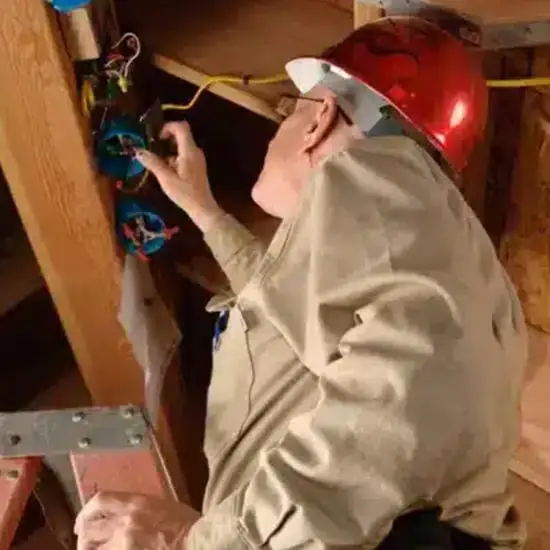

Investing in property is a major financial commitment—a Pre Purchase Building Inspection protects that investment. Our comprehensive reports are prepared by inspectors with extensive knowledge and experience of the local market.
Pre Purchase Building Inspections go beyond basic assessments. Each property receives a thorough evaluation from the foundation through the roof structure. Our trade-qualified inspectors assess structural components, weathertightness systems, electrical installations, and plumbing infrastructure in accordance with AS 4349.1-2007.
Schedule your Pre-Purchase Building Inspection to receive your report within 24-48 hours. Every report includes moisture testing results, structural analysis, and detailed documentation to support confident property negotiations.
Professional and Reliable Inspection reports to AS4349.1 reporting Standards
Same-day onsite testing with your building inspection in all suburbs
On site or over the phone verbal overview for time critical decisions




Amaroo was one of Gungahlin's first suburbs, gazetted in 1991 and developed through the mid-to-late 1990s into the early 2000s. That timing matters because the building standards and development practices of that era have left specific legacies that buyers in this suburb should understand — legacies that go beyond ordinary wear and tear.
A well-documented issue in Amaroo concerns properties built in the late 1990s, where stormwater pipes were not always connected to the public network. This was not an oversight by individual owners — it reflected the prevailing standard at the time. The ACT Government has acknowledged that in original homes in suburbs developed during this period, connection to the main stormwater system was not always provided in accordance with the standards later expected.
In practice, this means a home inspection in Amaroo should always include careful tracing of downpipe discharge points. We routinely find properties where all roof water is shed onto the block surface — into garden beds, onto lawns, against retaining edges, or toward low corners of the yard. In some cases, a single downpipe may be connected, while in others it is not, creating a misleading impression that the system is complete.
The practical consequence is not usually dramatic flooding of living spaces. It is subtler: persistent dampness along one side of the building, elevated moisture readings at the slab edges, efflorescence on the brickwork near ground level, and a gradual worsening of movement-related cracks during wet cycles. Over the years, the moisture load can also contribute to subsoil conditions that favour termite activity — a relevant consideration given Amaroo's proximity to Ginninderra Creek corridors and reserve edges.
A licensed plumber can verify whether a property's stormwater is tied into the public network, and rectification — connecting via a tie to the street main, a sump, or the kerb — is usually straightforward. The key is knowing that the gap exists.
Amaroo sits on the Canberra Formation, where slaty shale and mudstone dominate the subsurface. A north-north-east oriented band of dacite and quartz andesite cuts through the centre of the suburb, and a long fault running parallel with Ginninderra Creek determines drainage orientation along the south-eastern boundary. Two shorter faults intersect the mid-south zone.
For a building inspector, this geological complexity translates into ground behaviour that can vary noticeably from one street to the next. The weathered shale produces reactive clays, but the depth of weathering, the orientation of bedrock folding, and the proximity to fault lines all influence how evenly a slab performs. Homes built near the central dacite band may experience different moisture movement patterns compared with those in the predominantly mudstone areas to the east and west.
We do not suggest that every home on Amaroo's fault lines will have structural issues. What we do observe is that understanding block-level drainage, slab-edge moisture, and crack patterns becomes more valuable in suburbs with this kind of geological variation. Two houses built by the same builder in the same year on the same street can exhibit different settlement signatures depending on whether they sit on deeper or shallower rock.
Amaroo's planning character includes generous reserve edges, green corridors, and proximity to Ginninderra Creek. These features add lifestyle value, but they also influence termite ecology. Mature eucalypts, undisturbed soil along creek lines, and moisture-retentive vegetation zones create conditions where subterranean termite colonies can establish and forage.
The homes in this suburb are now at an age where termite management systems — chemical barriers, physical mesh, or treated zones installed at construction — may be approaching or past their effective lifespan. Where a property has no current termite management in place, or where landscaping changes have bridged an original barrier (raised garden beds against slab edges, paving poured over treated zones, timber stored along fence lines), the risk of concealed activity increases.
We commonly find conditions conducive to termite entry: slab-edge weepholes at or below soil level, mulch mounded against brickwork, and subfloor areas where original ant caps show corrosion from sustained ground moisture. None of these guarantees against infestation, but they represent pathways that warrant regular professional inspection — particularly on blocks that back onto reserve land.
Many Amaroo homes have had at least one round of updates — kitchen and bathroom refreshes, new flooring, rear alfresco additions, or garage conversions. These upgrades can significantly improve the amenity, but the junction between the original and new work is where defects tend to concentrate. Roof tie-ins at extension junctions, altered floor levels that affect waterproofing continuity, and wet-area updates in which the visible finish was renewed without addressing the original substrate all warrant close attention during a building inspection.
Example: Late-1990s brick veneer on a gently sloping block near a reserve edge
We inspected a four-bedroom family home where marketing emphasised recent interior paint and new carpet. Externally, the property presented well, but the rear yard remained persistently soggy along the fence line after rain, and one section of the side paving had developed a noticeable tilt toward the slab. Roof space inspection showed no widespread leak staining.
What we found was that two of four downpipes were discharging directly onto garden beds beside the slab; the remaining two drained to the street but via a connection that, on closer review, appeared to be a surface channel rather than a direct pipe tie. Moisture readings at the slab edge on the affected elevation were elevated across multiple points, and the adjacent brickwork showed stepped cracking at one window return. A pest inspection revealed historical mud-tube activity on a rear fence post — not currently active, but indicating that termite foraging had reached the property boundary previously. The stormwater rectification was a straightforward plumbing job.
The buyer's key takeaway was that the cracking and dampness were not structural failures of the house itself but rather consequences of how the block had managed roof water for more than two decades.

Copyright © 2016- Alert Building Inspections