
Building Inspection Franklin
BUILDING REPORT FRANKLIN
Residential & Commercial Building Reports
Our Working Process
Book
Confirm
Inspect
Report
An on-site or over-the-phone verbal overview for time-critical decisions. Useful when you need an answer before an auction, a deadline, or a multi-offer situation.
Pre-purchase inspections occur before you make an offer or after acceptance, giving you crucial information about the property’s condition before you finalise your investment.
TESTING
Same-day on-site meth screening at your property. You'll know whether contamination is present before you commit to the purchase.
A pest inspection checks accessible areas of an Australian property for termites, borers, fungal decay and conditions that attract timber pests.
Builders Report Franklin
What Our Inspectors Typically Find
Franklin is one of Canberra's newest suburbs — established in 2007 and largely built out over the following decade. Its streets carry the names of female Australian writers, its layout follows a master-planned design with integrated wetlands and parkland corridors, and its housing stock is almost entirely post-2000 construction.
On inspection day, the questions are different from those we ask in older Canberra suburbs. The defects are not about fifty-year-old membranes or narrow strip footings designed before reactive clay was well understood. They are about how modern volume-built homes and apartments perform on Canberra Formation mudstone and clay during the first decade and a half of their lives.
The housing in Franklin is a deliberate mix. Detached brick veneer homes on slab-on-ground foundations sit alongside townhouses and medium-density apartment blocks, with higher-density mixed-use development concentrated along Flemington Road.
Roofs on the detached and townhouse stock are predominantly Colorbond steel or concrete tiles, depending on the builder and era of construction. Blocks vary from level to gently sloping, and the estate design incorporates shared drainage swales, wetland basins, and pedestrian corridors that manage stormwater across the suburb as an integrated system.
Foundation performance in Franklin is driven by the same reactive clay soils that characterise much of the ACT — weathered mudstone and volcanic rock from the Canberra Formation, producing moderately reactive profiles. The difference is that Franklin's homes were designed and built under modern site classification requirements and engineered slab designs intended to manage shrink-swell behaviour.
On paper, that should mean fewer movement issues. In practice, we still document differential movement in some properties, particularly where site drainage has been altered by landscaping after construction, where garden beds hold moisture against the slab edge, or where downpipes discharge too close to the footing.
Roof and gutter performance in homes of this age is less about material fatigue and more about installation quality and maintenance consistency. We regularly find gutters that have pulled away from fascia where brackets were underspecified, valley junctions where the seam detailing is marginal, and downpipe connections that were never fully sealed at the junction with the stormwater system. On Colorbond roofs, we look for damage from tradie access during construction — scratches through the Colourbond layers that have begun to rust, dented pans, and flashings that were walked on and never restored.
Internally, wet-area defects in modern homes follow a different pattern from older stock. The risk in Franklin's newer homes is not aged membrane failure but installation defects in waterproofing that were present from day one. We document tiled showers where the membrane termination was not properly finished at flange height, waterproofing that stops short of the door threshold, and screeds laid without adequate fall to the waste.
In apartment and townhouse developments, the inspection focus expands to include common-property elements: shared stormwater infrastructure, balcony waterproofing on upper levels, and the interface between individual units and common-property drainage.
The standout local risk we flag for Franklin buyers is the gap between a modern build date and defect-free construction — where a ten-to-fifteen-year-old home can appear contemporary and well-presented but carry installation-quality defects in waterproofing, drainage integration, and slab-edge moisture management that are only visible to a trained inspector.
+
+
BUILDING INSPECTOR FRANKLIN
24-48 Hour Report Delivery Guaranteed
Looking for a Building Inspector in Franklin? Our trade-qualified inspectors provide thorough building reports within 24-48 hours, combining speed with meticulous attention to detail.
Our building inspection service is perfect for time-sensitive property purchases. Each inspector carries professional indemnity insurance and brings deep knowledge of your local market and common building challenges. All inspections comply with AS 4349.1-2007 standards for comprehensive, reliable assessments.
Property buyers rely on our inspection expertise for accurate, actionable assessments. Every report delivers a complete structural evaluation, weather-tightness analysis, and maintenance requirements—giving you the information you need to make confident purchasing decisions on schedule.
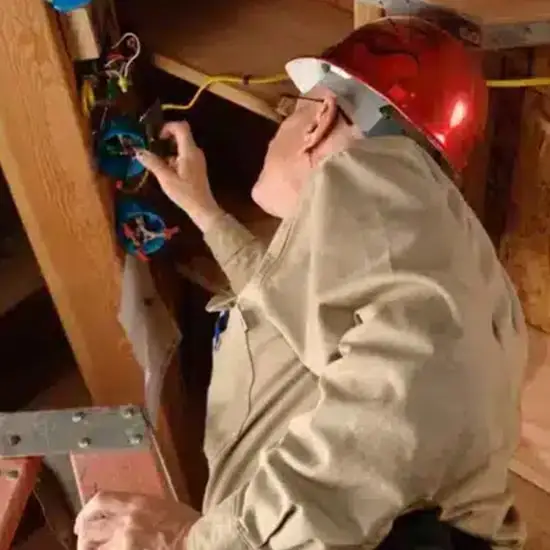

PRE PURCHASE BUILDING INSPECTION FRANKLIN
Investing in property is a major financial commitment—a Pre Purchase Building Inspection protects that investment. Our comprehensive reports are prepared by inspectors with extensive knowledge and experience of the local market.
Pre Purchase Building Inspections go beyond basic assessments. Each property receives a thorough evaluation from the foundation through the roof structure. Our trade-qualified inspectors assess structural components, weathertightness systems, electrical installations, and plumbing infrastructure in accordance with AS 4349.1-2007.
Schedule your Pre-Purchase Building Inspection to receive your report within 24-48 hours. Every report includes moisture testing results, structural analysis, and detailed documentation to support confident property negotiations.
WRITTEN BUILDING INSPECTION
Professional and Reliable Inspection reports to AS4349.1 reporting Standards
METH TESTING
Same-day onsite testing with your building inspection in all suburbs
VERBAL BUILDING INSPECTION
On site or over the phone verbal overview for time critical decisions




Franklin's Unique Building Challenges
Franklin was developed as a master-planned community from the outset, earning the UrbanGrowth NSW Award for Best Master Planned Community in 2016. That planning philosophy created a suburb that works differently from Canberra's older incremental-growth areas, and the differences matter for building inspections.
Designed drainage: wetlands, swales, and shared stormwater
Franklin's stormwater management is built around an integrated network of wetlands, vegetated swales, and basin reserves that handle runoff across the entire suburb rather than on a lot-by-lot basis. This approach is environmentally sound and contributes to Franklin's open-space character, but it creates specific considerations for property inspections.
The designed drainage system depends on swales and overland flow paths remaining unobstructed. We regularly inspect properties where landscaping — raised garden beds, new fences, paving extensions, retaining walls — has altered the intended flow path, directing more water toward a neighbour's boundary or concentrating runoff at a slab edge that was not designed for it. The wetland basins themselves can create localised moisture zones that keep perimeter soils damp for longer than they would be in a conventionally drained suburb.
For buyers, the practical point is that drainage in Franklin is a shared system rather than a series of independent lot connections. Understanding how a property sits within the broader estate drainage plan — where its stormwater flows, whether the designed swale is functioning, and whether subsequent landscaping has altered the intended falls — is an important part of the inspection scope.
The greenfield construction quality pattern
Franklin was built during a period of high demand in Canberra's housing market, and the pace of construction varied between developers and builders. While many homes in Franklin were built to a good standard, we encountered a recurring pattern of defects that reflect the pressures of volume building in a growth corridor.
Common findings include waffle pod slabs where the edge detailing was not fully finished, leaving EPS exposed at ground level — a pathway for termite entry and a potential moisture wicking point. We also see brick veneer walls where the cavity was not kept clean during construction, creating mortar bridge points that can transfer moisture across the cavity.
On roofs, the most frequent issues are Penetration flashings — around flues, exhaust fans, and plumbing vents — where the sealant was applied sparingly, or the flashing was not properly integrated with the roof sheet.
These are not catastrophic defects, and many are not visible to an untrained eye. They are the kind of installation-quality issues that a thorough building inspection is designed to catch before they become the buyer's problem.
The apartment story: Esque and the strata lesson
Franklin's higher-density precinct along Flemington Road has produced some of the suburb's most prominent cases of building defects. The Esque development became a well-publicised example of what can go wrong in modern apartment construction: a defects report identified 29 separate issues, including leaking toilets, faulty air conditioning, and cracks in walls and ceilings, while the developer entered administration with approximately $2 million owed to unpaid subcontractors.
For buyers considering an apartment in Franklin, the lesson is not that every building has problems — it is that the owners' corporation records, engineering reports, and defect histories matter just as much as the interior presentation. Buildings constructed during the 2000s boom, particularly those where the developer was under financial pressure, warrant careful review of the common property condition, waterproofing certification, and any past or pending defect claims.
Ecological corridors and termite ecology
Franklin was designed with ecological corridors linking the Gubur Dhaura Heritage Park, Gungaderra Creek, and the Mulangarri and North Mitchell Grasslands. These corridors preserve native vegetation and provide movement corridors for wildlife, but they also create conditions favourable to subterranean termite activity. Mature eucalypts, undisturbed soil along the creek line, and moisture-retentive grassland margins are all environments where termite colonies can establish and forage.
The edge of Franklin, where properties back onto these corridors — particularly along the Gungaderra Creek reserve and the Gubur Dhaura precinct — carries a higher termite risk than properties in the middle of the estate. We recommend that owners of these blocks confirm whether the original termite management system (chemical barrier, physical mesh, or treated zone) is still active and has not been bridged by landscaping changes. Most Franklin homes had a termite management system installed during construction; the question is whether it remains effective at the 10-15-year mark.
The heritage overlay at Gubur Dhaura
The Gubur Dhaura Heritage Park occupies part of Franklin's eastern edge, preserving an ochre quarry site of cultural significance to the Ngunnawal people, as well as remnants of the Red Hill pipeclay mine and the Old Well Station Track. Properties adjacent to this park sit at the interface between suburban development and a heritage landscape. The management of stormwater runoff, the retention of mature vegetation, and the controls on excavation and ground disturbance are all considerations that can affect building condition and renovation planning in this precinct.
Recent Inspection Examples
Example: Volume-built detached home with a 12-year-old Colorbond roof and unresolved slab-edge dampness
We inspected a four-bedroom Franklin home where the presentation was clean throughout — modern finishes, landscaped gardens, and a rear yard that opened onto a shared wetland corridor. The buyer had noted no obvious issues. Our inspection found that the Colorbond roof, while structurally sound, showed early corrosion at several fastener points where the Colourbond had been scratched during installation.
Two valley junctions had sealant that had shrunk away from the metal, and one downpipe connection to the below-ground stormwater was incomplete — the pipe discharged into the surrounding soil rather than being tied into the pit. Externally, the slab edge on the side elevation was partially concealed by a garden bed that held damp mulch above the weep-hole line, and a retaining edge from a neighbouring block directed surface water across the rear corner of the site.
Internally, the main bathroom shower had a floor waste that sat slightly proud of the tiles, indicating a marginal fall. None of these defects was an emergency item. Still, together they represented a pattern of installation-quality issues that would become progressively more expensive over the next five to ten years.
