Building Inspection Kambah
BUILDING REPORT KAMBAH
Residential & Commercial Building Reports
Our Working Process
Book
Confirm
Inspect
Report
An on-site or over-the-phone verbal overview for time-critical decisions. Useful when you need an answer before an auction, a deadline, or a multi-offer situation.
Pre-purchase inspections occur before you make an offer or after acceptance, giving you crucial information about the property’s condition before you finalise your investment.
TESTING
Same-day on-site meth screening at your property. You'll know whether contamination is present before you commit to the purchase.
A pest inspection checks accessible areas of an Australian property for termites, borers, fungal decay and conditions that attract timber pests.
Builders Report Kambah
What Our Inspectors Typically Find
Kambah is Canberra's largest suburb by a wide margin, and it was the first in the Tuggeranong district, established in 1974 when the National Capital Development Commission needed to house a rapidly growing public service. The housing stock is overwhelmingly 1970s brick-veneer on slab-on-ground foundations, with concrete, terracotta-tile roofs, timber-framed windows, and the straightforward rectangular layouts that defined the era.
On inspection day, the dominant story is age: these homes are now 50 years old or more, and the defects we find reflect five decades of Canberra's climate, soil movement, and maintenance history.
The roofs on Kambah's original homes are nearly all made of concrete terracotta tiles, and at half a century old, they show consistent signs of fatigue. Ridge bedding and pointing have hardened, cracked, and in many areas lifted away from the tile profile. Valley trays at roof intersections — typically galvanised steel — show corrosion at overlaps and seams. Penetration flashings around flues, exhaust vents, and plumbing stacks have pulled away or been patched with silicone that has itself deteriorated.
Tile fractures from foot traffic, hail impacts, or thermal cycling are common, and we regularly find replacement tiles that do not match the original profile, creating gaps at the interlock. Gutters on these homes are typically up to date in part — a front section replaced while rear runs remain original — and the original runs are often at the end of their serviceable life.
Foundation performance on Kambah's slab-on-ground homes is driven by reactive clay soils weathered from the Laidlaw Volcanics. The clay profiles here are moderately reactive, and the original slab designs from the 1970s were built to the standards of their time — narrower edge beams and less reinforcement than modern AS2870 requirements.
The result is a predictable pattern of differential movement: stepped cracking in brickwork at window and door openings, doors and windows that bind during wet winters and loosen in dry summer conditions, and cornice separation at wall-to-ceiling junctions. In most cases, these are within the normal range for a 50-year-old home on this soil type.
Still, the severity depends heavily on site drainage — homes where downpipes discharge onto the ground beside the slab consistently show more pronounced movement than those with fully connected stormwater.
Internally, wet areas are the most common cost risk by a wide margin. Original bathroom waterproofing from the 1970s is now well past its effective life, and we regularly document tiled shower hob failures where the membrane seal has failed, flexi-hose connections under vanities that have begun to weep, and WC pan outlets where the seal has deteriorated, tracking moisture into adjacent flooring and cabinetry. Kitchens show similar patterns of aged waste connections and tapware seepage, which have maintained low-level dampness in the cabinetry for years.
A specific awareness point for any Kambah inspection is the presence of bonded asbestos in homes of this era. Fibro cement sheeting in eaves, linings, and some internal wet-area walls is common in 1970s Canberra construction, and the original ridge capping was often bedded on asbestos-containing compound. We do not test for asbestos as part of a standard building inspection. Still, we flag it as a due diligence item for any pre-purchase decision on a home of this vintage — particularly if renovations are planned.
The standout local risk we flag for Kambah buyers is the combination of 50-year-old building fabric, reactive clay on volcanic-derived soils, and a construction era that predates modern footing standards and waterproofing materials — where a well-presented interior can easily disguise ageing roof elements, concealed moisture damage, and movement-related defects that only become apparent after settlement.
+
+
BUILDING INSPECTOR KAMBAH
24-48 Hour Report Delivery Guaranteed
Looking for a Building Inspector in Kambah? Our trade-qualified inspectors provide thorough building reports within 24-48 hours, combining speed with meticulous attention to detail.
Our building inspection service is perfect for time-sensitive property purchases. Each inspector carries professional indemnity insurance and brings deep knowledge of your local market and common building challenges. All inspections comply with AS 4349.1-2007 standards for comprehensive, reliable assessments.
Property buyers rely on our inspection expertise for accurate, actionable assessments. Every report delivers a complete structural evaluation, weather-tightness analysis, and maintenance requirements—giving you the information you need to make confident purchasing decisions on schedule.

PRE PURCHASE BUILDING INSPECTION KAMBAH
Investing in property is a major financial commitment—a Pre Purchase Building Inspection protects that investment. Our comprehensive reports are prepared by inspectors with extensive knowledge and experience of the local market.
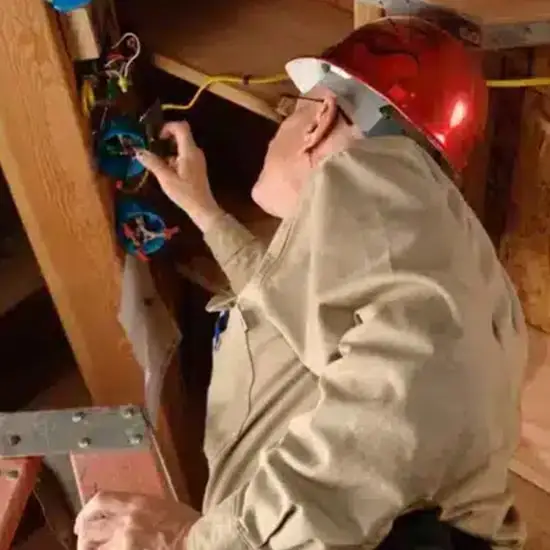
Pre Purchase Building Inspections go beyond basic assessments. Each property receives a thorough evaluation from the foundation through the roof structure. Our trade-qualified inspectors assess structural components, weathertightness systems, electrical installations, and plumbing infrastructure in accordance with AS 4349.1-2007.
Schedule your Pre-Purchase Building Inspection to receive your report within 24-48 hours. Every report includes moisture testing results, structural analysis, and detailed documentation to support confident property negotiations.
WRITTEN BUILDING INSPECTION
Professional and Reliable Inspection reports to AS4349.1 reporting Standards
METH TESTING
Same-day onsite testing with your building inspection in all suburbs
VERBAL BUILDING INSPECTION
On site or over the phone verbal overview for time critical decisions




Kambah's Unique Building Challenges
The territorial unit: why size matters for building condition
Kambah was not designed as a standard suburb. It was planned as a "territorial unit" — a concept abandoned after the 1970s — defined by its natural boundaries of hills and ridges rather than by a single neighbourhood centre. At 1,130 hectares, it is roughly four times the size of a typical Canberra suburb, and it was built across four stages over more than a decade.
For a building inspector, the practical implication is that housing quality across Kambah varies by stage and developer, even though the homes all look broadly similar. A home built in the first stage in 1974 may have different foundation detailing, roof construction details, and plumbing materials from one built in the final stage in the mid-1980s.
The suburb is large enough that soil conditions also vary across its expanse — properties on the eastern side near Athllon Drive sit on different volcanic material (Deakin Volcanics rhyolite and tuff) than those on the western side toward the Murrumbidgee corridor (Laidlaw Volcanics rhyodacite), and the bearing behaviour differs accordingly. Two homes of the same vintage on opposite sides of the suburb can present very different defect profiles.
The Richman Place asbestos legacy
Six homes on Richman Place in Kambah were built by the NCDC as experimental modular houses in the early 1970s, constructed almost entirely from bonded asbestos. The properties were initially used for public housing before being sold to private owners, who unknowingly carried out renovations — sanding, drilling, installing fittings — that released asbestos fibres into their living spaces. The story became public in 2016, and the ACT Government eventually bought back and demolished the six homes. The land was subsequently redeveloped for community housing.
For anyone buying or inspecting in Kambah today, the practical relevance is not about those specific properties — they no longer exist — but about the broader awareness it created. The Richman Place case was a blunt reminder that homes built in the 1970s were constructed with materials and standards we would not accept today.
While most Kambah homes contain bonded asbestos only in the usual locations (eaves, linings, ridge capping), the episode underscores why pre-purchase inspections for homes of this era should always include a recommendation to verify the asbestos status of any material that may be disturbed during future renovations.
Urambi Village: a different way of building
Tucked into the north-west of Kambah is Urambi Village, a 72-townhouse co-operative housing development designed by architect Michael Dysart in 1974 and completed in 1976. It is one of the best-preserved examples of the Sydney regional style in the ACT — split-level and courtyard homes arranged around shared bushland, with natural materials, stained timber, and tiled skillion roofs.
The development was conceived by a group of public servants in the Whitlam-era Department of Urban and Regional Development who wanted to demonstrate that medium-density co-housing could outperform the standard suburban block.
Urambi Village's architecture is distinctive, but its building condition issues are shaped by the same factors as the rest of Kambah — age, reactive clay, and 1970s construction methods — with some additional considerations. The skillion roofs with their low pitch are more prone to leaf litter accumulation and slower water shedding than the steeper-pitched roofs on conventional homes.
The split-level designs mean that slab-on-ground and suspended floor sections meet at junctions where movement can differ. And the shared accessways and common landscaping mean that site drainage is a collective responsibility, not something an individual owner can fully control.
For buyers considering a Urambi Village townhouse, the owners' corporation records — particularly around roof maintenance history, common drainage infrastructure, and any special levies — are essential reading.
The 2003 bushfire: a scar that still matters
On 18 January 2003, a firestorm driven by extreme winds and a documented fire tornado swept through the western edge of Kambah, destroying homes and damaging many more. The fire was part of the broader Canberra bushfire disaster that destroyed nearly 500 homes across the territory, and Kambah was one of the hardest-hit suburbs.
For today's building inspections, the legacy of the 2003 fires appears in properties that were rebuilt or significantly repaired in the years that followed. Rebuilt homes in the affected areas were constructed under updated bushfire standards that require ember-resistant materials, sealed roof junctions, and specific glazing and venting requirements. For original homes that survived the fire but sustained damage, the quality of post-fire repairs varies.
We occasionally inspect properties where windows, roofing, or cladding were replaced piecemeal after the fire, and where the integration between original and replaced elements — flashing details at junctions, weather sealing around replacement windows, roof sheet tie-ins — is not to the same standard as the original work.
For buyers looking at properties on Kambah's western edge, particularly near the Bullen Range and Murrumbidgee corridor, a question worth asking is whether the property was affected by the 2003 fires and, if so, what repairs or rebuilding took place and whether those works were certified.
The Murrumbidgee corridor: termite ecology and bushland interface
Kambah's western boundary runs alongside the Murrumbidgee River corridor, including the Kambah Pool recreation area and the Bullen Range Nature Reserve. This interface between suburban development and bushland creates conditions that are genuinely different from standard Canberra suburbs. The termite risk mapping for the ACT rates Kambah at 8.8 out of 10, among the highest in Canberra, reflecting the combination of large blocks, proximity to river corridors and reserves, and mature eucalypts that provide foraging habitat for subterranean termites.
For homes on the western side of Kambah — particularly those backing onto the reserve or within a few streets of the river corridor — the termite management system should be a primary inspection item. Many 50-year-old homes in this suburb have never had a termite barrier installed, or if they did, the chemical treatment has long since degraded.
We recommend that buyers on this side of the suburb arrange a separate timber pest inspection by a licensed pest inspector, in addition to the standard building inspection, and confirm whether any termite management is in place and up to date.
Recent Inspection Examples
Example: 1970s brick veneer in the western part of Kambah near the Murrumbidgee corridor
We inspected a three-bedroom home built in 1976 on a large block within walking distance of the Kambah Pool reserve. The home had been updated with modern kitchen and bathroom fit-outs, fresh interior paint, and new floor coverings — the kind of presentation that makes a 50-year-old home feel contemporary.
Our inspection found that the concrete tile roof had extensive cracking on the western elevation tiles, consistent with thermal cycling and UV exposure, and the ridge bedding was loose and powdery across multiple sections. The gutters were original on the rear of the home and showed advanced corrosion at the joints. The slab had stepped cracking at two window openings on the southern elevation, and the doors to the rear patio showed evidence of having been planed to fit — a reliable sign that the slab has moved since the home was built.
The termite management system sticker in the meter box was dated 1976, with no evidence of any reapplication or inspection since then. An external inspection of the subfloor area via the accessible vents revealed bare earth, no visible termite barrier, and several timber stumps showing minor dampness at ground level. The renovated bathroom had new tiles and fittings, but the waterproofing termination at the shower hob was concealed behind the tile.
It could not be verified without invasive inspection — a standard limitation, but worth noting given the age of the substrate beneath the new finish. The key message for the buyer was that the cosmetic updates were well executed. Still, the essential building elements — roof, drainage, slab management, and termite protection — needed attention that the interior presentation alone would not suggest.
