Building Inspection Narrabundah
BUILDING REPORT NARRABUNDAH
Residential & Commercial Building Reports
Our Working Process
Book
Confirm
Inspect
Report
An on-site or over-the-phone verbal overview for time-critical decisions. Useful when you need an answer before an auction, a deadline, or a multi-offer situation.
Pre-purchase inspections occur before you make an offer or after acceptance, giving you crucial information about the property’s condition before you finalise your investment.
TESTING
Same-day on-site meth screening at your property. You'll know whether contamination is present before you commit to the purchase.
A pest inspection checks accessible areas of an Australian property for termites, borers, fungal decay and conditions that attract timber pests.
Builders Report Narrabundah
What Our Inspectors Typically Find
Narrabundah is Canberra's first blue-collar suburb, established in 1947 to house the workers who built the city — construction labourers, government printing staff, and migrants from the British Isles. It was deliberately screened from view by a dense tree planting along Canberra Avenue, so that visitors approaching the capital would not see the workers' homes. Today, that workers' suburb is one of the inner south's most diverse building stock, spanning three distinct eras within a few streets.
The oldest housing sits in the area near the Narrabundah shops, where prefabricated cottages were erected from 1947 onward. These homes are unlike anything else in Canberra: steel-framed with fibro-cement cladding, originally intended as temporary housing during the post-war construction boom. The steel frames are generally sound — the structural design is robust — but the cladding and fittings are the challenge.
Fibro cement sheets of this era almost invariably contain bonded asbestos, and the original plywood elements in the earliest prefabs have often deteriorated. The roofs are corrugated asbestos cement or later replacements in Colorbond steel. Gutters and downpipes on these homes are typically in poor condition due to age and the original lightweight construction. The shallow concrete strip footings were considered adequate for a "temporary" dwelling, but are marginal for a home now approaching 80 years old.
The second era is the Narrabundah Duplexes, built from 1953 along Sturt Avenue and Boolimba Crescent. These are double-brick, two-storey homes built from Canberra Brickworks red brick — solid, well-constructed, and completely different in character from the prefabs. At over 70 years old, the defects follow a pattern: concrete terracotta tile roofs with failing ridge bedding and valley tray corrosion, original timber windows where paint systems have broken down.
The timber has begun to rot at the sills and meeting rails, and rising damp in the brick cavity where the original damp-proof course has been bridged by decades of garden build-up. The duplex configuration means shared wall and shared drainage considerations apply — how the stormwater from both units is managed, whether the roof tie-in between the two halves remains weathertight, and whether one owner's renovations have affected the other unit's building fabric.
The third area — Upper Narrabundah or Narrabundah Heights, west of Captain Cook Crescent — was developed in the 1960s on land that rises steeply toward Red Hill. Here, the housing is predominantly detached brick veneer on slab-on-ground, built on sloping blocks that required significant cut-and-fill earthworks. The slabs on these homes show variable movement patterns — some have performed well, others have developed stepped cracking at window openings and doorways where the fill beneath one corner has consolidated differently from the cut section.
Retaining walls along property boundaries, supporting the cut on the uphill side of the block, are a recurring finding; where drainage behind the wall was inadequate from installation, we find bulging, leaning, or water staining on the wall face.
Internally, wet-area defects span all eras. The prefab cottages typically had minimal original bathroom and laundry facilities that had been renovated multiple times, with varying quality. The duplexes have original bathroom layouts in which the waterproofing is long past its effective life. The Upper Narrabundah homes have 1960s-era bathroom and kitchen fittings, with flexi-hose connections, WC seals, and waste pipes showing age-related deterioration.
Narrabundah is also undergoing rapid change. Knocked-down prefabs and original cottages are increasingly replaced with new townhouse developments and larger homes, creating a streetscape where a 1947 steel-framed fibro cottage sits next to a 2024 architect-designed residence. For buyers, the inspection scope must account for which era they are in — the defects of a steel-framed prefab, a double-brick duplex, and a 1960s slab-on-ground home are completely different, and the right questions change accordingly.
+
+
BUILDING INSPECTOR NARRABUNDAH
24-48 Hour Report Delivery Guaranteed
Looking for a Building Inspector in Narrabundah? Our trade-qualified inspectors provide thorough building reports within 24-48 hours, combining speed with meticulous attention to detail.
Our building inspection service is perfect for time-sensitive property purchases. Each inspector carries professional indemnity insurance and brings deep knowledge of your local market and common building challenges. All inspections comply with AS 4349.1-2007 standards for comprehensive, reliable assessments.
Property buyers rely on our inspection expertise for accurate, actionable assessments. Every report delivers a complete structural evaluation, weather-tightness analysis, and maintenance requirements—giving you the information you need to make confident purchasing decisions on schedule.

PRE PURCHASE BUILDING INSPECTION NARRABUNDAH
Investing in property is a major financial commitment—a Pre Purchase Building Inspection protects that investment. Our comprehensive reports are prepared by inspectors with extensive knowledge and experience of the local market.
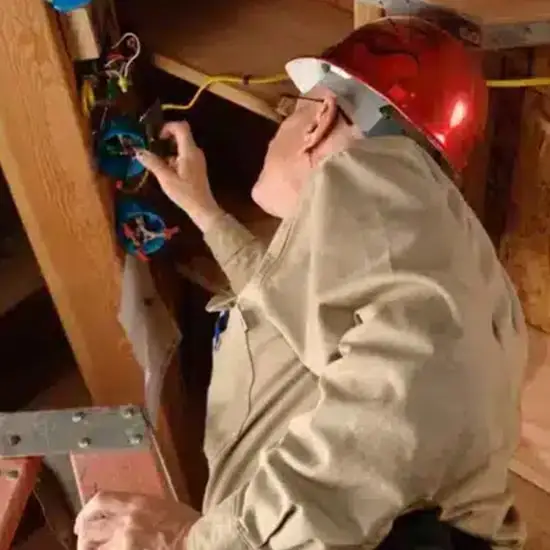
Pre Purchase Building Inspections go beyond basic assessments. Each property receives a thorough evaluation from the foundation through the roof structure. Our trade-qualified inspectors assess structural components, weathertightness systems, electrical installations, and plumbing infrastructure in accordance with AS 4349.1-2007.
Schedule your Pre-Purchase Building Inspection to receive your report within 24-48 hours. Every report includes moisture testing results, structural analysis, and detailed documentation to support confident property negotiations.
WRITTEN BUILDING INSPECTION
Professional and Reliable Inspection reports to AS4349.1 reporting Standards
METH TESTING
Same-day onsite testing with your building inspection in all suburbs
VERBAL BUILDING INSPECTION
On site or over the phone verbal overview for time critical decisions




Narrabundah's Unique Building Challenges
The workers' suburb: how a hidden history shapes today's housing
Narrabundah was never meant to be seen. The tree screen along Canberra Avenue was planted deliberately by the National Capital Development Commission to hide the workers' housing from visitors arriving at the capital. The suburb was built quickly and cheaply — "75 cheap temporary housing with steel frames and plywood" in the first phase, then larger fibro cottages — because the priority was speed, not permanence.
That origin story has direct consequences for building conditions today. The prefab cottages were designed as temporary dwellings with a short intended lifespan. They were never meant to last 80 years. The steel frames have held up better than expected, but the original footings, cladding, roofing, and site drainage were designed to a standard that does not match modern expectations.
Buyers considering a prefab cottage should understand that they are buying a home that was never designed to be permanent — and that the renovation costs to bring it to modern standards can be significantly higher than for a conventionally built home of the same era.
The suburb's social history also affects its development trajectory. Narrabundah historically had a higher proportion of public housing than neighbouring inner south suburbs, and that legacy persists in pockets. Public housing properties may have different maintenance histories from privately owned homes, and the quality of past repairs and upgrades can vary accordingly.
Geology named after the suburb: the Narrabundah Ashstone
Narrabundah is one of the few Canberra suburbs with a rock formation named after it. The Narrabundah Ashstone Member — a fine-grained tuff — is found in the eastern part of the suburb and in a geological monument along Fairbairn Avenue. The suburb's geology also includes two significant fault lines: the Deakin Fault, which runs through Frome Street, and the South Fyshwick Fault, which separates ashstone in the south from the Canberra Formation calcareous shale in the north.
For a building inspector, this geological complexity translates into ground conditions that vary noticeably within short distances. The ashstone weathers differently from the shale; the fault zones create fractured, more deeply weathered rock, and the ground's bearing capacity can vary significantly from one street to the next. Homes built on the ashstone areas tend to have more stable foundation conditions than those on the deeply weathered Canberra Formation shale. Still, the fault zones introduce variability that makes block-specific geotechnical assessment more valuable than suburb-wide assumptions.
Upper Narrabundah: living on a slope
The homes in Narrabundah Heights, rising from Captain Cook Crescent up toward Red Hill, sit on some of the steepest residential blocks in Canberra's inner south. The combination of reactive clay soils, significant slope, and cut-and-fill earthworks creates a distinct set of inspection priorities.
Retaining walls on these properties are structural elements, not landscaping features. Where drainage behind a retaining wall has failed — blocked ag pipe, no gravel backfill, or no provision for drainage at all — the wall can lean, bulge, or collapse under the pressure of waterlogged soil behind it. We regularly inspect Upper Narrabundah properties where a retaining wall on the uphill boundary is showing early signs of movement, and where the homeowner was unaware that drainage was required because a previous owner installed the wall as part of landscaping works.
Overland flow across these steep blocks is another focus. During heavy rain, water moves quickly downhill. Where the original site grading or subsequent landscaping has altered the natural flow path, concentrated runoff can erode soil, undermine paths, and direct water against the slab edge on the downhill side of the house.
We recommend that buyers on these sloping blocks trace the overland flow path during an inspection and check whether any downstream properties are affected.
The Boolimba Crescent duplexes: a streetscape worth understanding
The Narrabundah Duplexes on Sturt Avenue and Boolimba Crescent were part of a post-war response to Canberra's housing crisis, designed by the NCDC to provide higher-density accommodation as an alternative to single-house sprawl. Built from Canberra Brickworks red double-brick in 1953, they have survived largely intact and are listed on the ACT Register of Significant Streetscapes.
For buyers considering a duplex in this precinct, the heritage listing on the streetscape means that external alterations — roof replacement, window changes, facade modifications — are subject to additional scrutiny. The double-brick construction is generally robust and well-built.
Still, the shared-wall configuration means that sound transmission between units, shared roof drainage, and the condition of the common boundary are all relevant inspection items. The orientation of the duplexes on their blocks also means that some units have better solar access and natural ventilation than others, which affects moisture management and internal comfort over time.
Peacocks: a uniquely Narrabundah consideration
Upper Narrabundah is known for its population of feral peafowl, which have been part of the suburb's character for decades. The peacocks roost in mature trees, roam across properties, and are fed by some residents while others consider them a nuisance. The ACT Government has undertaken trapping and relocation programs, but the birds remain a feature of the suburb.
For building inspections, the practical relevance is not about the birds themselves but about their impact on property condition. Peafowl droppings on roofs can accelerate corrosion of metal roofing and gutters, and their scratching and dust-bathing in garden beds can alter drainage patterns around slab edges. The birds roost on roofs and in trees, and their weight can contribute to fatigue in gutter brackets on older homes. These are minor considerations in the broader inspection scope, but they are specific to Narrabundah and worth noting for buyers in the affected pocket.
Recent Inspection Examples
Example: 1950s prefab cottage in Old Narrabundah nearing the end of its original life
We inspected a steel-framed fibro cottage built in 1949, one of the original prefabs in the streets near the Narrabundah shops. The home had been updated over the years — a modern kitchen and bathroom, new floor coverings, fresh paint — but the underlying structure told an older story. The steel frame was in good condition with no evidence of corrosion. Still, the fibro cladding showed cracking at several sheet joints and around window openings, and the original corrugated asbestos-cement roof had been overlaid with Colorbond sheeting at some point in the past.
This common approach conceals the substrate but does not address the condition of the underlying roof structure. The footings showed no visible distress, but the original concrete strip was exposed in one corner where the soil had eroded, revealing a footing depth that appeared shallow by modern standards. The rear garden had been built up over time, and the soil level on the southern elevation was above the level of the original damp-proof course.
Internally, the renovated bathroom was well finished, but the original laundry at the rear retained its concrete floor and wall linings, which tested positive for bonded asbestos. This finding did not pose an immediate risk, but it meant that any future renovation of that area would require licensed asbestos removal.
The standout message for the buyer was that the cosmetic updates made the home livable. Still, the original fabric — shallow footings, aged cladding, concealed asbestos in the original build — meant the property carried inherent limitations that no amount of renovation could fully resolve.
