Building Inspection Gungahlin
BUILDING REPORT GUNGAGHLIN
Residential & Commercial Building Reports
Our Working Process
Book
Confirm
Inspect
Report
An on-site or over-the-phone verbal overview for time-critical decisions. Useful when you need an answer before an auction, a deadline, or a multi-offer situation.
Pre-purchase inspections occur before you make an offer or after acceptance, giving you crucial information about the property’s condition before you finalise your investment.
TESTING
Same-day on-site meth screening at your property. You'll know whether contamination is present before you commit to the purchase.
A pest inspection checks accessible areas of an Australian property for termites, borers, fungal decay and conditions that attract timber pests.
Builders Report Gungahlin
What Our Inspectors Typically Find
Gungahlin is not a suburb in the traditional Canberra sense — it is the town centre itself, the commercial and civic heart of the district that shares its name, and its built form reflects that role. High-density apartment towers, mixed-use buildings with ground-floor retail, and rows of townhouses dominate the streetscape around the light rail terminus and the shopping precinct. Detached houses account for only about a third of dwellings.
On inspection day, the scope is shaped by strata plans, common property, and the specific defect patterns that emerge when private developers rapidly build a town centre on land originally planned for government offices.
The housing stock in Gungahlin spans roughly three decades, from the first residential developments of the mid-1990s through to buildings still under completion today. The earlier phases near the edges of the town centre include some detached homes and townhouses from the 1990s and early 2000s, but the dominant story is the apartment boom of the 2010s and beyond.
Roofs vary markedly by building type: high-density blocks have flat or low-pitch membrane roofs, while townhouses and detached homes typically have concrete tiles or Colorbond steel roofs. Blocks in the town centre are generally level, shaped by the engineered pads and basements of multi-storey construction.
For apartment inspections, the priorities differ fundamentally from detached house inspections. The condition of the common-property roof membrane, the waterproofing on balcony and podium slabs, the integrity of basement car park drainage, and the fire compartmentation between units and common areas are all elements that affect the individual unit but sit outside the apartment's interior finishes.
We regularly document balcony slabs where the waterproofing membrane has failed at the junction with the building facade, producing staining on the balcony below or tracking moisture into the interior wall cavity. In basements, we find failed drainage channels, sump pumps that are no longer operational, and dampness at the junction between the basement slab and the retaining wall.
In townhouses, the inspection focus shifts to shared-wall detailing, roof tie-ins between adjoining units, and the drainage infrastructure that manages runoff across multiple lots. We commonly inspect townhouses where the stormwater connection is shared between two or three units, and where one owner's modification — new paving, a garden bed, a retaining wall — has altered the flow path in a way that affects the neighbouring property.
Internally, wet-area defects in Gungahlin apartments and townhouses follow the installation-quality pattern common to modern volume-built multi-unit developments. We document tiled showers where the waterproofing was not correctly terminated at the hob or threshold, floor wastes that sit too high relative to the tile finish, and shower screens where the seal at the door jamb was poorly detailed from the start.
In apartments, the interface between the unit's wet areas and the common-property structure is a particular focus — where a bathroom leak in one unit tracks along the slab to affect the ceiling of the unit below, the defect is only partly about the visible finishes.
The standout local risk we flag for Gungahlin buyers is the concentration of risk in common-property elements of multi-unit buildings constructed during a period of rapid private-sector development, where the visible presentation of an apartment or townhouse can be excellent while the shared infrastructure — roof, balcony waterproofing, basement drainage, fire compartmentation — carries defects that will eventually surface as special levies or rising strata fees.
+
+
BUILDING INSPECTOR GUNGAGHLIN
24-48 Hour Report Delivery Guaranteed
Looking for a Building Inspector in Gungahlin? Our trade-qualified inspectors provide thorough building reports within 24-48 hours, combining speed with meticulous attention to detail.
Our building inspection service is perfect for time-sensitive property purchases. Each inspector carries professional indemnity insurance and brings deep knowledge of your local market and common building challenges. All inspections comply with AS 4349.1-2007 standards for comprehensive, reliable assessments.
Property buyers rely on our inspection expertise for accurate, actionable assessments. Every report delivers a complete structural evaluation, weather-tightness analysis, and maintenance requirements—giving you the information you need to make confident purchasing decisions on schedule.

PRE PURCHASE BUILDING INSPECTION GUNGAGHLIN
Investing in property is a major financial commitment—a Pre Purchase Building Inspection protects that investment. Our comprehensive reports are prepared by inspectors with extensive knowledge and experience of the local market.
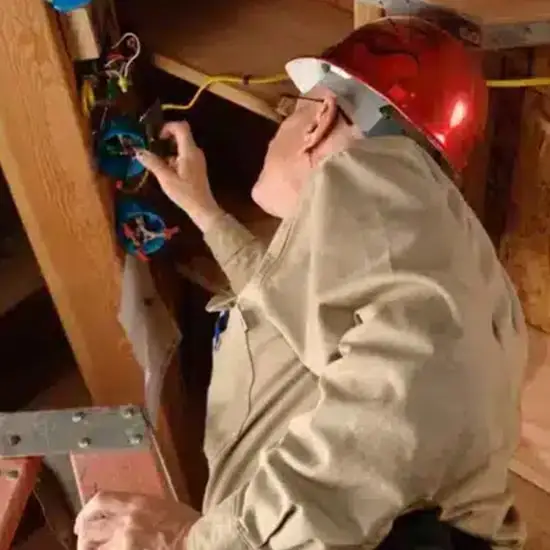
Pre Purchase Building Inspections go beyond basic assessments. Each property receives a thorough evaluation from the foundation through the roof structure. Our trade-qualified inspectors assess structural components, weathertightness systems, electrical installations, and plumbing infrastructure in accordance with AS 4349.1-2007.
Schedule your Pre-Purchase Building Inspection to receive your report within 24-48 hours. Every report includes moisture testing results, structural analysis, and detailed documentation to support confident property negotiations.
WRITTEN BUILDING INSPECTION
Professional and Reliable Inspection reports to AS4349.1 reporting Standards
METH TESTING
Same-day onsite testing with your building inspection in all suburbs
VERBAL BUILDING INSPECTION
On site or over the phone verbal overview for time critical decisions




Gungahlin's Unique Building Challenges
Gungahlin's development story is different from every other Canberra town centre. It was the first to be built under ACT self-government, without the oversight of the National Capital Development Commission, and its evolution from a planned commercial hub to a predominantly residential centre has created a built environment with its own set of inspection considerations.
The self-government legacy: private development, public outcomes
When the NCDC was abolished in 1989 and self-government arrived, the mechanism that had guided the development of Belconnen, Woden, and Tuggeranong town centres was gone. Those earlier centres were built with a deliberate employment base — government office blocks that anchored the commercial core and brought workers into the area daily. Gungahlin's land was sold to private developers instead, and the anticipated government agency relocations never eventuated. Large blocks originally designated for commercial use were progressively rezoned for residential development.
For a building inspector, the practical legacy is a town centre built by multiple private developers across different stages, with varying approaches to construction quality, defect management, and long-term maintenance. The concentration of apartment buildings from this era — many constructed during the 2000s and 2010s boom — means that common-property defects are a recurring theme.
Buildings where the developer operated under financial pressure, or where a receiver or administrator completed the project, are particularly likely to carry latent defects in waterproofing, fire separation, and structural detailing that may not surface until well after the warranty period.
Buyers considering an apartment in Gungahlin should treat the owners' corporation records — including defect reports, engineering assessments, and special levy histories — as essential reading, not optional background.
The Gungahlin Fault: geology with a visible signature
A major geological feature runs through the eastern side of the Gungahlin town centre: the Gungahlin Fault, a significant north-east to south-west-aligned fracture zone in the Canberra Formation. The quartz ridge visible near Gundaroo Road is a surface expression of this fault, where quartz has been squeezed up along the fracture line over millions of years. The fault passes through the eastern part of the town centre and continues south through Crace, Kaleen, Bruce, and Aranda before meeting the Deakin Fault.
For buildings constructed on or near a fault line of this significance, the practical inspection consideration is not about seismic risk — Canberra is not a seismically active region in any meaningful sense — but about the variability of the underlying rock mass. Fault zones often produce more deeply weathered rock, more fractured ground, and more variable bearing conditions than the surrounding geology. In a town centre where buildings are taller and loads are higher than in standard residential suburbs, the consistency of foundation conditions matters more.
We do not suggest that buildings over the Gungahlin Fault are unsafe. What we observe is that the geological variability created by the fault zone — and the folding and fracturing that accompanies it — makes site-specific geotechnical assessment more important in this part of the town centre than in areas of uniform rock. Two buildings a few hundred metres apart can have very different foundation performance if one sits on sound mudstone and the other on weathered, fractured material within the fault influence zone.
Light rail proximity and vibration considerations
The light rail line runs through Gungahlin town centre, terminating at the Gungahlin Place interchange before continuing south toward Civic. Properties immediately adjacent to the light rail corridor experience vibration and noise that are not factors in other parts of Canberra. While the light rail is designed to minimise these effects, we do inspect apartments and townhouses where ongoing low-level vibration has contributed to sealant fatigue at window and door junctions, and where the acoustic performance of the glazing and building fabric has affected occupant comfort.
The infrastructure timing gap
Gungahlin's rapid residential growth outpaced its supporting infrastructure through much of its development, and that timing gap has consequences for building conditions. Estate drainage systems designed for one phase of development sometimes had to accommodate additional loads from subsequent phases. Roads were duplicated after the fact. The light rail arrived years after the first residents.
In practical inspection terms, this means that stormwater infrastructure on some Gungahlin properties may have been designed for a different catchment configuration than the one that was eventually built. We occasionally find properties where a drainage easement that once served a single row of townhouses now handles runoff from a larger area, and where the original pipe capacity or pit configuration is marginal during peak events. These are not widespread problems, but they are worth investigating during a building inspection.
Ecological interfaces: Mulanggari Grasslands and Gungaderra Creek
Gungahlin town centre is bordered by significant ecological areas: the Mulanggari Grasslands to the north-west and the Gungaderra Creek corridor to the south-east. These areas were protected during the planning process (the Mulanggari Grasslands were declared prohibited for development under Territory Plan Variation No. 53), and they contribute to the district's character.
Properties on the edges of the town centre, facing these grassland and creek reserves, share the same termite-ecology considerations we see across Canberra's green-corridor interfaces. Mature eucalypts, undisturbed soil profiles, and moisture-retentive vegetation zones create environments where subterranean termites can establish. For apartment and townhouse developments on these edges, the termite management system — typically a chemical barrier or physical mesh installed during construction — should be verified to remain active and uncompromised by subsequent landscaping.
Recent Inspection Examples
Example: Top-floor apartment in a 2010s town centre building with common-property roof issues
We inspected a two-bedroom apartment on the top floor of a mid-rise building near the Gungahlin town centre. The interior was well-presented with modern finishes, and the agent highlighted the "as new" condition. Our inspection noted that the roof membrane above the common-property corridor serving this floor had visible ponding and a repair patch at one penetration that appeared to be a temporary seal rather than a permanent remedy.
The owners' corporation records, which we reviewed as part of the inspection process, showed that a special levy for roof membrane replacement had been discussed at the most recent annual general meeting but not yet voted on. Internally, the balcony waterproofing at the threshold junction showed evidence of historical staining that had been painted over.
None of these findings made the apartment unlivable. Still, they meant the buyer needed to factor potential common-property contributions into their budget — costs that were not reflected in the unit's presentation or the vendor's disclosure.
