Building Inspection Kingston
BUILDING REPORT KINGSTON
Residential & Commercial Building Reports
Our Working Process
Book
Confirm
Inspect
Report
An on-site or over-the-phone verbal overview for time-critical decisions. Useful when you need an answer before an auction, a deadline, or a multi-offer situation.
Pre-purchase inspections occur before you make an offer or after acceptance, giving you crucial information about the property’s condition before you finalise your investment.
TESTING
Same-day on-site meth screening at your property. You'll know whether contamination is present before you commit to the purchase.
A pest inspection checks accessible areas of an Australian property for termites, borers, fungal decay and conditions that attract timber pests.
Builders Report Kingston
What Our Inspectors Typically Find
Kingston is not one suburb but three built over a century — a Garden City heritage precinct from the 1920s, a Causeway pocket reconstructed in the 1970s, and a foreshore apartment district that rose from the remnants of Canberra's industrial heart. On inspection day, the scope shifts entirely depending on which Kingston you are in.
The Garden City precinct, centred on the blocks bounded by Dawes, Howitt, Kennedy, and Leichhardt Streets, contains Canberra's best surviving collection of original 1920s housing. These mirror-image brick cottages were built in 1926-27 to house lower-ranked public servants and workers for the opening of Provisional Parliament House.
They sit on concrete strip footings — narrow by modern standards — with concrete terracotta tile roofs, timber windows, and brick cavity walls. At nearly a century old, the defects follow a predictable pattern: roof ridge bedding that has turned to powder, valley trays corroded through at the overlaps, and penetration flashings patched with silicone that has itself failed.
The original cast-iron downpipes and drainage connections, where they survive, are often blocked by internal corrosion or root ingress. Rising damp in brickwork at ground level is common, particularly where garden beds have been built up above the original damp-proof course level over decades of landscaping changes.
In the Causeway pocket, north of Wentworth Avenue, the story is different. The original 1925-26 timber workers' cottages were replaced with brick veneer homes in the late 1970s. These are standard-issue Canberra brick-veneer on slab-on-ground, with concrete-tile roofs and the straightforward rectangular forms of that era.
At 45 to 50 years old, they sit in an age window where the original concrete tiles show consistent fatigue — ridge pointing cracked and lifted, valley tray corrosion, and tile fracture from thermal cycling — but the homes are not old enough for the foundation movement patterns seen in older suburbs to be fully established.
The Kingston Foreshore precinct is an entirely different world. Built from the late 1990s onward on the site of Canberra's former industrial zone — the Powerhouse, the bus depot, the fitter's workshop — these are modern apartment buildings, typically four to eight storeys, with concrete slab construction, flat or low-pitch membrane roofs, basement car parks, and balconies on most units.
The inspection priorities here are about common-property elements rather than individual unit finishes. We document balcony waterproofing membranes where the junction with the building facade has failed, allowing water to track down to the balcony below or into the wall cavity. Basement car parks show cracking at construction joints and slab penetrations where waterproofing detailing was marginal. Planter boxes on terraces and common-area podium slabs leak where the membrane was not correctly terminated at the drainage layer.
The stormwater detention tanks buried beneath many of these buildings — required by the development approval — are another recurring focus; access to these tanks for inspection is often limited, and their condition is rarely documented in standard pre-purchase reports.
Internally, across all eras, wet-area defects are the most consistent finding. The 1920s cottages have original bathroom layouts, where any waterproofing that may have been applied has long since failed. Bathrooms and laundries in these homes have typically been renovated zero, one, or multiple times, and the quality of each renovation varies.
The 1970s Causeway homes show the same pattern of aged flexi-hose and WC seal failures as other Canberra homes of that vintage. In the foreshore apartments, internal wet areas are generally modern and well finished. Still, the risk is concealed — waterproofing that was marginal at installation, floor wastes set slightly too high, and shower screens with door seals that were never fully effective.
The standout local risk we flag for Kingston buyers is the complete absence of a single inspection template for this suburb — where the right questions depend entirely on whether you are buying a 1920s heritage cottage, a 1970s Causeway brick veneer, or a modern foreshore apartment, and where the defects that matter most in one category may be entirely irrelevant in another.
+
+
BUILDING INSPECTOR KINGSTON
24-48 Hour Report Delivery Guaranteed
Looking for a Building Inspector in Kingston? Our trade-qualified inspectors provide thorough building reports within 24-48 hours, combining speed with meticulous attention to detail.
Our building inspection service is perfect for time-sensitive property purchases. Each inspector carries professional indemnity insurance and brings deep knowledge of your local market and common building challenges. All inspections comply with AS 4349.1-2007 standards for comprehensive, reliable assessments.
Property buyers rely on our inspection expertise for accurate, actionable assessments. Every report delivers a complete structural evaluation, weather-tightness analysis, and maintenance requirements—giving you the information you need to make confident purchasing decisions on schedule.

PRE PURCHASE BUILDING INSPECTION KINGSTON
Investing in property is a major financial commitment—a Pre Purchase Building Inspection protects that investment. Our comprehensive reports are prepared by inspectors with extensive knowledge and experience of the local market.
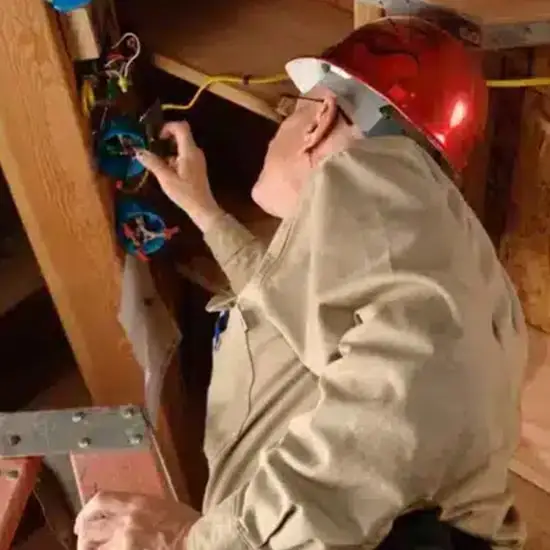
Pre Purchase Building Inspections go beyond basic assessments. Each property receives a thorough evaluation from the foundation through the roof structure. Our trade-qualified inspectors assess structural components, weathertightness systems, electrical installations, and plumbing infrastructure in accordance with AS 4349.1-2007.
Schedule your Pre-Purchase Building Inspection to receive your report within 24-48 hours. Every report includes moisture testing results, structural analysis, and detailed documentation to support confident property negotiations.
WRITTEN BUILDING INSPECTION
Professional and Reliable Inspection reports to AS4349.1 reporting Standards
METH TESTING
Same-day onsite testing with your building inspection in all suburbs
VERBAL BUILDING INSPECTION
On site or over the phone verbal overview for time critical decisions




Kingston's Unique Building Challenges
The Garden City precinct: living inside a heritage listing
The Kingston-Griffith Garden City heritage precinct is the only part of the original Eastlake subdivision that has not been redeveloped for strata-titled units. Its three city blocks contain mirror-image housing constructed in 1926-27, with mini-parks on corner blocks, mature sequoias, original street pillars, vintage fire hydrants, and light posts. For a property within this precinct, the heritage overlay is not a background detail — it is a central constraint that affects every aspect of building condition and maintenance.
Renovation work on these homes requires heritage approval from the ACT Heritage Council. Roof replacement, window changes, alterations to the brickwork, and even changes to paint colours on heritage-significant elevations may require assessment.
The practical consequence for building inspections is that unapproved alterations are a finding we regularly flag — replacement windows that do not match the original timber profile, roof tiles that are modern profiles rather than the original pattern, and gutters that were changed without consideration of the original streetscape. None of these necessarily make the home defective, but they create a compliance risk for the buyer, particularly if further renovations are planned.
The heritage status also affects maintenance costs. Sourcing matching terracotta tiles, reproduction timber window joinery, or compatible damp-proofing materials for a 1920s cavity wall is more expensive than using standard modern equivalents. Buyers of a Garden City cottage should factor in a maintenance premium that does not apply to most Canberra homes.
The Kingston Foreshore: industrial land reborn
The foreshore precinct occupies what was once Canberra's industrial centre — the Kingston Powerhouse (1915), the bus and transport depot, the fitter's workshop, and the government printing office. The Powerhouse itself has been preserved as the Canberra Glassworks, and the Old Bus Depot Markets operate from the former transport depot. The land between these heritage buildings was redeveloped through an award-winning master plan in the late 1990s and early 2000s.
For a building inspector, the industrial history introduces considerations that are absent from standard residential suburbs. The site was not originally residential land, and the subsurface conditions reflect decades of industrial use — compacted fill, remnant foundations from demolished structures, and variable bearing conditions, with different parts of the site having different uses.
Geotechnical reports for the foreshore buildings typically reflect these conditions, but the quality of foundation engineering has varied between developments. The Kingston Place case (discussed below) is a reminder that modern construction on this site has not been uniformly successful.
The mix of heritage and new-build also creates interfaces that deserve attention. Where new apartment buildings adjoin the preserved Powerhouse or the bus depot, the management of stormwater runoff, the condition of shared retaining walls, and the integration of services between old and new structures all become inspection considerations that are specific to this precinct.
The Causeway: Kingston's overlooked pocket
The Causeway is a distinct district within Kingston, separated from the rest of the suburb by Wentworth Avenue and the railway line. Its story is unique: 120 portable wooden cottages were erected here in 1925-26 to house the workers building Canberra, making it the city's first residential settlement. Those original timber cottages were replaced by brick-veneer homes in the late 1970s, and today the Causeway sits in the shadow of the Kingston Foreshore development, which now abuts it on three sides.
For buyers considering a home in this pocket, the key building condition considerations are the age of the replacement housing stock (late 1970s, now approaching 50 years), the proximity to the foreshore's modern apartment buildings (which can affect local drainage patterns and groundwater movement), and the Causeway's position as a low-lying area relative to the surrounding land.
Drainage in this pocket warrants close attention — the original workers' settlement was built on a site that was never ideal for permanent housing, and stormwater management in this part of Kingston can be marginal during heavy rain events.
We recommend carefully tracing downpipe connections to the stormwater network during any Causeway inspection, as the original infrastructure from the 1970s replacement program may not have been upgraded to meet current capacity standards.
Kingston Place and the punching shear lesson
No discussion of Kingston's building condition is complete without the Kingston Place case. The 120-unit apartment complex, completed in 2011, became the subject of one of Canberra's most serious building defect disputes. Engineers identified a risk of punching shear failure — a structural condition where concrete columns could punch through the supporting slabs with minimal warning — prompting an emergency rectification order from Access Canberra.
The developer initially refused to carry out the work, arguing the building was structurally sound, and the ACT Government ultimately stepped in to install more than 230 temporary props throughout the complex at the developer's cost.
The case generated extensive legal proceedings, including action against the builder, the developer, the design engineer, and the Construction Occupations Registrar, who issued the Certificate of Occupancy in 2011. Beyond the structural concerns, defects documented at Kingston Place included cracking basement slabs, leaking stormwater detention tanks, failed balcony waterproofing, and planter box leaks.
For buyers considering any apartment in Kingston, the practical lesson is straightforward: the age and presentation of a building are not reliable indicators of structural condition. A building completed in 2011 and finished to contemporary standards can carry latent structural defects that a standard pre-purchase inspection — limited to visual assessment of accessible areas — cannot fully evaluate.
We recommend that buyers of apartments in Kingston's foreshore precinct request copies of any structural engineering reports, owners' corporation meeting minutes relating to defects, and records of any Access Canberra rectification orders or building complaints. These documents are often more revealing than the unit's interior finish.
Variable geology in a compact suburb
Kingston's 2.1 square kilometres contain more geological variation than most Canberra suburbs. The waterfront properties along the foreshore sit on alluvial deposits and reworked fill from the industrial era. The Garden City precinct occupies elevated ground with reactive clay profiles weathered from Canberra Formation volcanics. The Causeway pocket sits on lower-lying ground with different drainage characteristics.
This variation matters for foundation performance. A 1920s heritage cottage on the elevated section of the Garden City precinct may experience different soil movement patterns than a modern apartment building on the filled foreshore land, even though they are less than a kilometre apart.
For any property in Kingston, understanding the site-specific soil conditions — and how the foundation was designed for those conditions — is a more reliable guide to long-term building performance than suburb-wide assumptions. Site classification reports from the original construction, where available, are worth reviewing as part of any pre-purchase due diligence.
Recent Inspection Examples
Example: 1920s Garden City heritage cottage with partial renovations
We inspected a three-bedroom cottage in the Kingston heritage precinct, built in 1927, where the owners had updated the kitchen and main bathroom while retaining the original floor plan and most original windows. The roof was original concrete terracotta tiles with widespread cracking on the northern and western pitches, and the ridge bedding was loose and crumbling. The valley tray showed advanced corrosion at the seam, and the original cast-iron downpipes had visible rust perforation on the rear elevation.
The rear garden had been built up over time, and the soil level on one side was above the damp-proof course line — moisture readings at the slab edge on that elevation were elevated, and the brickwork showed efflorescence near ground level. The renovated bathroom was well-finished, but the original laundry at the rear had a floor waste that was no longer connected to any drainage — the pipe had been capped beneath the concrete floor during a previous alteration.
We flagged the heritage status as a consideration for roof replacement costs, noted that the drainage issues were manageable but would require a licensed plumber to confirm stormwater connections, and recommended that the buyer commission a separate timber pest inspection, given the age of the timber window frames and roof framing. The home was structurally sound and well-loved, but its age and heritage constraints meant its maintenance obligations were higher than those of a typical modern home.
