
Building Inspection Bruce
BUILDING REPORT BRUCE
Residential & Commercial Building Reports
Our Working Process
Book
Confirm
Inspect
Report
An on-site or over-the-phone verbal overview for time-critical decisions. Useful when you need an answer before an auction, a deadline, or a multi-offer situation.
Pre-purchase inspections occur before you make an offer or after acceptance, giving you crucial information about the property’s condition before you finalise your investment.
TESTING
Same-day on-site meth screening at your property. You'll know whether contamination is present before you commit to the purchase.
A pest inspection checks accessible areas of an Australian property for termites, borers, fungal decay and conditions that attract timber pests.
Builders Report Bruce
What Our Inspectors Typically Find
Bruce is not like other Canberra suburbs. Walk its streets, and you will find University of Canberra students heading to lectures, AIS athletes on the training tracks, hospital staff coming off shifts, and families in the established residential pockets near Radford College and the older court layouts.
The housing reflects that mix: a suburb where only one in five dwellings is a detached house, and where the rest is a blend of townhouses, apartment blocks, and mixed-use developments alongside major institutional campuses. On inspection day, that diversity means the scope shifts sharply depending on the type of property we are in.
The detached housing stock in Bruce consists largely of 1970s and 1980s brick-veneer homes, concentrated in the older sections near the Calvary Hospital precinct and along streets such as College Street and Watkin Street. Roofs are predominantly concrete and terracotta tiles, now in the 40-to-50-year age range, with ridge bedding, valley trays, and penetration flashings showing advanced wear.
Blocks are generally level, and the underlying geology — dominated by Pittman Formation greywacke, a strong sedimentary rock — provides more stable foundation conditions than the reactive clay suburbs elsewhere in Canberra. That does not mean movement is absent, but the pattern is different: less seasonal clay heave, more localised settling where fill or variable rock depth is at play.
In the older homes, the inspection priorities follow a familiar 1970s Canberra pattern. Roof defects are consistent: hardened, cracked ridge pointing; valley tray corrosion at overlaps; and flashing details at flues and vents that have fatigued and lifted away from the tile profile. Gutters and downpipes often show partial renewal, and the stormwater discharge points — where they exist — should be traced carefully, as the era's connection standards were not always consistent.
Internally, wet areas in these older homes are the main cost risk. Original PVC sheet or trowelled membranes in bathrooms are now well past their effective life, and we regularly document failed seals at shower hobs, slow leaks at vanity and WC connections, and at laundry fittings, where decades of use and modest original detailing have combined to produce concealed dampness. Kitchens show similar patterns of aged flexi-hoses and seepage at waste connections.
The townhouse and apartment stock tells a different story. Much of Bruce's medium-density housing dates from the 1990s onward, including the Fern Hill precinct, where former commercial land has been redeveloped for mixed residential use. In these properties, the inspection focus shifts toward common-property elements: roof membranes on flat or low-pitch sections, balcony and podium waterproofing, stormwater infrastructure shared among multiple units, and fire-separation detailing between adjoining dwellings.
The standout local risk we flag for Bruce buyers is the gap between presentation and underlying condition in a suburb with radically different housing types — where an older detached home can look well-kept while hiding 50-year-old wet-area membranes, and a modern apartment can appear polished. At the same time, common-property defects sit outside the individual unit's control.
+
+
BUILDING INSPECTOR BRUCE
24-48 Hour Report Delivery Guaranteed
Looking for a Building Inspector in Bruce? Our trade-qualified inspectors provide thorough building reports within 24-48 hours, combining speed with meticulous attention to detail.
Our building inspection service is perfect for time-sensitive property purchases. Each inspector carries professional indemnity insurance and brings deep knowledge of your local market and common building challenges. All inspections comply with AS 4349.1-2007 standards for comprehensive, reliable assessments.
Property buyers rely on our inspection expertise for accurate, actionable assessments. Every report delivers a complete structural evaluation, weather-tightness analysis, and maintenance requirements—giving you the information you need to make confident purchasing decisions on schedule.

PRE PURCHASE BUILDING INSPECTION BRUCE
Investing in property is a major financial commitment—a Pre Purchase Building Inspection protects that investment. Our comprehensive reports are prepared by inspectors with extensive knowledge and experience of the local market.
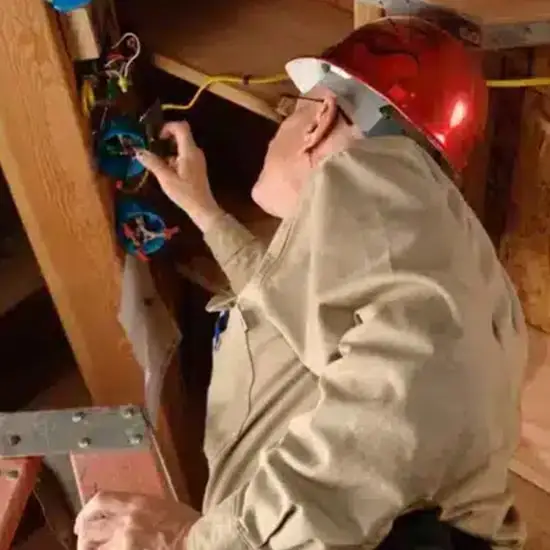
Pre Purchase Building Inspections go beyond basic assessments. Each property receives a thorough evaluation from the foundation through the roof structure. Our trade-qualified inspectors assess structural components, weathertightness systems, electrical installations, and plumbing infrastructure in accordance with AS 4349.1-2007.
Schedule your Pre-Purchase Building Inspection to receive your report within 24-48 hours. Every report includes moisture testing results, structural analysis, and detailed documentation to support confident property negotiations.
WRITTEN BUILDING INSPECTION
Professional and Reliable Inspection reports to AS4349.1 reporting Standards
METH TESTING
Same-day onsite testing with your building inspection in all suburbs
VERBAL BUILDING INSPECTION
On site or over the phone verbal overview for time critical decisions




Bruce's Unique Building Challenges
Bruce's role as an institutional and educational hub, along with its recent shift toward higher-density living, makes its inspection needs unique in Canberra.
The strata story: Elara and beyond
Bruce has become known in Canberra for reasons that prospective apartment buyers should be aware of. The Elara complex on Thynne Street, completed in 2007, became one of the ACT's most prominent cases of building defects. Owners faced repair estimates exceeding $19 million for issues including roof and balcony leaks, basement water ingress, structural concerns with columns and beams, and fire-safety detailing.
The scale and complexity of defects at Elara — waterproofing failures across multiple building zones, structural elements that did not meet the relevant standards, and a lengthy legal process that ultimately failed to deliver the compensation owners sought — made it a landmark case.
For buyers considering any apartment in Bruce, the practical lesson is not to assume that a well-presented unit means a well-built building. Defects in multi-unit developments can be concentrated in common property — roof membranes, balcony slabs, basement waterproofing, fire compartments — that are invisible from inside the individual apartment.
A vendor's building inspection report for a single unit may not capture these elements. Buyers in Bruce's apartment market should review the owners' corporation records for information on any past or pending defect claims, special levies, or engineering assessments, particularly for buildings constructed during the 2000s boom period.
Three rock types under one suburb
Bruce has unusual geological diversity for a single Canberra suburb. The western side is dominated by Pittman Formation greywacke — a hard, quartz-rich sedimentary rock that provides good bearing capacity. Bands of Acton Shale, a black siliceous shale, run under the University of Canberra and Calvary Hospital. The Glebe Farm Adamellite, a coarse granite intrusion of Silurian age, appears in several pockets across the west, north, and south-east. And a triangle of calcareous shale from the Canberra Formation sits in the north-east.
For a building inspector, this variety means that foundation performance can vary noticeably within a short distance. A house built on greywacke at shallow depth will typically show less movement than one on deeper weathered profiles over the Canberra Formation shale. The Acton Shale bands, while generally stable, are highly folded and faulted — preserved only in the cores of ancient synclines — and the rock quality can change abruptly across short distances.
We do not suggest problems are widespread, but the geological variation in Bruce makes it a suburb where block-specific conditions matter more than suburb-wide assumptions.
Institutional edges: termites, stormwater, and boundary interfaces
Bruce's defining character comes from its major institutions: the University of Canberra campus, the AIS, Calvary Hospital, Canberra Stadium, and Radford College. These large sites create interfaces with residential properties that are different from standard suburb-to-suburb boundaries.
The green corridors and mature tree plantings around these institutions — particularly along the Bruce Ridge and the University's landscaped edges — support the kind of moisture-retentive, undisturbed soil environments where subterranean termites can forage. Residential properties backing onto institutional land may have higher termite pressure than those in the middle of standard residential blocks.
Stormwater is another interface worth attention. Large institutional sites generate significant runoff, and the drainage infrastructure that manages it may direct flow toward residential boundaries in ways that are not always obvious from a single-property inspection. We regularly check for evidence of concentrated runoff at fence lines, ponding along shared boundaries, and grading altered by institutional landscaping works.
The Fern Hill transition
The Fern Hill precinct in south-eastern Bruce was originally planned as an ICT and commercial hub. That vision shifted over time, and the area has seen considerable residential development instead — apartment buildings up to four storeys, townhouses, and mixed-use buildings with ground-floor commercial tenancies.
This transition creates a specific inspection dynamic. Buildings designed to a commercial or mixed-use standard may have different waterproofing, fire separation, and acoustic detailing than purpose-built residential blocks. Ground-floor commercial tenancies — cafes, offices, small retail — introduce service penetrations, waste-disposal arrangements, and mechanical systems that share the structure and services with the residential floors above. The junction between the commercial and residential zones in these buildings warrants close attention.
Reserve edges and the Bruce Ridge corridor
The Bruce Ridge runs along the suburb's eastern edge, providing a bushland corridor that connects to the larger Canberra Nature Park system. This proximity adds to Bruce's appeal but also influences building condition. properties on the ridge interface may experience higher exposure to wind-driven rain on eastern elevations, greater leaf litter load in gutters from surrounding eucalypts, and the termite ecology considerations already noted. The ridge also affects micro-drainage patterns, with stormwater moving downhill through residential blocks that were not always designed for the concentrated flows that come from steeper, bushland-adjacent terrain.
Recent Inspection Examples
Example: Ground-floor apartment in a 2000s Fern Hill complex
We inspected a well-presented two-bedroom apartment in a mid-rise building in Fern Hill. The unit had updated flooring and fresh paint, and the agent's marketing highlighted a quiet position overlooking a common garden area. Our inspection noted that while the interior was in good order, the balcony slab above showed historical water staining at the junction with the external wall, and the shared stormwater pit servicing the building's rear section was partially blocked with debris.
The owners' corporation records indicated a special levy had been raised for roof membrane replacement in an adjacent building within the same complex — a detail not disclosed in the unit's marketing. The balcony waterproofing issue was not urgent but warranted monitoring, and the blocked pit affected drainage across the common area rather than directly affecting the individual unit.
The buyer's key takeaway was that the unit itself was sound. Still, the building's common-property condition — and the financial implications of deferred maintenance — deserved as much attention as the interior finishes.
