Building Inspection Bellamack
BUILDING REPORT BELLAMACK
Residential & Commercial Building Reports
Our Working Process
Book
Confirm
Inspect
Report
An on-site or over-the-phone verbal overview for time-critical decisions. Useful when you need an answer before an auction, a deadline, or a multi-offer situation.
Pre-purchase inspections occur before you make an offer or after acceptance, giving you crucial information about the property’s condition before you finalise your investment.
TESTING
Same-day on-site meth screening at your property. You'll know whether contamination is present before you commit to the purchase.
A pest inspection checks accessible areas of an Australian property for termites, borers, fungal decay and conditions that attract timber pests.
Builders Report Bellamack
What Our Inspectors Typically Find
Bellamack was the next major release after Bakewell and Rosebery in Palmerston's staged expansion, with most homes constructed between 2010 and 2015. Walking into a Bellamack inspection, the first thing that strikes you is how uniform the building stock looks — and how much of it relies on lightweight construction methods that were relatively new to the Territory at the time.
The suburb was developed as a greenfield master-planned community on land that was originally gravelly lithosols and shallow sandy earths over laterite — free-draining soils that contrast with the heavy clays found in older Palmerston suburbs. That sounds like an advantage, and in some respects it is: slab movement from reactive clay is less common here. But free-draining sandy soils bring their own inspection priorities, particularly around erosion of perimeter fill, slab-edge exposure where site levels have been built up, and the stability of retaining walls on the gentle slopes that run through parts of Bellamack.
The most notable construction pattern we see in Bellamack is the widespread use of prefabricated steel-framed wall systems, often imported as flat-pack kits and assembled on site. On inspection, we pay close attention to how these systems were joined, braced, and connected to the slab. The connection between steel columns and the concrete slab is a critical load path in cyclonic conditions, and we regularly find bolted connections that are either underspecified, corroding due to trapped moisture at the slab interface, or hidden behind cladding, where they cannot be visually inspected without intrusive inspection.
We also see issues with lateral bracing — diagonal strap bracing that has been omitted, incorrectly tensioned, or installed in a way that doesn't follow the engineer's layout. In a region where the design wind speed is 250 km/h or more, these details matter.
External cladding in Bellamack is typically lightweight — fibre-cement sheeting, metal sheeting, or composite panels applied over the steel frame. On inspection day, we look for corrosion at cut edges and fastener penetrations, evidence of water tracking behind the cladding where sealant at panel joints has failed, and impact damage from the severe storms that roll through during the wet season. The combination of a lightweight cladding system and cyclonic wind loads means that any defect in the fixing schedule — wrong fastener type, incorrect spacing, missing washers — can have consequences far beyond what you would see in a temperate climate.
Inside, the homes are typically open-plan with tiled living areas and carpeted bedrooms. Wet areas in Bellamack are newer than in older suburbs but often share a common problem: waterproofing details were carried out to a standard that seemed adequate at the time but was later found to be insufficient for the climate. We see tile de-bonding in showers, particularly where the substrate was a fibre cement sheet rather than a purpose-designed waterproof membrane system.
Hobless shower entries — popular in the 2010s — regularly show moisture tracking beyond the shower zone, and the steel framing behind tiled walls can begin corroding from concealed moisture before any visible sign appears on the tile surface.
Roofs in Bellamack are predominantly Colorbond or Zincalume steel sheeting on steel roof framing. In a tropical climate with high UV exposure and heavy rainfall, the corrosion rate on exposed fastener heads, flashings, and ridge capping is significantly faster than in southern Australia.
We routinely document rust on fasteners on roofs that are barely a decade old, especially on the northern and western roof planes that get the most sun and storm exposure.
+
+
BUILDING INSPECTOR BELLAMACK
24-48 Hour Report Delivery Guaranteed
Looking for a Building Inspector in Bellamack? Our trade-qualified inspectors provide thorough building reports within 24-48 hours, combining speed with meticulous attention to detail.
Our building inspection service is perfect for time-sensitive property purchases. Each inspector carries professional indemnity insurance and brings deep knowledge of your local market and common building challenges. All inspections comply with AS 4349.1-2007 standards for comprehensive, reliable assessments.
Property buyers rely on our inspection expertise for accurate, actionable assessments. Every report delivers a complete structural evaluation, weather-tightness analysis, and maintenance requirements—giving you the information you need to make confident purchasing decisions on schedule.

PRE PURCHASE BUILDING INSPECTION BELLAMACK
Investing in property is a major financial commitment—a Pre Purchase Building Inspection protects that investment. Our comprehensive reports are prepared by inspectors with extensive knowledge and experience of the local market.
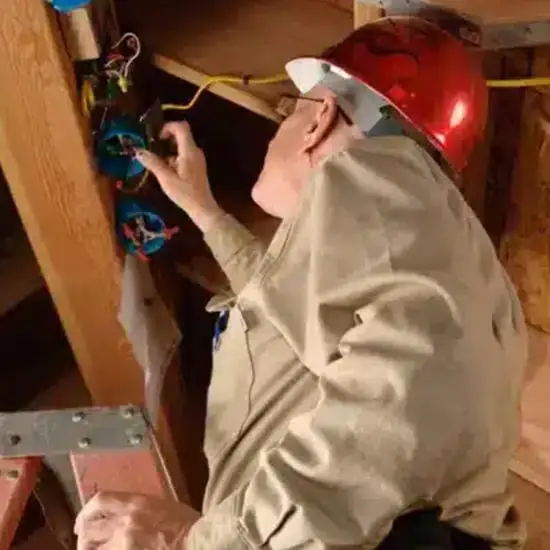
Pre Purchase Building Inspections go beyond basic assessments. Each property receives a thorough evaluation from the foundation through the roof structure. Our trade-qualified inspectors assess structural components, weathertightness systems, electrical installations, and plumbing infrastructure in accordance with AS 4349.1-2007.
Schedule your Pre-Purchase Building Inspection to receive your report within 24-48 hours. Every report includes moisture testing results, structural analysis, and detailed documentation to support confident property negotiations.
WRITTEN BUILDING INSPECTION
Professional and Reliable Inspection reports to AS4349.1 reporting Standards
METH TESTING
Same-day onsite testing with your building inspection in all suburbs
VERBAL BUILDING INSPECTION
On site or over the phone verbal overview for time critical decisions




Bellamack's Unique Building Challenges
The Titan Building System Legacy
Eighteen homes in Bellamack were built under a government-backed affordable housing scheme using a construction method known as the Titan Building System — a prefabricated steel-framed design with imported wall panels that was relatively untested in the Territory's cyclonic environment. Multiple engineering assessments later found that these homes did not meet the National Construction Code for structural adequacy.
Issues identified included corrosion of steel supports that progressed far faster than expected, inadequate bracing to resist lateral wind loads, and connections between structural elements that could not reliably transfer the forces required in a cyclone event.
Nine of these homes were eventually demolished by the NT government for $4.35 million. The remaining five were the subject of a decade-long legal battle that resulted in the builder being ordered to pay $2.5 million in compensation — a ruling that was then appealed. The engineering reports used the terms "risk of serious harm to occupants" and "structural failure from high winds." The homes were built in 2012 and 2013. That means there are homes in Bellamack that have been known to be structurally non-compliant for over a decade, with some still occupied.
The relevance for buyers is not limited to those 18 houses. The same builder and building system were used for privately commissioned homes in Bellamack and neighbouring suburbs. If you are buying in Bellamack, knowing which wall system was used, who engineered it, and whether any structural assessment has been done since completion is a practical due diligence step that goes beyond the scope of a standard pre-purchase inspection.
Lightweight Construction in a Cyclonic Climate
Bellamack's housing stock is predominantly lightweight steel-framed, a common feature of newer Palmerston suburbs. The engineering challenge is straightforward: a lightweight building has less mass to resist wind uplift, so every connection — from the roof sheeting to the purlins, from the purlins to the top plate, from the wall frame to the slab — must be correctly designed and installed to transfer load continuously down to the ground.
In practice, we find that the weakest link in this chain is often the interface between trades: the frame erector, the cladding installer, and the roof plumber all work from different drawings, and if their work does not meet at the connection points, the structural continuity is broken.
We also see issues with how services are run through lightweight steel frames. Electrical cables, plumbing pipes, and air-conditioning lines are often routed through holes drilled in the steel studs during the builder's stage. When these penetrations are not sleeved or grommeted, the sharp edges of the steel cut into the cable sheathing over time, creating a fire risk that is specific to this type of construction — you rarely see the same problem in double-brick or concrete block homes.
Watching the Landscape Mature
Bellamack is now 15 years into its life as a suburb. The original landscaping — street trees, garden beds, irrigation systems — has matured, and with that maturity comes a shift in the termite and moisture risk profile. When the homes were first built, the cleared development site offered little harbourage for subterranean termite colonies. But established gardens, garden beds built against slab edges, irrigation systems that keep the soil along the perimeter consistently moist, and the accumulation of mulch and organic matter against external walls have all changed local conditions.
The giant northern termite, Mastotermes darwiniensis, is present across the Top End and thrives in exactly the conditions that a 15-year-old garden suburb provides: consistent soil moisture, concealed access to timber and timber-alternative building materials, and garden beds that obscure the slab edge and make visual inspection of termite barriers difficult.
The practical point for buyers is that a home inspection in Bellamack that does not include a thorough termite assessment — and a review of which termite management system was installed and whether it has been maintained — misses the most significant long-term risk in this suburb.
Recent Inspection Example
We inspected a 2011-built Bellamack home that was listed as "fully renovated." The agent's photos showed fresh paint, new flooring, and a modern kitchen. The renovation had not extended to anything structural. When we removed an access panel at the base of an internal wall — something the renovation hadn't touched — we found the base of a steel column sitting directly on the slab with no corrosion protection and a visible layer of rust scaling where moisture had wicked up from the concrete.
The same wall cavity contained plumbing from a first-floor bathroom that had been leaking at a compression fitting for long enough that the steel studs adjacent to the leak had lost significant cross-section. The owners had no idea. The renovation had covered every surface but had not looked inside a single wall.
