Building Inspection Gray
BUILDING REPORT GRAY
Residential & Commercial Building Reports
Our Working Process
Book
Confirm
Inspect
Report
An on-site or over-the-phone verbal overview for time-critical decisions. Useful when you need an answer before an auction, a deadline, or a multi-offer situation.
Pre-purchase inspections occur before you make an offer or after acceptance, giving you crucial information about the property’s condition before you finalise your investment.
TESTING
Same-day on-site meth screening at your property. You'll know whether contamination is present before you commit to the purchase.
A pest inspection checks accessible areas of an Australian property for termites, borers, fungal decay and conditions that attract timber pests.
Builders Report Gray
What Our Inspectors Typically Find
Gray was one of Palmerston's first two suburbs, developed from 1982 as part of the initial staged release that created the satellite city. It is a compact suburb — just over a square and a half kilometres of flat tropical terrain — and its housing is noticeably denser than the later Palmerston suburbs. Where Driver across the road was built on larger blocks with generous frontages, Gray was planned on a tighter grid with smaller allotments, a higher proportion of duplexes and attached dwellings, and a significant concentration of government-built housing, which now accounts for around one in five homes.
The construction era is the same post-Cyclone Tracy period that shaped Driver: concrete slab-on-ground foundations, reinforced concrete block or brick veneer walls, steel or timber roof trusses, and Colorbond steel roof sheeting. The cyclonic building standards introduced after 1974 are baked into every dwelling. But Gray's inspection profile is shaped less by the construction type and more by the suburb's tenure mix and block density.
We inspect a wider range of maintenance conditions here than in any other Palmerston suburb, because a well-maintained owner-occupied home on a corner block can sit next to a rental property where the same 40-year-old roof and waterproofing have never been renewed.
Roofing is where the age of Gray's housing stock first shows up. Original Colorbond sheeting from the early 1980s is now past its effective service life on many homes. Where it has not been replaced, we find perforation around fastener penetrations, corrosion at sheet overlaps and valley trays, and ridge capping that has lifted or split at the fold line. On the homes where the roof has been replaced or over-sheeted — and many have been — the quality of the replacement work varies.
We document over-sheeted roofs where the new sheeting was fastened only to the old sheeting rather than to the underlying roof frame, creating a wind-uplift risk that defeats the purpose of the replacement. The older steel roof frames that remain are typically in fair condition, but where moisture from a prolonged leak has been dripping onto a bottom chord or web member for years, we find corrosion that reduces the steel's effective section.
External wall condition in Gray is closely tied to maintenance history. The concrete block walls typical of this era were originally left unpainted or finished with a light render. On many homes, the external finish has deteriorated to the point where the block face is exposed, and mortar joints are eroding.
That matters because moisture ingress through degraded mortar joints is the pathway leading to corrosion of the embedded reinforcing steel within the block cores. The same spalling risk affects all early 1980s concrete block construction in the Territory. On homes where the exterior has been painted, we look for blistering and peeling that signal moisture trapped behind the paint film, particularly on the weather-facing elevations.
Inside, Gray's older homes have wet areas that are 40 years old with varying levels of intervention. In owner-occupied homes that have been progressively upgraded, we often see bathrooms renovated in the 1990s or 2000s, and the waterproofing standards of those renovations may not meet current expectations. In rental properties where no renovation has occurred, the original early 1980s wet areas remain — paint-on waterproofing membranes that have long since failed, shower bases with cracked tile beds, and wall junctions where water has been tracking into the adjacent framing for years.
We moisture-meter the base of every internal wall adjacent to a wet area in Gray, regardless of presentation.
The flat terrain of Gray means site drainage is straightforward in most cases, but the density of development creates shared drainage conditions that are less common in the newer Palmerston suburbs. Neighbouring blocks with roof areas discharging to common side boundaries, narrow drainage paths between attached dwellings, and stormwater infrastructure that was designed for 1980s rainfall intensities that may not be adequate for the more intense wet-season events the Top End is now experiencing — these are the practical details we check on every Gray inspection.
+
+
BUILDING INSPECTOR GRAY
24-48 Hour Report Delivery Guaranteed
Looking for a Building Inspector in Gray? Our trade-qualified inspectors provide thorough building reports within 24-48 hours, combining speed with meticulous attention to detail.
Our building inspection service is perfect for time-sensitive property purchases. Each inspector carries professional indemnity insurance and brings deep knowledge of your local market and common building challenges. All inspections comply with AS 4349.1-2007 standards for comprehensive, reliable assessments.
Property buyers rely on our inspection expertise for accurate, actionable assessments. Every report delivers a complete structural evaluation, weather-tightness analysis, and maintenance requirements—giving you the information you need to make confident purchasing decisions on schedule.

PRE PURCHASE BUILDING INSPECTION GRAY
Investing in property is a major financial commitment—a Pre Purchase Building Inspection protects that investment. Our comprehensive reports are prepared by inspectors with extensive knowledge and experience of the local market.
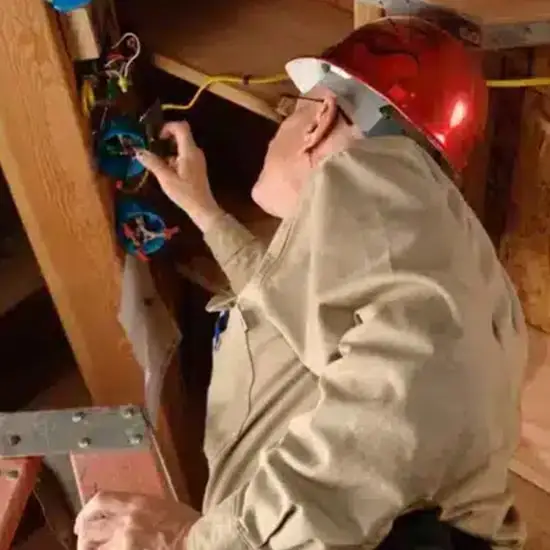
Pre Purchase Building Inspections go beyond basic assessments. Each property receives a thorough evaluation from the foundation through the roof structure. Our trade-qualified inspectors assess structural components, weathertightness systems, electrical installations, and plumbing infrastructure in accordance with AS 4349.1-2007.
Schedule your Pre-Purchase Building Inspection to receive your report within 24-48 hours. Every report includes moisture testing results, structural analysis, and detailed documentation to support confident property negotiations.
WRITTEN BUILDING INSPECTION
Professional and Reliable Inspection reports to AS4349.1 reporting Standards
METH TESTING
Same-day onsite testing with your building inspection in all suburbs
VERBAL BUILDING INSPECTION
On site or over the phone verbal overview for time critical decisions




Gray's Unique Building Challenges
The Public Housing Stock and Its Inspection Implications
Gray contains a significant concentration of NT government-built housing from the early 1980s, and these homes have a distinct inspection profile that differs from the private-market housing built in the same period. The government-built homes were constructed to a standardised design — typically three-bedroom, one-bathroom concrete block dwellings on slab foundations, with steel roof trusses and Colorbond sheeting, on blocks of approximately 600 to 700 square metres.
They were built efficiently and solidly, but the specification was cost-conscious: material grades, finish standards, and detailing were selected for durability rather than appearance.
The inspection implication is not that government-built homes are inherently defective — many are structurally sound and have been well maintained by long-term tenants or subsequent private owners. The issue is that the maintenance history is often harder to verify. Government housing stock cycles through tenancies, and the interval between routine maintenance inspections can be long.
We inspect Gray homes where the original hot water system is still in place after 40 years, where the roof sheeting has never been replaced and is at the end of its corrosion life, and where the termite management system has no record of ever being inspected or reapplied because the ownership history — from government to private sale to investor — has gaps in the documentation.
For buyers, the practical question is not whether the home was originally government-built. It is whether the maintenance record is complete and verifiable, and whether the deferred maintenance that accumulates during tenancy gaps has been addressed before the home is offered for sale.
Shared Boundaries, Shared Risk
Gray's smaller blocks and higher housing density create defect patterns that are less common in Palmerston's later, more generously spaced suburbs. Attached and semi-attached dwellings share common walls, and the roof geometry at the junction between units is a frequent problem point.
We inspect duplexes and townhouses in Gray where the valley gutter at the shared wall has been leaking for years but neither owner could agree on who was responsible for the repair, so neither fixed it. The water damage spreads into both roof spaces, and by the time a sale triggers an inspection, the rot in the roof framing at the shared junction is already advanced.
Shared stormwater connections are another density-related issue. Many Gray properties on the smaller blocks have a single stormwater connection point that serves the dwelling and its driveway. When that connection blocks — often due to tree root ingress or decades of sediment buildup — the stormwater backs up across both properties. The symptom on inspection day may be a damp patch in a corner of the garage or a musty smell in a bedroom that shares a wall with the driveway, but the cause is a shared drain that neither owner has an incentive to maintain.
Renovation Patterns in a High-Turnover Suburb
Gray's high rental rate — nearly half of all dwellings are rented — produces a renovation pattern that is different from owner-occupied suburbs. Renovations here are more likely to be cosmetic upgrades designed to attract tenants or achieve a sale, rather than structural improvements planned by owners who intend to stay.
We see kitchens and bathrooms where new benchtops, cabinets, and tiles have been installed over original framing that shows signs of past water damage, where the waterproofing behind the new tile surface was never inspected or replaced, and where the electrical and plumbing work was done by whoever was cheapest rather than whoever was qualified.
The risk for a buyer in Gray is not that the home has been renovated. It is possible that a recent renovation can conceal the true condition of the 40-year-old structure behind it. A freshly painted concrete block wall can look sound even as the reinforcing steel inside is actively corroding. A new shower screen can look clean while the wall cavity behind it has been wet for years.
The inspection challenge is to distinguish genuine maintenance from cosmetic covering, which requires looking at the areas the renovation did not touch: the roof space, the subfloor, the external perimeter, and the termite barrier.
Recent Inspection Example
We inspected a 1984-built duplex in Gray where one side had been owner-occupied for 30 years and the other had been a rental for most of its life. The owner-occupied side had a replaced roof, updated wet areas, and an annual termite inspection. The rental side had original roof sheeting with multiple patches, the original bathroom with cracked tiles and a leaking shower base, and a garden bed built against the slab edge that concealed active termite mud leads at the common wall junction. The owner-occupied side had repointed the shared parapet wall five years earlier. The rental side had not.
The inspection found that water entering through the deteriorated parapet on the rental side had been tracking down inside the shared wall cavity and affecting both roof spaces. The repair — repointing the entire parapet, replacing the valley gutter, and addressing the termite activity — cost $22,000, split between the two owners.
