Building Inspection Woodroffe
BUILDING REPORT WOODROFFE
Residential & Commercial Building Reports
Our Working Process
Book
Confirm
Inspect
Report
An on-site or over-the-phone verbal overview for time-critical decisions. Useful when you need an answer before an auction, a deadline, or a multi-offer situation.
Pre-purchase inspections occur before you make an offer or after acceptance, giving you crucial information about the property’s condition before you finalise your investment.
TESTING
Same-day on-site meth screening at your property. You'll know whether contamination is present before you commit to the purchase.
A pest inspection checks accessible areas of an Australian property for termites, borers, fungal decay and conditions that attract timber pests.
Builders Report Woodroffe
What Our Inspectors Typically Find
Woodroffe was the fourth Palmerston suburb to be developed, with construction starting in 1983, and it occupies a transitional position in the city's layout — sitting between the original 1980s core suburbs to the north and the 1990s and 2000s expansion suburbs to the south and east.
The housing stock reflects that position: mostly the same post-Cyclone Tracy concrete block and brick veneer construction that defines the early Palmerston suburbs, but with a slightly later average build date and a higher proportion of homes that were built for the private market rather than government housing, even though the suburb still contains a meaningful 13.7 per cent social housing component.
The typical Woodroffe home is a three-bedroom concrete block or brick veneer dwelling on a concrete slab, with Colorbond steel roof sheeting on steel or timber trusses, on a block of around 600 to 700 square metres. The construction era — mid-1980s through the early 1990s — means the building fabric is 30 to 40 years old, and its condition varies dramatically depending on whether the home has been progressively maintained or left to weather to its original specification.
Roofing is the most often deferred maintenance item in Woodroffe. The original Colorbond sheeting from the 1980s is typically past its effective service life on homes that have not been replaced, and the pattern of corrosion is concentrated on the northern and western roof planes, where UV exposure and storm damage are highest.
On the homes that have had a roof replacement, the quality of the replacement varies. We inspect Woodroffe homes where the new roof was installed over the old sheeting without removing it. The over-sheet installation did not include new fasteners in the roof frame — the new sheeting is fastened only to the old, corroded sheeting, which means the roof's wind uplift capacity is no better than before the replacement.
External wall condition in Woodroffe follows the same gradient. The concrete block homes that were painted early in their lives now show paint failure on the weather-facing elevations, with blistering and peeling indicating moisture trapped behind the paint film. On the homes that were left unpainted, the concrete blocks have weathered to the point where the surfaces are beginning to spall, and the mortar joints are eroding.
The embedded steel reinforcing inside the block cores is at risk in both cases — in the painted homes because the failed paint film allows moisture ingress, and in the unpainted homes because the porous block face and eroded mortar joints are direct pathways for water to reach the steel.
The wet areas in Woodroffe are typically original 1980s installations or first-generation renovations from the 1990s or 2000s. The original bathrooms have paint-on waterproofing membranes that have long since failed, shower bases with cracked tile beds, and wall-floor junctions where water has been tracking into the adjacent framing for years.
The renovated bathrooms are a mixed picture: some were done to a reasonable standard by the original owners who lived in the home for decades, while others were budget renovations carried out for a rental property or a quick sale. We moisture-meter the base of every internal wall adjacent to a wet area in Woodroffe, regardless of whether the bathroom looks original or renovated.
Site drainage in Woodroffe is generally adequate — the suburb is flat, the blocks are a reasonable size, and the original stormwater infrastructure was designed to the standards of the early 1980s. But the mature landscaping that has developed over 40 years — street trees, garden beds, paving, retaining walls, and irrigation systems — has altered the original drainage patterns on most blocks.
We find downpipes discharging onto the block and relying on overland flow that is now blocked by garden beds, slab edges buried under mulch and soil from years of garden expansion, and termite barriers installed at construction that have not been inspected since.
+
+
BUILDING INSPECTOR WOODROFFE
24-48 Hour Report Delivery Guaranteed
Looking for a Building Inspector in Woodroffe? Our trade-qualified inspectors provide thorough building reports within 24-48 hours, combining speed with meticulous attention to detail.
Our building inspection service is perfect for time-sensitive property purchases. Each inspector carries professional indemnity insurance and brings deep knowledge of your local market and common building challenges. All inspections comply with AS 4349.1-2007 standards for comprehensive, reliable assessments.
Property buyers rely on our inspection expertise for accurate, actionable assessments. Every report delivers a complete structural evaluation, weather-tightness analysis, and maintenance requirements—giving you the information you need to make confident purchasing decisions on schedule.

PRE PURCHASE BUILDING INSPECTION WOODROFFE
Investing in property is a major financial commitment—a Pre Purchase Building Inspection protects that investment. Our comprehensive reports are prepared by inspectors with extensive knowledge and experience of the local market.
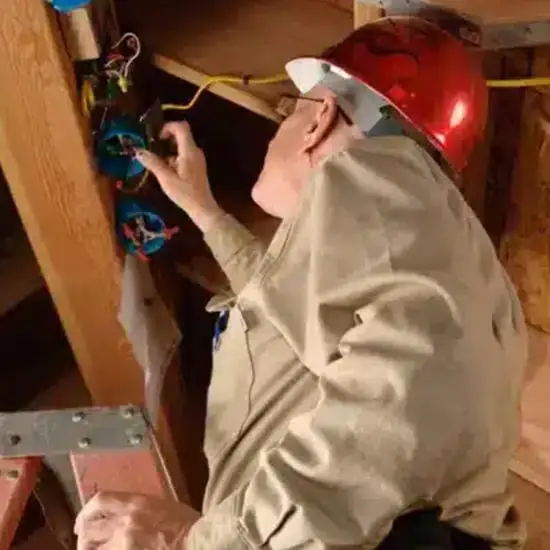
Pre Purchase Building Inspections go beyond basic assessments. Each property receives a thorough evaluation from the foundation through the roof structure. Our trade-qualified inspectors assess structural components, weathertightness systems, electrical installations, and plumbing infrastructure in accordance with AS 4349.1-2007.
Schedule your Pre-Purchase Building Inspection to receive your report within 24-48 hours. Every report includes moisture testing results, structural analysis, and detailed documentation to support confident property negotiations.
WRITTEN BUILDING INSPECTION
Professional and Reliable Inspection reports to AS4349.1 reporting Standards
METH TESTING
Same-day onsite testing with your building inspection in all suburbs
VERBAL BUILDING INSPECTION
On site or over the phone verbal overview for time critical decisions




Woodroffe's Unique Building Challenges
The Transition Suburb — Between Two Eras of Palmerston Development
Woodroffe was built during the period when Palmerston was transitioning from its original government-orchestrated development model to the private market-driven expansion that characterised the 1990s suburbs. The first Palmerston suburbs — Gray, Driver, and Moulden — were largely built under the direct management of the Palmerston Development Authority, with a high proportion of government housing and standardised designs. The 1990s suburbs — Bakewell, Rosebery, and Durack — were developed by private developers and volume builders with more variety in design and construction quality.
Woodroffe sits between these two eras. Some parts of the suburb were built to the earlier standardised model, with government-built homes on conventional blocks. Other parts were built slightly later by private builders, on the remaining undeveloped lots within the suburb boundary. The result is a suburb where the consistency of the housing stock is lower than in the earlier suburbs but higher than in the later ones. Two homes on the same street may have been built five years apart by different builders to different specifications, and their inspection profiles differ.
For a Woodroffe buyer, understanding the build date and the original owner history is more useful than in the more uniform Palmerston suburbs. A home built in 1984 as a government-built dwelling, sold to a private owner in 1995 and has had two owners since, has a different maintenance history from a home built in 1990 by a private builder for an owner-occupier who lived there for 30 years. The latter is more likely to have had planned maintenance and upgrades. The former is more likely to have had deferred maintenance that was addressed only when it became critical.
The Mortgage Belt — Financial Pressure and Deferred Maintenance
Woodroffe has one of the lowest rates of outright home ownership in Palmerston — only 12.6 per cent of homes are owned outright, compared to 31 per cent nationally. More than 43 per cent of homes are owned with a mortgage, and 41 per cent are rented. The statistical profile tells a story about the financial pressure on the suburb's households: a young population (median age 33), a high proportion of families with children, and a significant proportion of household income committed to housing costs.
The inspection consequence of this financial profile is that maintenance is more often deferred than in the suburbs, where there is a higher proportion of outright owners or higher-income households. We inspect Woodroffe homes where the owner has known about a leaking roof for three years but has not been able to afford the $12,000 replacement, where the termite barrier has been expired for five years because the $800 annual reappointment fee has been deprioritised, and where the bathroom waterproofing has been patched with silicone rather than replaced because that is the option that costs $50 instead of $8,000.
This is not a criticism of the suburb's residents — it is a practical reality of the suburb's demographic profile. For a Woodroffe buyer, the implication is that the inspection should focus on the systems that are expensive to defer: the roof covering, the termite management system, and the wet area waterproofing. These are the categories where the gap between the ideal maintenance schedule and what has actually been done is widest, and where the cost of catching up on deferred maintenance is highest.
The Public Housing Transition
Woodroffe's 13.7 per cent social housing component is significant but is transitioning as the NT government sells off its housing stock. The government-built homes in Woodroffe are the same concrete-block design as those in Gray and Moulden — efficient, solidly built, and straightforward to maintain, but now 35 to 40 years old, with original fabric that is reaching the end of its life.
The inspection pattern in the former government-built homes is consistent. The roof covering is original and nearing the end of its service life. The termite management system has no verifiable maintenance history. The bathroom is original or has had a single budget renovation. The concrete block walls have never been sealed or painted and are beginning to show surface weathering. The structural core of the home — the reinforced block walls, the tied-down roof frame, the concrete slab — is typically sound, but the envelope and the services are approaching the point where significant capital expenditure is required.
For a buyer considering a former government-built home in Woodroffe, the value proposition is straightforward: the structure is solid, and the block is generous, but the budget for the first five years of ownership should include a roof replacement, a new termite barrier system, and a bathroom renovation. If those costs are accounted for in the purchase price and the buyer's budget, the home represents good value. If they are not accounted for, the buyer will face unexpected expenses that can strain a household budget that is already committed to mortgage payments.
Recent Inspection Example
We inspected a 1986-built concrete block home in Woodroffe that the same family had owned for 28 years. The home was clean, tidy, and presented well. The owner was a widow on a fixed pension who had done her best to maintain the property but had not been able to afford major work. The original Colorbond roof was in place with multiple patch repairs visible from inside the roof space.
The chemical termite barrier had last been reapplied in 2004, 20 years earlier. The bathroom was original, with a cracked tile shower base that had been sealed with silicone multiple times. The external concrete block walls had never been painted and showed surface spalling on the western elevation, with mortar joints that could be picked out with a finger.
The structural core of the home was sound — no slab movement, no wall cracking, no roof frame distortion. The cost of catching up on the deferred maintenance — roof replacement, termite barrier installation, bathroom renovation, and external wall treatment — was estimated at $35,000 to $42,000. The owner had not had a building inspection in the 28 years she had owned the home. She said she wished someone had told her 15 years ago what the long-term costs would be.
