Building Inspection Moulden
BUILDING REPORT MOULDEN
Residential & Commercial Building Reports
Our Working Process
Book
Confirm
Inspect
Report
An on-site or over-the-phone verbal overview for time-critical decisions. Useful when you need an answer before an auction, a deadline, or a multi-offer situation.
Pre-purchase inspections occur before you make an offer or after acceptance, giving you crucial information about the property’s condition before you finalise your investment.
TESTING
Same-day on-site meth screening at your property. You'll know whether contamination is present before you commit to the purchase.
A pest inspection checks accessible areas of an Australian property for termites, borers, fungal decay and conditions that attract timber pests.
Builders Report Moulden
What Our Inspectors Typically Find
Moulden was Palmerston's third suburb, with development commencing in 1983, and its housing tells the story of a suburb in transition. The original stock was overwhelmingly government-built — Territory housing, Telecom housing, and public-sector employee accommodation on generously sized blocks averaging over 800 square metres.
In the decades since, the government has progressively sold off its holdings, and Moulden has become a destination for first-home buyers, renovators, and investors who are drawn to the large blocks and solid post-Tracy construction at prices below most Palmerston suburbs. The result is a suburb where the building stock covers a wider range of conditions than its 1980s origins would suggest.
The original Moulden home is the same concrete-block, concrete-slab, steel-framed or timber-truss-roofed post-Tracy standard that defines the other early Palmerston suburbs. The walls are typically 200-millimetre reinforced concrete block, either left unpainted or finished with a cement render, on a slab-on-ground foundation designed to the Category 1 cyclonic code.
The roof is Colorbond or Zincalume sheeting on steel or timber trusses, tied down through the wall frame to the slab with tie-down rods. These are solid, wind-rated structures that have held up well structurally. Where Moulden differs is in what 40 years of varied ownership have done to the original fabric.
Roof condition in Moulden is the most variable inspection category. Original sheeting from the mid-1980s is now past its effective service life. We find every possible response to that reality: homes where the original roof is still in place with perforated sheeting and failed fasteners, homes where the roof has been over-sheeted to extend its life (with varying quality in the over-sheet installation), homes where a full replacement has been done to a good standard, and homes where patch repairs have been applied to individual leak points without addressing the systemic corrosion.
For homes that have been over-sheeted, we check whether the new sheeting was fastened to the underlying roof frame or only to the old sheeting — a distinction that determines whether the roof will stay on in cyclonic conditions.
External wall condition follows a similar pattern. The original unpainted concrete block walls on many of the former government-built homes have weathered to the point where the mortar joints are eroding, and the block faces are spalling from exposure. On the original owner-occupied homes that were painted early in their life, the paint is now peeling or blistering on the weather-facing elevations, and the moisture trapped behind the failing paint film is driving corrosion of the embedded reinforcing steel.
In homes purchased and renovated by first-home buyers, we often see a fresh coat of paint over the old surface, which improves appearance but does nothing to address the underlying moisture ingress through the mortar joints.
Inside, Moulden homes have the same 40-year-old original wet areas as the other early Palmerston suburbs, but the renovation pattern is distinct. Many recent first-home buyer renovations are budget-conscious, and waterproofing is where corners are most often cut.
We inspect Moulden homes where a new shower has been installed over the original floor waste without breaking up the old tile bed, where the waterproofing membrane has been applied to the old tile surface rather than to the structural substrate, and where the shower screen has been sealed directly to the tile finish with silicone that is already failing. These renovations look acceptable on the surface, but they do not meet the waterproofing standards required for a wet area in any Australian climate, let alone in the Top End with 1,700 millimetres of annual rainfall.
The large block sizes in Moulden — typically 800 to 900 square metres — mean that site drainage and perimeter management are more important than in the denser early-Palmerston suburbs. We find downpipes discharging onto the block and relying on overland flow to reach the street connection, garden beds that have expanded over the years to cover half the side setback, and termite barriers installed when the block was cleared in 1984 that have never been inspected since.
+
+
BUILDING INSPECTOR MOULDEN
24-48 Hour Report Delivery Guaranteed
Looking for a Building Inspector in Moulden? Our trade-qualified inspectors provide thorough building reports within 24-48 hours, combining speed with meticulous attention to detail.
Our building inspection service is perfect for time-sensitive property purchases. Each inspector carries professional indemnity insurance and brings deep knowledge of your local market and common building challenges. All inspections comply with AS 4349.1-2007 standards for comprehensive, reliable assessments.
Property buyers rely on our inspection expertise for accurate, actionable assessments. Every report delivers a complete structural evaluation, weather-tightness analysis, and maintenance requirements—giving you the information you need to make confident purchasing decisions on schedule.

PRE PURCHASE BUILDING INSPECTION MOULDEN
Investing in property is a major financial commitment—a Pre Purchase Building Inspection protects that investment. Our comprehensive reports are prepared by inspectors with extensive knowledge and experience of the local market.
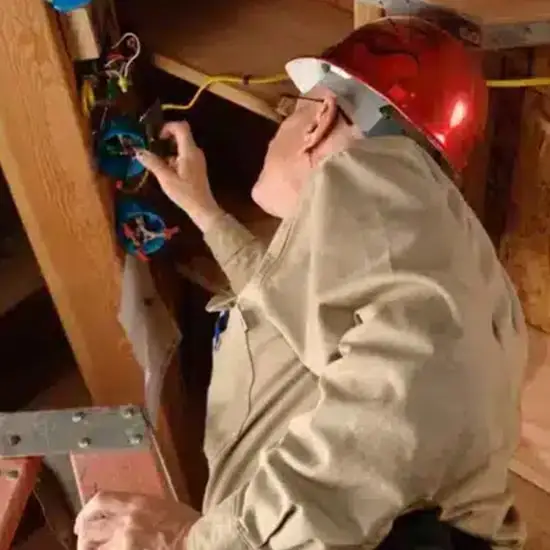
Pre Purchase Building Inspections go beyond basic assessments. Each property receives a thorough evaluation from the foundation through the roof structure. Our trade-qualified inspectors assess structural components, weathertightness systems, electrical installations, and plumbing infrastructure in accordance with AS 4349.1-2007.
Schedule your Pre-Purchase Building Inspection to receive your report within 24-48 hours. Every report includes moisture testing results, structural analysis, and detailed documentation to support confident property negotiations.
WRITTEN BUILDING INSPECTION
Professional and Reliable Inspection reports to AS4349.1 reporting Standards
METH TESTING
Same-day onsite testing with your building inspection in all suburbs
VERBAL BUILDING INSPECTION
On site or over the phone verbal overview for time critical decisions




Moulden's Unique Building Challenges
The North-South Divide — Two Suburbs in One
Moulden naturally splits into two zones with very different inspection profiles. North Moulden, closer to the Palmerston town centre, the high school, sports facilities, and swimming pool, was the first part developed and has seen the most turnover of housing stock from government to private ownership.
Many of the original government-built homes here have been sold, renovated, and resold to families and investors. The inspection profile in North Moulden is dominated by homes that have had one or two renovation cycles, where the quality of the renovation work determines the condition far more than the original 1980s construction.
South Moulden retains a higher concentration of original government-built housing that has not yet been renovated. The inspection profile here is closer to the original 1983 construction standard: roofs still on their first lifecycle with corrosion that is advanced but not yet catastrophic, original wet areas with paint-on waterproofing membranes that failed years ago, concrete block walls that have never been sealed or painted and are now weathering progressively, and termite management systems with no maintenance history.
The flip side is that the original construction was solid and the structural core — the reinforced block walls, the tied-down roof frame, the concrete slab — is typically sound. The defects in South Moulden are more predictable than in North Moulden, and a buyer who budgets for a full roof replacement, bathroom renovation, and termite barrier reinstallation knows what they are getting into.
For an inspector, the practical difference is that a North Moulden inspection requires scrutiny of the quality of past renovations, because a home that looks freshly updated may have concealed defects behind the new surfaces. A South Moulden inspection requires an honest assessment of the cost of bringing a 40-year-old, unrenovated home up to a maintainable standard, as the defects are visible, but the overall scope can be daunting.
Port Mar Grove and Balmoral Estate — The Private Infill
Later in Moulden's development, two private estates — Port Mar Grove and Balmoral Estate — were built on the remaining undeveloped parcels within the suburb. These are the homes that do not look like the rest of Moulden. Private developers built them to a different specification: brick-veneer and rendered-masonry construction with Colorbond roofing, on slabs engineered for the area's reactive clays, but with a more thorough level of site investigation than the original government-built homes received.
The inspection profile in these estates differs from that of the rest of Moulden. The homes are typically 15 to 25 years old. The defects are those of early-2000s construction in the Territory: roof penetrations where solar hot water systems were retrofitted without adequate flashings, termite barriers that were installed at construction and not maintained, slab edge detailing where the concrete was poured against uncompacted fill at the perimeter, and external cladding where the paint or render system is reaching the end of its service life. The Port Mar Grove and Balmoral homes are not affected by the same age-related issues as the original 1980s stock, but they have their own defect patterns that reflect the period and developer.
The First-Home Buyer Renovation Economy
Moulden has become one of Palmerston's most active suburbs for first-home buyer renovations, driven by the large blocks, affordable entry prices, and government incentives such as the renovation bonus program. From an inspection perspective, this creates a specific risk pattern: renovations that are designed to make a home livable on a tight budget rather than to meet the building code requirements for the Territory's climate.
The most common finding is a bathroom or laundry renovation in which the waterproofing work was done by the owner or a licensed but inexperienced tradesperson, and the installation does not meet the NCC requirements for wet areas in cyclonic regions. We see showers where the waterproofing membrane terminates at the wall-floor junction without extending up the wall, hobless entries where no water stop has been installed under the tile bed, and floor wastes that have been tiled over rather than left accessible.
These are not minor issues — in a Top End climate with intense wet-season rainfall, a shower that leaks through the wall-floor junction will cause concealed damage to the wall framing and slab edge within months, not years.
The same budget-driven approach affects other renovation work. Electrical work without compliance certificates, plumbing connections not up to current standards, and structural alterations where load-bearing walls have been modified without engineering input — we find these in Moulden more often than in suburbs where established builders have done the renovation work for long-term owners.
The inspection approach in Moulden is to treat every visible renovation as potentially concealing a non-compliant installation, and to verify critical details rather than assume they were done correctly.
Recent Inspection Example
We inspected a South Moulden home built in 1985 that had been purchased by a first-home buyer six months earlier. The buyer had painted the interior, installed new flooring, and replaced the bathroom vanity and toilet. The original shower remained, and the buyer had not touched the roof or the termite barrier. During the inspection, we found that the original Colorbond roof sheeting had corrosion holes at fastener penetrations on the western slope, the ridge capping was lifting at the fold line, and the old chemical termite barrier had no record of reapplication since the original installation.
The shower base had a cracked tile bed that had been painted over rather than replaced, and the wall-floor junction showed moisture meter readings of 28 per cent on the adjacent bedroom wall — active water damage that the new flooring had been laid over without addressing. The buyer had spent $15,000 on cosmetic improvements.
The cost of the work that actually needed to be done — roof replacement, termite barrier installation, and shower remediation — was $28,000.
