
Building Inspection Durack
BUILDING REPORT DURACK
Residential & Commercial Building Reports
Our Working Process
Book
Confirm
Inspect
Report
An on-site or over-the-phone verbal overview for time-critical decisions. Useful when you need an answer before an auction, a deadline, or a multi-offer situation.
Pre-purchase inspections occur before you make an offer or after acceptance, giving you crucial information about the property’s condition before you finalise your investment.
TESTING
Same-day on-site meth screening at your property. You'll know whether contamination is present before you commit to the purchase.
A pest inspection checks accessible areas of an Australian property for termites, borers, fungal decay and conditions that attract timber pests.
Builders Report Durack
What Our Inspectors Typically Find
Durack is a Palmerston suburb that developed later than the original 1980s suburbs — residential construction began here in the mid-1990s and continued in stages through to the present, with The Heights estate still adding new lots. The suburb was originally reserved for a university campus, and when that plan was scaled back, the land was released for housing.
That meant the soil sat undisturbed under native vegetation for 15 years longer than surrounding suburbs, and the reactive black clays that characterise this part of Palmerston had time to develop deep root systems, moisture gradients, and organic layers that influence how building sites behave today.
The housing stock in Durack comprises three distinct estates, and construction quality varies noticeably among them. The established areas — Fairway Waters and The Mews — were built from the mid-1990s through the early 2000s and are dominated by brick-veneer and concrete-block homes on concrete slabs, with Colorbond or concrete-tile roofing and steel or timber roof trusses.
The newer Heights estate, released from 2012 onward, includes a wider variety of modern construction features: lightweight steel framing, fibre-cement cladding, and more compact floor plans on smaller lots. The suburb has a mature, well-landscaped feel. On inspection day, it is not unusual for a Durack home to present beautifully from the street while concealing issues specific to its era and estate.
Slab performance is the first thing we assess, because Durack sits on reactive black vertosol soils that are Class H1 to H2 — the same clay family that affects other Palmerston suburbs, but with a twist. Because the land here had been undeveloped longer, the soil's natural moisture profile was more established when the first slabs were poured. Homes in Fairway Waters and The Mews built in the late 1990s and early 2000s show the same stepped brick cracking, window misalignment, and wall stress fractures we see in Bakewell.
Still, the pattern is less uniform — some streets have almost no movement. In contrast, neighbouring streets show moderate to severe symptoms, depending on the extent to which the original site's cut-and-fill disturbed the natural soil moisture balance. In the Heights estate, the slabs are newer and better engineered, but the fill used to level some of the sloping lots varies in compaction quality, and we document differential settlement patterns that suggest not every site preparation met the geotechnical specification.
Roofing in the older Durack estates is now 25 to 30 years old. Original Colorbond sheeting from the late 1990s typically shows corrosion of fastener heads on the northern and western roof planes, and we frequently find that ridge capping flashings have lifted or split along the fold lines after decades of thermal cycling in the tropical sun.
Concrete tile roofs from the same era are less common in Durack than in older Palmerston suburbs, but where they exist, the tiles are often becoming porous, and the sarking beneath may be degraded. Roof penetrations for solar hot water systems — popular in the Territory during the 2000s — are a recurring problem: the flashing details were not always adequate for cyclonic wind-driven rain, and we regularly find concealed moisture staining around these penetrations.
Termite risk in Durack is elevated by the same factors that affect other Palmerston suburbs — the giant northern termite and reactive clays — but with an added dimension. The Palmerston Golf Course runs along the western edge of the Fairway Waters estate. Irrigated fairways and landscaped roughs maintain consistently moist soil conditions year-round, and that moisture extends into the adjoining residential blocks.
We find that termite activity is noticeably more common in homes along the golf course boundary, where the moisture gradient from the irrigated course into the residential blocks creates ideal conditions for subterranean termite colonies to establish and travel. A termite management system in these locations needs to be more robust than one on an interior block, and we routinely find that the original barrier has been bridged by irrigation lines, garden beds, and retaining walls installed since handover.
Inside, Durack homes from the 1990s and early 2000s have wet areas that are typically second-generation — many have been renovated once. The quality of those renovations varies widely. Some have been done to a good standard with modern waterproofing systems, while others show the classic signs of a budget renovation: floor tiles laid over old tiles without addressing the substrate, shower screens sealed directly to the tile surface, and waterproofing that stops short of the wall junctions. We probe these areas regardless of how new the finishes look.
+
+
BUILDING INSPECTOR DURACK
24-48 Hour Report Delivery Guaranteed
Looking for a Building Inspector in Durack? Our trade-qualified inspectors provide thorough building reports within 24-48 hours, combining speed with meticulous attention to detail.
Our building inspection service is perfect for time-sensitive property purchases. Each inspector carries professional indemnity insurance and brings deep knowledge of your local market and common building challenges. All inspections comply with AS 4349.1-2007 standards for comprehensive, reliable assessments.
Property buyers rely on our inspection expertise for accurate, actionable assessments. Every report delivers a complete structural evaluation, weather-tightness analysis, and maintenance requirements—giving you the information you need to make confident purchasing decisions on schedule.
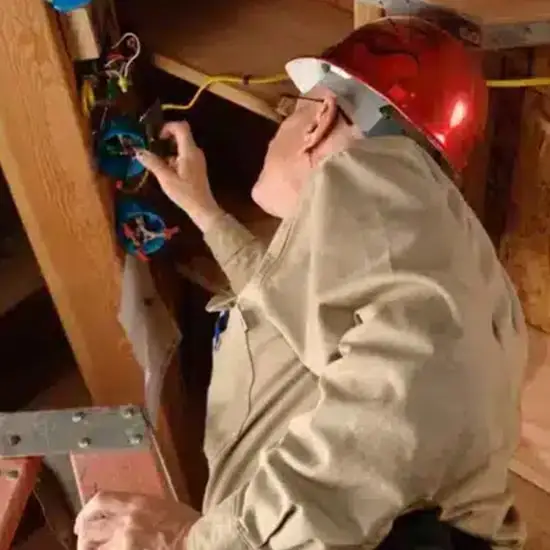

PRE PURCHASE BUILDING INSPECTION DURACK
Investing in property is a major financial commitment—a Pre Purchase Building Inspection protects that investment. Our comprehensive reports are prepared by inspectors with extensive knowledge and experience of the local market.
Pre Purchase Building Inspections go beyond basic assessments. Each property receives a thorough evaluation from the foundation through the roof structure. Our trade-qualified inspectors assess structural components, weathertightness systems, electrical installations, and plumbing infrastructure in accordance with AS 4349.1-2007.
Schedule your Pre-Purchase Building Inspection to receive your report within 24-48 hours. Every report includes moisture testing results, structural analysis, and detailed documentation to support confident property negotiations.
WRITTEN BUILDING INSPECTION
Professional and Reliable Inspection reports to AS4349.1 reporting Standards
METH TESTING
Same-day onsite testing with your building inspection in all suburbs
VERBAL BUILDING INSPECTION
On site or over the phone verbal overview for time critical decisions




Durack's Unique Building Challenges
Estate-Level Quality Variation — Not All Durack Homes Are Equal
Durack is unusual among Palmerston suburbs because multiple developers developed it in distinct stages, and the design and construction standards differ meaningfully between the three estates. Fairway Waters, the earliest estate, was built on larger blocks with generous setbacks and a conventional brick-veneer construction approach that reflected late-1990s Territory standards.
The Mews, developed around the same time, introduced more attached dwellings and medium-density lots, with shared driveway access and common stormwater connections. The Heights, the newest estate, was designed in line with current town planning principles, with smaller lots, more compact housing, and a contemporary mix of lightweight and masonry construction.
For an inspector, this means the typical defects vary by estate. A Fairway Waters home from 1998 is likely to show ageing roof and termite management issues consistent with a 25-year-old conventional build. A home in The Mews is more likely to have drainage and common boundary issues from the attached or semi-attached configuration. A home in The Heights is newer and better detailed on paper.
Still, it may have been built during a period when the Territory's construction quality assurance was under scrutiny. The compact lot layout brings its own set of proximity-related risks — reduced setbacks mean less separation between building and garden beds, less room for termite barrier maintenance, and more concentrated stormwater flows from adjoining roof areas.
The practical implication for buyers is that a pre-purchase inspection needs to account for which estate the property is in and what era of regulation and development standards applied to it. A generic inspection checklist that treats all Durack homes the same will miss the nuance.
The Golf Course Moisture Boundary
The Palmerston Golf Course is an 18-hole championship course with extensive irrigated fairways, greens, and landscaped roughs. The irrigation system runs year-round, maintaining high soil moisture levels even through the dry season. Properties that back onto or adjoin the course sit within the influence zone of that irrigation, and the effect on building performance is measurable.
Soil moisture readings near the course boundary are consistently higher than on interior blocks, and that moisture drives three specific effects: increased soil reactivity under the slab (meaning more seasonal movement in the clay), more favourable conditions for termite colony establishment in the top 300 mm of soil, and accelerated corrosion of any embedded steel or metal components at or below ground level, including slab edge reinforcement and termite barrier terminators.
We inspect Durack homes on the golf course boundary, where the concrete slab has been poured directly against the sandy loam topsoil at the course edge, with no dedicated drainage swale. The moisture migration from the irrigated course into the residential soil profile is visible as efflorescence at the slab edge and damp patches on internal flooring along the course-facing wall during the dry season. These are not catastrophic defects, but they are persistent, and they shorten the service life of floor coverings, wall finishes, and termite management systems.
Mature Landscaping and the Changing Termite Risk Profile
Durack's street trees and gardens are now 15 to 30 years old, depending on the estate. The original developers planted tropical species — African mahogany, golden shower trees, frangipani, palms — that have grown to substantial size. The root systems extend under driveways, paths, and slab edges. Garden beds that were originally mulched and kept clear of the house have been expanded by successive owners. Irrigation systems installed during construction have been modified, extended, or left leaking at fittings. All of this changes the termite risk profile from what it was when the homes were new.
Mastotermes darwiniensis colonies in the Top End are capable of extending foraging galleries for hundreds of metres through soil. In a mature Durack garden, the conditions that suppress termite activity — dry, bare, disturbed soil around the building perimeter — have been replaced by the conditions that encourage it: consistent moisture from irrigation, organic material in the form of mulch and leaf litter, and concealment provided by dense garden plantings against the slab edge.
We inspect most Durack homes with an expired or unverifiable termite management history, and we regularly document concealed mud leads behind garden beds. The solution is not complicated — it involves keeping the perimeter clear, maintaining a verifiable termite barrier, and having an annual inspection — but very few owners do all three.
Recent Inspection Example
We inspected a Fairway Waters home built in 1999 on a block that backed directly onto the Palmerston Golf Course fairway. The house was brick veneer with a Colorbond roof that had been painted within the past five years. The interior was well maintained, and the owners had lived there for 18 years. During the external inspection, we found the garden beds along the rear boundary were built up to the slab edge, with dense foliage touching the brickwork. The irrigation system for the garden bed was leaking at a connector near the corner of the slab.
When we pulled back the mulch at that corner, we exposed active termite mud leads entering the wall cavity through a gap between the slab edge and the brick veneer weep hole. The owners had never had a termite inspection. The chemical barrier installed at construction had never been reapplied—the estimated cost of treatment and structural repairs: $14,000 to $18,000.
