Building Inspection Johnston
BUILDING REPORT JOHNSTON
Residential & Commercial Building Reports
Our Working Process
Book
Confirm
Inspect
Report
An on-site or over-the-phone verbal overview for time-critical decisions. Useful when you need an answer before an auction, a deadline, or a multi-offer situation.
Pre-purchase inspections occur before you make an offer or after acceptance, giving you crucial information about the property’s condition before you finalise your investment.
TESTING
Same-day on-site meth screening at your property. You'll know whether contamination is present before you commit to the purchase.
A pest inspection checks accessible areas of an Australian property for termites, borers, fungal decay and conditions that attract timber pests.
Builders Report Johnston
What Our Inspectors Typically Find
Johnston is Palmerston's most recent suburb — development accelerated here from 2010 onward and continues. It sits on elevated ground between the Stuart Highway and Farrar Boulevard, and the site's natural topography — gentle ridges with bush-covered drainage lines — was mostly retained during subdivision.
Where other Palmerston suburbs were gridded out on flat land, Johnston's streets follow the contours, and the soil is the same reactive black vertosol clay found across the area, but with a variable depth of sandy loam topsoil that reflects the original woodland vegetation.
The housing stock is predominantly from the 2010s and is more diverse than almost any other Palmerston suburb. The Johnston Ridge estate alone involved more than a dozen home builders, and the architectural styles range from conventional brick-veneer homes on concrete slabs to contemporary lightweight steel-framed homes with fibre-cement cladding and flat-roof sections.
The Parks estate includes attached townhouses, duplexes, and low-rise apartment buildings, as well as detached homes. On any given inspection day in Johnston, we could be walking through a 2012 project home by a volume builder or a custom-designed residence by an architect, and the defect profiles are completely different.
What unifies most Johnston homes is that they were built during a period when the Northern Territory's construction quality assurance system was under serious scrutiny. The Bellamack Titan Building System failures and the Tomazos Group scandals were both unfolding while Johnston was being developed. The design standards and engineering requirements were adequate on paper, but the gap between what was certified and what was built was wider than buyers assumed. In Johnston, that gap shows up in several specific ways.
The slab-and-foundation connection details are the most common area where design intent and site reality diverge. Because the site has variable topography, many Johnston homes are built on fill platforms where the cut material — reactive clay mixed with the original sandy topsoil — was used to raise the building pad. The compaction of this fill was supposed to be tested and certified before the slab was poured.
We find homes where the slab edge is visible above the finished ground level by 100 to 150 millimetres on the high side, indicating the fill has settled more than the engineer allowed. Inside, that settlement shows as sloping floors that are not immediately obvious to a buyer walking through, but are measurable with a level, and as doors that drag on the frame at the low corner.
The roof and stormwater package in Johnston is typically a steel frame with Colorbond sheeting, and the roof pitches are often flatter than those of older Palmerston homes. This design choice carries over from contemporary Australian suburban architecture but is not ideal for a tropical climate with 1,700 millimetres of annual rainfall.
We find ponding water on flat roof sections where the fall to the outlet was not enough, blocked box gutters where leaf litter accumulates faster than the design assumed, and overflow weeps that discharge onto the wall cladding rather than clear of the building. The internal ceiling staining we document in Johnston homes is almost always traceable to a roof drainage issue rather than a roof covering failure.
Inside, the wet areas are newer than in older suburbs, but the standard of waterproofing artistry is not uniformly good. The most frequent finding in Johnston is a shower installation where the waterproofing membrane has been terminated at the wall-floor junction rather than extending up the wall to the required height, and where the hobless shower entry has no physical water stop — just a slight fall in the tile bed that is not enough to prevent water migrating into the adjoining room over time. We moisture-test the perimeter of every shower in Johnston regardless of how new the installation looks.
+
+
BUILDING INSPECTOR JOHNSTON
24-48 Hour Report Delivery Guaranteed
Looking for a Building Inspector in Johnston? Our trade-qualified inspectors provide thorough building reports within 24-48 hours, combining speed with meticulous attention to detail.
Our building inspection service is perfect for time-sensitive property purchases. Each inspector carries professional indemnity insurance and brings deep knowledge of your local market and common building challenges. All inspections comply with AS 4349.1-2007 standards for comprehensive, reliable assessments.
Property buyers rely on our inspection expertise for accurate, actionable assessments. Every report delivers a complete structural evaluation, weather-tightness analysis, and maintenance requirements—giving you the information you need to make confident purchasing decisions on schedule.

PRE PURCHASE BUILDING INSPECTION JOHNSTON
Investing in property is a major financial commitment—a Pre Purchase Building Inspection protects that investment. Our comprehensive reports are prepared by inspectors with extensive knowledge and experience of the local market.
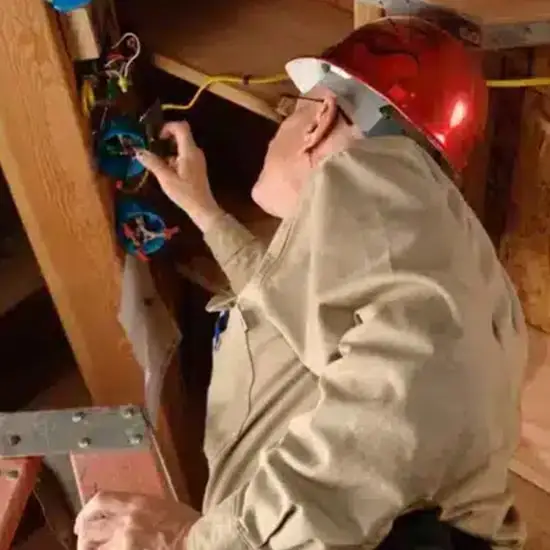
Pre Purchase Building Inspections go beyond basic assessments. Each property receives a thorough evaluation from the foundation through the roof structure. Our trade-qualified inspectors assess structural components, weathertightness systems, electrical installations, and plumbing infrastructure in accordance with AS 4349.1-2007.
Schedule your Pre-Purchase Building Inspection to receive your report within 24-48 hours. Every report includes moisture testing results, structural analysis, and detailed documentation to support confident property negotiations.
WRITTEN BUILDING INSPECTION
Professional and Reliable Inspection reports to AS4349.1 reporting Standards
METH TESTING
Same-day onsite testing with your building inspection in all suburbs
VERBAL BUILDING INSPECTION
On site or over the phone verbal overview for time critical decisions




Johnston's Unique Building Challenges
The Quality Spectrum — A Dozen Builders, a Dozen Standards
Johnston Ridge was developed with a deliberate policy of builder diversity. More than a dozen separate construction companies built homes in the estate, from national volume builders to local operators who built a handful of homes a year. The result is a suburb where two homes on the same street can have completely different structural adequacy, despite being built to the same code, on the same soil, in the same year.
We have inspected Johnston homes built by reputable builders that are in excellent condition — correctly tied-down roof framing, properly compacted fill under the slab, termite barriers installed to the NCC specification and maintained. We have also inspected Johnston homes where the roof bracing was incomplete, where the slab edge reinforcing was exposed at the perimeter, where the termite barrier consisted of a chemical spray applied to the fill surface before the slab was poured with no provision for reapplication, and where the external cladding was fixed at half the specified centres.
The difference is not the age of the home or the price point. It is the builder's quality management system, and whether the certifier checked the critical-stage works.
For a Johnston buyer, the implication is that a standard pre-purchase inspection is more essential here than in a suburb with a more uniform housing stock. The history of which builder built the home, whether the original owner supervised the construction closely, and whether the certifier's stage hold points were actually inspected — these are the pieces of information that distinguish a good Johnston home from one with hidden structural deficiencies.
The Tomazos Townhouses — A Suburb's Defining Failure
Sixteen affordable rental townhouses built in The Parks estate by the Tomazos Group for Venture Housing are being demolished. They were completed in 2015, and within three years, tenants reported cracking walls, water ingress, movement underfoot, and a general sense that the buildings were unstable. Engineering assessments confirmed that the homes were structurally non-compliant and could not be relied upon to perform in cyclonic conditions. The tenants were moved out in 2020. The homes have sat empty since. The demolition is in progress as of 2024.
The specific defects identified in the Tomazos townhouses are instructive for any Johnston buyer, even if their property is not one of the 16. The engineering reports documented inadequate lateral bracing in the wall framing, connections between structural elements that were not capable of transferring the wind loads required in Region D cyclonic conditions, and corrosion in steel components that had progressed further than expected for homes that were barely five years old. These are not exotic defects. They are the same categories of failure that can affect any lightly framed building in the Territory when the critical connections and bracing details are not verified during construction.
The Tomazos' story also matters for what it reveals about the regulatory environment. The defects were identified years after completion, the builder argued that the homes had been certified at every stage, and the regulator ultimately could not prosecute because the investigation period had lapsed. The homes are being demolished at taxpayer expense because the insurance schemes in place at the time of construction did not cover the cost of rectifying systemic structural non-compliance.
For a buyer, this is a reminder that occupancy certificates and stage approvals are not guarantees of structural adequacy — they are administrative checkpoints in a system that relies on the competence and integrity of the people doing the checking.
Transitional Ecology and the Shifting Risk Profile
Johnston was developed on land that was originally tropical woodland — a mix of eucalypts, acacias, and native grasses that supported a diverse insect and animal population. The clearing and subdivision replaced that ecology with housing. Still, the surrounding undeveloped land — the conservation areas within Johnston Ridge, the bushland along the Stuart Highway corridor, and the undeveloped blocks in the adjoining Mitchell and Zuccoli precincts — remains as a reservoir of termite colonies, feral animals, and invasive plant species that are now adjacent to the residential fabric.
The practical effect is that Johnston homes on the bushland interface experience termite pressure materially higher than that of homes on interior streets. The giant northern termite forages from the undisturbed bush into the residential blocks along root pathways and underground galleries that were established before the homes were built. The termite management systems installed during construction are the first line of defence.
Still, on a bushland interface block, the chemical barrier needs to be stronger and maintained more frequently than on an interior block. We inspect Johnston homes on the interface where the original barrier has never been reapplied and where the bushland vegetation comes right to the fence line — a direct termite pathway from the untreated reserve to the building.
Recent Inspection Example
We inspected a 2013-built home on a bushland interface lot in Johnston Ridge. The house was a two-storey steel-framed design by a local builder, on a sloping block with a cut-and-fill platform. The lower level was a concreted undercroft used as a rumpus room. During the inspection, we noticed that the steel columns supporting the upper floor at the interface between the cut and fill sides lacked corrosion protection at the base, and that the concrete slab of the undercroft exhibited a fine crack pattern that followed the outline of the fill zone.
We measured a 15-millimetre difference in floor level across the width of the undercroft — settlement of the fill that had occurred since construction. The owners had never noticed. The lower-level walls had been lined and painted, concealing the movement until we took level readings.
The repair involved underpinning the slab on the fill side and jacking the steel columns back to their true position—estimated cost: $25,000 to $35,000.
