
Building Inspection Cranbourne
BUILDING REPORT CRANBOURNE
Residential & Commercial Building Reports
Our Working Process
Book
Confirm
Inspect
Report
An on-site or over-the-phone verbal overview for time-critical decisions. Useful when you need an answer before an auction, a deadline, or a multi-offer situation.
Pre-purchase inspections occur before you make an offer or after acceptance, giving you crucial information about the property’s condition before you finalise your investment.
TESTING
Same-day on-site meth screening at your property. You'll know whether contamination is present before you commit to the purchase.
A pest inspection checks accessible areas of an Australian property for termites, borers, fungal decay and conditions that attract timber pests.
Builders Report Cranbourne
What Our Inspectors Typically Find
Cranbourne is a suburb of two distinct eras, and the inspection story is different for each. The older parts of Cranbourne, centred around the original township and extending north and west, were developed from the 1970s through to the 1990s as the south-eastern growth corridor began its long expansion.
The newer parts — Cranbourne East, Cranbourne North, Cranbourne West, and the vast greenfield estates like Botanic Ridge, Settlers Run, and Mayfield — have been built since the 2000s in one of Australia's fastest-growing regions. What unites them is the ground they sit on: flat, poorly draining plains of highly reactive clay, on a former floodplain that was never well suited to the kind of intensive residential development it now supports.
The older housing stock in Cranbourne is predominantly 1980s and 1990s brick veneer homes on concrete slabs, with terracotta or concrete tile roofing, set on large blocks that reflected the land values of the time. These homes were built during a period when Melbourne's building standards for footing design were improving, but many were still constructed to specifications that did not fully account for the extreme soil reactivity of this area.
The newer estates feature modern brick veneer and rendered homes, often on smaller lots with minimal setbacks, built by volume builders under tight margins.
Roof condition in Cranbourne follows the patterns you'd expect for each era. The older homes have terracotta or concrete tile roofs that are 25 to 40 years old. The ridge capping and bedding are often deteriorated, the valley gutters may be rusting, and the original sarking is usually intact but can be torn or degraded around penetrations.
The newer homes have metal deck roofing or concrete tiles that are generally in good condition, but the quality of the roof installation varies significantly between builders. We regularly find inadequately flashed penetrations, poorly sealed ridge capping, and gutters installed with insufficient fall.
The standout risk in Cranbourne — and the one that should be at the top of every buyer's list — is slab movement caused by the interaction between reactive clay soils and poor drainage across the suburb's flat terrain. Cranbourne sits on some of the most reactive clay in metropolitan Melbourne.
The ground here has a high shrink-swell potential, meaning it changes volume significantly between wet and dry periods. On the flat plains of the Casey area, water drains slowly, so after heavy rain, the soil stays saturated for longer, keeping the clay in an expanded state. During dry periods, the clay shrinks and cracks open. This seasonal cycle places continuous stress on concrete slabs and footings.
The result is slab heave and differential settlement. We find stepped cracking in brick veneer walls, diagonal cracks above window and door openings, floor tiles that have cracked from slab movement, and doors and windows that jam or won't latch. In properties where the issue has been ongoing for years, the internal wall linings show separation at the corners, and floor levels can be noticeably uneven across open-plan areas.
The homes most affected are those on the older estates, where footing design standards were less robust, but we also see movement in newer homes where the site-specific soil classification was inaccurate, or the footing design was marginal.
Termite risk in Cranbourne is high. The combination of reactive clay soils that crack open in dry weather — providing easy access routes for subterranean termite colonies — and the moist conditions near foundations from poor drainage creates an environment where termite activity is a genuine concern. Any pre-purchase inspection in Cranbourne should include a thorough pest inspection, and properties without a current termite management system should be treated as a priority.
Drainage is the underlying driver of many of the defects we find. Cranbourne's flat terrain means stormwater doesn't run off naturally, and if the site drainage hasn't been properly designed and maintained, water pools against the slab edge. Downpipes that terminate less than a metre from the building, garden beds that are mounded above the slab level, concrete paths that slope back toward the house — these are common findings, and each one is adding moisture to the reactive clay beneath the slab.
+
+
BUILDING INSPECTOR CRANBOURNE
24-48 Hour Report Delivery Guaranteed
Looking for a Building Inspector in Cranbourne? Our trade-qualified inspectors provide thorough building reports within 24-48 hours, combining speed with meticulous attention to detail.
Our building inspection service is perfect for time-sensitive property purchases. Each inspector carries professional indemnity insurance and brings deep knowledge of your local market and common building challenges. All inspections comply with AS 4349.1-2007 standards for comprehensive, reliable assessments.
Property buyers rely on our inspection expertise for accurate, actionable assessments. Every report delivers a complete structural evaluation, weather-tightness analysis, and maintenance requirements—giving you the information you need to make confident purchasing decisions on schedule.

PRE PURCHASE BUILDING INSPECTION CRANBOURNE
Investing in property is a major financial commitment—a Pre Purchase Building Inspection protects that investment. Our comprehensive reports are prepared by inspectors with extensive knowledge and experience of the local market.
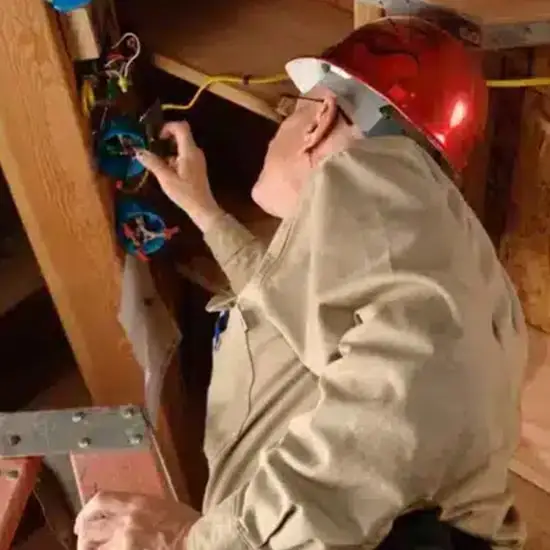
Pre Purchase Building Inspections go beyond basic assessments. Each property receives a thorough evaluation from the foundation through the roof structure. Our trade-qualified inspectors assess structural components, weathertightness systems, electrical installations, and plumbing infrastructure in accordance with AS 4349.1-2007.
Schedule your Pre-Purchase Building Inspection to receive your report within 24-48 hours. Every report includes moisture testing results, structural analysis, and detailed documentation to support confident property negotiations.
WRITTEN BUILDING INSPECTION
Professional and Reliable Inspection reports to AS4349.1 reporting Standards
METH TESTING
Same-day onsite testing with your building inspection in all suburbs
VERBAL BUILDING INSPECTION
On site or over the phone verbal overview for time critical decisions




Cranbourne's Unique Building Challenges
Location Context
Cranbourne sits about 45 kilometres south-east of the Melbourne CBD, in the City of Casey, one of Australia's fastest-growing municipalities. The suburb has been at the centre of Melbourne's south-eastern growth corridor for three decades, with large-scale greenfield estates transforming former market gardens and grazing land into residential subdivisions at a remarkable pace.
The physical reality of the area is that much of it is built on flat, low-lying former floodplain, on highly reactive clay soils, with drainage infrastructure that has struggled to keep pace with development. These constraints affect every property in the suburb, regardless of its age or price point.
Reactive Clay and Slab Performance on Flat Terrain
Cranbourne's soils are among the most demanding in metropolitan Melbourne for footing design. The clay here has high shrink-swell potential, causing significant ground movement between wet and dry seasons. The problem is compounded by the flat terrain, which means water sits on the ground rather than running off.
After heavy rain — and Cranbourne gets its share — the clay beneath and around the slab stays saturated for extended periods, expanding and exerting upward pressure on the slab. When the weather dries out, the clay shrinks, and the slab settles back — often unevenly.
This is not a theoretical risk. Homes across Cranbourne show signs of slab movement directly attributable to soil conditions. The typical damage pattern is differential movement, in which one part of the slab has risen or dropped relative to another. In older homes with stiffened raft slabs, the movement often manifests as a twist across the slab, with one corner heaving and the diagonally opposite corner settling.
The brick veneer follows the slab movement, producing stepped cracking in the mortar joints that follows a predictable pattern — wider at the point of maximum movement, narrowing toward the stable areas.
The homes most affected are those built in the 1980s and 1990s, when the building standards for footing design on reactive soils were less prescriptive. Many of these homes have slab edge beams that are too shallow to extend below the depth of seasonal moisture fluctuations, so the slab moves with the seasons.
Homes built after the introduction of AS 2870 in 1996 generally perform better, but only if the site-specific soil classification was accurate and the footing design was appropriate for the actual soil conditions. We have inspected homes in newer estates where the soil classification underestimated reactivity, and slab movement began within a few years of construction.
For buyers, the inspection should focus on the pattern of cracking in the brickwork, the floor levels across the main living areas, and any evidence that the slab movement is ongoing rather than historic. Crack monitors installed over several months can provide definitive answers, but even a single inspection can identify the key indicators.
Drainage: The Critical Issue on Flat Land
Poor drainage is the leading cause of structural failure in Victoria, and in Cranbourne, it is the single most important factor in building performance. The suburb's flat terrain means stormwater does not flow away from buildings naturally — it must be managed through carefully designed and maintained drainage systems. Where those systems are inadequate or compromised, water saturates the ground around the slab edge, triggering the clay expansion cycle that drives slab movement.
The specific drainage issues we find most often in Cranbourne include downpipes that discharge directly onto the ground within 300 millimetres of the slab edge, concrete paths and driveways that slope back toward the building, garden beds that have been built up above the slab level (trapping water against the brickwork), and ineffective or blocked agricultural drainage systems.
In older estates, the original stormwater connections were not always designed to handle the increased runoff from paved driveways, patios, and sheds added since construction. In the newer estates, the drainage infrastructure is generally better, but it is lot-specific.
The pipes that take water from the downpipes to the kerb or the estate drainage network are only as good as the builder who installed it, and we regularly find poorly graded pipes, blocked junctions, and outlets that discharge at points too close to the building.
The Cranbourne North area has a documented history of stormwater flooding during even mild to moderate rainfall events, and Melbourne Water has undertaken multimillion-dollar drainage upgrades, including retarding basins and increased pipe capacity, to address persistent issues.
For buyers, checking whether the property has a history of water pooling around the slab is a basic step, but an inspection that includes a visual check of drainage infrastructure after recent rain is far more valuable.
Flood Risk and Stormwater Management
Approximately 14 per cent of the City of Casey is at risk of flooding from rivers, creeks, and overland stormwater flows, and Cranbourne sits firmly within the affected areas. The suburb has a documented history of flash flooding — the February 2011 floods caused significant problems across Cranbourne, with road closures and property inundation, and subsequent storm events in 2012 and 2022 have reinforced the pattern.
The flood risk in Cranbourne is driven by the flat terrain, the high proportion of impervious surfaces in the newer estates, and a drainage network that was designed to standards that no longer match the rainfall intensities we are seeing.
Properties at the low points of the estate drainage catchments are most at risk, and the signs are often visible — water staining on brickwork near ground level, soil erosion in garden beds, and downpipes that appear to be well maintained but are simply overwhelmed during heavy rain.
The newer estates generally have better stormwater management infrastructure — retarding basins, wetland systems, and piped drainage networks that are designed to current standards. But even the best-designed system needs maintenance, and we regularly find stormwater pits full of sediment, pipes blocked by tree roots, and overland flow paths blocked by landscaping or fencing.
Termite Risk in a High-Pressure Zone
Cranbourne is a declared termite area, and the termite pressure across the suburb is among the highest in metropolitan Melbourne. The conditions that create this risk are well understood: reactive clay soils that crack open, creating easy entry routes for subterranean termites; flat terrain that keeps the ground moist near foundations; and abundant food sources in the form of timber framing and cellulose-rich building materials.
In the older estates, the original termite management systems — where they were installed at all — have typically expired. The chemical barriers applied during construction have degraded over time and have often been compromised by subsequent landscaping, paving, and building work.
In the newer estates, termite management systems are mandatory under the Building Regulations, but we regularly find that the system has been disturbed by later work and not reinstated. A concrete patio poured against the house, a retaining wall built within 500 millimetres of the slab, or new plumbing penetrations through the slab can all compromise the integrity of the termite barrier.
For buyers, the message is straightforward: any pre-purchase inspection in Cranbourne must include a termite inspection, and any property without a current termite management system should be viewed as a risk. The cost of installing a new system — typically $2,500 to $4,000, depending on the system type — is small relative to the potential cost of untreated termite damage.
Greenfield Estate Construction Quality
The newer estates in Cranbourne — Botanic Ridge, Settlers Run, Mayfield, Brompton, and others — have added thousands of new homes to the suburb, and the quality of construction across these estates is variable. The volume builders who dominate this market operate under tight margins, and the speed of construction can sometimes come at the expense of quality.
The defects we most commonly find in newer Cranbourne homes include inadequate waterproofing in wet areas (showers, bathrooms, and en-suites that leak within months or years of completion), poor roof flashing details that allow water ingress around penetrations and wall junctions, settlement cracking in driveways and paths where the fill material was not properly compacted, and, in some cases, combustible cladding materials on multi-unit developments.
The Cladding Safety Victoria research published in 2024 found that nearly 50 per cent of buildings with combustible cladding also have non-cladding defects, with an average rectification cost of $180,000 per building. For buyers of townhouses or apartments in newer Cranbourne developments, a thorough inspection of the common property and a review of the owners' corporation records are essential steps.
Stage inspections during construction — where an inspector visits the site at key stages such as slab pour, framing, waterproofing, and final handover — are strongly recommended for anyone building a new home in Cranbourne. These inspections catch defects while they can still be corrected relatively cheaply, rather than years later when the cost of rectification is far higher.
The Older Housing Stock: 1980s and 1990s Brick Veneer
The older parts of Cranbourne, developed from the 1970s through the 1990s, contain a high proportion of brick veneer homes on concrete slabs. These homes are now 25 to 45 years old and are at a stage where the original building materials and systems are nearing the end of their service life.
The most significant issue with this older stock is slab movement due to reactive clay, as discussed above. Beyond that, the common defects include roof tiles that need repointing of ridge capping and hip junctions (the original mortar bedding deteriorates and allows water ingress), original galvanised steel plumbing that is corroding internally and restricting flow, and window frames — particularly early aluminium frames — that have failed seals and are draughty or leaking.
Asbestos-containing materials are also a consideration in homes built before the mid-1980s. Eaves linings, wall cladding, and roofing materials from this period may contain asbestos, which adds cost and complexity to any renovation work involving removal or disturbance.
Bushfire Risk
Properties on the southern and eastern fringes of Cranbourne, where the urban area meets rural land, may fall within designated bushfire-prone areas. The bushfire risk in this part of Casey is primarily from grassfires, which can move quickly through dry grassland during hot, windy conditions and pose a real threat to properties on the urban-rural interface.
For buyers considering properties on the fringes of Cranbourne, it is worth checking whether the property is in a Bushfire Management Overlay area and whether the existing building fabric meets the relevant standards.
Era-Specific Housing Stock Risk Profile
1980s–1990s brick veneer homes: The largest portion of the older housing stock. Concrete slab on ground, brick veneer walls, terracotta or concrete tile roofing. Slab movement from reactive clay is the dominant issue. Ridge capping bedding is typically deteriorated and needs repointing. Original termite barriers, where they existed, have expired. Galvanised steel plumbing is approaching the end of its life. Asbestos may be present in eaves and cladding.
1990s–early 2000s homes: Generally better footing design under AS 2870, but site-specific soil classification was not always accurate. Metal deck or concrete tile roofing. Termite management systems were required but may have been compromised by subsequent work. Plumbing is approaching its 20- to 25-year service life.
Mid-2000s onward greenfield estate homes: Modern brick veneer and rendered homes on concrete slabs. Better footing design and mandatory termite protection, but build quality varies between volume builders. Waterproofing failures in wet areas are the most common defect. Settlement cracking in driveways and paths is common where fill was not properly compacted. Stage inspections during construction are recommended.
Multi-unit townhouse developments (2010s onward): An increasing proportion of Cranbourne's new housing supply. Defect profile includes waterproofing failures, combustible cladding in some cases, and inadequate acoustic separation between units. The financial health of the owners' corporation and the adequacy of the sinking fund are critical assessment points.
Recent Inspection Examples
Example 1 — 1990s brick veneer, Cranbourne North
A family home on a large corner block, presenting well with established gardens and a recently renovated kitchen and bathroom. The inspection revealed a stepped crack pattern in the brickwork on the western elevation, running from the window head down to the slab edge. The crack was approximately 3 millimetres wide at its widest point and had been filled and painted over.
The floor in the adjacent living room had a noticeable slope, measuring roughly 25 millimetres of fall across a 4-metre span. The cause was a combination of reactive clay soils and a downpipe on the western corner that had been discharging directly onto the ground within 200 millimetres of the slab edge for years. The slab had moved differentially, and the movement was ongoing.
Estimated remediation: $15,000–$20,000 for diversion of downpipe, subsoil drainage, and slab stabilisation, plus cosmetic repairs.
Example 2 — 2015-built townhouse, Cranbourne East
A relatively new townhouse in a modern estate, still within the builder's warranty period. The inspection identified two significant defects. First, the waterproofing in the main bathroom had failed — moisture readings behind the shower wall were above 40 per cent, and there was evidence of water tracking along the base of the wall toward the adjoining bedroom.
Second, the termite management system had been compromised by a concrete path poured around the rear of the property, which bridged the chemical barrier and provided a direct pathway for termites to reach the slab edge. The builder had been notified of the waterproofing issue but had not yet rectified it. The termite barrier issue was not covered by warranty, as it was caused by work performed after the original construction.
Estimated remediation: $5,000–$8,000 for the waterproofing rectification, plus $2,500–$4,000 for a new termite management system.
We offer building inspections across Australia — Sydney, Perth, Adelaide, Canberra, Tasmania and Darwin.
Sydney locations include: Craigieburn, Point Cook, Pakenham, Reservoir, Tarneit, Berwick, Werribee, Glen Waverley, Richmond, Brunswick, Narre Warren, South Yarra, Doncaster, Hawthorn, Southbank, Sunshine and St Kilda.
