
Building Inspection Sunshine
BUILDING REPORT SUNSHINE
Residential & Commercial Building Reports
Our Working Process
Book
Confirm
Inspect
Report
An on-site or over-the-phone verbal overview for time-critical decisions. Useful when you need an answer before an auction, a deadline, or a multi-offer situation.
Pre-purchase inspections occur before you make an offer or after acceptance, giving you crucial information about the property’s condition before you finalise your investment.
TESTING
Same-day on-site meth screening at your property. You'll know whether contamination is present before you commit to the purchase.
A pest inspection checks accessible areas of an Australian property for termites, borers, fungal decay and conditions that attract timber pests.
Builders Report Sunshine
What Our Inspectors Typically Find
Sunshine is one of Melbourne's most historically significant suburbs, but its building stock tells a story that many buyers overlook. The suburb was developed as a planned industrial town by H.V. McKay's Sunshine Harvester Works from the 1910s onward, influenced by the Garden City movement.
The result is a suburb dominated by pre-war and post-war housing on generous blocks, much of it now carrying the accumulated maintenance burden of 70 to 110 years of service. The price points may be more accessible than inner Melbourne, but the defects are not necessarily cheaper to fix.
The housing stock is overwhelmingly detached houses on medium-to-large allotments, built in distinct waves. The earliest homes — Edwardian and Federation-era weatherboard cottages and bungalows with corrugated iron roofs — are concentrated around the original McKay subdivisions.
The post-war boom from the 1950s through the 1970s added vast numbers of brick-veneer and weatherboard homes, many built by the Housing Commission and through cooperative schemes. More recent infill development has brought townhouses and units, but these make up a relatively small share of the total.
Rising damp is a significant issue in Sunshine's older brick homes, particularly those built before the widespread adoption of damp-proof courses. The western suburbs' clay soils hold moisture for extended periods, and ground levels around many older homes have been altered over decades of landscaping — garden beds built up, concrete paths poured, verandahs enclosed — all of which can bridge whatever damp-proofing was originally installed.
The result is salt attack in the lower courses of brickwork, spalling, and internal plaster damage that owners often treat cosmetically rather than addressing the source.
Roof defects are heavily dependent on era and material. Sunshine's pre-war homes predominantly have corrugated galvanised iron roofing — much of it original or only once-replaced. These roofs are approaching or past 80 years of service. Deteriorated flashings around brick chimneys, rusted sheets at fastener points, and blocked or corroded box gutters are standard.
The post-war homes are split between terracotta tile roofs — which are generally robust but suffer from cracked tiles, slipped tiles, and deteriorated sarking — and corrugated asbestos cement roofs, which present their own set of concerns. Asbestos cement roofs are not defective in themselves, but they become so when they are damaged, weathered, or when unsuspecting owners attempt maintenance without proper precautions.
Subfloor conditions in Sunshine's older homes are regularly poor. Many sit on unlined brick piers with dirt floors and minimal subfloor ventilation. The combination of Melbourne's western suburbs' clay soils — which hold moisture at the surface for extended periods — and the lack of vapour barriers creates a damp environment beneath the floor that is ideal for timber decay.
We regularly find moisture readings of 20 per cent or higher in floor joists and bearers, particularly around the perimeter where subfloor ventilation is most restricted. In homes where plumbing leaks have been present — and many have — the decay can extend to sections of the floor frame that require structural repairs.
The standout risk in Sunshine — and one that buyers in this market consistently underestimate — is the interaction between the suburb's highly reactive clay soils and the original shallow footings that the vast majority of homes were built on. Melbourne's western suburbs are well known for their expansive clay soils, and Sunshine sits squarely in this zone.
The seasonal shrink-swell cycle has been working on these shallow footings for decades. The prolonged drought years caused significant soil desiccation and differential settlement. The wet years that followed caused rebound movement, often in different directions.
Many Sunshine homes show the classic signs: diagonal cracking in brickwork above window and door openings, sloping timber floors, and doors and windows that no longer operate properly. In homes that have never had their footings upgraded, the movement is ongoing, and buyers should expect it to continue.
Maintenance history varies enormously across Sunshine. Some homes have been occupied by the same families for decades and maintained with the consistency that long ownership allows. Others have been through multiple ownership cycles, including periods of rental investment where cosmetic fixes were prioritised. Fresh paint over internal cracking, floor coverings laid over uneven subfloors, and patched-but-unresolved roof leaks are common findings.
+
+
BUILDING INSPECTOR SUNSHINE
24-48 Hour Report Delivery Guaranteed
Looking for a Building Inspector in Sunshine? Our trade-qualified inspectors provide thorough building reports within 24-48 hours, combining speed with meticulous attention to detail.
Our building inspection service is perfect for time-sensitive property purchases. Each inspector carries professional indemnity insurance and brings deep knowledge of your local market and common building challenges. All inspections comply with AS 4349.1-2007 standards for comprehensive, reliable assessments.
Property buyers rely on our inspection expertise for accurate, actionable assessments. Every report delivers a complete structural evaluation, weather-tightness analysis, and maintenance requirements—giving you the information you need to make confident purchasing decisions on schedule.
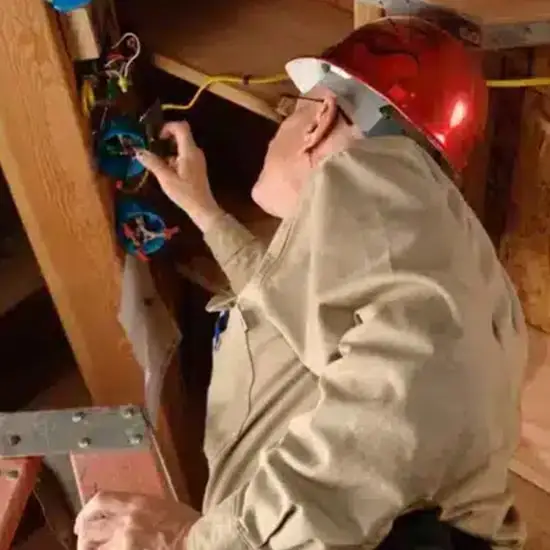

PRE PURCHASE BUILDING INSPECTION SUNSHINE
Investing in property is a major financial commitment—a Pre Purchase Building Inspection protects that investment. Our comprehensive reports are prepared by inspectors with extensive knowledge and experience of the local market.
Pre Purchase Building Inspections go beyond basic assessments. Each property receives a thorough evaluation from the foundation through the roof structure. Our trade-qualified inspectors assess structural components, weathertightness systems, electrical installations, and plumbing infrastructure in accordance with AS 4349.1-2007.
Schedule your Pre-Purchase Building Inspection to receive your report within 24-48 hours. Every report includes moisture testing results, structural analysis, and detailed documentation to support confident property negotiations.
WRITTEN BUILDING INSPECTION
Professional and Reliable Inspection reports to AS4349.1 reporting Standards
METH TESTING
Same-day onsite testing with your building inspection in all suburbs
VERBAL BUILDING INSPECTION
On site or over the phone verbal overview for time critical decisions




Sunshine's Unique Building Challenges
Location Context
Sunshine sits about 12 kilometres west-northwest of the Melbourne CBD, at the junction of the railway lines to Ballarat and Bendigo. It falls within the City of Brimbank municipality. The suburb was essentially created by industry — the H.V. McKay Sunshine Harvester Works dominated the local economy for decades and shaped the suburb's layout, housing stock, and population.
The planned residential subdivisions laid out under the influence of the Garden City movement gave Sunshine its characteristic wide streets, generous blocks, and mix of housing for workers, supervisors, and managers. The post-war era brought rapid population growth — from around 22,000 in 1951 to over 62,000 by 1961 — fuelled by migrant settlement and Housing Commission development.
The topography is generally flat to gently undulating, sitting on the volcanic and alluvial plains of Melbourne's west. The Kororoit Creek runs through the northern part of the suburb, and the Stony Creek catchment affects drainage in the southern areas. The underlying geology consists of basalt-derived clay soils overlying sedimentary deposits — the classic western-suburbs reactive clay profile.
These soils are classified as Class H (highly reactive) across most of Sunshine, with some areas of Class M (moderately reactive) and Class E (extremely reactive) in localised pockets. The implications for building performance are significant and ongoing.
Reactive Clay Soils and Foundation Movement
Sunshine's reactive clay soils are the single most important factor affecting the long-term performance of its housing stock. These soils swell when wet and shrink when dry, and the seasonal moisture changes in Melbourne's climate mean the ground beneath Sunshine's homes is in constant motion. The characteristic depth of seasonal moisture change in these soils is around 1.5 to 2.5 metres — far deeper than the shallow strip footings that most of Sunshine's older homes were built on.
The damage patterns follow predictable lines. The most common is differential movement — one corner of the house settles more than another because the soil beneath it has dried out more (often near a tree or garden bed), or because a leaking drainpipe has locally saturated the clay, causing it to swell and heave the footing upward.
The result is cracking in brickwork, both internal and external, that tends to concentrate at the corners of window and door openings where the stress is highest. Timber floors slope perceptibly, and the direction of the slope often changes between summer and winter as the soil moisture profile shifts.
In Sunshine's post-war Housing Commission homes and project homes, the footing systems are typically concrete strip footings or slab-on-ground, and they are not immune to this movement. The waffle pod slabs used in many 1960s and 1970s homes are particularly vulnerable to differential movement on reactive soils when drainage around the perimeter is inadequate, which it often is.
We have inspected Sunshine homes where perimeter drainage had been blocked by garden beds, concrete paths, or simply decades of neglect, and the resulting soil moisture imbalance had caused slab-edge heave of 30 to 50 millimetres across a single wall.
The management of this risk comes down to drainage, consistent soil moisture, and — where movement has already occurred — engineered footing remediation. Buyers should be looking for well-maintained stormwater drainage that directs water away from the footings, downpipe extensions that discharge at least 1.5 metres from the building, and garden irrigation that doesn't concentrate water against the walls.
Homes that have had underpinning or footing stabilisation work carried out by properly qualified engineers are generally sound investments. Homes that show active cracking without evidence of investigation or remediation are high risk.
Asbestos in Sunshine's Pre-1990 Housing Stock
Asbestos-containing materials are widespread across Sunshine. The suburb's housing stock was built primarily between the 1910s and the 1980s — the peak period of asbestos use in Australian construction. Asbestos is present in multiple locations in most Sunshine homes built before 1990, and the Victorian Asbestos Safety and Eradication Agency advises that any home built before 1990 should be assumed to contain asbestos until testing proves otherwise.
The most common locations include: corrugated asbestos cement roof sheeting on post-war homes and outbuildings (garages, sheds, carports); flat asbestos cement sheeting used as external wall cladding, often referred to as fibro; eaves linings throughout; internal wall and ceiling linings in wet areas such as bathrooms and laundries, typically behind tiles; and backing material on vinyl floor coverings, particularly in kitchens and bathrooms. Less obvious locations include the linings of electrical meter boxes and switchboards, as well as asbestos-cement pipes used for stormwater drainage and flues.
For homeowners and buyers, asbestos is not necessarily a deal-breaker. Asbestos-containing materials in good condition, sealed, and undisturbed are low-risk because fibres are not released into the air. The problems arise when these materials are damaged, weathered, or disturbed through renovation work.
A 50-year-old corrugated asbestos cement roof, beginning to show surface degradation, may be releasing fibres into the gutters and garden beds below. A bathroom renovation that involves removing asbestos-cement wall sheeting behind the tiles will generate dust and debris that require professional management.
The practical implication for buyers is that any Sunshine home built before 1990 will eventually require the management of asbestos-containing materials. The cost of professional removal varies by material type and quantity. A full roof replacement on a standard Sunshine weatherboard home, including professional asbestos removal and disposal, adds $8,000 to $15,000 to the cost compared to a non-asbestos roof replacement. Buyers should factor this into their budget and timeline.
Please note that a pre-purchase inspection report can't identify all asbestos locations; it is limited to visual assessment. Materials that appear to be asbestos must be confirmed by laboratory testing.
Post-War Housing Commission and Cooperative Housing
A significant portion of Sunshine's housing stock was built between the 1950s and 1970s through the Housing Commission of Victoria and various cooperative building schemes. These homes share a common set of characteristics and defects distinct from those of earlier McKay-era housing.
The typical Housing Commission home in Sunshine is a modest brick-veneer or weatherboard dwelling on a concrete slab or strip footings, with a terracotta-tile or asbestos-cement roof. The construction quality was generally adequate for the standards of the time, but the materials and methods have aged differently from those of the earlier housing.
The concrete slabs from this era were often poured without adequate damp-proof membranes, and we regularly find evidence of moisture migration through the slab — particularly in homes where the perimeter drainage has been compromised. The external brickwork in many of these homes was constructed with soft, early-fired bricks that are prone to spalling and surface erosion, particularly on the weather-exposed western and southern elevations.
The plumbing in these homes is typically approaching or past its design life. Original galvanised iron pipes are now corroding internally, reducing flow and contributing to water quality issues. Copper plumbing from the 1960s and 1970s is known to develop pinhole leaks at elbows and joints where the pipe wall has thinned over decades.
We find leaking plumbing in the subfloor or slab in a significant proportion of inspections at these homes. The cost of replumbing a standard Sunshine home — including cutting into concrete slabs where the pipes run through them — can range from $5,000 to $15,000, depending on the extent of the work.
Electrical systems in these post-war homes are frequently inadequate for modern use. Original switchboards with ceramic fuse holders and vulcanised rubber wiring are still present in many homes. These systems were designed for a fraction of the electrical load that a modern household requires. Upgrading the switchboard and rewiring at least the high-demand circuits is a common recommendation following an inspection. The cost typically ranges from $3,000 to $6,000 for a partial upgrade.
Heritage Overlay Constraints
Parts of Sunshine are covered by heritage overlays administered by Brimbank City Council, particularly the McKay housing subdivisions around Anderson Road, Derby Road, and Durham Road, as well as the commercial precinct near the railway station. The heritage significance of these areas is well documented, with the McKay housing estate recognised as of national historical and social significance as a planned industrial suburb.
For owners of heritage-listed properties, the practical implications are similar to those in inner-suburbs. A planning permit is required for external alterations, including window replacements, re-roofing in non-original materials, fence changes, and additions.
The McKay estate homes are particularly valued for their original weatherboard cladding, corrugated iron roofs, timber verandahs, and generous front setbacks. Any renovation that alters these character-defining features will require heritage approval, and the council generally expects original materials and forms to be retained where possible.
The inspection relevance of this is that unauthorised work in heritage areas is reasonably common. We regularly find windows replaced with non-original materials, roof cladding replaced with Colorbond without heritage approval, and verandahs enclosed in ways that would not have been permitted.
These are not always critical issues, but they can create complications at settlement, with insurance, and with future resale. Buyers of a heritage-listed Sunshine home should request evidence that any external works completed in the last 20 years were carried out with appropriate approvals.
Recent Inspection Examples
Example 1 — 1920s weatherboard bungalow, McKay estate
A three-bedroom weatherboard bungalow on a generous corner block in the original McKay subdivision, built around 1922. The home presented well from the street with a recently painted exterior and a well-maintained garden. The inspection identified three significant issues.
First, a large mature oak tree in the front yard, approximately eight metres from the front wall, had caused significant differential movement in the front section of the house. The floor dropped 40 millimetres over a distance of three metres at the front door, and there was a diagonal crack extending from the top corner of the front window to the roof plate, wide enough at its widest point to insert a 5-millimetre gauge. The footings at the front corner had settled and were not founded on stable ground.
Second, the original corrugated iron roof had been patched multiple times over the years but was at the end of its life, with rust perforations visible on the southern slope. The roof cavity showed evidence of past water ingress and staining on the ceiling battens.
Third, the subfloor ventilation was severely compromised — the original brick pier vents had been partially blocked by landscaping, and the dirt floor beneath had no vapour barrier. Moisture readings in the floor joists exceeded 25 per cent in the worst-affected areas.
Estimated remediation: $8,000–$12,000 for footing stabilisation and crack stitching, $14,000–$18,000 for a full roof replacement, and $3,000–$5,000 for subfloor ventilation improvements and vapour barrier installation.
Example 2 — 1960s brick veneer, Housing Commission stock
A three-bedroom brick veneer home typical of the Housing Commission development in Sunshine's post-war expansion. The home had been owned by the same family for over fifty years and had received ongoing but reactive maintenance. The inspection revealed a roof of corrugated asbestos cement sheeting in poor condition — surface degradation consistent with prolonged weathering, moss growth on the southern slope, and several cracked sheets patched with sealant. Testing confirmed the presence of asbestos.
The roof was leaking at the ridge flashing, with staining and mould in the roof cavity. The original galvanised steel plumbing in the subfloor had corroded at multiple joints, with one active leak dripping onto the subfloor soil. The electrical switchboard still had ceramic fuse holders and cloth-insulated wiring. The brickwork on the western elevation showed surface spalling in the lower courses, consistent with moisture absorption from the adjacent garden bed, which had been built up above the damp-proof course.
Estimated remediation: $12,000–$15,000 for professional asbestos roof replacement (including removal and disposal), $4,000–$6,000 for re-plumbing, and $3,000–$4,000 for switchboard and electrical upgrade.
We offer building inspections across Australia — Sydney, Perth, Adelaide, Canberra, Tasmania and Darwin.
Sydney locations include: Craigieburn, Point Cook, Pakenham, Reservoir, Tarneit, Berwick, Werribee, Glen Waverley, Richmond, Brunswick, Narre Warren, South Yarra, Doncaster, Cranbourne, Hawthorn, Southbank and St Kilda.
