Building Inspection Richmond
BUILDING REPORT RICHMOND
Residential & Commercial Building Reports
Our Working Process
Book
Confirm
Inspect
Report
An on-site or over-the-phone verbal overview for time-critical decisions. Useful when you need an answer before an auction, a deadline, or a multi-offer situation.
Pre-purchase inspections occur before you make an offer or after acceptance, giving you crucial information about the property’s condition before you finalise your investment.
TESTING
Same-day on-site meth screening at your property. You'll know whether contamination is present before you commit to the purchase.
A pest inspection checks accessible areas of an Australian property for termites, borers, fungal decay and conditions that attract timber pests.
Builders Report Richmond
What Our Inspectors Typically Find
Richmond presents a classic inner-Melbourne inspection challenge: the suburb's popularity and price point can easily lead buyers to overlook underlying defects that are remarkably common in its older housing stock. The Federation and Edwardian-era terraces and workers' cottages that dominate the area have a lot of character, but they also carry a long list of maintenance burdens that first-time buyers especially tend to underestimate.
The housing stock here spans roughly 170 years, with the bulk built between the 1880s and the 1920s. The mix of Victorian terrace rows, Edwardian weatherboard cottages, and interwar brick bungalows means material types vary block by block.
Red face brick is common along the main roads, partly because an 1886 council by-law banned timber construction on major streets. Head down the side streets, and you'll find plenty of weatherboard homes with corrugated iron roofing. The materials themselves are often original or only partially updated, which is where the problems start.
Roof defects are nearly ubiquitous across Richmond's older homes. Corrugated iron roofs from the Federation period typically have 80 to 120 years of service. Even where the roofing has been replaced, the underlying roof framing and sarking are often original and showing their age.
Deteriorated flashings around brick chimneys, rusted valleys, and blocked box gutters are standard findings. Internal ceiling staining and mould in the roof cavity are the inevitable downstream results.
Subfloor moisture is another near-certain finding. Many Richmond homes sit on unlined brick piers with dirt floors — essentially open to the damp ground below. Poor subfloor ventilation, a lack of a vapour barrier, and plumbing leaks that have been dripping into the crawl space for years create ideal conditions for timber decay.
We regularly find moisture readings well above acceptable levels in floor joists and bearers. In weatherboard homes, the external wall framing is particularly vulnerable because it's closer to ground level and more exposed to splash-back.
Rising damp in solid brick walls is a recurring issue in Richmond's Victorian and Federation-era terraces. Original damp-proof courses, where they exist at all, are often compromised by decades of ground-level changes, garden bed build-up, or concrete paths poured against the walls. The result is salt attack and spalling in lower brick courses, deteriorated internal plaster, and that musty, damp smell that's all too familiar in these properties.
The standout risk in Richmond — and the one most frequently underestimated — is the combined effect of reactive clay soils and the age of the original footings. Melbourne's clay soils are notoriously expansive, and shrink-swell cycles have been working on Richmond's shallow brick footings for over a century.
The drought of the late 1990s and 2000s caused significant soil desiccation and differential settlement across the suburb, and when the rains returned, the rebound movement was just as damaging. It's extremely common to find diagonal cracking in brickwork above window and door openings, out-of-level floors, and doors that no longer latch properly. In many cases, the original footings have never been upgraded, so the movement is ongoing rather than historical.
Maintenance history varies enormously between properties. Some Richmond homes have been lovingly maintained by long-term owners who understood the quirks of old buildings — regular gutter cleaning, repointing, downpipe extensions, and re-bedding of ridge capping. Others have been through multiple short-term ownership cycles where cosmetic fixes were prioritised over real repairs. Fresh paint over rising damp and new floor coverings laid over bouncy joists are common discoveries.
For buyers, the practical implication is straightforward: the inspection should focus heavily on structural movement indicators, subfloor moisture levels, and the condition of the original roof framing. A well-maintained Richmond property with stabilised footings is a sound investment. One that hasn't — and many haven't — will present a significant capital works program in the first few years of ownership.
+
+
BUILDING INSPECTOR RICHMOND
24-48 Hour Report Delivery Guaranteed
Looking for a Building Inspector in Richmond? Our trade-qualified inspectors provide thorough building reports within 24-48 hours, combining speed with meticulous attention to detail.
Our building inspection service is perfect for time-sensitive property purchases. Each inspector carries professional indemnity insurance and brings deep knowledge of your local market and common building challenges. All inspections comply with AS 4349.1-2007 standards for comprehensive, reliable assessments.
Property buyers rely on our inspection expertise for accurate, actionable assessments. Every report delivers a complete structural evaluation, weather-tightness analysis, and maintenance requirements—giving you the information you need to make confident purchasing decisions on schedule.

PRE PURCHASE BUILDING INSPECTION RICHMOND
Investing in property is a major financial commitment—a Pre Purchase Building Inspection protects that investment. Our comprehensive reports are prepared by inspectors with extensive knowledge and experience of the local market.
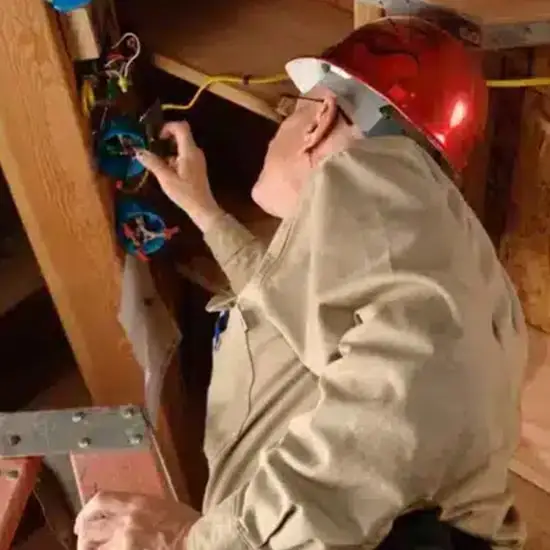
Pre Purchase Building Inspections go beyond basic assessments. Each property receives a thorough evaluation from the foundation through the roof structure. Our trade-qualified inspectors assess structural components, weathertightness systems, electrical installations, and plumbing infrastructure in accordance with AS 4349.1-2007.
Schedule your Pre-Purchase Building Inspection to receive your report within 24-48 hours. Every report includes moisture testing results, structural analysis, and detailed documentation to support confident property negotiations.
WRITTEN BUILDING INSPECTION
Professional and Reliable Inspection reports to AS4349.1 reporting Standards
METH TESTING
Same-day onsite testing with your building inspection in all suburbs
VERBAL BUILDING INSPECTION
On site or over the phone verbal overview for time critical decisions




Richmond's Unique Building Challenges
Location Context
Richmond sits on the northern bank of the Yarra River, less than three kilometres from the Melbourne CBD, in a narrow band of land between the river and the Eastern Freeway corridor. Its position on the river flats means it has always been susceptible to flooding, and many of its working-class terraces and cottages were built on shallow footings adequate for the era but have struggled as the ground beneath them has shifted over time.
The suburb has undergone an intense demographic and built-form transformation in the last two decades. Still, the underlying physical constraints — reactive clay, flood risk, heritage controls, and an ageing housing stock — have not changed at all.
Flood Risk and the Yarra River Floodplain
A significant portion of Richmond sits within the Yarra River floodplain, particularly south of Swan Street and around the Burnley and Cremorne pockets. The City of Yarra Flood Mapping Project has identified areas where overland flow and riverine flooding present real risks to existing buildings and new developments alike. Many properties in the lower-lying parts of Richmond were built before modern flood mapping existed, and their floor levels, drainage systems, and subfloor configurations were never designed to handle the kind of storm events that are becoming more frequent.
The practical consequences are often hidden until a heavy rain event occurs. Properties that sit below the nominated flood level may experience inundation of subfloor spaces, damage to stored goods, and water ingress through low-set floor vents and door thresholds.
More importantly, the periodic saturation of reactive clay subsoils in these areas accelerates foundation movement — the ground swells unevenly when wet, then contracts and cracks when it dries out. This cycle is particularly damaging for Richmond's older homes with shallow strip footings that don't extend below the zone of seasonal moisture change.
For buyers looking at properties in the lower parts of Richmond, a building inspection should always include an assessment of the property's floor level relative to the surrounding ground, the adequacy of stormwater drainage, and any evidence of previous flood damage in the subfloor area.
Properties that have had flood mitigation work done — such as raised floor levels, backflow prevention devices, or upgraded drainage — are far better prospects than those where nothing has been addressed.
Heritage Overlay Constraints and Renovation Risks
Richmond is heavily covered by heritage overlays administered by the Yarra City Council. The Richmond Hill Heritage Precinct, the Barkly Gardens Heritage Overlay, and numerous individually listed heritage places mean that a large proportion of the suburb's housing stock is subject to controls that affect what owners can and can't do to their properties. This creates a specific set of building challenges that go beyond the typical maintenance issues.
The most immediate impact is on renovations and extensions. A heritage overlay means a permit is required for demolition, external alterations, window replacements, re-roofing in non-original materials, fence changes, and sometimes even painting previously unpainted brickwork.
This can turn a straightforward reno into a costly and time-consuming approval process. Several VCAT cases involving Richmond properties have centred on exactly this tension — owners wanting to extend their homes to accommodate modern living, and council insisting on heritage outcomes that limit what's possible.
For example, adding a second storey to a single-storey Federation terrace in the Richmond Hill precinct will almost certainly trigger a heritage assessment, and the council will scrutinise visibility, setbacks, materials, and massing in detail.
Even internal alterations can be affected if they impact the structural integrity of the original fabric, such as chimney breasts, original fireplaces, and exposed timber joinery. The upshot is that some Richmond heritage homes are effectively frozen in their original floorplan, which means families often outgrow them or resort to ad hoc rear additions that may or may not have been permitted.
From an inspection perspective, this matters because unauthorised work is surprisingly common. Out-of-permit bathroom renovations, window replacements using non-original materials, and unapproved rear decking or pergolas are common. These aren't always deal-breakers, but they can create issues with insurance, future resale, and council compliance that buyers need to know about before they commit.
Warehouse Conversions and Apartment Defects
Richmond's industrial past has left a legacy of warehouse and factory buildings that have been converted into apartments, and the quality of these conversions varies widely. Some are genuine heritage-adaptive reuse projects with proper engineering and fire safety upgrades. Others are far less rigorous, and the Building Appeals Board records tell the story.
Multiple Richmond apartment buildings have been subject to board orders requiring the removal or rectification of combustible cladding. Buildings at Stawell Street, Bridge Road, Burnley Street, and Elizabeth Street have all had ACP issues serious enough to require fire engineering reports, upgraded essential safety measures, and, in some cases, complete removal of non-compliant cladding within very tight timeframes.
These are not trivial matters — the costs of cladding rectification can run into hundreds of thousands of dollars per building, and they're typically passed back to owners through special levies.
Warehouse conversions also present structural quirks that differ from conventional residential construction. Concrete slabs originally designed for light industrial loads are often carrying residential partitions and finishes that add weight. Open-plan layouts were carved out of former factory spaces without necessarily providing adequate lateral bracing.
Soundproofing between converted units is frequently inadequate. And the mechanical services — plumbing, electrical, ventilation — are sometimes retrofitted in ways that are serviceable but far from ideal.
Anyone buying into a converted warehouse or apartment building in Richmond needs to do their homework on the building's compliance history, any cladding-related orders, the adequacy of the owners' corporation sinking fund, and the original conversion approvals. The building inspection should look particularly closely at fire safety measures, common property drainage, and the condition of any retained original fabric, like steel columns, roof trusses, and brickwork.
Era-Specific Housing Stock Risk Profile
Victorian-era terraces (1850s–1890s): The oldest housing in Richmond, concentrated near the city's western end. These tend to have shallow bluestone or brick footings, unlined cavity brick construction, and original timber floors that are often compromised by damp and termite activity. The party walls between attached terraces can conceal structural issues that are difficult to inspect, including bowing, separation from the roof framing, and inadequate lateral restraint.
Federation and Edwardian-era homes (1900–1920): The dominant housing type across central and eastern Richmond. Red face brick and weatherboard construction with corrugated iron roofs. Common issues include rising damp in brickwork (especially where ground levels have been raised), failed damp-proof courses, rusted roof sheeting at fasteners and flashings, and the reactive clay footing movement described earlier. The decorative timber elements — verandah fretwork, window hoods, and gable infill — are frequently found to have rot where paint systems have failed.
Interwar bungalows and brick homes (1920s–1940s): More common in the eastern parts of Richmond and towards Burnley. Generally, more robust construction with concrete footings and brick veneer or cavity brick walls. However, the roofing materials of this era — terracotta tiles and corrugated asbestos cement — are often nearing the end of their useful lives. Asbestos in eaves linings, wall cladding, and roof sheeting is a significant consideration for any renovation work.
Post-war and late 20th century infill (1960s–1990s): A smaller portion of the housing stock, but where it exists, the main defects are typical of the period — concrete slab edge cracking (sometimes undersealed), poorly installed damp-proof membranes, and plumbing that's approaching the end of its service life.
Recent Inspection Examples
Example 1 — Federation weatherboard, central Richmond
A single-fronted weatherboard cottage built around 1910, presenting beautifully with a freshly painted exterior and a well-maintained garden. Under the floor, however, the subfloor ventilation was severely compromised — three of the four original vent openings had been partially or fully blocked by recent landscaping and a concrete side path.
Moisture readings in the floor joists exceeded 28% in the worst-affected areas, and there was visible decay in two of the main bearers. The owner was unaware that the path they'd paid for two years earlier was directly contributing to the problem—estimated remediation: replacement of affected timbers and installation of additional subfloor vents with drainage adjustments.
Example 2 — 1990s warehouse conversion, Cremorne
A spacious apartment in a converted printing factory, marketed as a premium property with exposed brick and high ceilings. The owners' corporation had recently received a Building Appeals Board notice requiring the removal of non-compliant ACP cladding on the eastern facade.
The special levy to cover the work was over $45,000 per unit. The buyer's inspection also identified inadequate smoke detection in the common corridors (original to the conversion and never upgraded to current standards) and a section of the concrete slab in the living area that showed evidence of long-term damp migration from an adjoining bathroom slab. The cladding issue alone was enough for the buyer to withdraw their offer.
We offer building inspections across Australia — Sydney, Perth, Adelaide, Canberra, Tasmania and Darwin.
Sydney locations include: Craigieburn, Point Cook, Pakenham, Reservoir, Tarneit, Berwick, Werribee, Glen Waverley, Brunswick, Narre Warren, South Yarra, Doncaster, Cranbourne, Hawthorn, Southbank, Sunshine and St Kilda.
