
Building Inspection Narre Warren
BUILDING REPORT NARRE WARREN
Residential & Commercial Building Reports
Our Working Process
Book
Confirm
Inspect
Report
An on-site or over-the-phone verbal overview for time-critical decisions. Useful when you need an answer before an auction, a deadline, or a multi-offer situation.
Pre-purchase inspections occur before you make an offer or after acceptance, giving you crucial information about the property’s condition before you finalise your investment.
TESTING
Same-day on-site meth screening at your property. You'll know whether contamination is present before you commit to the purchase.
A pest inspection checks accessible areas of an Australian property for termites, borers, fungal decay and conditions that attract timber pests.
Builders Report Narre Warren
What Our Inspectors Typically Find
Narre Warren is a different proposition from Melbourne's inner suburbs, and the inspection approach reflects that. Where the inner north deals with heritage brick on reactive clay, this part of the south-eastern growth corridor is dominated by brick-veneer homes on concrete slabs, built from the 1970s onward, on land that was market gardens and grazing paddocks not that long ago.
The defect profile here is less about rising damp and decaying roof timbers and more about slab movement, termite risk, and the quality of construction in a suburb that grew fast — sometimes too fast.
The bulk of Narre Warren's housing stock dates from the 1970s through to the early 2000s, with a second wave of greenfield development rolling through Narre Warren South and surrounding estates in the past two decades. The suburb's most interesting pocket is the Fountain Gate Estate, designed by Robin Boyd in the 1960s using Radburn planning principles — pedestrian paths separated from roads, cul-de-sac entries, and connecting parklands.
Those homes are a local heritage asset, but they also carry the maintenance burden of 50-plus years of exposure to the elements on their original materials.
Roof condition is the first thing we check, as it is everywhere, but the picture is different from the inner suburbs. Terracotta tiles and concrete tiles dominate, and the issues are broken or cracked tiles, failed ridge capping bedding, and corroded fasteners in coastal-affected areas.
Many homes in Narre Warren have original roof sheets or tiles that have been in place for 30 or 40 years, and the pointing at the ridge capping and hip junctions is often loose or missing entirely. Blocked valley gutters and overflows from inadequate downpipe systems are common findings. Because so many of these roofs are low-pitched, even minor gutter blockages can cause water to back up under the tiles.
The standout risk in Narre Warren — and the one that consistently surprises buyers — is termite activity. Narre Warren South is a declared termite area, and the termite pressure across the broader suburb is high. These aren't just isolated finds in older homes with timber floors. Termites in this area move into slab-on-ground construction through expansion joints, service penetrations, and the gaps around plumbing pipes.
We regularly find concealed infestations in wall cavities that have been active for years without any external sign — no mud galleries, no visible damage. The combination of reactive clay soils that crack open in dry weather and the proximity to bushland and grassland reserves creates ideal conditions for subterranean termite colonies to establish and spread.
Slab movement is the second major concern. Narre Warren's reactive clay soils are highly expansive, and the shrink-swell cycle places continuous stress on concrete slabs and strip footings. Homes built in the 1970s and 1980s were often constructed to footing standards that are less robust than those now required by AS 2870.
We frequently find stepped cracking in brick veneer, diagonal cracks above window and door openings, and cracked floor tiles due to slab movement beneath. In more severe cases, the movement has caused doors and windows to jam, interior wall linings to separate at the corners, and noticeable differences in floor level across open-plan areas. The key question is whether the movement is historic and stable or ongoing and likely to worsen.
Drainage is the third critical area. Poor site drainage is the leading cause of structural failure in Victoria, and it's a recurring theme across Narre Warren's established estates. Many homes were built with minimal site fall, and the original drainage designs don't always cope with the increased run-off from paved driveways, patios, and sheds added by subsequent owners.
Water ponding against the slab edge, downpipes discharging straight onto the ground next to the footings, and garden beds built up above the slab level are all common findings. Each of these drives moisture into the reactive clay beneath the slab, triggering the ground movement cycle all over again.
Maintenance history in Narre Warren varies enormously between original-owner homes and properties that have undergone several rental cycles. Some of the older homes in the Fountain Gate area have been well cared for — re-roofed, re-pointed, regutered — but others are showing the cumulative effects of deferred maintenance on 40-year-old materials.
The newer estates tend to present well cosmetically, but the build quality can be inconsistent, and we regularly find defects that were present from the day of handover but never addressed during the warranty period.
+
+
BUILDING INSPECTOR NARRE WARREN
24-48 Hour Report Delivery Guaranteed
Looking for a Building Inspector in Narre Warren? Our trade-qualified inspectors provide thorough building reports within 24-48 hours, combining speed with meticulous attention to detail.
Our building inspection service is perfect for time-sensitive property purchases. Each inspector carries professional indemnity insurance and brings deep knowledge of your local market and common building challenges. All inspections comply with AS 4349.1-2007 standards for comprehensive, reliable assessments.
Property buyers rely on our inspection expertise for accurate, actionable assessments. Every report delivers a complete structural evaluation, weather-tightness analysis, and maintenance requirements—giving you the information you need to make confident purchasing decisions on schedule.
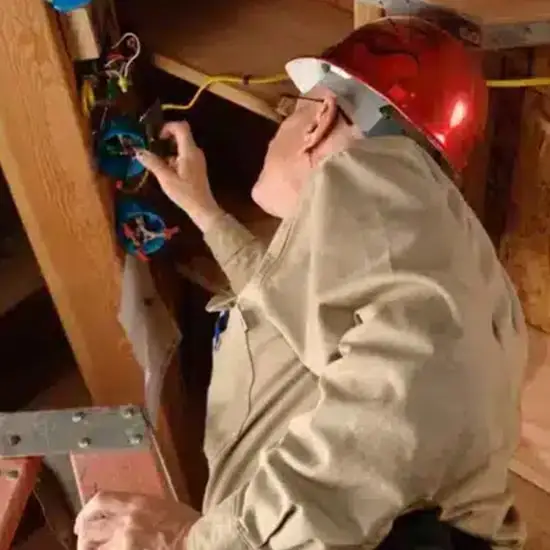

PRE PURCHASE BUILDING INSPECTION NARRE WARREN
Investing in property is a major financial commitment—a Pre Purchase Building Inspection protects that investment. Our comprehensive reports are prepared by inspectors with extensive knowledge and experience of the local market.
Pre Purchase Building Inspections go beyond basic assessments. Each property receives a thorough evaluation from the foundation through the roof structure. Our trade-qualified inspectors assess structural components, weathertightness systems, electrical installations, and plumbing infrastructure in accordance with AS 4349.1-2007.
Schedule your Pre-Purchase Building Inspection to receive your report within 24-48 hours. Every report includes moisture testing results, structural analysis, and detailed documentation to support confident property negotiations.
WRITTEN BUILDING INSPECTION
Professional and Reliable Inspection reports to AS4349.1 reporting Standards
METH TESTING
Same-day onsite testing with your building inspection in all suburbs
VERBAL BUILDING INSPECTION
On site or over the phone verbal overview for time critical decisions




Narre Warren's Unique Building Challenges
Location Context
Narre Warren sits about 40 kilometres south-east of the Melbourne CBD, in the City of Casey, one of Victoria's fastest-growing municipalities. The suburb has transformed from a rural crossroads into a major suburban centre over the past 50 years, anchored by the Fountain Gate Shopping Centre and surrounded by residential estates that continue to push outward.
The physical reality of the area is that much of it is built on former floodplain and drainage lines, on highly reactive clay soils, with the Dandenong Ranges and Lysterfield Park bushland to the north and grassland reserves to the east. These aren't academic considerations — they directly affect every building in the suburb.
Reactive Clay and Slab Performance
Narre Warren's soils are among the most reactive in metropolitan Melbourne. The clay here has a high shrink-swell potential, meaning the ground beneath your slab can change volume significantly between a dry summer and a wet winter. In prolonged drought conditions, the clay shrinks and cracks open — sometimes to depths of over a metre. When heavy rain returns, the clay expands again, heaving the slab unevenly.
This isn't a subtle effect. Homes in Narre Warren regularly show signs of differential movement that would be less pronounced in suburbs with more stable soils. The typical pattern is a twisting movement where one corner of the slab drops or rises relative to the others, causing what's known as "racking" in the wall framing and brick veneer.
The damage shows up as stepped cracking in the mortar joints of the brickwork — the cracks follow the mortar lines in a stair-step pattern, which is the classic signature of foundation movement in brick veneer construction.
The homes most affected are those built in the 1970s and 1980s, when footing design standards were less stringent. Many of these properties have shallow strip footings or stiffened rafts that do not extend below the depth of seasonal moisture change.
The result is that the slab moves with the seasons — not enough to cause imminent collapse, but enough to crack tiles, jam doors, and create ongoing maintenance issues. Homes built after the introduction of AS 2870 in the 1990s generally perform better, but only if the site-specific soil classification was actually carried out and the footings were designed accordingly.
For buyers considering a property in Narre Warren, the building inspection should pay close attention to the external brickwork for stepped cracking, the internal wall linings for separation at corners, and the floor levels across the main living areas. A slab that has moved and stabilised is one thing. A slab that is still moving is a completely different proposition.
Termite Risk: A Declared Area
Narre Warren South is formally designated as a declared termite area under the Building Regulations, and the termite pressure across the wider suburb is among the highest in metropolitan Melbourne. This is not a risk that can be managed with a quick visual check. Termites in this area are aggressive, well-established, and highly skilled at remaining undetected.
The conditions that make Narre Warren so favourable to termites are straightforward: reactive clay soils that crack open and provide easy access routes for subterranean termite colonies; abundant food sources in the form of timber framing, particleboard flooring, and cellulose-rich building materials; and proximity to bushland, grassland, and creek corridors that support large termite populations.
The result is that properties that never had a termite barrier installed, or whose barrier has been compromised by landscaping, plumbing work, or slab movement, are genuinely at risk.
We find active termite infestations in homes of all ages in Narre Warren, from 1970s brick veneers to recently completed townhouses. The most common entry points are unseen: the gap around a plumbing pipe where it penetrates the slab, the edge of a concrete path or patio that abuts the brickwork without a proper gap, or the section of timber framing that sits within 50 millimetres of the ground because the slab edge was poorly finished.
The practical implication is that any pre-purchase inspection in Narre Warren must include both a visual termite inspection and, where possible, a non-invasive scan of the wall cavities and subfloor areas. Properties with a current termite management system, documented annual inspections, and an intact chemical or physical barrier are far lower risk than those with no system at all. Properties where the original termite barrier has been disturbed — by paving, retaining walls, or new plumbing — and not reinstated require the closest scrutiny.
Flood Risk and Stormwater Drainage
Narre Warren sits within the broader Dandenong Creek and Cranbourne drainage catchments, and approximately 14% of the City of Casey is at risk of flooding from rivers, creeks, and overland stormwater flows. The suburb has a documented history of flash flooding during major storm events — the February 2011 floods caused road closures across the area, including Narre Warren-Cranbourne Road, and floodwater on the Pakenham train line near Narre Warren station.
The November 2022 floods caused significant stormwater issues on Centre Road, where the council identified low points requiring engineering assessment.
For residential properties, the concern is less about riverine flooding and more about stormwater management on estates that were developed decades ago with drainage systems designed to older standards. As the suburb has densified and more hard surfaces have been added, the original drainage infrastructure is increasingly undersized for the run-off volumes generated during heavy rain. Properties at the bottom of catchment areas — where overland flow concentrates — are most at risk.
The signs of inadequate drainage are often visible in the property itself. Water staining along the lower edge of the brickwork, damp patches near the slab edge after rain, soil erosion in garden beds, and downpipes terminating less than a metre from the building are all indicators that stormwater is not being managed effectively.
In more severe cases, we find water ingress through the slab edge, dampness at the bottom of wall cavities, and, in one recent inspection, a subfloor area holding standing water three days after a storm event.
Properties in the newer estates generally have better drainage infrastructure — formalised wetland basins, piped drainage networks, and lot-specific stormwater detention requirements. But even these systems need maintenance, and we regularly find poorly maintained pits, blocked pipes, and gardens that have been regraded to drain toward the house rather than away from it.
The Fountain Gate Estate: A Heritage-Aware Pocket
The Fountain Gate Estate, developed from the mid-1960s by Isador Magid with design input from architect Robin Boyd, is a genuine piece of Melbourne's planning history. The Radburn layout — with housing accessed from cul-de-sacs and connected by linear parklands — was innovative for its time, and the estate is now listed in the City of Casey heritage scheme.
From a building-inspection perspective, these homes are now 50 to 60 years old and carry the maintenance burden of homes built to 1960s standards. The original roof coverings, window frames, plumbing, and electrical systems are approaching or past their service life.
The real challenge, however, is that the heritage listing can affect what owners are allowed to do with external alterations, particularly to the front facade, roof lines, and the relationship between the house and the parkland setting. Anyone buying in the Fountain Gate Estate should check what the heritage controls allow before planning any major renovation.
Bushfire Risk in the Northern Fringe
Properties on the northern edge of Narre Warren, particularly in Narre Warren North and areas adjacent to Lysterfield Park and the Dandenong foothills, sit within designated bushfire-prone areas. The Bushfire Management Overlay applies to some of these properties, and development controls require consideration of vegetation clearance, access, water supply, and building construction standards under the Bushfire Attack Level (BAL) framework.
The risk here is from grassfires and bushfires originating in the wooded reserves to the north and east. The 2009 Churchill National Park fire, which threatened homes in nearby Endeavour Hills and Lysterfield South, is a reminder that these fire events are not hypothetical.
For buyers considering properties on the northern fringe of Narre Warren, the building inspection should confirm whether the property is in a bushfire-prone area and whether the existing building fabric — window glazing, gutter guards, ember-proof eaves, and the like — meets the standards required for a new build today.
Era-Specific Housing Stock Risk Profile
1960s–1970s Fountain Gate estate homes: Brick veneer and cladded homes on concrete slabs, typically with terracotta or concrete tile roofing. Slab movement from reactive clay is the dominant issue. Original plumbing and electrical systems at or past service life. Heritage controls may apply to external alterations. Termite protection likely absent or expired.
1970s–1980s brick veneer homes: The largest portion of Narre Warren's housing stock. Shallow footings designed to standards that are now known to be inadequate for the site's soil reactivity. Stepped cracking in brickwork, cracked floor tiles, and jammed doors are common. Original terracotta or concrete tile roofing often needs ridge capping repairs and gutter replacements. Termite management systems, where they exist, are likely expired.
1990s–early 2000s homes: Generally better footing design under AS 2870, but site-specific soil testing was not always carried out or correctly applied. Metal roof sheeting and concrete tiles are the common roofing materials. Termite barriers were required by this period, but they may have been compromised by subsequent landscaping or building work. Plumbing in homes of this era is approaching its 25-year service life.
From the mid-2000s onward, modern estates and townhouses: Better footing design and mandatory termite protection, but build quality is variable. Common defects include poor waterproofing in wet areas, inadequate roof flashing details, and settlement cracking in pathways and driveways.
Recent VCAT cases involving newer townhouses in the broader Casey area have highlighted persistent water ingress issues around windows and cladding systems that builders failed to rectify during the warranty period. Stage inspections during construction are highly recommended for anyone building new.
Recent Inspection Examples
Example 1 — 1980s brick veneer, central Narre Warren
A well-presented family home with polished floorboards and a renovated kitchen. The owners had lived there for 20 years and maintained the property meticulously — regutered, repointed, freshly painted. What they hadn't realised was that a large gum tree in the rear yard was drawing significant moisture from the reactive clay soil directly adjacent to the slab.
The slab had settled differentially by roughly 40 millimetres along the rear wall, causing a stepped crack pattern in the brick veneer that ran from the window head down to the slab edge. The crack had been filled and painted over, but the movement was ongoing.
Estimated repair: $15,000–$25,000 for underpinning or ground improvement to stabilise the footing.
Example 2 — Mid-2000s townhouse, Narre Warren South
A relatively new townhouse in an estate developed around 2008. The building inspection revealed that the termite management system had been compromised — the chemical barrier around the slab edge had been disturbed when the owner installed a concrete patio and retaining wall directly against the house without reinstating the barrier.
There was no evidence of active termites at the time of inspection, but the property was in a declared termite area with no effective protection in place. The inspection report recommended immediate installation of a new termite management system, with above-ground bait stations and regular monitoring.
Estimated cost: $2,500–$4,000, depending on the system selected.
We offer building inspections across Australia — Sydney, Perth, Adelaide, Canberra, Tasmania and Darwin.
Sydney locations include: Craigieburn, Point Cook, Pakenham, Reservoir, Tarneit, Berwick, Werribee, Glen Waverley, Richmond, Brunswick, South Yarra, Doncaster, Cranbourne, Hawthorn, Southbank, Sunshine and St Kilda.
