Building Inspection Southbank
BUILDING REPORT SOUTHBANK
Residential & Commercial Building Reports
Our Working Process
Book
Confirm
Inspect
Report
An on-site or over-the-phone verbal overview for time-critical decisions. Useful when you need an answer before an auction, a deadline, or a multi-offer situation.
Pre-purchase inspections occur before you make an offer or after acceptance, giving you crucial information about the property’s condition before you finalise your investment.
TESTING
Same-day on-site meth screening at your property. You'll know whether contamination is present before you commit to the purchase.
A pest inspection checks accessible areas of an Australian property for termites, borers, fungal decay and conditions that attract timber pests.
Builders Report Southbank
What Our Inspectors Typically Find
Southbank is a suburb built almost entirely from scratch in the last thirty years. Before the 1990s, this stretch of land along the Yarra's south bank was a mix of industrial warehouses, railway yards, and vacant lots.
Today, it is Melbourne's most densely populated suburb, dominated by high-rise apartment towers, including some of the tallest residential buildings in the Southern Hemisphere. The inspection challenges here are fundamentally different from those in the inner-city terrace suburbs — you are dealing with building-envelope performance, waterproofing integrity, common-property condition, and the financial health of owners' corporations rather than rising damp and shallow footings.
The housing stock is almost exclusively apartment towers built from the early 1990s onward, with the bulk of construction occurring in the 2000s and 2010s. The typical building form is a podium-and-tower configuration: several levels of parking and retail at the base, with residential levels rising above.
Construction is predominantly flat-plate or post-tensioned slab reinforced concrete, with concrete or masonry infill walls, curtain-wall glazing, and lightweight facade cladding systems. The materials and methods changed significantly over the three decades of development, and each era carries its own defect profile.
Waterproofing failure is the single most common defect across all eras of Southbank apartment buildings. Balcony membranes, podium decks, planter boxes, and rooftop terraces are all high-risk areas where water ingress is routinely found. The issue is that these defects are often concealed during inspection.
The balcony tiles look fine, the planter looks dry, and the ceiling below shows no staining — but the membrane failure is already occurring beneath the surface. Moisture meter testing and thermal imaging during an inspection are essential for identifying problems that a visual walk-through will miss.
In Southbank, we regularly find moisture levels above 40 per cent in concrete slabs beneath failed balcony membranes, with no visible evidence in the apartment below.
Combustible cladding is the second major concern. A significant number of Southbank apartment buildings constructed between the late 1990s and mid-2010s installed aluminium composite panels (ACP) with polyethylene cores that do not meet fire safety requirements.
The Victorian Cladding Taskforce identified multiple Southbank buildings requiring rectification, and the Building Appeals Board has issued determinations on several Southbank addresses, including 46-50 Haig Street and 57-91 Clarendon Street.
The costs of cladding rectification are substantial — typically running into the millions per building — and are passed back to lot owners through special levies that can exceed $50,000 per unit in the worst cases. Some buildings are still working through remediation programs years after the issue was identified.
Facade and glazing defects are a recurring pattern in Southbank's older towers. Curtain-wall systems from the 1990s and early 2000s are now approaching thirty years of service, and sealant degradation, failed gaskets, and water tracking through facade interfaces are common findings.
In some cases, the original glazing systems were never adequately tested for water-penetration resistance, and the first sign of trouble is water staining on internal walls during heavy rain on north-facing roofs. Identifying the exact entry point is often difficult because water can track horizontally within the facade cavity before appearing internally at a location far from the actual breach.
The standout risk in Southbank — and the one that buyers in this premium market most consistently underestimate — is the interaction between building age, owners' corporation financial health, and the compounding cost of deferred maintenance. A 1990s apartment tower with original balcony membranes, original glazing sealants, and a sinking fund deliberately kept low to minimise quarterly fees is a ticking financial time bomb.
The special levies for the necessary capital works — facade remediation, balcony waterproofing, cladding replacement, lift upgrades, fire services upgrades — can easily total six figures per owner over a five-year period. We have inspected units in buildings where the owners' corporation was undertaking simultaneous cladding rectification, balcony waterproofing, and essential safety-measure upgrades, with total estimated costs exceeding $15 million for a 150-lot complex.
For buyers, the practical takeaway is that a building inspection for a Southbank apartment must go beyond the unit itself. The owners' corporation records — including the sinking fund forecast, the asset management plan, the building's compliance history, and any outstanding or resolved cladding issues — are just as important as the condition of the individual apartment. A well-maintained building with a properly funded sinking fund and no unresolved defect claims is a far better investment than an identical unit in a building where major capital works are being deferred.
+
+
BUILDING INSPECTOR SOUTHBANK
24-48 Hour Report Delivery Guaranteed
Looking for a Building Inspector in Southbank? Our trade-qualified inspectors provide thorough building reports within 24-48 hours, combining speed with meticulous attention to detail.
Our building inspection service is perfect for time-sensitive property purchases. Each inspector carries professional indemnity insurance and brings deep knowledge of your local market and common building challenges. All inspections comply with AS 4349.1-2007 standards for comprehensive, reliable assessments.
Property buyers rely on our inspection expertise for accurate, actionable assessments. Every report delivers a complete structural evaluation, weather-tightness analysis, and maintenance requirements—giving you the information you need to make confident purchasing decisions on schedule.

PRE PURCHASE BUILDING INSPECTION SOUTHBANK
Investing in property is a major financial commitment—a Pre Purchase Building Inspection protects that investment. Our comprehensive reports are prepared by inspectors with extensive knowledge and experience of the local market.
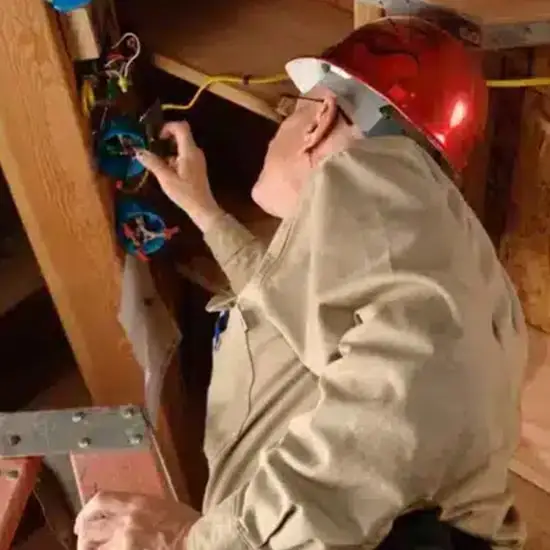
Pre Purchase Building Inspections go beyond basic assessments. Each property receives a thorough evaluation from the foundation through the roof structure. Our trade-qualified inspectors assess structural components, weathertightness systems, electrical installations, and plumbing infrastructure in accordance with AS 4349.1-2007.
Schedule your Pre-Purchase Building Inspection to receive your report within 24-48 hours. Every report includes moisture testing results, structural analysis, and detailed documentation to support confident property negotiations.
WRITTEN BUILDING INSPECTION
Professional and Reliable Inspection reports to AS4349.1 reporting Standards
METH TESTING
Same-day onsite testing with your building inspection in all suburbs
VERBAL BUILDING INSPECTION
On site or over the phone verbal overview for time critical decisions




Southbank's Unique Building Challenges
Location Context
Southbank occupies a narrow strip of land along the south bank of the Yarra River, directly opposite the Melbourne CBD, from the Princes Bridge to Clarendon Street and extending south to St Kilda Road. It sits entirely within the City of Melbourne municipality. The suburb was transformed through an urban renewal program in the 1990s that rezoned the former industrial and rail lands for high-density residential and commercial development.
The result is a precinct of roughly 20,000 residents living in more than 12,000 dwellings — almost all of them in high-rise towers — making Southbank the most densely populated suburb in Australia.
The physical setting creates specific constraints. The land is low-lying and was historically subject to flooding from the Yarra River. Much of the area was originally marshland, filled and levelled during the industrial era. The near-surface geology consists of Yarra Delta sediments — soft to firm silty clays overlying deeper layers of stiff clay and sand, with a shallow water table that can be within a metre of the ground surface in some areas.
This geological context has implications for basement construction, groundwater management, and the long-term performance of deep foundations.
Flood Risk and Ground Conditions
Southbank is classified as a flood-prone area by both the State Emergency Service and Melbourne Water. The suburb is susceptible to two distinct types of flooding: flash flooding from intense short-duration rainfall events that overwhelm the stormwater drainage network, and riverine flooding when prolonged rainfall causes the Yarra River to overflow into the surrounding areas.
Major roads through Southbank — City Road, Clarendon Street, and Kings Way — are identified by the SES as particularly susceptible to flooding during storm events, with ground-floor businesses and residential properties in these areas at risk of inundation.
The Special Building Overlay (SBO) and Land Subject to Inundation Overlay (LSIO) apply to significant portions of Southbank under the Melbourne Planning Scheme. A planning permit is required for buildings and works in these areas. Any new development or major renovation must demonstrate that floor levels, drainage, and stormwater management are adequate to manage flood risk.
For existing apartment buildings, the flood risk manifests in several ways. Basement car parks and storage areas in older towers were not always designed to the current flood standard, and we regularly find evidence of past water ingress in basement levels — rust on electrical switchboards, tide marks on concrete walls, and sump pumps that are undersized or non-functional.
The shallow water table in the area also means that basement waterproofing systems are under constant hydrostatic pressure, and where those systems were inadequately designed or have deteriorated, water ingress through construction joints, lift pits, and service penetrations is common.
The clay subsoils beneath Southbank also pose challenges for the deep foundation systems supporting the high-rise towers. While the large-diameter bored piles and diaphragm walls used in modern construction are generally adequate, the settlement behaviour of these deep foundations on the Yarra Delta clays requires careful management, particularly where buildings are adjacent, and foundation loads interact.
Differential settlement between a tower and its podium structure — often on different foundation types — has been observed in several Southbank buildings, manifesting as cracking at the junction between the tower and the lower-level podium.
Era-Specific Apartment Building Defects
Southbank's building stock can be divided into distinct construction eras, each with a characteristic defect profile.
Early development (early 1990s–2000): The first wave of Southbank apartment towers, including early stages of the Southbank development adjacent to Crown. These buildings typically have reinforced concrete flat-plate construction with post-tensioned slabs, curtain-wall glazing systems, and lightweight metal or ACP facade cladding.
The original waterproofing membranes on balconies and podium decks are now 25 to 30 years old and well past their design life. Facade sealants from this era have hardened, cracked, and lost adhesion, allowing water penetration at panel joints and window interfaces. Combustible cladding is a known issue in several buildings from this period.
The original building services — fire detection and suppression systems, lifts, and hydraulic services — are approaching or have exceeded their service life and require significant capital expenditure. Buoyed floor slabs in post-tensioned buildings have been known to exhibit long-term deflection that exceeds original design assumptions, affecting floor levels and partition alignment.
Mid-era development (2000–2010): The boom period that produced the majority of Southbank's residential towers, including landmarks such as Eureka Tower (completed 2006). Balcony waterproofing failures are the dominant defect in this cohort — membranes installed during a construction boom, when quality control was inconsistent, have failed prematurely in many buildings. The use of ACP cladding with polyethylene cores peaked during this period, and many buildings from this era have been or are being subject to cladding rectification programs.
The Building Appeals Board determination at 46-50 Haig Street, Southbank (2020) found insufficient evidence that the ACP and timber battens on that building complied with fire safety performance requirements, and the building was ultimately required to remove and replace the non-compliant cladding. Similar outcomes have occurred at other Southbank addresses.
Late-era development (2010–present): Contemporary towers, including Australia 108 (completed 2020) and the newer build-to-rent towers such as Indi Southbank. Construction quality has generally improved compared to the boom era, but defects still occur. Waterproofing failures in wet areas — particularly in bathrooms and on balconies — remain the most common finding.
The increasing complexity of building services — centralised HVAC, automated parking, smart building systems — creates new failure modes that inspectors need to be aware of. The build-to-rent towers present a different ownership and maintenance model that may affect the long-term defect picture, but the underlying construction quality issues remain similar.
The Owners Corporation Financial Trap
The single biggest risk for Southbank apartment buyers is not a physical defect in the individual unit — it is the financial position of the owners' corporation. Southbank's high-rise buildings have complex common property: multiple lifts, fire services, basement parking, podium landscaping, swimming pools, gyms, concierge services, and, in some cases, full building management systems. The cost of maintaining, repairing, and eventually replacing these assets is substantial, and it is shared among the lot owners.
The problem is that many owners' corporations have historically set their fees at the minimum necessary to cover day-to-day operations, resulting in inadequate contributions to the sinking fund for future capital works. When the sinking fund is low, and a major defect or building compliance issue arises, the only option is a special levy.
We have reviewed owners' corporation records for Southbank buildings where the combined cost of cladding rectification, balcony waterproofing, lift modernisation, and fire services upgrades totalled over $20 million — a liability that, when apportioned across the lot owners, translated to special levies of $80,000 to $150,000 per unit over three years.
The warning signs to look for in owners' corporation records include: a sinking fund balance that is below the recommended level for the building's age and asset profile, a history of fee increases that are below the rate of inflation (indicating fees have been artificially suppressed), unresolved insurance claims for water damage or cladding, and any building orders or compliance notices from the Municipal Building Surveyor.
A building that has had recent large special levies is not necessarily a bad investment — it means the problems are being addressed — but the one with no special levies and no sinking fund may be the more dangerous prospect because the problems are being deferred rather than resolved.
Renovation and Fit-Out Risks
Renovating an apartment in a Southbank high-rise presents different challenges from renovating a house. The structural slab is common property, and any works that penetrate it — for plumbing, electrical, or floor level changes — require owners' corporation approval.
Bathroom renovations are the most common source of problems, and we regularly find evidence of waterproofing failures in renovated bathrooms where the renovation was carried out by a contractor who did not properly detail the waterproofing membrane at the wall-floor junction or around the shower waste. In a multi-level building, a leaking shower tray can damage the apartment below within days, and the liability chain can be complex and expensive.
Changes to the building facade — including the installation of split-system air conditioning units, retractable awnings, or external shade screens — are almost always prohibited or restricted by the owners' corporation rules. Many Southbank buildings have strict guidelines on what can be installed on balconies, and unauthorised installations are a common source of disputes. Buyers who plan to customise their apartment should review the owners' corporation rules carefully before committing.
Recent Inspection Examples
Example 1 — 2000s apartment tower, central Southbank
A two-bedroom apartment on the 22nd floor of a 2005-built tower, marketed as a premium city-fringe residence. The unit presented very well with recent paint and new floor coverings. The inspection identified three significant issues.
First, moisture readings on the balcony slab adjacent to the sliding door were above 50 per cent, indicating that the balcony waterproofing membrane had failed. The tiles sounded hollow when tapped across a wide area of the balcony.
Second, the owners' corporation records revealed that the building had a building order requiring the removal of ACP cladding on the north and west elevations, with estimated remediation costs of $4.2 million. The sinking fund held only $340,000.
Third, a review of the building's maintenance log showed five reported instances of water ingress through the curtain-wall system on the west elevation over the preceding two years, with no permanent rectification completed.
Estimated special levy exposure for the cladding works alone: $45,000–$55,000 per lot.
Example 2 — Early 1990s apartment complex, near Crown
A one-bedroom apartment in one of Southbank's earliest residential towers, built in 1994. The apartment had original finishes throughout and was being sold by the original owner's estate. The building had no outstanding cladding issues — it predated the widespread use of ACP — but the inspection and records review revealed that it was at a crossroads.
The original balcony membranes had never been replaced, and multiple units reported water ingress. The lift systems were original and nearing the end of life, with an engineering report recommending replacement within three years at an estimated cost of $1.8 million. The fire detection and suppression systems required an upgrade estimated at $600,000 to comply with current standards.
The sinking fund had been run down by a series of smaller, reactive repairs and held only $120,000 against a recommended minimum balance of $900,000, as set by the building's asset management plan. The buyer proceeded with the purchase after negotiating a $85,000 price reduction to account for the expected special levies over the following five years.
We offer building inspections across Australia — Sydney, Perth, Adelaide, Canberra, Tasmania and Darwin.
Sydney locations include: Craigieburn, Point Cook, Pakenham, Reservoir, Tarneit, Berwick, Werribee, Glen Waverley, Richmond, Brunswick, Narre Warren, South Yarra, Doncaster, Cranbourne, Hawthorn, Sunshine and St Kilda.
