
Building Inspection Doncaster
BUILDING REPORT DONCASTER
Residential & Commercial Building Reports
Our Working Process
Book
Confirm
Inspect
Report
An on-site or over-the-phone verbal overview for time-critical decisions. Useful when you need an answer before an auction, a deadline, or a multi-offer situation.
Pre-purchase inspections occur before you make an offer or after acceptance, giving you crucial information about the property’s condition before you finalise your investment.
TESTING
Same-day on-site meth screening at your property. You'll know whether contamination is present before you commit to the purchase.
A pest inspection checks accessible areas of an Australian property for termites, borers, fungal decay and conditions that attract timber pests.
Builders Report Doncaster
What Our Inspectors Typically Find
Doncaster is one of Melbourne's most recognisable eastern suburbs, sitting high on a ridge with views across the city skyline. Its housing stock tells the story of Melbourne's post-war suburban expansion — the rapid transformation from an orchard district to family suburbs that occurred in the 1950s, 60s, and 70s.
The homes here are largely brick-veneer on concrete slabs, built on large blocks carved from former orchards, and they come with a specific set of issues that reflect the era, the terrain, and the clay beneath them.
The dominant housing type across Doncaster is the 1960s and 1970s brick-veneer family home, typically three bedrooms, one bathroom, a separate laundry, and a single- or double-garage. These homes were built quickly to meet the demand of a population that tripled in a single decade, and the construction standards of the time were adequate for the period, but have not aged equally well.
Many of these properties are now 50 to 60 years old, and the original materials — roof tiles, window frames, plumbing, electrical systems — are approaching or have exceeded their intended service life.
Roof condition is where most inspections start, and in Doncaster, the story usually centres on terracotta and concrete tiles. The original tile roofs on 1960s and 70s homes are often structurally sound, but the bedding in the ridge capping and hip junctions has frequently deteriorated and needs repointing.
Many of these roofs have been patched rather than properly maintained over the years — a slipped tile here, a patch of sealant there. Valley gutters, particularly where they've been painted over multiple times, can be rusting beneath the paint layer. Blocked gutters from leaf litter from the suburb's well-established gardens are a near-universal finding.
The standout risk in Doncaster — and the one that most consistently catches buyers off guard — is the combined effect of sloping terrain, reactive clay soils, and inadequate drainage around the slab edge. Doncaster sits on a ridge with significant natural fall across many properties, and the original site earthworks for 1960s and 70s homes often involved cut-and-fill to create a level building pad.
The fill material was not always properly compacted, and the drainage around the slab edge was not always designed to deal with the volumes of water flowing down from the higher side of the property.
The result is differential slab movement. Water from the high side of the block — from rainfall, garden irrigation, or leaking downpipes — saturates the clay soil on one side of the slab while the other side remains relatively dry. The clay expands on the wet side and stays stable on the dry side, causing the slab to twist.
This shows up as stepped cracking in the brick veneer, cracked floor tiles, and doors and windows that jam or won't latch. In more severe cases, the slab movement has caused internal wall linings to separate at the corners and noticeable differences in floor level across the main living areas.
Subfloor moisture is a related issue, particularly in properties where the ground slopes away steeply from the building and retaining walls have been installed to hold back the earth. Where retaining walls are too close to the building or lack adequate drainage, water pools behind them and saturates the ground beneath the slab edge.
This keeps the clay soil in a permanently expanded state on that side of the building, creating ongoing structural movement that no amount of internal patching will address.
Termite risk in Doncaster is elevated, though not as aggressively high as in the declared termite areas further south and east. The suburb's mature gardens, established trees, and the timber content of 1960s- and 70s-era brick-veneer construction all contribute to an environment where termite activity is reasonably common.
The original termite barriers installed during construction, where they existed at all, have long since expired or been compromised by subsequent landscaping and building work.
Maintenance history across Doncaster's housing stock varies significantly. Properties that have been owned by the same family for decades often show a pattern of careful maintenance — re-roofing when needed, gutter replacements, proper drainage, and regular pest inspections.
Properties that have been through multiple owners or rental cycles are more likely to have had cosmetic updates that conceal underlying issues — fresh paint over cracked brickwork, new floor coverings laid over uneven slabs, and gardens regraded to hide drainage problems.
+
+
BUILDING INSPECTOR DONCASTER
24-48 Hour Report Delivery Guaranteed
Looking for a Building Inspector in Doncaster? Our trade-qualified inspectors provide thorough building reports within 24-48 hours, combining speed with meticulous attention to detail.
Our building inspection service is perfect for time-sensitive property purchases. Each inspector carries professional indemnity insurance and brings deep knowledge of your local market and common building challenges. All inspections comply with AS 4349.1-2007 standards for comprehensive, reliable assessments.
Property buyers rely on our inspection expertise for accurate, actionable assessments. Every report delivers a complete structural evaluation, weather-tightness analysis, and maintenance requirements—giving you the information you need to make confident purchasing decisions on schedule.
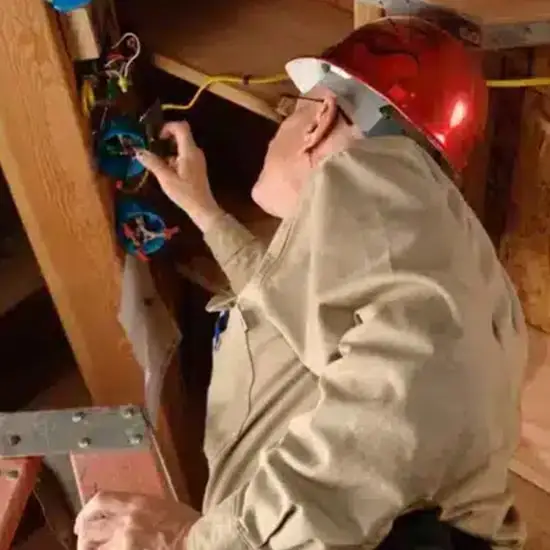

PRE PURCHASE BUILDING INSPECTION DONCASTER
Investing in property is a major financial commitment—a Pre Purchase Building Inspection protects that investment. Our comprehensive reports are prepared by inspectors with extensive knowledge and experience of the local market.
Pre Purchase Building Inspections go beyond basic assessments. Each property receives a thorough evaluation from the foundation through the roof structure. Our trade-qualified inspectors assess structural components, weathertightness systems, electrical installations, and plumbing infrastructure in accordance with AS 4349.1-2007.
Schedule your Pre-Purchase Building Inspection to receive your report within 24-48 hours. Every report includes moisture testing results, structural analysis, and detailed documentation to support confident property negotiations.
WRITTEN BUILDING INSPECTION
Professional and Reliable Inspection reports to AS4349.1 reporting Standards
METH TESTING
Same-day onsite testing with your building inspection in all suburbs
VERBAL BUILDING INSPECTION
On site or over the phone verbal overview for time critical decisions




Doncaster's Unique Building Challenges
Location Context
Doncaster sits on a ridge about 12 kilometres east of the Melbourne CBD, within the City of Manningham. The suburb's elevated position — it's one of the highest points in Melbourne's east — gives it extensive views but also creates specific building challenges. The terrain is characterised by significant natural slopes, with many properties on blocks that fall steeply from the street to the rear or vice versa.
The underlying soils are highly reactive clays, and the suburb's rapid development in the post-war period meant that many homes were built to standards that did not fully account for the interaction between steep slopes, cut-and-fill earthworks, and expansive clay.
The Reality of Sloping Blocks
Doncaster's hilly terrain is one of the suburb's defining features, but it's also the most significant factor in building performance. Properties on sloping blocks require careful drainage management, properly compacted fill, and footing designs that can accommodate both the soil reactivity and the slope. The problem is that many of Doncaster's 1960s and 1970s homes were built before these interactions were well understood, and the consequences are still playing out.
The typical scenario is a property where the building pad was created by cutting into the high side of the block and filling the low side. The cut side is usually stable — it's sitting on undisturbed clay — but the fill side is variable. If the fill was properly compacted in controlled layers, it can perform adequately.
If it were pushed into place and levelled, it would continue to settle over time, pulling the slab edge with it. We see this pattern regularly in Doncaster: the high side of the slab is stable, but the low side has dropped, causing a visible twist in the slab and a stepped crack pattern in the brickwork on the downhill elevation.
Manningham Council now requires that buildings on sloping sites be designed to suit the land rather than the land be altered to suit the building. This means split-level construction, pole homes, or stepped footings are preferred over large-scale cut-and-fill. But the existing housing stock was built to a different standard, and the legacy of those decisions is visible in the cracking patterns across the suburb.
Retaining Walls and Drainage
Retaining walls are common on Doncaster properties, and they are a frequent source of building problems. Where a retaining wall has been installed close to the building — sometimes within a metre or less — and lacks adequate drainage, it creates a bathtub effect. Water builds up behind the wall, saturates the soil, and transfers moisture directly to the ground beneath the slab edge. The reactive clay expands, the slab edge rises, and the brickwork cracks.
We find retaining walls on Doncaster properties that are structurally inadequate — too thin, unreinforced, or built from materials unsuitable for the height being retained. Walls over 1.5 metres in height require engineering certification. Still, many of the retaining walls we encounter on older properties were built without permits and show signs of leaning, bulging, or drainage failure.
The cost of replacing a failed retaining wall on a Doncaster property can easily run to $10,000 or more, particularly where access is difficult, and the wall supports a driveway or garden bed.
The drainage component is just as important. A retaining wall without an agricultural (agg) drain at its base, without gravel backfill, and without weep holes is effectively a dam. The proper approach — perforated drainage pipe at the base, wrapped in geotextile fabric, surrounded by 20-millimetre gravel, with weep holes through the wall face — is well understood. Still, it's often absent on older installations.
Buyers should look for evidence of water staining on retaining walls, leaning sections, and any signs that the ground on the low side of the wall is consistently damp.
Flood Risk and Stormwater Drainage
Doncaster has a documented history of flash flooding during major storms, with significant floods recorded in February 2011, February 2005, and November 2004. Manningham Council, in partnership with Melbourne Water, has completed a flood risk review and introduced updated Special Building Overlay (SBO) and Land Subject to Inundation Overlay (LSIO) provisions to properties affected by flooding from natural watercourses and drainage systems.
The flood risk in Doncaster is primarily from overland stormwater flows during intense rainfall events. The suburb's position on a ridge means water runs off quickly, and the older drainage networks in established areas were designed to standards that are no longer adequate for current rainfall intensities.
Properties at the bottom of catchment areas, where overland flow concentrates, are most at risk. The signs of inadequate drainage — water staining on lower brickwork, soil erosion, downpipes terminating too close to the building — are the same as in many other Melbourne suburbs. Still, the steeper terrain in Doncaster means the consequences of poor drainage are often more severe.
For properties within a Special Building Overlay, a planning permit is required for any building or works. Any new development or significant renovation will need to demonstrate that floor levels are above the nominated flood level and that stormwater runoff from the site is managed appropriately.
The Orchard Legacy: Soil Disturbance and Site History
Before Doncaster became a suburb, it was one of Melbourne's major orchard districts. The deep, well-drained soils that made the area ideal for fruit trees are the same soils that now underlie thousands of residential properties. The history matters because the transition from orchard to suburb involved significant earthworks — removal of tree stumps, grading of land, importation of fill, and the installation of underground drainage networks that were sometimes ad hoc.
The practical consequence is that soil conditions can vary significantly from one property to the next, even within the same street. A property that was built on undisturbed orchard soil may have stable ground conditions. A property built on imported fill over the remains of removed orchard trees may have ongoing settlement issues. And a property where the original orchard drainage tiles have collapsed or been blocked can have localised waterlogging that affects the slab.
This is one reason why geotechnical testing is particularly valuable for new building work in Doncaster. For existing properties, the building inspection should include a close look at the external ground levels, the condition of the soil around the slab edge, and any signs of differential movement that might indicate variable ground conditions beneath the building.
Heritage and Character Controls
Doncaster does not have the extensive heritage overlay coverage of inner Melbourne suburbs, but it does have heritage-listed properties and character controls that affect what owners can do. The Doncaster Primary School site and a small number of individual properties are heritage-listed. More broadly, Manningham Council's planning scheme includes neighbourhood character policies that influence the design of new developments and alterations, particularly in the established residential areas.
The practical effect for most homeowners is that significant renovations — second-storey additions, large rear extensions, new front fences — may require a planning permit if they are considered to affect the character of the neighbourhood. This is less restrictive than a heritage overlay. However, it's still a consideration buyers should be aware of, particularly for properties in the older parts of the suburb, where the established character is most protected.
Modern Apartments and Townhouse Developments
Doncaster has seen a significant increase in apartment and townhouse development in recent years, particularly around the Doncaster Road corridor and the Doncaster Shopping Centre precinct. Several large-scale developments are underway or recently completed, including the 416-residence development at 2 Frederick Street and a 33-apartment project at 722-724 Doncaster Road.
The defect profile of these newer buildings follows the broader Victorian pattern — waterproofing failures in bathrooms and on balconies are the most common issues, followed by acoustic separation problems and concerns about combustible cladding. The Cladding Safety Victoria research published in 2024 found that nearly 50 per cent of buildings with combustible cladding also have non-cladding defects, and that the average rectification cost per building is $180,000.
For buyers considering an apartment in a newer building, the inspection should include a review of the owners' corporation records — the sinking fund balance, any outstanding defect claims, and the building's compliance history. In buildings with combustible cladding, the remediation timeline and cost allocation should be clearly understood before purchase.
Era-Specific Housing Stock Risk Profile
Pre-war and early post-war homes (1930s–1950s): A small portion of Doncaster's housing stock, concentrated in the older areas near the former Doncaster village centre. Typically, weatherboard or brick veneer on timber stumps, with corrugated iron or tile roofing.
These homes are old enough that the original footings are often inadequate for the soil conditions, and the timber subfloor structure is vulnerable to termite attack and rot. Asbestos-containing materials in the eaves, wall cladding, and roofing are likely present.
1960s–1970s brick veneer homes: The dominant housing type across Doncaster. Concrete slab on ground, brick veneer walls, terracotta or concrete tile roofing. The primary defects are slab movement from reactive clay and inadequate drainage, cracked brickwork from differential settlement, and original roof tiles that need repointing of the ridge capping.
Termite barriers, where they existed, have expired. Galvanised steel plumbing is approaching the end of its life. Window frames are typically timber or aluminium — the timber ones need repainting, and the early aluminium frames often have failed seals and draughts.
1980s–1990s homes: A smaller but significant portion of the stock. Generally, better footing design under evolving Australian Standards, but site-specific soil classification was not always carried out. Brick veneer or rendered masonry construction, metal deck or concrete tile roofing. Termite management systems were required by this period, but may have been compromised by subsequent work. Plumbing is approaching the 25- to 30-year service-life mark.
2000s onward: modern homes and townhouses: Higher overall construction standards, but build quality varies significantly between developers. Waterproofing failures in wet areas and on balconies are the most common issues. Modern townhouses on sloping blocks often rely on engineered retaining walls and split-level designs that require proper drainage to function properly. Stage inspections during construction are recommended for anyone building new.
Recent apartment developments (2010s onward): Concentrated around the Doncaster Road and shopping centre precinct. The defect profile follows the broader trend — waterproofing failures, combustible cladding in some buildings, and inadequate acoustic separation between units. The financial health of the owners' corporation and the adequacy of the sinking fund are critical areas of assessment.
Recent Inspection Examples
Example 1 — 1970s brick veneer, sloping block, East Doncaster
A three-bedroom brick veneer home on a block that fell steeply from the street to the rear. The property had been renovated — new kitchen, new bathroom, new floor coverings throughout. The inspection revealed a stepped crack pattern in the brickwork on the rear elevation, consistent with the low side of the slab having dropped approximately 30 millimetres.
The cause was a failed retaining wall on the rear boundary that had been holding back fill from the building pad. The wall had no drainage, and water had been saturating the soil behind it for years, causing the clay to expand and contract in an ongoing cycle. The existing crack had been filled and painted over, but the movement was active. The owners had not connected the cracking to the retaining wall issue.
Estimated remediation: $8,000–$12,000 for a new engineered retaining wall with proper drainage, plus monitoring of the slab movement.
Example 2 — 1960s brick veneer, level block, central Doncaster
A solid family home on a relatively level block, presenting well with established gardens and a fresh coat of paint. The roof was terracotta tiles in fair condition, but the ridge capping was loose in multiple sections, and the bedding mortar was powdery and falling out. Several valley gutters showed rust beneath old paint layers.
The subfloor was the real concern — the original termite barrier had never been reinstated after a plumbing repair in the 1990s. While there was no active termite infestation at the time of inspection, conditions were conducive to one. The home's mature trees, the absence of a termite barrier, and the timber content of the floor framing created a risk profile that the owners had not considered.
The inspection report recommended installing a new termite management system with annual monitoring.
We offer building inspections across Australia — Sydney, Perth, Adelaide, Canberra, Tasmania and Darwin.
Sydney locations include: Craigieburn, Point Cook, Pakenham, Reservoir, Tarneit, Berwick, Werribee, Glen Waverley, Richmond, Brunswick, Narre Warren, South Yarra, Cranbourne, Hawthorn, Southbank, Sunshine and St Kilda.
