
Building Inspection St Kilda
BUILDING REPORT ST KILDA
Residential & Commercial Building Reports
Our Working Process
Book
Confirm
Inspect
Report
An on-site or over-the-phone verbal overview for time-critical decisions. Useful when you need an answer before an auction, a deadline, or a multi-offer situation.
Pre-purchase inspections occur before you make an offer or after acceptance, giving you crucial information about the property’s condition before you finalise your investment.
TESTING
Same-day on-site meth screening at your property. You'll know whether contamination is present before you commit to the purchase.
A pest inspection checks accessible areas of an Australian property for termites, borers, fungal decay and conditions that attract timber pests.
Builders Report St Kilda
What Our Inspectors Typically Find
St Kilda is one of Melbourne's most architecturally diverse suburbs, and that diversity extends directly to its defects. The building stock spans from 1850s Regency-style terraces through ornate Victorian and Federation-era houses, interwar mansion flats and Art Deco apartment blocks, post-war walk-ups, 1990s apartment developments, and contemporary high-rise towers along the foreshore.
No two inspections are the same, but there are consistent patterns that anyone buying in St Kilda needs to understand.
The older housing stock — Victorian and Federation-era terraces and houses — is concentrated in the residential streets east of Fitzroy Street and around the St Kilda East precinct. These are predominantly solid brick or stuccoed brick constructions with corrugated iron or slate roofs, timber sash windows, and decorative verandah ironwork.
Many were built on shallow brick or bluestone footings directly onto the sandy clay soils that characterise the Port Phillip foreshore. After 150-plus years, those footings have seen a lot of movement.
Rising damp and salt attack are arguably the most pervasive issues in St Kilda's older brick buildings. The suburb's proximity to Port Phillip Bay means the groundwater has elevated salt content, and the capillary action that draws moisture up through brickwork also brings soluble salts with it. When the moisture evaporates at the wall surface, the salts crystallise and progressively disrupt the masonry.
The characteristic damage pattern is spalling and fretting of brickwork in the lower courses, deteriorated mortar joints, and internal plaster damage extending up to a metre above floor level. Original damp-proof courses, where they exist at all, are often compromised by raised ground levels, garden beds, or concrete paths poured against the wall.
In St Kilda, rising damp is not just a maintenance issue — it is an ongoing chemical process that will continue to damage the brickwork until the moisture source and salt accumulation are properly addressed.
Roof defects vary by era but are consistently common. The older slate roofs are now 120 to 150 years old, and many have been patched rather than replaced. The original nails have corroded, slates are slipping, and the flashings around chimneys and party walls have deteriorated.
Corrugated iron roofs from the Federation and interwar periods are similarly aged, with rust at fastener points, corrosion in valleys and box gutters, and failed flashings. The coastal environment accelerates this corrosion — salt-laden air from Port Phillip Bay means that metal roofing and guttering in St Kilda corrode faster than equivalent installations in inland suburbs.
Subfloor conditions in St Kilda's older homes are frequently poor. The sandy clay soils drain reasonably well, but the shallow water table in areas close to the bay means the subfloor environment is inherently damp. Many pre-war homes have unlined brick piers with dirt floors, minimal ventilation, and no vapour barrier.
The combination of ground moisture, poor ventilation, and soil salt content creates conditions highly conducive to timber decay. We regularly find moisture readings well above acceptable levels in floor joists and bearers, and, in some cases, active fungal decay requiring structural timber replacement.
The standout risk in St Kilda — and the most consistently underestimated defect across the suburb — is the combination of sandy clay soils, coastal salt exposure, and the age of the original building fabric. The foundation soils in St Kilda are not as reactive as the basaltic clays in the western suburbs. However, they are still prone to movement, particularly where tree root activity, leaking drains, or poor stormwater management create localised changes in soil moisture.
The salt component accelerates the deterioration of both the above-ground masonry and the embedded timber and metal elements below it. A St Kilda property that has been well-maintained with proper drainage, damp-proofing, and regular roof maintenance is a sound investment. One that hasn't — and many haven't — will present a compounding set of issues that only get more expensive to address over time.
For apartment buyers, the defect profile shifts entirely. St Kilda was at the forefront of Melbourne's shift to higher-density living, and the suburb has a higher concentration of older apartment buildings than almost any other part of the city.
The walk-up flats of the 1920s through 1950s, the 1960s and 1970s brick apartment blocks, and the newer towers all have their own specific defect patterns — waterproofing failures, cladding issues, common property maintenance backlogs, and owners' corporation financial stress.
+
+
BUILDING INSPECTOR ST KILDA
24-48 Hour Report Delivery Guaranteed
Looking for a Building Inspector in St Kilda? Our trade-qualified inspectors provide thorough building reports within 24-48 hours, combining speed with meticulous attention to detail.
Our building inspection service is perfect for time-sensitive property purchases. Each inspector carries professional indemnity insurance and brings deep knowledge of your local market and common building challenges. All inspections comply with AS 4349.1-2007 standards for comprehensive, reliable assessments.
Property buyers rely on our inspection expertise for accurate, actionable assessments. Every report delivers a complete structural evaluation, weather-tightness analysis, and maintenance requirements—giving you the information you need to make confident purchasing decisions on schedule.
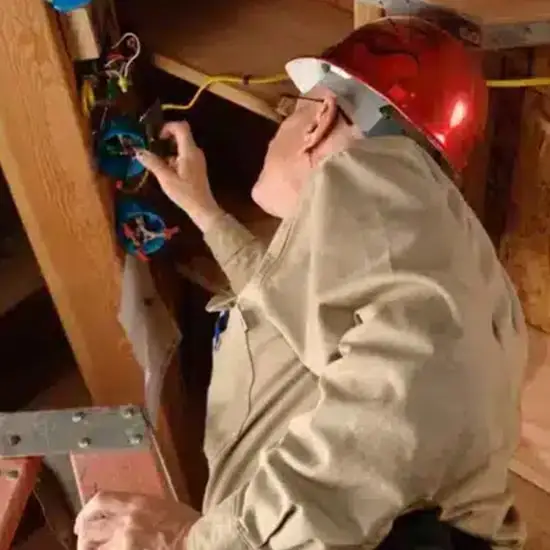

PRE PURCHASE BUILDING INSPECTION ST KILDA
Investing in property is a major financial commitment—a Pre Purchase Building Inspection protects that investment. Our comprehensive reports are prepared by inspectors with extensive knowledge and experience of the local market.
Pre Purchase Building Inspections go beyond basic assessments. Each property receives a thorough evaluation from the foundation through the roof structure. Our trade-qualified inspectors assess structural components, weathertightness systems, electrical installations, and plumbing infrastructure in accordance with AS 4349.1-2007.
Schedule your Pre-Purchase Building Inspection to receive your report within 24-48 hours. Every report includes moisture testing results, structural analysis, and detailed documentation to support confident property negotiations.
WRITTEN BUILDING INSPECTION
Professional and Reliable Inspection reports to AS4349.1 reporting Standards
METH TESTING
Same-day onsite testing with your building inspection in all suburbs
VERBAL BUILDING INSPECTION
On site or over the phone verbal overview for time critical decisions




St Kilda's Unique Building Challenges
Location Context
St Kilda sits on the northern shore of Port Phillip Bay, approximately six kilometres south of the Melbourne CBD. The suburb is bounded by the bay to the south-west, St Kilda Road to the east, and the suburbs of Balaclava and Elwood to the south and south-east. It falls within the City of Port Phillip municipality.
St Kilda has been Melbourne's most significant high-density residential suburb outside the CBD for over a century. The conversion of large Victorian terraces into flats began as early as the 1910s — the Eden Terrace on Dalgety Street, built as eight two-storey terraces in 1856, was subdivided into 24 flats by 1917.
The first purpose-built self-contained flats appeared around the same time, with The Canterbury (1914) on St Kilda Road recognised as one of Victoria's earliest examples of the modern flat type. The suburb's mansion-flat boom of the 1920s produced landmark buildings like Summerland Mansions (1920–21) on Fitzroy Street, with their generous 175-square-metre floorplates, shared services, and street-level shops.
This early and sustained shift to higher density means St Kilda has a stock of older multi-unit buildings that is unmatched in Melbourne's inner suburbs. It also means that many of these buildings are now approaching or past 100 years of age, with all the accumulated maintenance that entails.
The Port Phillip Council area is heavily covered by heritage overlays — including HO6 (St Kilda East), HO7 (St Kilda Hill and surrounds), and numerous individually listed places — which adds a layer of complexity to any renovation or remediation work.
Coastal Salt Exposure and Accelerated Deterioration
St Kilda's position on Port Phillip Bay means its building stock is exposed to a coastal environment that accelerates the deterioration of building materials in ways that are not well understood by buyers coming from inland suburbs. Salt-laden winds from the bay deposit chloride ions on building surfaces, and these penetrate porous materials — brickwork, mortar, render, and concrete — where they drive chemical reactions that weaken the material over time.
The effect is most visible on exposed external walls, particularly on the western and south-western elevations that face the prevailing winds from the bay. Painted brickwork on these elevations typically fails sooner than on sheltered elevations. Metal elements — cast-iron verandah brackets, steel window frames, galvanised gutters and downpipes — corrode more rapidly.
We regularly inspect St Kilda properties where the original cast-iron verandah lacework has lost a significant section due to corrosion, particularly on the lower levels where salt spray accumulates and is slow to dry out.
In concrete buildings — particularly the 1960s and 1970s apartment blocks that are common along the foreshore — salt ingress drives reinforcement corrosion. Chlorides penetrate the concrete cover and reach the steel reinforcement, where they break down the passive protective layer and initiate corrosion. The corrosion products occupy a larger volume than the original steel, generating internal stresses that crack and spall the concrete cover.
This process — concrete cancer — is visible as rust staining, cracking along the line of reinforcement, and spalled concrete that exposes the corroding steel. In St Kilda's older concrete buildings, this is a recurring finding on balcony edges, slab soffits, and exposed columns.
The management of salt-related deterioration requires appropriate material selection and maintenance. Coastal-grade materials — stainless steel or hot-dip galvanised fixings, marine-grade paints, dense concrete with adequate cover — perform significantly better than standard materials.
Buildings that have been maintained with these considerations in mind generally present fewer issues. Those that have been maintained with standard suburban specifications — particularly common in the 1960s and 1970s apartment blocks — show the accumulated effects of 40 to 60 years of salt exposure.
Sandy Clay Soils and Foundation Movement
The soils beneath St Kilda are predominantly sandy clays overlying deeper sedimentary deposits. These soils are moderately reactive — less dramatic than the highly reactive basaltic clays of the western suburbs, but still capable of significant movement under the right conditions. The sandy component means they drain better than pure clay soils, but the shallow water table in areas close to the bay means that the subgrade is often damp at shallow depth.
Different factors drive the foundation movement patterns in St Kilda than in other parts of Melbourne. Tree root activity is a major contributor — the suburb's mature street trees and garden plantings draw moisture from the sandy clay during dry periods, causing differential desiccation and settlement of the shallow footings beneath older homes.
Leaking underground drainage pipes locally saturate the soil, causing the clay component to swell and heave the footings upward. In areas closest to the foreshore, sandy soils are prone to erosion and washout when stormwater management is inadequate, leading to localised loss of support beneath footings and slabs.
The VCAT and Building Appeals Board records reflect these issues. Water ingress cases involving St Kilda apartment buildings frequently trace back to failures at the interface between balconies, glazed units, and the building facade — as seen in the 2019 VCAT matter involving The Griffin Park Regis on St Kilda Road, where the owners of two level 8 apartments suffered severe water damage from a combination of defects in the glazed roofing and balcony waterproofing of the apartments above. The repair costs and dispute resolution took years.
Heritage Overlay Complexity
St Kilda is one of the most heavily heritage-controlled suburbs in Melbourne. The City of Port Phillip has been actively expanding its heritage overlay coverage — Amendment C142 added 140 properties to the HO6 and HO391 precincts, and the HO7 review in 2022 updated citations and boundaries across the St Kilda Hill area. The practical effect is that a very large proportion of St Kilda's older housing stock is subject to heritage controls that affect what owners can and cannot do.
For properties within a heritage overlay, a planning permit is required for demolition, external alterations, window replacements, re-roofing in non-original materials, fence changes, and, in some precincts, painting previously unpainted brickwork. The Port Phillip Council's heritage policy identifies buildings as either 'significant' or 'contributory' within each precinct, and the level of control varies accordingly.
Significant buildings are subject to the strictest controls and must be retained and conserved. Contributory buildings, while less stringently controlled, are still expected to be managed in a manner that does not diminish the precinct's heritage character.
For buyers, the implications are significant. A heritage-compliant renovation is almost always more expensive than a non-heritage equivalent, particularly where original windows need to be restored rather than replaced, or where roof cladding must match the original material. The conversion of a large Victorian terrace into flats — a common pattern in St Kilda — will typically trigger a full heritage assessment, and the council will scrutinise visibility, setbacks, materials, and massing in detail.
We regularly find unauthorised work in St Kilda heritage properties — window replacements in aluminium rather than timber, roof cladding replaced with Colorbond without approval, and verandah enclosures that were never permitted. These create potential issues with insurance, future resale, and council compliance that buyers need to be aware of before settlement.
Apartment Building Defects: A Century of Multi-Unit Living
St Kilda's long history of apartment living means the suburb has buildings from every era of multi-unit construction, and each era carries a distinct defect profile.
Converted terrace flats (1910s–1930s): The earliest form of St Kilda flat — large Victorian and Edwardian terraces subdivided into multiple units. These conversions were often done with minimal regard for soundproofing, fire separation, or service capacity. The original plumbing and electrical systems were extended to serve multiple units and are now typically at or past the end of their service life.
Fire safety is a significant concern — original timber staircases often serve as the only means of egress, and there is typically no fire detection system beyond individual unit smoke alarms. The common property is often minimal or poorly defined, and owners' corporation arrangements can be informal or inadequate.
Purpose-built walk-up flats (1920s–1950s): The mansion-flat era that produced iconic buildings like Summerland Mansions, and the more modest brick walk-ups that followed. These buildings are generally solidly constructed, with reinforced-concrete floors and terracotta-tile or slate roofs.
The main defects are ageing building services — plumbing, electrical, and common-property lighting — that are approaching the end of their life. Roof decay and flashing failures are common. The original windows are typically steel-framed and are prone to corrosion from the coastal environment. Many of these buildings have heritage overlay protection, which complicates any significant renovation.
Post-war apartment blocks (1960s–1970s): The brick-veneer and concrete apartment blocks that fill many of St Kilda's side streets. Concrete cancer from salt-induced corrosion of the reinforcement is the dominant structural issue. Original balcony railings and balustrades — often mild steel or early aluminium — are corroded and may not meet current safety standards. The plumbing systems, particularly the original galvanised steel pipes, are typically corroding and require replacement. The electrical systems were designed for a fraction of modern loads. Asbestos-containing materials are common in eaves, internal wall linings, and floor coverings.
Contemporary apartment towers (1990s–present): Newer buildings along the foreshore and the St Kilda Road corridor. The defect profile here mirrors that of Southbank and other high-rise precincts — waterproofing failures in bathrooms and on balconies are the dominant issue. Combustible cladding has been identified in some buildings. The owners' corporation's financial health and sinking fund adequacy are critical considerations. The building services — lifts, fire systems, automated parking — are complex and expensive to maintain.
Flood Risk and Storm Surge
Portions of St Kilda, particularly the low-lying areas along the foreshore and around the St Kilda Marina, are subject to flooding from storm surge and overland flow. The Port Phillip Council has identified areas subject to a 1 per cent Annual Exceedance Probability (AEP) storm tide in Port Phillip Bay — approximately 1.15 metres AHD at St Kilda based on CSIRO modelling. By 2100, under climate change projections, the storm surge level is forecast to be significantly higher.
For existing buildings in these areas, the flood risk affects basement areas, ground-floor levels, and subfloor spaces. Buildings constructed before modern flood mapping existed — a significant portion of St Kilda's older stock — may have floor levels that sit at or below the current nominated flood level.
The Building Appeals Board, in a 2024 determination involving a St Kilda property, set a minimum floor level of 300 millimetres above the declared flood level — a standard that many older buildings in the area cannot meet without significant modification.
For buyers, the practical implication is that properties in low-lying areas of St Kilda should be assessed for flood risk as part of due diligence. Evidence of past water ingress in basements, subfloor spaces, or ground-floor rooms should be taken seriously, and the property's floor level relative to the surrounding ground should be considered.
Recent Inspection Examples
Example 1 — Victorian terrace conversion, St Kilda East
A double-fronted Victorian terrace built around 1885, converted into three flats in the 1920s. The building sits within the HO6 heritage precinct and is subject to significant heritage controls. The inspection identified rising damp throughout the ground-floor walls on the southern and western elevations, with moisture readings at the base of the walls exceeding 20 per cent and visible salt crystallisation on the internal plaster in the front sitting room.
A concrete path had bridged the original damp-proof course poured against the wall on the southern side and by a raised garden bed on the western side. The roof was corrugated galvanised iron, patched multiple times, with active rust perforations. The subfloor consisted of unlined brick piers with a dirt floor, and moisture readings in the floor joists near the western wall exceeded 28 per cent, with visible fungal decay in two of the main bearers. The owners' corporation had no sinking fund and no asset management plan.
Estimated remediation: $12,000–$18,000 for rising damp treatment, including DPC injection, drainage works, and plaster reinstatement; $16,000–$20,000 for roof replacement; $4,000–$6,000 for subfloor ventilation and timber replacement.
Example 2 — 1960s brick apartment block, near the foreshore
A two-bedroom apartment on the third floor of a six-storey brick apartment block built around 1964, approximately 200 metres from the St Kilda beachfront. The building's exposed western elevation showed extensive concrete spalling along the balcony edges, with exposed, corroding reinforcement.
Several balconies on the western side had active rust staining and delamination of the concrete cover. The original steel balcony balustrades were heavily corroded at the base connections and did not appear to meet current load requirements.
The common property fire detection system was original to the building. It did not meet current standards — the owners' corporation had received a compliance notice from the Municipal Building Surveyor requiring an upgrade within 12 months. The sinking fund held approximately $80,000, compared with a recommended minimum of $350,000 per the building's asset management plan.
The estimated cost of the concrete spalling remediation and balustrade replacement for the building was $1.2 million, equating to a special levy of approximately $18,000–$22,000 per unit. The buyer proceeded with the purchase after negotiating a $30,000 price reduction.
We offer building inspections across Australia — Sydney, Perth, Adelaide, Canberra, Tasmania and Darwin.
Sydney locations include: Craigieburn, Point Cook, Pakenham, Reservoir, Tarneit, Berwick, Werribee, Glen Waverley, Richmond, Brunswick, Narre Warren, South Yarra, Doncaster, Cranbourne, Hawthorn, Southbank, and Sunshine.
