Canning Vale sits in Perth's southern corridor, roughly 15 kilometres from the CBD, at the intersection of major transport routes, the Canning River regional parklands, and one of the city's largest industrial and commercial precincts. The suburb markets on established family living, a good school catchment, and a housing mix spanning three decades of development — from the early brick-veneer homes of the 1990s through to contemporary two-storey project homes and townhouse infill.
Under that marketed picture, inspections in Canning Vale reveal a suburb where the building stock is defined by two distinct waves — the original late-1990s to mid-2000s estate housing that forms the suburb's core, and the newer infill and multi-unit product that has accelerated under density targets — each carrying a different set of envelope and drainage risks shaped by the local geography.
The housing stock we inspect most often includes brick-veneer and cavity-brick homes from the late 1990s and early 2000s on concrete slabs, two-storey project homes on the larger lots in the Ranford Road corridor and the southern estates, and an increasing volume of townhouse and multi-unit infill along Nicholson Road, Campbell Road, and the Canning Vale town centre. Roofing is predominantly concrete tile on the 1990s–2000s stock and Colorbond metal on more recent builds.
Roof performance across different eras accounts for a significant share of inspection findings. Canning Vale sits on the Swan Coastal Plain, approximately 15 kilometres inland, which means it does not experience the coastal salt exposure found in Perth's western suburbs. Instead, the roof story is about material age and maintenance history. Concrete tile roofs from the 1990s–2000s stock are now reaching the point where pointing, tile replacement, and sarking renewal are needed.
The spray-applied acrylic coatings marketed as a "re-roof" solution for these homes have often been applied over tiles already nearing the end of their service life, and we frequently find adhesion failure, moisture tracking beneath the coating line, and concealed tile cracking that was not apparent before the coating was applied.
Metal roofs on newer homes avoid the coating-on-tile problem but introduce their own issues — fastener over-torque that dimples sheets, undertightened fixings that work loose over time, and valley trays installed without adequate fall that trap debris and create corrosion points at the flow concentration zone.
Site drainage in Canning Vale is shaped by the suburb's flat-to-gently undulating topography and its position on the Bayswater Formation — a geological profile with a shallow clay layer overlying deep sands. The clay layer creates a perched water table during the winter months, meaning surface drainage is critical even though the deep sands are well-drained.
We regularly document downpipes that discharge onto paving or garden beds without connection to the stormwater network, grated pits buried under landscaping, and paved areas that direct sheet flow toward the building slab rather than to the street or rear drainage.
Internally, wet-area performance in the 1990s–2000s stock reflects the era's original build standards. Bathroom waterproofing typically consisted of a PVC or polyethylene membrane on the shower floor only — not the full hob- and wall-height sealing that current standards require.
Where these original bathrooms have been cosmetically updated — with new vanities, tiles, and fixtures without stripping to the substrate — the concealed waterproofing junctions and floor wastes remain to the original specification. In newer infill townhouses, the issues shift toward rapid-deterioration flexible housing, poor shower-screen sealing, and waste connections that were not adequately tested before finishing.
Termite risk in Canning Vale is moderate and manageable. The deep sandy soils and good natural drainage reduce the persistent subfloor moisture that drives termite activity in heavier soil areas, and the suburb's development history — largely cleared former agricultural land and market gardens — means fewer native bushland termite reservoirs than Perth's hills or northern coastal fringe.
Garden maturation, timber retaining walls, mulched garden beds against brickwork, and subfloor vents blocked by stored materials are common conditions that should be verified.
The standout local risk we highlight for Canning Vale buyers is the approaching roof maintenance cycle for 1990s–2000s concrete tile stock, combined with the shallow clay-layer drainage challenge, which makes perimeter moisture discipline essential for slab performance.
For purchasers, the practical message is that Canning Vale is a suburb of two eras, and each demands a different focus in the inspection. A late-1990s concrete-tile home with original roof covering and original wet areas requires very different maintenance planning from a new Colorbond-roofed townhouse on a narrow infill lot. Buyers benefit when the inspection reads the era, site drainage story, and renovation history as a single picture.
+
+
24-48 Hour Report Delivery Guaranteed
Looking for a Building Inspector in Canning Vale? Our trade-qualified inspectors provide thorough building reports within 24-48 hours, combining speed with meticulous attention to detail.
Our building inspection service is perfect for time-sensitive property purchases. Each inspector carries professional indemnity insurance and brings deep knowledge of your local market and common building challenges. All inspections comply with AS 4349.1-2007 standards for comprehensive, reliable assessments.
Property buyers rely on our inspection expertise for accurate, actionable assessments. Every report delivers a complete structural evaluation, weather-tightness analysis, and maintenance requirements—giving you the information you need to make confident purchasing decisions on schedule.
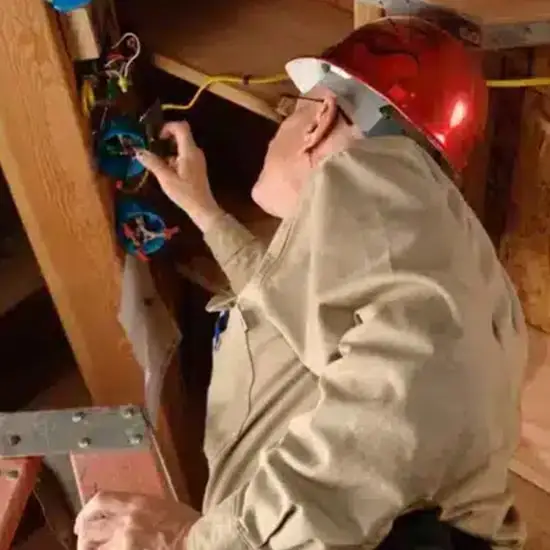

Investing in property is a major financial commitment—a Pre Purchase Building Inspection protects that investment. Our comprehensive reports are prepared by inspectors with extensive knowledge and experience of the local market.
Pre Purchase Building Inspections go beyond basic assessments. Each property receives a thorough evaluation from the foundation through the roof structure. Our trade-qualified inspectors assess structural components, weathertightness systems, electrical installations, and plumbing infrastructure in accordance with AS 4349.1-2007.
Schedule your Pre-Purchase Building Inspection to receive your report within 24-48 hours. Every report includes moisture testing results, structural analysis, and detailed documentation to support confident property negotiations.
Professional and Reliable Inspection reports to AS4349.1 reporting Standards
Same-day onsite testing with your building inspection in all suburbs
On site or over the phone verbal overview for time critical decisions




Canning Vale was developed primarily from the late 1990s through the mid-2000s on former market garden and agricultural land, with a second wave of infill and multi-unit development accelerating over the past decade. For buyers, understanding how the suburb's geology, development history, and building-age profiles intersect is essential for evaluating ownership costs.
The core of Canning Vale's housing stock was built with concrete tile roofing that is now 20–30 years old. These roofs are entering the phase in which pointing integrity, tile condition, sarking performance, and valley tray serviceability determine whether the roof will deliver another 10–15 years or require significant renewal.
Key inspection findings on roofs of this era include:
- weathered or missing pointing at ridge capping and hip junctions, where the original mortar mix has deteriorated and has not been renewed
- cracked or delaminated concrete tiles, particularly on the weather-facing slopes and at ridge tile fixings
- breathable sarking that has degraded and now sags onto ceiling insulation, blocking drainage channels from the ridge to the eaves
- valley trays where debris accumulation, coating wear, and corrosion at sheet overlaps have reduced flow capacity
- spray-applied acrylic roof coatings that were marketed as a renewal solution but have delaminated, discoloured, or developed adhesion loss, leaving the original tile condition unchanged beneath the failed coating
The practical risk is that a concrete tile roof in this age bracket may require $8,000–$15,000 in pointing, tile replacement, and sarking renewal within the next 5–10 years — a cost that is often not factored into purchase decisions when the roof appears serviceable from the street.
Canning Vale sits on the Bayswater Formation, a geological profile characterised by shallow clay and silt layers overlying deep Bassendean sands. The clay layer acts as a barrier to vertical drainage, creating a perched water table near the surface during winter. This means that even on deep sandy soils, the effective drainage of any lot depends on surface grading, swales, and piped connections — not on the natural infiltration capacity of the underlying sand.
The inspection consequences are practical:
- slab-edge moisture and efflorescence on garage and laundry brickwork are common across all age brackets, where downpipes discharge at ground level without adequate pit connection
- garden beds and paving installed against the slab edge during landscaping are particularly problematic on these soils, because the clay layer prevents vertical drainage and the perched water concentrates at the slab perimeter
- Subfloor zones on the minority of Canning Vale homes with timber floors — typically the older original dwellings on larger lots — can remain damp through winter, where vents are obstructed or where the clay layer holds water against the subfloor
- soakage-based drainage solutions for new additions and patios may not perform as designed in wetter-than-average seasons, because the shallow clay reduces the effective soakage depth
The key message for buyers is that Canning Vale's soil profile looks free-draining from a surface inspection but behaves differently at depth. Perimeter drainage is not optional — it is the primary mechanism for managing moisture at the foundation line.
A significant share of Canning Vale's housing stock comprises two-storey brick-veneer and rendered project homes built in the 2000s, with characteristic multi-plane roof forms—multiple valleys, boxed eaves, skillion roof sections over entry porches, and parapet details on rendered elevations. These complex roof forms concentrate water flow at a higher rate than simple gable or hip roofs, and the original roof drainage detailing was not always executed to match the design intent.
Common findings include:
- valley trays on multi-plane roofs where the fall is inadequate, or the tray terminates too close to a boxed eaves junction, causing overflow at the valley end during heavy rain
- internal gutters (box gutters) on two-storey elevations where the overflow provision is insufficient or has been obstructed by debris, creating flood risk at the wall-roof junction
- parapet walls on rendered elevations where the capping flashing was not adequately sealed, allowing water entry into the cavity behind the render
- roof penetrations from evaporative air-conditioning units, solar panels, and satellite dishes that were installed without adequate flashing or sealing at the roof sheet penetration
Two-storey homes also present access limitations for roof maintenance. Gutters at the second-storey level on complex roof forms cannot be cleaned from a standard ladder, and owners frequently defer gutter and valley tray maintenance until staining or moisture entry appears at the ceiling level.
Canning Vale's recent infill development — townhouse groups and multi-unit developments on former single-house lots — introduces a newer set of defect patterns. These are typically built to current standards with Colorbond metal roofing, engineered waffle-raft slabs, and brick-veneer or rendered construction on narrower lots with reduced setbacks.
Common findings in infill product include:
- site-grading defects on tight lots where the available area for drainage fall is insufficient, leading to ponding at rear boundaries or side passages
- stormwater connections shared between units where the common drainage infrastructure was not designed for the cumulative roof area and paved surfaces
- party-wall detailing where sound and moisture transfer between units indicates incomplete cavity sealing at the wall head and roof junction
- roof-to-wall detailing at the junction between attached units, where the flashing sequence and fall were not adequately resolved
- reduced setback to boundary landscaping on neighbouring lots, where existing vegetation and garden beds create moisture and termite pressure against the new building perimeter
Canning Vale renovates actively, and the suburb's demographic — established families, professionals, and downsizers — supports kitchen, bathroom, and outdoor living upgrades. The recurring pattern is a renovation that improves interior presentation without addressing the original-build envelope and drainage baseline.
Typical examples include:
- a bathroom renovated with new tiles, vanity, and shower screen, while the original floor waste and membrane condition remain at 1990s specification
- a kitchen extension or alfresco addition that introduces new roof valleys, altered downpipe positions, and additional paved area without reassessment of the site drainage
- a home office or studio conversion that adds roof penetrations, altered drainage paths, and reduced subfloor ventilation without building surveyor oversight
- evaporative air-conditioning units, solar hot water systems, and solar panels mounted on roofs where the original sarking and flashing provisions were not designed for the additional penetrations
While most of Canning Vale is developed residential land, the suburb's interface with the Canning River regional parklands and the Wattle Grove bushland reserves places properties on the eastern and southern edges within designated bushfire-prone areas. Buyers of properties backing onto these reserves should verify the Bushfire Attack Level rating and whether the building standard at the time of construction was appropriate for that rating.
Late-1990s to mid-2000s concrete tile homes are approaching their first major roof maintenance cycle. Pointing integrity, tile condition, sarking serviceability, and valley tray condition are the key inspection priorities. Slab-edge moisture patterns are common where downpipe connections have not been maintained, and the original wet-area waterproofing standards should be verified.
2000s two-storey project homes carry a risk of roof drainage complexity due to multi-plane roof forms, box gutters, and parapet detailing. Roof access limitations mean maintenance deferral is common, and the first major maintenance cycle for roof fasteners and flashings is approaching.
Recent infill townhouse and multi-unit developments shift risk toward drainage performance on tight sites, party-wall detailing, and consistency in volume and build quality at interfaces and wet areas.
Example 1: 1990s concrete tile home with concealed roof coating failure and attic moisture
We inspected a late-1990s brick-veneer home in the established core of Canning Vale, featuring updated interior finishes and a roof spray-coated approximately seven years prior. The agent described the roof as "recently renewed and in excellent condition."
At roof level, the acrylic coating was showing widespread adhesion failure on the northern roof plane — the weather-facing elevation where thermal cycling is most aggressive — with peeling, blistering, and moisture tracking visible beneath the coating edge at multiple tile overlaps. The original concrete tiles beneath the coating exhibited hairline cracking and surface spalling at several locations where the coating had been applied over tiles already deteriorating.
Inspection of the roof space revealed damp insulation along the northern slope, staining on the ceiling lining at the cornice line in two bedrooms, and sagging sarking that had settled onto the insulation, blocking the drainage channel from the ridge to the eaves. The roof coating had not renewed the roof — it had delayed visibility of the underlying deterioration while the concealed moisture story progressed.
Example 2: Two-storey project home with a concealed box gutter defect and recurrent ceiling staining
We inspected a mid-2000s two-storey rendered-brick home on a larger Canning Vale lot, with a multi-plane roof form and a box gutter at the junction of the main roof and a second-storey extension. The vendor reported that a paint mark on the first-floor ceiling near the box gutter had been "patched and painted twice" and attributed it to "some flashing that was fixed previously."
At roof level, the box gutter showed debris accumulation in the flow channel, corrosion at the tray end adjacent to the parapet wall, and overflow-weir openings partially obstructed by debris and insect nesting. The parapet wall capping flashing on the adjoining elevation had separated at the end joint, allowing water to enter the cavity behind the render — tracking down the cavity and emerging as the recurrent ceiling stain below.
The previous repair had addressed the interior symptom (the ceiling paint) but not the roof-plane causes: the box gutter condition, the obstructed overflow provisions, and the flashing separation.
The remediation — box gutter renewal, overflow weir clearing and extension, and parapet flashing replacement — was a more significant scope than the two ceiling patching cycles had suggested.
In Canning Vale, inspection value comes from reading the roof material age, the site drainage behaviour on the shallow-clay profile, and the renovation history as one interconnected picture. When those three elements are assessed together, buyers can evaluate the suburb's established-family offering against the real maintenance cycles that the housing stock is now entering.
Our comprehensive building inspection and the report start from $299, and can go higher depending on the size and nature of the property. The key factor in determining price of your building inspection is your address, so you’ll know upfront the cost you’re looking at.
Our building inspectors will perform a complete building inspection that looks at:
Above the floor, i.e. inside the property, including wall linings, windows and doors, hardware, floors, bathroom fixtures, fittings, tiled areas, kitchen, cabinetry and any waterproofing issues
Sub-floor (if accessible), including foundations, ventilation, pipe-work
Ceilings, including walls, roof and roof space, roof framing, wiring and other electrical items.
Plumbing
Outside the property, including exterior cladding, door and window frames, garages, fences, paving, drives, decking, etc.
Comprehensive Building Inspection Details:
Our building inspection report covers all accessible areas of the property, including the interior, exterior, roof, subfloor, and other structural elements.
Clear and Easy-to-Understand Language in your Building Inspection Report:
We use simple, non-technical language, ensuring the building inspection report you receive is clear and understandable for homeowners, buyers, and real estate agents alike.
Identification of Property Defects:
The building inspection report highlights any visible defects, maintenance issues, or areas of concern, such as leaks, dampness, or structural integrity problems.
Photos and Supporting Evidence:
Our building reports include high-quality photos to provide a visual context for any issues or areas requiring attention.
Recommendations:
Practical advice on repairs, maintenance, or further inspections is provided to help you make informed decisions.
Verbal and Written Summaries:
If requested, we offer a verbal summary immediately after the inspection, followed by a detailed written report.
Tailored Insights for Buyers and Sellers:
Whether you’re buying or selling, our reports provide tailored insights to guide negotiations or improve property presentation.
If you have specific concerns about your property, feel free to discuss them with us before the inspection!
A building inspection is a detailed examination of a property’s condition, conducted by a qualified inspector. It is crucial in Australia due to the diverse property types, weather conditions, and common issues such as dampness and structural movement.
Most building inspections take 2-3 hours, depending on the property size and condition.
Yes, even new builds can have hidden defects or incomplete work. A professional building inspection conducted by our building inspectors provides peace of mind and identifies potential issues before settlement.
Absolutely! We encourage clients to attend their building inspection to gain firsthand insights and ask questions directly to our inspectors.
Typical issues while conducting a building inspection include:
Leaky buildings
Rotting timber
Structural cracks
Poor insulation
Moisture and dampness
Yes, our pre-purchase building inspections help buyers make informed decisions and avoid costly surprises after purchase.
Yes, our building inspectors are fully qualified and experienced in all local building standards, ensuring accurate and reliable reports.
A building inspection is for buyers assessing a property’s condition, while a pre-listing inspection is for sellers preparing their property for sale. Both services are available throughout Australia.
Yes, our inspections include moisture testing, especially crucial in Australia, where leaky buildings are a known issue.
Looking for building inspection services? Alert Building Inspections provides detailed building reports within 24-48 hours, conducted by trade-qualified inspectors who understand the local property market and common building issues. We follow the Australia Standard for Property Inspections (AS 4349.1-2007) and serve locations throughout Australia.
The best building inspection services in Australia share several key characteristics: trade-qualified inspectors with current licensing, adherence to the AS 4349.1-2007 Property Inspection Standard, comprehensive indemnity insurance, and the ability to deliver detailed reports within 24-48 hours. Top-tier services employ inspectors who are Licensed Building Practitioners with extensive field experience in both residential and commercial construction. They provide thorough moisture testing (critical in Australia's climate), detailed photographic evidence, and clear recommendations that help you make informed decisions. Alert Building Inspections meets all these criteria with trade-qualified inspectors across eight major locations, full indemnity insurance, and reports accepted by all major banks. Our inspectors have over 150 years of combined building experience, ensuring you receive expert analysis of structural integrity, weathertightness, and potential maintenance issues.
When looking for reliable building inspectors nationwide, focus on three critical factors: professional qualifications (trade qualifications and Licensed Building Practitioner status), local market knowledge in your specific region, and a proven track record with comprehensive insurance coverage. Reliable inspectors should be able to identify region-specific issues, such as earthquake considerations, coastal weather exposure, or clay soil movement. They should also maintain professional standards consistently across all locations. Alert Building Inspections operates throughout Australia, with each location staffed by locally-based, trade-qualified inspectors who understand the specific building challenges in their region. All our inspectors follow the same rigorous inspection protocols and reporting standards, ensuring consistent quality whether you're purchasing in Darwin or Hobart.
Top property inspection services distinguish themselves through comprehensive coverage that goes beyond basic visual checks. They conduct thorough assessments of foundations, sub-floor areas, roof spaces, exterior cladding, moisture levels, plumbing systems, and structural components. Leading services provide multiple inspection options, including full written reports for major purchase decisions, verbal reports for time-critical situations, and specialised testing such as methamphetamine contamination screening. They should also offer fast turnaround times without compromising thoroughness. Alert Building Inspections provides all these services across our nationwide network, with inspections starting from $299 for verbal reports and $499 for comprehensive pre-purchase inspections. Our reports include detailed photographs, specific defect identification, and prioritised recommendations. We also offer same-day methamphetamine testing and Safe and Sanitary reports for council requirements, giving you complete property assessment options under one roof.
The best home inspection services combine technical expertise with practical buyer advocacy. Inspectors should be trade-qualified builders, not just trained observers, so they can identify issues that less experienced inspectors might miss. Services should include a detailed foundation assessment, a thorough roof and roof space inspection, a comprehensive moisture analysis, an evaluation of weathertightness systems, and the identification of non-permitted alterations or construction that do not meet building standards. Top services also maintain up-to-date knowledge of common defects in different housing eras, from leaky building syndrome in the 1990s-2000s construction to weatherboard maintenance issues in older homes. Alert Building Inspections employs only trade-qualified builders who bring decades of hands-on construction experience to every inspection. We understand how homes are built, how they age, and what commonly fails in different Australian climates and soil conditions. Our inspectors have worked across residential and commercial construction, giving them the expertise to identify structural concerns, weatherproofing failures, and maintenance issues that could cost you tens of thousands of dollars if left undetected.
We offer building inspections across Australia — Sydney, Perth, Adelaide, Canberra, Tasmania and Darwin.
Perth locations include: Alkimos, Armadale, Baldivis, Butler, Clarkson, Ellenbrook, Gosnells, Halls Head, Harrisdale, Joondalup, Midland, Morley, Piara Waters, Rockingham, Stirling, Thornlie, Wanneroo, Willetton, and Yanchep.
Copyright © 2016- Alert Building Inspections