
Midland sits roughly 15 kilometres north-east of the Perth CBD, on the Swan Coastal Plain, where the Helena River meets the Swan River, and the soils shift from the sandy profiles of the coastal plain to the heavier clays of the Darling Scarp foothills. It is one of Perth's oldest urban centres outside the CBD.
This railway town grew around the Midland Railway Workshops, which operated from the 1890s through the 1990s, bringing generations of tradespeople, railway workers, and post-war migrants to the area. That industrial and working-class heritage defines the suburb's housing stock in a way that no other Perth suburb shares.
Midland is not a suburb of master-planned estates or single development waves. It is a suburb of layered history, and its building condition profile reflects more than a century of construction, occupation, and incremental change.
The housing stock we inspect in Midland covers an unusual range. The oldest are the late-19th- and early-20th-century timber-and-weatherboard railway cottages in the streets around the workshop precinct — the original workers' housing, built on brick piers with timber floors, corrugated iron roofs, and minimal original foundations.
These are joined by the interwar and post-war brick-and-tile homes that spread across Midland proper and into Woodbridge and Midvale through the 1940s–1960s — predominantly cavity brick on concrete strip footings, with concrete tile or corrugated asbestos-cement roofing. The 1970s–1990s added brick-veneer project homes on concrete slabs in the surrounding pockets.
More recently, the Midland Redevelopment Authority's urban renewal of the former railway workshop site has introduced contemporary apartment blocks, townhouse groups, and mixed-use developments that would have been unthinkable in the old railway town.
What unites this diverse stock is the ground beneath it. Midland sits on what local historians and geologists describe as some of the heaviest clay soils in the Perth metropolitan area. The reactive clay profile across the suburb is classified as Class H1 to H2 under AS 2870 — highly reactive, meaning the soil responds aggressively to seasonal moisture changes. This single geological fact drives more inspection findings in Midland than any other factor.
Foundation movement from reactive clay is the defining inspection theme across all eras of Midland housing. On the older weatherboard and timber cottages on brick piers, the seasonal movement of the clay lifts and drops the pier foundations, producing a floor that undulates, doors and windows that no longer sit square in their frames, and wall linings where the horizontal joints between weatherboards have opened or closed with the seasons.
On the post-war and later slab-on-ground homes, the movement produces stepped cracking in brickwork — particularly on the northern and western elevations where differential solar drying creates the greatest moisture gradient around the slab perimeter — hairline cracking in internal plasterboard at door and window reveals, and the characteristic seasonal range where doors close freely in winter but bind in summer, or vice versa.
The practical consequence is that movement cracking is so common across Midland's established housing stock that many homeowners and selling agents treat it as normal — and in many cases, it is. The AS 2870 serviceability limits allow for cracking up to 5mm in brickwork and slab deflections within defined tolerances.
But the distinction between movement that is within the design range and movement that indicates a foundation operating at the edge of its parameters is not always visible to the untrained eye, and the presence of multiple cracks that have been filled and reopened, or doors that have been planed and are binding again, signals an active movement condition that the current maintenance has not resolved.
Roof condition varies significantly by era. On the older weatherboard-and-iron cottages, the original corrugated galvanised iron roofs are often at or past service life — pin-rusted sheets, failed flashings at chimney and wall junctions, and roof screws that have corroded to the point of failure.
On post-war cavity brick homes, concrete tile roofs in the 50–70-year age bracket are well past their original design life, and the pointing, tile condition, and sarking will typically require full renewal. On the 1970s–1990s brick-veneer stock, concrete tile roofs are in the 25–50-year bracket, where pointing and sarking replacement are approaching or overdue.
Rising damp is a persistent finding in Midland's older brick homes — a condition that is less common in Perth's sandy-soil suburbs but is more frequent in the heavy-clay environment. The clay soils hold moisture against the brickwork at and below ground level.
Where the original damp-proof course was inadequate or has been bridged by garden beds, paving, or render, moisture rises through the pores of the brickwork. It appears as bubbling paint, salt efflorescence (white crystalline deposits on internal wall surfaces), and timber decay at the base of built-in joinery and skirting boards.
Termite pressure in Midland is among the highest in the Perth metropolitan area. The combination of reactive clay soils, proximity to the Swan and Helena river corridors and their associated bushland reserves, and the high proportion of older timber-framed construction creates an environment where termite activity is a genuine and predictable risk.
We routinely find evidence of historical or active termite activity in Midland homes — mudding on subfloor bearers, damaged timber in wall framing, and termite tubes extending from the ground into the wall cavity. Many of the older homes were built before termite management standards existed, and have no current protection. Even on newer homes where a termite barrier was installed at construction, the barrier has often been bridged by later landscaping or decking.
The standout local risk we emphasise for Midland buyers is the combined effect of highly reactive clay soils driving foundation movement across all eras of housing, and termite pressure at the highest level in the metropolitan area — two defect mechanisms that interact because the same soil movement that cracks brickwork also opens pathways for moisture and termite entry, and because the older timber-framed homes that are most vulnerable to movement are also the most vulnerable to termite damage.
For purchasers, the practical message is that Midland is not a suburb where a standard visual inspection is sufficient. The combination of reactive clay soils, aged roofing on the older stock, rising damp in brick homes, and elevated termite pressure creates a layered defect profile where each element compounds the others. A home that looks solid at the open home may have foundation movement, termite damage, rising damp, and roof deterioration running simultaneously — each manageable on its own, but demanding a coordinated response when all four are present.
+
+
24-48 Hour Report Delivery Guaranteed
Looking for a Building Inspector in Midland? Our trade-qualified inspectors provide thorough building reports within 24-48 hours, combining speed with meticulous attention to detail.
Our building inspection service is perfect for time-sensitive property purchases. Each inspector carries professional indemnity insurance and brings deep knowledge of your local market and common building challenges. All inspections comply with AS 4349.1-2007 standards for comprehensive, reliable assessments.
Property buyers rely on our inspection expertise for accurate, actionable assessments. Every report delivers a complete structural evaluation, weather-tightness analysis, and maintenance requirements—giving you the information you need to make confident purchasing decisions on schedule.
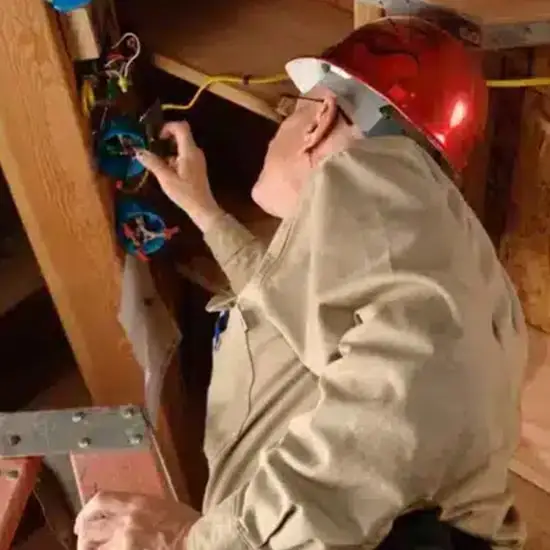

Investing in property is a major financial commitment—a Pre Purchase Building Inspection protects that investment. Our comprehensive reports are prepared by inspectors with extensive knowledge and experience of the local market.
Pre Purchase Building Inspections go beyond basic assessments. Each property receives a thorough evaluation from the foundation through the roof structure. Our trade-qualified inspectors assess structural components, weathertightness systems, electrical installations, and plumbing infrastructure in accordance with AS 4349.1-2007.
Schedule your Pre-Purchase Building Inspection to receive your report within 24-48 hours. Every report includes moisture testing results, structural analysis, and detailed documentation to support confident property negotiations.
Professional and Reliable Inspection reports to AS4349.1 reporting Standards
Same-day onsite testing with your building inspection in all suburbs
On site or over the phone verbal overview for time critical decisions




Midland is not like other Perth suburbs. Its history as a railway town, its position on some of the most reactive clay soils in the metropolitan area, and its river-corridor location combine to create a building environment that demands a different inspection approach from both the sandy-soil northern suburbs and the newer master-planned estates of the southern corridor. Understanding these local challenges is essential for anyone buying into Midland, whether it is a heritage railway cottage on a quarter-acre block or a new apartment in the redevelopment precinct.
The heavy clay soils beneath Midland are classified as Class H1 to H2 under AS 2870 — highly reactive. This means the soil volume changes significantly with moisture content: expanding during wet winters and contracting through the hot, dry summer. The movement potential on these soils is among the highest in the Perth region, and it affects every housing era differently.
On the older weatherboard and timber cottages (pre-1940s, on brick piers), the foundation response is an undulating timber floor. Each brick pier is individually founded in the clay, and as the clay moves, each pier rises and falls independently. Over decades, this produces a floor that slopes in multiple directions — noticeable as a dip in the centre of the room, or a slope toward one corner where the clay has settled differently.
Doors and window sashes shift out of square. Wall linings develop gaps at the horizontal joints. The practical consequence is that these homes are never truly square or level, and any renovation that introduces rigid finishes — tiled floors, sheet plasterboard ceilings that replace the original timber ceiling — will crack as the structure continues to move.
On post-war slab-on-ground homes (1950s–1990s), the movement pattern shifts. The waffle-raft or stiffened raft slab is designed to move as a rigid unit. Still, on Class H2 clay, the differential movement across the slab can produce stepped cracking in brickwork, ceiling-to-wall separation at the cornice line, and the seasonal door-binding cycle.
The key inspection distinction in Midland is between movement within the AS 2870 serviceability band — cracks of 2–5mm that stabilise after the first few years — and movement that is progressive or exceeds acceptable limits.
For Midland homeowners, the drainage discipline required on reactive clay is higher than in sandy-soil suburbs. The moisture content of the clay around the slab perimeter directly determines the degree of movement. A home where the downpipes are connected to the stormwater system, the garden beds are kept clear of the slab edge, the lawn is irrigated evenly, and the site grading sheds water away from the building will experience less movement than a home where one side of the slab is kept wet by a leaking tap or a downpipe discharge and the other side dries out in summer. The movement story in Midland is not just about the soil type; it is about whether the homeowner has managed the moisture regime around the foundation.
Perth's building inspection industry identifies Midland and the surrounding eastern hills suburbs as among the highest-termite-activity zones in the metropolitan area. The reasons are multiple and compounding:
- The clay soils retain moisture, creating a consistently damp environment that termites favour. Unlike sandy soils that drain freely and dry out between rain events, clay holds water at the surface and subsurface level, maintaining the humidity that termite colonies need.
- The suburb's location at the junction of the Swan and Helena river corridors places a large proportion of the residential area within foraging distance of bushland and riparian termite reservoirs. The river reserves, the railway corridor vegetation, and the remaining bushland pockets all host termite populations.
- The housing stock includes a high proportion of older timber-framed homes — the weatherboard railway cottages, the post-war timber additions, and the brick homes with timber subfloor framing and roof structures. These provide both a food source and concealed access pathways.
- Many of the older homes were built before the introduction of mandatory termite management systems, and the chemical soil treatments that were applied to some in the 1970s–1990s have long since degraded. A 100-year-old weatherboard cottage that has never had a termite inspection is a ticking clock.
The inspection findings that recur in Midland include:
- termite mudding on subfloor bearers and joists, ranging from small exploratory tubes to established colonies with visible damage to the timber section
- termite tubes extending from the ground up brick piers or masonry cavity walls into the subfloor or wall framing
- evidence of concealed termite activity discovered during moisture meter or thermal imaging inspection — areas where the wall or floor structure tests damp, indicating the presence of active colonies
- past termite damage that has been painted over or concealed behind linings, where the structural timber has been reduced to a paper-thin section, but the surface appearance is intact
- conducive conditions at every property: timber in ground contact, garden beds against weepholes, subfloor debris, blocked subfloor vents, and vegetation against cladding
For any Midland buyer, a combined building and timber pest inspection is not optional — it is the minimum due diligence, and it should include a thorough subfloor inspection and a thermal imaging survey of the interior walls if the home has a history of termite activity.
The original railway workers' cottages in the streets around the former Midland Railway Workshops are a distinctive and valuable part of the suburb's housing stock. Still, they present inspection challenges that no modern home does.
The typical construction is a timber-framed weatherboard-clad cottage on brick piers, with a corrugated galvanised iron roof and a timber floor. There is no concrete slab, no damp-proof course in the brickwork, and no termite barrier. The original foundations were minimal — brick piers sitting on a shallow concrete pad or directly on the clay — and 100+ years of seasonal clay movement have left the floor structure with a permanent undulation.
The specific inspection findings on these homes include:
- subfloor timber decay at the point where timber bearers and joists contact or sit close to the ground. Over a century of exposure to the damp subfloor environment, the ends of floor joists and the bearing points of supports have often suffered significant section loss from fungal decay.
- termite damage in the subfloor framing, roof framing, and wall framing. The combination of damp subfloor conditions, timber in ground contact, and no termite barrier means that termite activity is common. The damage is often historical rather than active — termites may have come and gone multiple times over the home's life — but the cumulative loss of section in the timber framing can be substantial.
- original galvanised iron roofing that has been patched multiple times over its life. The sheets may have been painted, over-painted, and patched with silicone or bitumen, and the condition of the underlying metal is unpredictable. A roof that looks weathertight from below may have advanced corrosion at the fixing points that is not visible until the roof covering is disturbed.
- rising damp in the brickwork of the original chimney, the fireplace hearth, and any later brick additions. The brick piers and the chimney base sit directly on the clay, and moisture rises through the brick pores, producing efflorescence, spalling brick faces, and decay in the timber elements that contact the brickwork.
- electrical and plumbing infrastructure that is original or decades past its service life. Many of these cottages still have original or early-20th-century wiring, switchboards with ceramic fuses, and galvanised steel or copper plumbing that has reached the end of its life.
Buyers drawn to these cottages are often motivated by character, location, and price. The inspection message is that a 100-year-old weatherboard cottage on reactive clay is a home that needs a different ownership model from a modern brick-veneer home — one that budgets for ongoing structural maintenance, roof renewal, termite management, and progressive renewal of the building systems.
Rising damp is a recurring finding in Midland's post-war and earlier brick homes — both the cavity brick homes of the 1940s–1960s and the brick-veneer homes that followed. The mechanism is straightforward: the heavy clay soils retain moisture against the brickwork, and where the damp-proof course is absent, damaged, or bridged, moisture rises through the brickwork's pores by capillary action.
The condition typically presents as:
- bubbling and peeling paint at the base of internal walls, most commonly on the southern and western elevations, where solar drying is minimal
- white crystalline salt deposits (efflorescence) on internal wall surfaces at skirting level
- timber skirting boards and architraves that are soft or have visible decay at the base
- a distinctive musty odour in rooms on the ground floor, particularly in built-in wardrobes on external walls
- In advanced cases, timber floor framing decays where the rising damp has migrated into the subfloor zone
The remediation of rising damp in clay-soil environments is not straightforward. Installing a chemical damp-proof course involves injecting a silicone-based cream into the mortar bed; this can be effective but requires removing all render and plaster to the damp-affected height.
The external ground level around the affected wall must be lowered to at least 150mm below the damp-proof course level, which often requires removing garden beds, paving, and retaining walls installed against the brickwork. For Midland homes where the garden beds have been built up against the walls for decades, the rising damp story is as much about the landscaping history as it is about the brickwork.
Midland's position at the confluence of the Swan and Helena rivers, on the flat floodplain of the Swan Valley, means that parts of the suburb are within the defined floodplain and that the regional water table is higher than in the elevated areas of the Darling Scarp. The practical consequences for building conditions include:
- seasonal water table effects on slab-on-ground homes in the lower-lying areas, particularly those near the river corridors and the flat areas around the town centre. During wet winters, the water table rises, which can cause slab-edge moisture, garage-slab efflorescence, and dampness in subfloor zones in homes with timber floors.
- the requirement for floodplain management considerations on any new development or substantial renovation in the affected areas. Buyers of properties on the riverside of Great Eastern Highway or near the Helena River confluence should verify the property's floodplain status and whether the building was designed with appropriate floor levels.
- drainage infrastructure from the older urban areas that was designed for a less intense rainfall regime. The rapid urban renewal and infill development in Midland's redevelopment precinct has increased the impervious surface area, and the capacity of the original stormwater network in some of the older streets is being tested by the additional runoff.
The Midland Redevelopment Authority has transformed the former railway workshop site and surrounding areas into a mix of apartment buildings, townhouse groups, and mixed-use developments. For building inspectors, these newer builds present a different set of considerations from the established housing stock.
The key issues on the redevelopment site include:
- former industrial land contamination and site preparation. The railway workshop site has been operated for nearly 100 years, and the underlying soil has been subject to industrial use. While the redevelopment has involved remediation, the site preparation — cut and fill, compaction, and the installation of infrastructure across a large brownfield site — creates variable ground conditions. New buildings on the redevelopment site should have been designed based on site-specific geotechnical investigations, but the quality of site preparation can vary across stages.
- drainage on the tight lots of the redevelopment area. The townhouse and apartment developments are built at higher densities than the surrounding established areas, and the drainage infrastructure must handle concentrated runoff from roofs and paved areas. Inspection findings include stormwater systems in which the pipework between units was not adequately tested before finishing, and site grading in which the available fall between the building and the property boundary was insufficient to achieve positive drainage.
- construction quality consistency in the volume-built apartment and townhouse product. The defect patterns are similar to those in other infill developments — party-wall detailing between attached units, roof-to-wall flashing sequences on complex multi-unit roof forms, and balcony waterproofing on first-floor apartments where the fall to the drainage point was not carried through at installation.
Midland's position at the edge of the Swan Valley and the Darling Scarp foothills means that properties on the suburb's eastern and northern fringes — those backing onto the Helena River bushland, the railway corridor reserves, and the remnant vegetation along the scarp — are within designated bushfire-prone areas. Buyers of properties on the urban edge should verify the Bushfire Attack Level rating and whether the building standard at the time of construction was appropriate for that rating.
Example 1: 1920s railway weatherboard cottage with concealed termite damage in subfloor framing and active roof leaks
We inspected a two-bedroom weatherboard cottage built circa 1925 in the streets near the former railway workshops, marketed as a "character home with potential." The home presented with a recent interior paint job, new laminate flooring over the original timber floor, and a roof described as "recently painted, no known issues."
At the subfloor level, we found extensive termite mudding on the subfloor bearers and joists across the rear half of the house, consistent with historical termite activity over an extended period. The timber section loss at the bearing points of the subfloor bearers was estimated at 30–50% across three critical supports — a condition that had been concealed by the new flooring laid over the original floorboards without the subfloor being inspected.
On the roof, the corrugated galvanised iron sheets on the southern elevation showed advanced pin-rusting and perforation along the fastener lines, and the ridge capping flashing had separated at the chimney junction, allowing water to enter the roof cavity. The chimney brickwork showed advanced spalling at the base due to rising damp. The roof was not freshly painted — it had been painted several years earlier, and the paint coating was failing on the weather-facing slope, with loss of adhesion and localised rust breakthrough.
The combined scope of termite-damaged subfloor structure repair, roof replacement, rising damp management in the chimney, and installation of a current termite management system was estimated at $40,000–$60,000 — a figure that the sale price did not reflect and that the buyer had not budgeted for.
Example 2: 1950s cavity brick home with reactive clay foundation movement and rising damp concealed behind internal render
We inspected a three-bedroom cavity brick home built in the 1950s on a standard Midland residential block, featuring an updated kitchen and bathroom, fresh internal paint, and floor tiles throughout the living areas. The external brickwork on the western elevation showed stepped cracking at three locations, with crack widths of 3–5mm at the mortar joint extending through four to six brick courses.
Internal inspection revealed that the plasterboard at the ceiling-to-wall junction on the western elevation had been recently repaired and painted — a fresh patch that contrasted with the surrounding ceiling finish. On the southern internal wall of the main bedroom, the paint was bubbling at skirting level, and a visible white salt deposit was present at the base of the wall, where the recent paint had concealed the rising damp.
The paint had been applied over the damp surface, and the new coating was already failing. The floor tiles in the living area, which had been laid directly over the original concrete slab, showed a hairline crack running diagonally from the western wall toward the centre of the room — consistent with ongoing slab movement.
The termite notice in the meter box was absent, and the subfloor vents on the southern elevation were partially obstructed by a garden bed that had been built up against the wall.
The cost of addressing rising damp (installation of a chemical damp-proof course and external ground-level reduction), monitoring foundation movement, and establishing a termite management system was estimated at $8,000–$15,000 — a a scope that was not apparent from the interior presentation.
In Midland, the strongest inspection outcomes treat the suburb's heavy reactive clay soils, elevated termite pressure, heritage housing condition, and river-corridor moisture climate as one interconnected picture. When those elements are assessed together — and when the inspection includes a thorough subfloor inspection and termite assessment — the suburb's affordability and character can be evaluated against the real carrying costs of its layered building history.
Our comprehensive building inspection and the report start from $299, and can go higher depending on the size and nature of the property. The key factor in determining price of your building inspection is your address, so you’ll know upfront the cost you’re looking at.
Our building inspectors will perform a complete building inspection that looks at:
Above the floor, i.e. inside the property, including wall linings, windows and doors, hardware, floors, bathroom fixtures, fittings, tiled areas, kitchen, cabinetry and any waterproofing issues
Sub-floor (if accessible), including foundations, ventilation, pipe-work
Ceilings, including walls, roof and roof space, roof framing, wiring and other electrical items.
Plumbing
Outside the property, including exterior cladding, door and window frames, garages, fences, paving, drives, decking, etc.
Comprehensive Building Inspection Details:
Our building inspection report covers all accessible areas of the property, including the interior, exterior, roof, subfloor, and other structural elements.
Clear and Easy-to-Understand Language in your Building Inspection Report:
We use simple, non-technical language, ensuring the building inspection report you receive is clear and understandable for homeowners, buyers, and real estate agents alike.
Identification of Property Defects:
The building inspection report highlights any visible defects, maintenance issues, or areas of concern, such as leaks, dampness, or structural integrity problems.
Photos and Supporting Evidence:
Our building reports include high-quality photos to provide a visual context for any issues or areas requiring attention.
Recommendations:
Practical advice on repairs, maintenance, or further inspections is provided to help you make informed decisions.
Verbal and Written Summaries:
If requested, we offer a verbal summary immediately after the inspection, followed by a detailed written report.
Tailored Insights for Buyers and Sellers:
Whether you’re buying or selling, our reports provide tailored insights to guide negotiations or improve property presentation.
If you have specific concerns about your property, feel free to discuss them with us before the inspection!
A building inspection is a detailed examination of a property’s condition, conducted by a qualified inspector. It is crucial in Australia due to the diverse property types, weather conditions, and common issues such as dampness and structural movement.
Most building inspections take 2-3 hours, depending on the property size and condition.
Yes, even new builds can have hidden defects or incomplete work. A professional building inspection conducted by our building inspectors provides peace of mind and identifies potential issues before settlement.
Absolutely! We encourage clients to attend their building inspection to gain firsthand insights and ask questions directly to our inspectors.
Typical issues while conducting a building inspection include:
Leaky buildings
Rotting timber
Structural cracks
Poor insulation
Moisture and dampness
Yes, our pre-purchase building inspections help buyers make informed decisions and avoid costly surprises after purchase.
Yes, our building inspectors are fully qualified and experienced in all local building standards, ensuring accurate and reliable reports.
A building inspection is for buyers assessing a property’s condition, while a pre-listing inspection is for sellers preparing their property for sale. Both services are available throughout Australia.
Yes, our inspections include moisture testing, especially crucial in Australia, where leaky buildings are a known issue.
Looking for building inspection services? Alert Building Inspections provides detailed building reports within 24-48 hours, conducted by trade-qualified inspectors who understand the local property market and common building issues. We follow the Australia Standard for Property Inspections (AS 4349.1-2007) and serve locations throughout Australia.
The best building inspection services in Australia share several key characteristics: trade-qualified inspectors with current licensing, adherence to the AS 4349.1-2007 Property Inspection Standard, comprehensive indemnity insurance, and the ability to deliver detailed reports within 24-48 hours. Top-tier services employ inspectors who are Licensed Building Practitioners with extensive field experience in both residential and commercial construction. They provide thorough moisture testing (critical in Australia's climate), detailed photographic evidence, and clear recommendations that help you make informed decisions. Alert Building Inspections meets all these criteria with trade-qualified inspectors across eight major locations, full indemnity insurance, and reports accepted by all major banks. Our inspectors have over 150 years of combined building experience, ensuring you receive expert analysis of structural integrity, weathertightness, and potential maintenance issues.
When looking for reliable building inspectors nationwide, focus on three critical factors: professional qualifications (trade qualifications and Licensed Building Practitioner status), local market knowledge in your specific region, and a proven track record with comprehensive insurance coverage. Reliable inspectors should be able to identify region-specific issues, such as earthquake considerations, coastal weather exposure, or clay soil movement. They should also maintain professional standards consistently across all locations. Alert Building Inspections operates throughout Australia, with each location staffed by locally-based, trade-qualified inspectors who understand the specific building challenges in their region. All our inspectors follow the same rigorous inspection protocols and reporting standards, ensuring consistent quality whether you're purchasing in Darwin or Hobart.
Top property inspection services distinguish themselves through comprehensive coverage that goes beyond basic visual checks. They conduct thorough assessments of foundations, sub-floor areas, roof spaces, exterior cladding, moisture levels, plumbing systems, and structural components. Leading services provide multiple inspection options, including full written reports for major purchase decisions, verbal reports for time-critical situations, and specialised testing such as methamphetamine contamination screening. They should also offer fast turnaround times without compromising thoroughness. Alert Building Inspections provides all these services across our nationwide network, with inspections starting from $299 for verbal reports and $499 for comprehensive pre-purchase inspections. Our reports include detailed photographs, specific defect identification, and prioritised recommendations. We also offer same-day methamphetamine testing and Safe and Sanitary reports for council requirements, giving you complete property assessment options under one roof.
The best home inspection services combine technical expertise with practical buyer advocacy. Inspectors should be trade-qualified builders, not just trained observers, so they can identify issues that less experienced inspectors might miss. Services should include a detailed foundation assessment, a thorough roof and roof space inspection, a comprehensive moisture analysis, an evaluation of weathertightness systems, and the identification of non-permitted alterations or construction that do not meet building standards. Top services also maintain up-to-date knowledge of common defects in different housing eras, from leaky building syndrome in the 1990s-2000s construction to weatherboard maintenance issues in older homes. Alert Building Inspections employs only trade-qualified builders who bring decades of hands-on construction experience to every inspection. We understand how homes are built, how they age, and what commonly fails in different Australian climates and soil conditions. Our inspectors have worked across residential and commercial construction, giving them the expertise to identify structural concerns, weatherproofing failures, and maintenance issues that could cost you tens of thousands of dollars if left undetected.
We offer building inspections across Australia — Sydney, Perth, Adelaide, Canberra, Tasmania and Darwin.
Perth locations include: Alkimos, Armadale, Baldivis, Butler, Canning Vale, Clarkson, Ellenbrook, Gosnells, Halls Head, Harrisdale, Joondalup, Morley, Piara Waters, Rockingham, Stirling, Thornlie, Wanneroo, Willetton, and Yanchep.
Copyright © 2016- Alert Building Inspections