
Harrisdale is a master-planned residential suburb in Perth's southern corridor, roughly 25 kilometres south of the CBD, within the City of Armadale. Until the mid-2000s, the area was rural — farms, egg production, horse agistment, and kennels on the Bassendean Sands and Guildford Clay of the Swan Coastal Plain.
The transition since then has been rapid and comprehensive: Harrisdale today is almost entirely residential, with 98.5% of dwellings being separate houses, and over 64% having four or more bedrooms. It is a suburb built in a single wave of development, and that fact shapes its inspection profile more than anything else.
The housing stock is almost entirely post-2008 volume-built project homes — brick-veneer and rendered cavity brick on waffle-raft or stiffened raft concrete slabs, with Colorbond metal roofing on the more recent builds and concrete tile on the earlier stages. The suburb was developed under structure plans, including Harrisdale Green, Harrisdale North, and the Varuna estate, with lot sizes typically ranging from 350m² to 550m² in the R25–R40 density zones and smaller terrace-style lots in the R60 pockets near Ranford Road.
The housing is large by Perth standards — average household size is 3.2 people — and the suburb's demographic profile skews toward mortgage-paying families: 67.2% of dwellings are mortgaged, compared with 11.5% owned outright.
Foundation performance on reactive clay is the single most significant inspection theme in Harrisdale. The suburb sits in a transition zone between the Bassendean Sands and the more problematic Guildford Clay, which underlies the Canning River floodplain and extends through the Southern River and Harrisdale areas. Many parts of Harrisdale have soils classified as Class M to H1 under AS 2870 — moderately to highly reactive — and the consequences of that classification appear in inspection findings across the suburb.
We regularly document stepped cracking in external brickwork, particularly on the northern and western elevations where solar drying creates the greatest moisture differential around the slab perimeter; hairline cracking in internal plasterboard at door and window openings; sliding doors that bind seasonally; and tile floor cracking in open-plan living areas where the longest unsupported slab span concentrates movement.
The critical distinction for Harrisdale compared with older suburbs is that these signs of movement are appearing in homes that are often less than 10–15 years old. In an established suburb, movement cracking at 25–30 years reflects normal foundation aging. In Harrisdale, movement at 5–10 years typically indicates that the slab design was not adequately matched to the site's soil reactivity, or that the moisture regime around the slab has been altered since construction in ways the original drainage design did not anticipate.
Site drainage is the second major inspection focus, and it is where the story gets specific to Harrisdale's development model. The suburb was built on former rural land with shallow water tables and reactive clay profiles, and the drainage infrastructure — both the lot-level grading and the estate-level stormwater network — has been tested by the rapid conversion of pervious rural land to impervious roofs, driveways, and roads.
Common findings include downpipes that discharge at ground level onto garden beds or paving rather than connecting to the piped stormwater network, grated pits positioned at high points in the landscape that never receive flow, side-access passages on narrow lots where the roof water concentration exceeds the available drainage fall, and rear-yard paved areas that slope toward the slab rather than to the boundary.
In wetter-than-average winters, these lot-level drainage deficiencies become visible as ponding along the slab edge, efflorescence on the garage brickwork, and dampness at the skirting level in rooms nearest the problem area.
Roof condition in Harrisdale reflects the suburb's youth. Colorbond metal roofs on the newer homes are generally within their first 10–15 years of service. The inspection findings are about installation quality rather than age-related deterioration: fastener over-torque that dimples sheets, undertightened roof screws that work loose in wind and create roof-space rattles, valley trays installed without adequate fall that trap debris, and roof penetrations from solar panels, evaporative air-conditioning, and exhaust fans where the flashings were not sealed to the manufacturer's specification. In the earlier stages with concrete tile roofs — now entering their 15–20-year age bracket — the findings shift to pointing to integrity at ridge and hip lines, cracked tiles on weather-facing slopes, and sarking condition.
Internally, wet-area performance in Harrisdale homes typically reflects the current build standards, which is good news compared with older suburbs. Bathroom waterproofing to current NCC requirements — full hob- and wall-height sealing in shower areas — is the norm.
The inspection issues are about artistry at the detail level: shower-screen hinge seals that were inadequately compressed at installation, floor wastes that sit slightly above tile level (indicating that the screed fall was not carried through to the waste point), flexible hosing to kitchen and laundry taps that was routed against sharp edges without protection grommets, and instantaneous hot water systems where the safety tray drain terminates inside the roof space or terminates against an external wall above an electrical outlet.
Termite risk in Harrisdale follows the pattern of Perth's newer estates. The suburb was developed on cleared former agricultural land, which means it lacks the native bushland termite reservoirs of the Perth hills or the northern coastal fringe. However, sandy-to-sandy-clay soils provide easy pathways for termite movement, and the rapid pace of development has meant that termite management systems — required under the NCC for all new dwellings — were not always installed with the care the standard requires.
We regularly find termite barriers that have been bridged by retaining walls, paving, or garden beds installed during landscaping; termite collars at service penetrations that are incomplete or missing; and termite notices in meter boxes that are present but have not been maintained as the house has changed ownership.
The standout local risk we emphasise for Harrisdale buyers is reactive clay foundation movement appearing within the first 5–15 years of the home's life, combined with lot-level drainage that was designed for a climatic average but is tested by the suburb's shallow reactive clay and rapid stormwater concentration — a combination where slab movement and moisture management are interlinked from the start.
For buyers, Harrisdale is a suburb with a young building stock and volume-build origins that deliver consistency across hundreds of similar floor plans. The inspection value lies not in finding major age-related deterioration — there should not be any — but in identifying the site-specific conditions that will determine whether the home performs well through its first 20 years: foundation design adequacy for the site's soil classification, drainage performance at the lot level, and the integrity of the termite management system that was installed at construction.
+
+
24-48 Hour Report Delivery Guaranteed
Looking for a Building Inspector in Harrisdale? Our trade-qualified inspectors provide thorough building reports within 24-48 hours, combining speed with meticulous attention to detail.
Our building inspection service is perfect for time-sensitive property purchases. Each inspector carries professional indemnity insurance and brings deep knowledge of your local market and common building challenges. All inspections comply with AS 4349.1-2007 standards for comprehensive, reliable assessments.
Property buyers rely on our inspection expertise for accurate, actionable assessments. Every report delivers a complete structural evaluation, weather-tightness analysis, and maintenance requirements—giving you the information you need to make confident purchasing decisions on schedule.
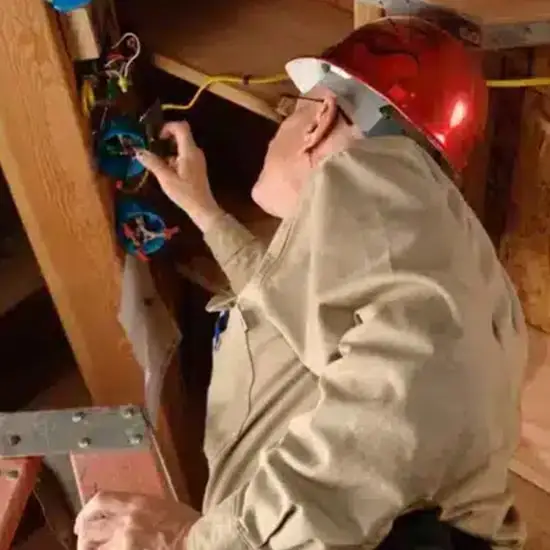

Investing in property is a major financial commitment—a Pre Purchase Building Inspection protects that investment. Our comprehensive reports are prepared by inspectors with extensive knowledge and experience of the local market.
Pre Purchase Building Inspections go beyond basic assessments. Each property receives a thorough evaluation from the foundation through the roof structure. Our trade-qualified inspectors assess structural components, weathertightness systems, electrical installations, and plumbing infrastructure in accordance with AS 4349.1-2007.
Schedule your Pre-Purchase Building Inspection to receive your report within 24-48 hours. Every report includes moisture testing results, structural analysis, and detailed documentation to support confident property negotiations.
Professional and Reliable Inspection reports to AS4349.1 reporting Standards
Same-day onsite testing with your building inspection in all suburbs
On site or over the phone verbal overview for time critical decisions




Harrisdale is a suburb built almost entirely within the past 15–20 years on land that was rural until the mid-2000s. For building inspectors, this creates a profile that differs from both the older suburbs of the Perth metropolitan area and even the neighbouring estate suburbs of Canning Vale and Piara Waters.
The challenges are not about deferred maintenance or aged materials — they are about how a volume-built residential estate on reactive clay soils with marginal drainage infrastructure performs when the original site conditions, construction quality, and post-construction landscaping converge.
Harrisdale sits on the Swan Coastal Plain, where the Bassendean Sands transition to the Guildford Clay formation — a clay profile that is classified as moderately to highly reactive under AS 2870. This means the soil beneath the suburb's homes expands when wet and contracts when dry, producing measurable vertical movement at the foundation.
The distinctive feature of the Harrisdale movement pattern is the timing. In older suburbs where homes were built before improved footing design became standard, foundation movement often appears at 20–30 years as the soil's moisture equilibrium gradually shifts. In Harrisdale, we see movement cracking appearing at 3–10 years in homes where the slab design was not matched to the site's soil classification, or where the post-construction drainage regime differs materially from what the engineer assumed.
The typical presentation includes:
- stepped cracking in face brickwork on the northern and western elevations, where differential solar drying creates the greatest moisture gradient around the slab perimeter. These cracks often measure 1–3mm at the mortar joint and may extend through three to six brick courses before terminating.
- interior plasterboard cracking at window and door reveals, particularly on the ground floor, where the slab movement is transmitted directly to the wall frame. In two-storey homes, the first-floor cracking pattern is usually less pronounced because the upper floor structure is decoupled from the slab.
- tile floor cracking in open-plan living and dining areas — the longest unsupported slab spans — where differential heave or settlement concentrates tensile stress in the tiled surface. This is one of the most common homeowner complaints in Harrisdale because it appears within the first few years of occupancy and is nearly impossible to resolve without replacing the tile.
- doors that bind in their frames seasonally: tight in summer (when the clay contracts and the slab perimeter drops slightly) and loose in winter (when the clay expands). This seasonal cycling is itself a diagnostic sign that the foundation is responding to moisture changes rather than experiencing a one-time settlement event.
The inspection distinction that matters is between movement within the AS 2870 serviceability limits (defined as cracks up to 5mm in brickwork, slab deflections within specified tolerances) and movement that exceeds those limits or is progressive over successive inspections.
Many Harrisdale homes sit within the serviceability band — the cracks are visible and unsettling, but they do not represent structural failure. The risk for buyers is that the condition is presented as a minor cosmetic issue when it may indicate that the slab is operating at the edge of its design parameters and will continue to affect the building's life.
Harrisdale's drainage challenge is specific to its development model. The suburb was designed and constructed as a series of master-planned estates, with engineered stormwater networks, detention basins, and public drainage infrastructure. At the lot level, however, site grading and downpipe connections were carried out by individual builders working to estate civil engineering plans, which were often prepared before the individual lot contours were finalised.
Common drainage findings include:
- downpipe connections at lot boundaries that are not connected to the estate stormwater network. In many Harrisdale homes, the builder provided a grated pit at the rear of the lot and a connection point at the front boundary, but the pipework between them was not installed, or was installed with inadequate fall. The result is roof water that discharges at ground level through a pipe stub-out that ends 50–100mm above the natural surface — effectively a downpipe that terminates at ground level.
- rear-yard grading that slopes toward the building rather than the rear boundary. On narrow lots with limited space for drainage falls, the natural tendency is for the rear yard paving and lawn to shed water toward the house. Where this combines with a high-clay-content soil that does not absorb water readily, the winter result is ponding along the rear slab edge that persists for days after rainfall.
- side-access passages on R25–R40 lots where the roof water from two building elevations is concentrated into a narrow (900–1500mm) strip between the house and the boundary fence. On any lot where the side passage lacks its own grated drainage, concentrated roof water saturates the soil along the slab edge, creating localised moisture conditions that drive reactive clay movement.
- landscaping alterations post-construction that compromise the original drainage design. The owner who installs paving, garden beds, retaining walls, or a shed in the side or rear yard without reassessing the drainage path is the most common source of new drainage problems in established Harrisdale homes.
For Harrisdale buyers, the inspection question is not "is there a drainage system?" — there will be one, at the estate level — but "does the lot-level drainage actually convey roof water and surface runoff to the estate network without saturating the slab perimeter?" The answer to that question determines whether the foundation performs as designed.
Termite risk in Harrisdale is not driven by proximity to native bushland — the suburb was developed on cleared agricultural land, and the termite reservoirs are less dense than in the Perth hills or the coastline reserves. Instead, the risk stems from how termite management systems were installed during the rapid construction phase.
The NCC requires all new dwellings in termite-prone areas to have a termite management system and to display a notice permanently affixed to the building. In Harrisdale, we regularly find:
- physical termite barriers (often stainless steel mesh at the slab edge) that have been covered by soil, garden mulch, or paving during post-construction landscaping. A buried barrier cannot be inspected and has been bridged by soil contact — it provides no protection.
- termite collars at plumbing penetrations through the slab that were not installed or were inadequately sealed. The penetration points — where water pipes, gas lines, and electrical conduits pass through the slab — are the most common entry points for termites in a slab-on-ground home, and the collars are frequently the detail that was overlooked during the rapid fit-out phase.
- termite notices in meter boxes that are missing, blank, or illegible. The notice should state the system type, installation date, life expectancy, and maintenance requirements. Without it, the homeowner has no record of what protection exists or when it needs to be reinstated.
- landscaping that creates concealed termite pathways against the building. Timber retaining walls, garden edging, sleepers, and decking substructures installed after the house was completed can bridge the termite barrier, providing direct access to the slab edge.
For buyers of a Harrisdale home, the termite inspection task is to verify that the system installed during construction remains intact, visible, and undamaged. A home that is 5–10 years old with no evidence of an active termite management system and no inspection history represents a protection gap that needs to be closed.
The landscaping-envelope interaction: a post-construction story
Harrisdale's wide streets, family-oriented neighbourhoods, and generous frontages mean that landscaping and outdoor living improvements are common. The interaction between these post-construction changes and the building envelope is a recurring theme in inspections.
The most frequent issues are:
- garden beds raised against external walls above weep hole level. In a brick-veneer home, the weep holes at the base of the brickwork are the designed drainage path for moisture in the cavity. When garden soil, mulch, or synthetic turf is installed above the weep hole level, moisture cannot drain from the cavity, and the brickwork becomes saturated — leading to efflorescence, mould on internal walls at skirting level, and concealed timber decay in the wall framing.
- timber decking, pergolas, and retaining walls installed without consideration of the termite barrier. A timber deck that sits above the slab edge but whose substructure contacts the ground outside the barrier line can provide termites with a pathway that bypasses the barrier entirely.
- irrigation systems that overspray onto the brickwork or concentrate moisture at the slab perimeter. In a suburb on reactive clay, the irrigation regime matters. A lawn irrigation system that keeps the soil consistently wet on one side of the house while the other side remains dry will create the moisture differential that drives differential slab movement.
- paving and concrete driveways that butt directly against the slab edge without a gap or expansion joint. As the slab moves seasonally, the rigid paving connection transfers stress to the slab edge rather than accommodating the movement separately.
Harrisdale was built by multiple volume builders working across multiple estates during a period of strong demand. The quality consistency varies not just between builders but between stages within the same estate. The inspection findings that recur across the suburb include:
- roof screw installation quality: over-torqued fasteners that have stripped the sheet dimple, undertightened fasteners that rattle in the wind, and fasteners that were driven at an angle rather than square to the sheet. These are individual defects, but their frequency across Harrisdale reflects a construction pace in which roof-fixing quality was not independently verified.
- insulation and vapour barrier layout in roof spaces: insulation batts that were compressed around wiring and plumbing runs, vapour barriers that were displaced during electrical fit-out, and air gaps at the wall plate that reduce the thermal envelope performance. These are not structural defects, but they affect the home's energy performance and can create roof-space condensation conditions that the homeowner attributes to a roof leak.
- shower-screen sealing: the most common wet-area defect in Harrisdale homes. Shower screens are frequently installed with inadequate sealant at the hinge-side frame junction, allowing water to track down the screen frame and accumulate at the shower floor edge, where it eventually migrates under the tile bed.
- builder handover quality: homes where the build completion was rushed to meet settlement dates, leaving incomplete caulking, missing architrave seals, and doors that were not adjusted after internal painting. These are minor items individually, but collectively they indicate a build where the finishing phase was compressed.
Example 1: Five-year-old brick-veneer home with reactive clay slab movement and drainage non-connection
We inspected a five-year-old four-bedroom brick-veneer home in the Harrisdale Green estate, on a 420m² lot on reactive clay soil classified as Class H1. The home presented as near-new with well-maintained interiors and a well-presented front garden. The owners reported that floor tiles in the open-plan living area had developed cracking along a line roughly three metres from the rear wall, and that the rear sliding door had become progressively harder to operate over the previous two summers.
External inspection revealed stepped cracking in the brickwork on the western elevation at three locations, with crack widths of 2–3mm at the mortar joint. At the rear of the property, the downpipe from the western roof plane terminated at a PVC stub-out that discharged onto the paved alfresco area — the grated pit connection to the estate stormwater network had never been installed.
The rear yard grading directed surface water toward the slab edge, and the garden bed along the western boundary had been raised above weep hole level with decorative stone and retaining sleepers. The slab movement pattern — concentrated on the western elevation where drainage was absent — was consistent with a foundation responding to localised moisture concentration at the slab perimeter.
The termite notice in the meter box was present but listed only the builder's details with no system type, installation date, or maintenance schedule. The drainage connection, slab movement monitoring, and termite management documentation were all gaps that the original build documentation had not addressed and that the buyer would need to resolve.
Example 2: An eight-year-old rendered brick home with a termite barrier bridging through landscaping
We inspected an eight-year-old two-storey rendered brick home on a 500m² lot in the Varuna estate. The home was well-presented with recent internal paint and updated window furnishings. At the slab edge, the physical termite barrier was visible on the front and side elevations. Still, it was buried beneath garden mulch and paving on the rear elevation, where a timber deck and retaining wall had been installed after construction.
The retaining wall sleepers — treated pine — were in direct ground contact and abutted the slab edge at the rear corner of the house. A timber deck had been constructed over the barrier line, with deck-support posts set into the ground outside the barrier perimeter. The combination of timber in ground contact, a buried barrier, and a deck substructure spanning the barrier line created multiple concealed termite pathways to the slab edge. In the roof cavity, we found evidence of historical water entry at the western gable end — staining on roof framing and insulation — consistent with flashing separation at the parapet wall on the rendered elevation.
The flashing had been repaired with silicone on the external face, but the internal roof space showed that moisture had been tracking into the wall cavity for several seasons. The termite management reinstatement — excavation to expose and verify the barrier, installation of a supplementary chemical treatment system, and modification of the deck and retaining wall to eliminate the bridging pathways — was an estimated $4,000–8,000 scope. The roof flashing repair required professional verification that the cavity moisture issue had been resolved.
In Harrisdale, the strongest inspection outcomes treat the suburb as what it is: a young, volume-built estate on reactive clay soils where lot-level drainage, termite barrier integrity, and the post-construction landscaping story are as important as the building fabric itself. When those three elements are assessed together, the suburb's appeal as a modern family neighbourhood can be evaluated against the actual performance of the foundation systems beneath every home.
Our comprehensive building inspection and the report start from $299, and can go higher depending on the size and nature of the property. The key factor in determining price of your building inspection is your address, so you’ll know upfront the cost you’re looking at.
Our building inspectors will perform a complete building inspection that looks at:
Above the floor, i.e. inside the property, including wall linings, windows and doors, hardware, floors, bathroom fixtures, fittings, tiled areas, kitchen, cabinetry and any waterproofing issues
Sub-floor (if accessible), including foundations, ventilation, pipe-work
Ceilings, including walls, roof and roof space, roof framing, wiring and other electrical items.
Plumbing
Outside the property, including exterior cladding, door and window frames, garages, fences, paving, drives, decking, etc.
Comprehensive Building Inspection Details:
Our building inspection report covers all accessible areas of the property, including the interior, exterior, roof, subfloor, and other structural elements.
Clear and Easy-to-Understand Language in your Building Inspection Report:
We use simple, non-technical language, ensuring the building inspection report you receive is clear and understandable for homeowners, buyers, and real estate agents alike.
Identification of Property Defects:
The building inspection report highlights any visible defects, maintenance issues, or areas of concern, such as leaks, dampness, or structural integrity problems.
Photos and Supporting Evidence:
Our building reports include high-quality photos to provide a visual context for any issues or areas requiring attention.
Recommendations:
Practical advice on repairs, maintenance, or further inspections is provided to help you make informed decisions.
Verbal and Written Summaries:
If requested, we offer a verbal summary immediately after the inspection, followed by a detailed written report.
Tailored Insights for Buyers and Sellers:
Whether you’re buying or selling, our reports provide tailored insights to guide negotiations or improve property presentation.
If you have specific concerns about your property, feel free to discuss them with us before the inspection!
A building inspection is a detailed examination of a property’s condition, conducted by a qualified inspector. It is crucial in Australia due to the diverse property types, weather conditions, and common issues such as dampness and structural movement.
Most building inspections take 2-3 hours, depending on the property size and condition.
Yes, even new builds can have hidden defects or incomplete work. A professional building inspection conducted by our building inspectors provides peace of mind and identifies potential issues before settlement.
Absolutely! We encourage clients to attend their building inspection to gain firsthand insights and ask questions directly to our inspectors.
Typical issues while conducting a building inspection include:
Leaky buildings
Rotting timber
Structural cracks
Poor insulation
Moisture and dampness
Yes, our pre-purchase building inspections help buyers make informed decisions and avoid costly surprises after purchase.
Yes, our building inspectors are fully qualified and experienced in all local building standards, ensuring accurate and reliable reports.
A building inspection is for buyers assessing a property’s condition, while a pre-listing inspection is for sellers preparing their property for sale. Both services are available throughout Australia.
Yes, our inspections include moisture testing, especially crucial in Australia, where leaky buildings are a known issue.
Looking for building inspection services? Alert Building Inspections provides detailed building reports within 24-48 hours, conducted by trade-qualified inspectors who understand the local property market and common building issues. We follow the Australia Standard for Property Inspections (AS 4349.1-2007) and serve locations throughout Australia.
The best building inspection services in Australia share several key characteristics: trade-qualified inspectors with current licensing, adherence to the AS 4349.1-2007 Property Inspection Standard, comprehensive indemnity insurance, and the ability to deliver detailed reports within 24-48 hours. Top-tier services employ inspectors who are Licensed Building Practitioners with extensive field experience in both residential and commercial construction. They provide thorough moisture testing (critical in Australia's climate), detailed photographic evidence, and clear recommendations that help you make informed decisions. Alert Building Inspections meets all these criteria with trade-qualified inspectors across eight major locations, full indemnity insurance, and reports accepted by all major banks. Our inspectors have over 150 years of combined building experience, ensuring you receive expert analysis of structural integrity, weathertightness, and potential maintenance issues.
When looking for reliable building inspectors nationwide, focus on three critical factors: professional qualifications (trade qualifications and Licensed Building Practitioner status), local market knowledge in your specific region, and a proven track record with comprehensive insurance coverage. Reliable inspectors should be able to identify region-specific issues, such as earthquake considerations, coastal weather exposure, or clay soil movement. They should also maintain professional standards consistently across all locations. Alert Building Inspections operates throughout Australia, with each location staffed by locally-based, trade-qualified inspectors who understand the specific building challenges in their region. All our inspectors follow the same rigorous inspection protocols and reporting standards, ensuring consistent quality whether you're purchasing in Darwin or Hobart.
Top property inspection services distinguish themselves through comprehensive coverage that goes beyond basic visual checks. They conduct thorough assessments of foundations, sub-floor areas, roof spaces, exterior cladding, moisture levels, plumbing systems, and structural components. Leading services provide multiple inspection options, including full written reports for major purchase decisions, verbal reports for time-critical situations, and specialised testing such as methamphetamine contamination screening. They should also offer fast turnaround times without compromising thoroughness. Alert Building Inspections provides all these services across our nationwide network, with inspections starting from $299 for verbal reports and $499 for comprehensive pre-purchase inspections. Our reports include detailed photographs, specific defect identification, and prioritised recommendations. We also offer same-day methamphetamine testing and Safe and Sanitary reports for council requirements, giving you complete property assessment options under one roof.
The best home inspection services combine technical expertise with practical buyer advocacy. Inspectors should be trade-qualified builders, not just trained observers, so they can identify issues that less experienced inspectors might miss. Services should include a detailed foundation assessment, a thorough roof and roof space inspection, a comprehensive moisture analysis, an evaluation of weathertightness systems, and the identification of non-permitted alterations or construction that do not meet building standards. Top services also maintain up-to-date knowledge of common defects in different housing eras, from leaky building syndrome in the 1990s-2000s construction to weatherboard maintenance issues in older homes. Alert Building Inspections employs only trade-qualified builders who bring decades of hands-on construction experience to every inspection. We understand how homes are built, how they age, and what commonly fails in different Australian climates and soil conditions. Our inspectors have worked across residential and commercial construction, giving them the expertise to identify structural concerns, weatherproofing failures, and maintenance issues that could cost you tens of thousands of dollars if left undetected.
We offer building inspections across Australia — Sydney, Perth, Adelaide, Canberra, Tasmania and Darwin.
Perth locations include: Alkimos, Armadale, Baldivis, Butler, Canning Vale, Clarkson, Ellenbrook, Gosnells, Halls Head, Joondalup, Midland, Morley, Piara Waters, Rockingham, Stirling, Thornlie, Wanneroo, Willetton, and Yanchep.
Copyright © 2016- Alert Building Inspections