Rockingham is the rare Perth suburb where you can inspect a 1950s fibro holiday shack and a 2023 townhouse on the same street. That mix — a port town turned holiday destination turned satellite city — means the building stock spans eras that most Perth growth corridors lack. For inspectors, Rockingham presents not one suburb profile but several overlapping ones, tied together by a single constant: coastal proximity that accelerates material wear across every decade of construction.
The 1970s and 1980s brick-and-tile homes that dominate Rockingham's older residential areas — Safety Bay, Shoalwater, and the original Rockingham townsite — are where we find the suburb's most characteristic defect patterns. These homes were built on concrete strip footings and stiffened-raft slabs over Spearwood sands and occasional clay lenses, with concrete tile roofs, cavity brick or brick-veneer walls, and original damp-proof courses that are now 30 to 50 years old.
Rising and salt damp is a standout finding — not the dramatic tide marks of Victorian-era construction, but an insidious moisture migration through failed or inadequate damp-proof membranes, manifesting as skirting-board deterioration, plaster delamination at wall bases, and efflorescence on internal brickwork that has been painted over between sales. The coastal sand carries dissolved salts that are drawn up into the brickwork by capillary action. Once the original DPC has been bridged by garden beds, paving, or rendered finishes, the path is established for ongoing moisture intrusion that internal ventilation alone cannot resolve.
Metal roof and fixing corrosion follow a different timeline here than in Perth's northern coastal corridor. Because Rockingham's older housing stock uses concrete tile rather than Colorbond, the primary coastal corrosion risk is not roofing sheets but fixings — the galvanised nails, batten screws, ridge capping fasteners, and gutter brackets that hold the envelope together.
We regularly inspect 1980s tile roofs where the original galvanised fixings have corroded to the point of reduced pull-out capacity on weather-facing slopes, particularly on the western roof plane exposed to the prevailing salt-laden wind off Cockburn Sound. The gutters and downpipes on these homes — often original Colorbond or galvanised steel — show accelerated edge corrosion at overlap joints and bracket-fixing points, and, in many cases, have been repaired with sealants rather than replaced, creating concealed failure points behind paint layers.
The newer Rockingham housing — infill townhouses, apartment developments near the Rockingham City Centre and along the Mandurah Road corridor, and the expanding estate developments toward Baldivis — shifts the defect patterns toward waterproofing failures in wet areas, inadequate stormwater connections on increasingly tight sites, and interface detailing between attached dwellings.
The coastal exposure still matters: balustrade fixings, balcony membranes, aluminium joinery on upper levels, and exposed metal handrails on townhouse developments all show accelerated wear compared with equivalent stock 20 kilometres inland. But in the newer stock, the immediate risks are more often internal — shower membrane failures within warranty periods, poor fall-to-waste on alfresco and balcony slabs, and party-wall detailing that does not adequately address the coastal wind-driven rain that Rockingham experiences through winter.
Termite management in Rockingham is a genuine concern that cuts across all eras. The sandy Spearwood soils drain well, which is favourable. Still, the suburb's multi-era development pattern — old holiday shacks on bush blocks, established homes on generous lots with mature gardens, new estates carved from remnant bushland — creates interface conditions where termite reservoirs abut residential property boundaries, regardless of a home's age.
We consistently find that the oldest homes have either no termite barrier or one that was never renewed. In contrast, the newest homes often have a chemical barrier installed at construction that was subsequently compromised by landscaping, paving, retaining walls, and irrigation systems installed after handover.
The standout local risk for Rockingham buyers is the intersection of coastal salt exposure and a housing stock spanning seven decades of varying construction standards, in which older homes exhibit material failure patterns that no longer present as obvious defects. The newer homes are subject to accelerated coastal wear that the builder's maintenance schedule did not anticipate.
+
+
24-48 Hour Report Delivery Guaranteed
Looking for a Building Inspector in Rockingham? Our trade-qualified inspectors provide thorough building reports within 24-48 hours, combining speed with meticulous attention to detail.
Our building inspection service is perfect for time-sensitive property purchases. Each inspector carries professional indemnity insurance and brings deep knowledge of your local market and common building challenges. All inspections comply with AS 4349.1-2007 standards for comprehensive, reliable assessments.
Property buyers rely on our inspection expertise for accurate, actionable assessments. Every report delivers a complete structural evaluation, weather-tightness analysis, and maintenance requirements—giving you the information you need to make confident purchasing decisions on schedule.

Investing in property is a major financial commitment—a Pre Purchase Building Inspection protects that investment. Our comprehensive reports are prepared by inspectors with extensive knowledge and experience of the local market.
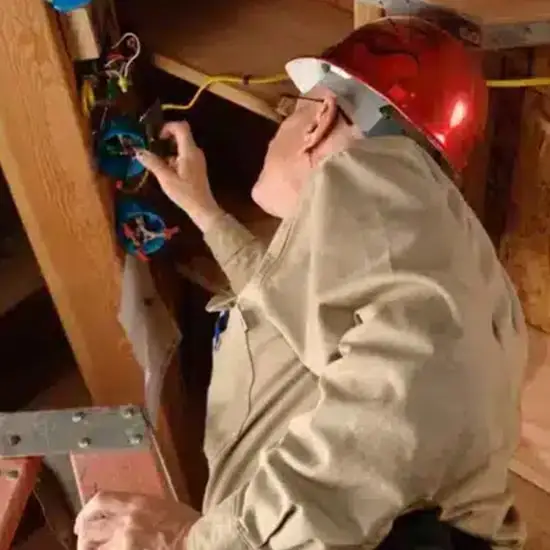
Pre Purchase Building Inspections go beyond basic assessments. Each property receives a thorough evaluation from the foundation through the roof structure. Our trade-qualified inspectors assess structural components, weathertightness systems, electrical installations, and plumbing infrastructure in accordance with AS 4349.1-2007.
Schedule your Pre-Purchase Building Inspection to receive your report within 24-48 hours. Every report includes moisture testing results, structural analysis, and detailed documentation to support confident property negotiations.
Professional and Reliable Inspection reports to AS4349.1 reporting Standards
Same-day onsite testing with your building inspection in all suburbs
On site or over the phone verbal overview for time critical decisions




The holiday-shack legacy and staged conversion to permanent housing
Rockingham's origins as a 20th-century seaside resort have left a distinct mark on its building fabric, with no parallel in Perth's other coastal suburbs. From the 1910s through to the 1960s, the foreshore and surrounding streets filled with fibro, weatherboard, and light-timber holiday shacks — weekenders built to a minimal standard, often without the damp-proof courses, slab-edge detailing, or subfloor ventilation that permanent housing required.
Over subsequent decades, many of these structures were progressively enclosed, extended, re-roofed, and in some cases reclad to create year-round homes. The inspection challenge is that what now appears on paper as a 1970s or 1980s house may retain the original 1950s floor structure, an unimproved subfloor, and a foundation system never designed for continuous habitation.
These converted shacks present a cluster of finding categories that do not appear in purpose-built housing of the same era. Subfloor ventilation is often inadequate or non-existent, with moisture readings consistently elevated under areas where the original low-set floor was enclosed by brick or block infill without consideration for cross-flow ventilation. Original timber floor joists in ground contact or within 100 millimetres of the soil surface — a legacy of the minimal clearance that was acceptable for seasonal occupancy — show localised decay at ends and at bearing points.
In cases where the subfloor was later enclosed with brickwork, the absence of weepholes and vent openings creates a concealed environment where fungal decay can progress within the wall cavity without visible external signs. These are not the products of neglect; they are the consequences of substrate conditions acceptable for a summer weekender but inadequate for a family home.
Rockingham is the home port of HMAS Stirling, Australia's largest naval base, and the adjacent Henderson shipbuilding and marine support precinct employs a substantial defence-industry workforce. This creates a housing market dynamic that distinguishes Rockingham from Perth's other coastal suburbs: a significant proportion of properties cycle through defence-posting tenants and owner-occupiers every three to five years, producing an unusually high turnover rate that directly affects building maintenance patterns.
Homes in the suburbs closest to HMAS Stirling — Rockingham itself, Shoalwater, Safety Bay, and Waikiki — show a distinct pattern of maintenance deferral between tenancies. Properties leased to defence personnel often receive cosmetic touch-ups and routine servicing during periods of vacancy. Still, the deeper maintenance — roof fastener renewal, gutter replacement, subfloor ventilation improvements, termite barrier renewal — tends to be deferred because the holding period for investment properties in this corridor is shorter than the interval at which these items require attention.
The result is a stock of homes where the presentation at open-for-inspection consistently outperforms the underlying condition of the envelope and structure. We routinely inspect properties in these suburbs where the interior has been freshly painted. The gardens are maintained, while the roof space reveals fastener corrosion that has been progressing for ten years; the subfloor has damp readings that have never been investigated; and the termite management system — if one exists — expired during a previous tenancy and was not renewed.
Rockingham's age profile of buildings gives it one of the highest concentrations of asbestos-containing materials among Perth's coastal suburbs. The pre-1970s holiday shacks used fibro extensively for external cladding, eaves, internal linings, and wet-area sheeting. The 1970s and 1980s brick homes used fibro for roof underlay, eaves linings, fencing, and bathroom wall sheeting. Even stock from the 1990s and early 2000s may contain asbestos in cement roof sheeting, internal wet-area linings, and exterior cladding on outbuildings, garages, and sheds.
The suburb's sustained renovation activity — extensions, re-cladding, re-roofing, and internal alterations over decades — has disturbed many of these materials. The inspection risk is not simply presence; it is that Rockingham homes have been renovated so often across so many eras that the original ACM locations may have been concealed behind new linings, encapsulated under new roofing, or buried in wall cavities by successive owners who were not aware of what was behind the surface they were covering.
While Section 1 addressed rising damp and salt damp as findings, this section examines the local mechanism that makes it more aggressive in Rockingham than in Perth's other coastal suburbs. Rockingham sits on the Spearwood Dune system, where the deep sands overlying Tamala limestone create an aquifer that sits close to the surface in winter. The groundwater in this system is brackish, carrying dissolved salts from the limestone and the coastal water table, which fluctuates with tidal influence.
In Rockingham's older brick homes, where the original damp-proof course was a simple bituminous membrane or slate DPC installed when groundwater salinity was not a design consideration, the capillary rise of this brackish water through the brickwork deposits salts within the wall fabric as the moisture evaporates. Over successive wet-dry cycles, the salt concentration within the brickwork increases, hygroscopic salts within the wall draw additional moisture from the air during humid coastal conditions, and the wall maintains a persistent damp state year-round — not only after rain.
This is the mechanism behind the 'salt damp' that local inspectors refer to, and it is distinct from the rising damp patterns found in Perth's inland clay-soil suburbs, where the moisture source is groundwater, without the same salinity loading.
Rockingham's current development phase — townhouse and apartment infill within established suburbs, plus estate expansion on the eastern fringe toward Baldivis — creates a third building profile alongside the converted shacks and the 1970s–90s brick homes. The newer attached product introduces shared-wall and shared-drainage arrangements that are poorly suited to Rockingham's coastal exposure when detailing is not specified for marine-influenced conditions.
Balcony membranes on three-year-old townhouses, shared stormwater lines that depend on common-property soakwells with no maintenance plan, and roof-to-wall junctions between attached units where sealant detailing was not designed for wind-driven rain at 40 kilometres per hour — these are emerging defect categories that will define Rockingham's next decade of inspection findings.
For buyers considering an attached product in Rockingham, the question is not whether the individual unit presents well — it is whether the common-property envelope has been detailed and maintained for the coastal conditions that will test every junction within the first ten years.
A converted holiday shack in Safety Bay with concealed subfloor deterioration
We inspected a weatherboard-and-tile home listed as a "three-bedroom character cottage" in Safety Bay, walking distance to the foreshore. The interior had been renovated, including a new kitchen, bathroom, floor coverings, and paint. The presentation was market-ready. At the subfloor level, the original building — a 1950s weekender on timber stumps — had been enclosed with brick infill at some point in the 1970s, and a concrete slab had been poured over part of the original floor area during a 1990s extension.
The timber stumps supporting the original structure showed localised decay at ground-contact points on the southern and western sides, consistent with decades of moisture exposure from the prevailing weather. More critically, the enclosed subfloor had no vent openings on the weather-facing sides — the brick infill had been rendered over, sealing the subfloor cavity. Moisture readings at the base of the original wall framing were elevated across multiple bays, and the timber floor joists showed early fungal decay at ends resting on the stumps.
The renovated interior showed no visible signs of the subfloor condition — the new flooring and paint concealed what was developing below. The buyer's post-settlement position required partial subfloor excavation, stump replacement, and the installation of vent openings and a subfloor membrane — a scope of work that the cosmetic renovation had neither addressed nor disclosed.
Rockingham's building stock cannot be assessed through the same lens as Perth's growth-corridor suburbs. The suburb has the oldest continuously occupied coastal housing fabric in metropolitan Perth south of Fremantle, with material failure patterns that span seven decades of changing construction standards, three distinct building typologies (converted shacks, established brick homes, modern infill), and a coastal exposure environment that accelerates envelope wear regardless of build age.
For buyers, the premium is not on the presentation at the open home — it is on understanding which era's building logic applies to the property, what has been altered since original construction, and whether the coastal salt-damp and corrosion mechanisms have been managed or concealed.
Our comprehensive building inspection and the report start from $299, and can go higher depending on the size and nature of the property. The key factor in determining price of your building inspection is your address, so you’ll know upfront the cost you’re looking at.
Our building inspectors will perform a complete building inspection that looks at:
Above the floor, i.e. inside the property, including wall linings, windows and doors, hardware, floors, bathroom fixtures, fittings, tiled areas, kitchen, cabinetry and any waterproofing issues
Sub-floor (if accessible), including foundations, ventilation, pipe-work
Ceilings, including walls, roof and roof space, roof framing, wiring and other electrical items.
Plumbing
Outside the property, including exterior cladding, door and window frames, garages, fences, paving, drives, decking, etc.
Comprehensive Building Inspection Details:
Our building inspection report covers all accessible areas of the property, including the interior, exterior, roof, subfloor, and other structural elements.
Clear and Easy-to-Understand Language in your Building Inspection Report:
We use simple, non-technical language, ensuring the building inspection report you receive is clear and understandable for homeowners, buyers, and real estate agents alike.
Identification of Property Defects:
The building inspection report highlights any visible defects, maintenance issues, or areas of concern, such as leaks, dampness, or structural integrity problems.
Photos and Supporting Evidence:
Our building reports include high-quality photos to provide a visual context for any issues or areas requiring attention.
Recommendations:
Practical advice on repairs, maintenance, or further inspections is provided to help you make informed decisions.
Verbal and Written Summaries:
If requested, we offer a verbal summary immediately after the inspection, followed by a detailed written report.
Tailored Insights for Buyers and Sellers:
Whether you’re buying or selling, our reports provide tailored insights to guide negotiations or improve property presentation.
If you have specific concerns about your property, feel free to discuss them with us before the inspection!
A building inspection is a detailed examination of a property’s condition, conducted by a qualified inspector. It is crucial in Australia due to the diverse property types, weather conditions, and common issues such as dampness and structural movement.
Most building inspections take 2-3 hours, depending on the property size and condition.
Yes, even new builds can have hidden defects or incomplete work. A professional building inspection conducted by our building inspectors provides peace of mind and identifies potential issues before settlement.
Absolutely! We encourage clients to attend their building inspection to gain firsthand insights and ask questions directly to our inspectors.
Typical issues while conducting a building inspection include:
Leaky buildings
Rotting timber
Structural cracks
Poor insulation
Moisture and dampness
Yes, our pre-purchase building inspections help buyers make informed decisions and avoid costly surprises after purchase.
Yes, our building inspectors are fully qualified and experienced in all local building standards, ensuring accurate and reliable reports.
A building inspection is for buyers assessing a property’s condition, while a pre-listing inspection is for sellers preparing their property for sale. Both services are available throughout Australia.
Yes, our inspections include moisture testing, especially crucial in Australia, where leaky buildings are a known issue.
Looking for building inspection services? Alert Building Inspections provides detailed building reports within 24-48 hours, conducted by trade-qualified inspectors who understand the local property market and common building issues. We follow the Australia Standard for Property Inspections (AS 4349.1-2007) and serve locations throughout Australia.
The best building inspection services in Australia share several key characteristics: trade-qualified inspectors with current licensing, adherence to the AS 4349.1-2007 Property Inspection Standard, comprehensive indemnity insurance, and the ability to deliver detailed reports within 24-48 hours. Top-tier services employ inspectors who are Licensed Building Practitioners with extensive field experience in both residential and commercial construction. They provide thorough moisture testing (critical in Australia's climate), detailed photographic evidence, and clear recommendations that help you make informed decisions. Alert Building Inspections meets all these criteria with trade-qualified inspectors across eight major locations, full indemnity insurance, and reports accepted by all major banks. Our inspectors have over 150 years of combined building experience, ensuring you receive expert analysis of structural integrity, weathertightness, and potential maintenance issues.
When looking for reliable building inspectors nationwide, focus on three critical factors: professional qualifications (trade qualifications and Licensed Building Practitioner status), local market knowledge in your specific region, and a proven track record with comprehensive insurance coverage. Reliable inspectors should be able to identify region-specific issues, such as earthquake considerations, coastal weather exposure, or clay soil movement. They should also maintain professional standards consistently across all locations. Alert Building Inspections operates throughout Australia, with each location staffed by locally-based, trade-qualified inspectors who understand the specific building challenges in their region. All our inspectors follow the same rigorous inspection protocols and reporting standards, ensuring consistent quality whether you're purchasing in Darwin or Hobart.
Top property inspection services distinguish themselves through comprehensive coverage that goes beyond basic visual checks. They conduct thorough assessments of foundations, sub-floor areas, roof spaces, exterior cladding, moisture levels, plumbing systems, and structural components. Leading services provide multiple inspection options, including full written reports for major purchase decisions, verbal reports for time-critical situations, and specialised testing such as methamphetamine contamination screening. They should also offer fast turnaround times without compromising thoroughness. Alert Building Inspections provides all these services across our nationwide network, with inspections starting from $299 for verbal reports and $499 for comprehensive pre-purchase inspections. Our reports include detailed photographs, specific defect identification, and prioritised recommendations. We also offer same-day methamphetamine testing and Safe and Sanitary reports for council requirements, giving you complete property assessment options under one roof.
The best home inspection services combine technical expertise with practical buyer advocacy. Inspectors should be trade-qualified builders, not just trained observers, so they can identify issues that less experienced inspectors might miss. Services should include a detailed foundation assessment, a thorough roof and roof space inspection, a comprehensive moisture analysis, an evaluation of weathertightness systems, and the identification of non-permitted alterations or construction that do not meet building standards. Top services also maintain up-to-date knowledge of common defects in different housing eras, from leaky building syndrome in the 1990s-2000s construction to weatherboard maintenance issues in older homes. Alert Building Inspections employs only trade-qualified builders who bring decades of hands-on construction experience to every inspection. We understand how homes are built, how they age, and what commonly fails in different Australian climates and soil conditions. Our inspectors have worked across residential and commercial construction, giving them the expertise to identify structural concerns, weatherproofing failures, and maintenance issues that could cost you tens of thousands of dollars if left undetected.
We offer building inspections across Australia — Sydney, Perth, Adelaide, Canberra, Tasmania and Darwin.
Perth locations include: Alkimos, Armadale, Baldivis, Butler, Canning Vale, Clarkson, Ellenbrook, Gosnells, Halls Head, Harrisdale, Joondalup, Midland, Morley, Piara Waters, Stirling, Thornlie, Wanneroo, Willetton, and Yanchep.