
Wanneroo is one of Perth's oldest European settlements and one of its newest urban frontiers — a suburb where a limestone farmhouse from the 1850s can sit a few streets from a 1970s brick-and-tile family home and a 2024 development estate that is still releasing lots. The suburb's centre, clustered around the lakes and wetlands of the Yellagonga Regional Park, was a small dairying and market-garden community for more than a century before the 1970 Corridor Plan designated the north-west corridor for urban expansion.
The growth that followed has been layered rather than linear: the old Wanneroo townsite with its historic buildings and large lots, the 1970s–1980s suburban estates that filled in the areas around Wanneroo Road, the 1990s–2000s infill developments, and now the East Wanneroo growth front that will add tens of thousands of homes on the rural land to the east. Each layer carries a different inspection profile, and they share a common geological foundation that produces defect patterns distinct from the clay-soil suburbs of Perth's south-east.
Foundation performance in Wanneroo is driven by the Bassendean Sands — deep, pale-grey, siliceous sands overlying a clay base at variable depth. These sands are classified predominantly as Class S (slightly reactive) under AS 2870, which is more favourable than the Class M-H classification for the Guildford Clay suburbs. However, this does not mean foundation movement is absent — it means the mechanism is different.
The sands themselves do not swell and shrink with moisture, but they sit over a clay substrate that can support a seasonal water table close to the surface during winter. On Wanneroo's flat-to-gently undulating topography, where many properties back onto or abut the wetland and lake system, the seasonal rise in the perched water table creates localised softening of the sand subgrade beneath slab edges. The inspection pattern is not the stepped diagonal cracking of clay heave.
Still, subtle differential settlement — slab corners that have dropped slightly relative to the main slab area, doors that have developed a scrape at the top rather than the side, and ceiling-to-wall separations that appear on one elevation only and correspond to the side of the house where the seasonal water table sits highest. The homes most affected are those on the lowest-lying lots near the lake system, where the winter water table may rise to within 300 millimetres of the surface.
The condition of tile roofs is a significant finding in Wanneroo's 1970s–1980s housing stock, which accounts for a large share of the suburb's established homes. These roofs are predominantly concrete tile, now 40 to 55 years old, and we commonly find ridge capping bedding mortar that has cracked and separated from the tiles, valley linings where the protective coating has eroded.
Corrosion has set in, and the sarking has perished to the point where it no longer provides an effective secondary weather barrier. On the older homes near the Wanneroo townsite — some dating to the 1960s and earlier — terracotta tile roofs are more common, and the issues there are often tile breakage from impacts (overhanging tree branches, foot traffic during past antenna or solar installations) and pointing failure at the ridge and hip lines.
The open, exposed nature of Wanneroo's position on the northern sandplain means roofs experience the full force of the prevailing westerly and south-westerly winds, and we regularly find tile displacement along exposed roof edges where nibs have worn or broken, leaving the tiles no longer adequately seated.
Drainage in Wanneroo's sandy soils presents a different picture from that in the clay suburbs. The sands are free-draining at the surface, which means ponding around the slab is less common after individual rain events. However, the flat terrain, the high seasonal water table, and the proximity of many properties to the Yellagonga lake system mean that the drainage issue is not surface ponding but profile saturation — the soil below the slab becomes saturated from below rather than from above.
In these conditions, downpipes that discharge onto the ground rather than into the stormwater system are still a defect, not because they cause surface ponding, but because they concentrate additional water into an already saturated soil profile, accelerating the softening of the sand subgrade at the slab edge. The most common drainage-related findings in Wanneroo are not blocked soakwells (as in the clay suburbs) but rather the absence of stormwater connections — downpipes terminating at ground level without any pit or pipe connection, relying on the sandy soil's natural infiltration, which works in summer but contributes to subgrade saturation in winter.
Termite management in Wanneroo is shaped by the wetland and lake system that defines the suburb's geography. The Yellagonga Regional Park — a chain of wetlands, lakes, and bushland corridors that includes Lake Joondalup, Lake Goollelal, and Walluburnup Swamp — creates extensive termite reservoirs that abut residential properties across multiple precincts.
The Bassendean Sands drain well, but the wetland interface means that properties backing onto bushland or lake reserves have a direct termite path from the reserve into garden vegetation and then to the building. The large, mature trees that characterise Wanneroo's established streetscapes — remnants of the original Banksia and Tuart woodlands — also create termite conduits through root systems that extend under house slabs.
We regularly inspect properties in Wanneroo where the original termite barrier, if one was installed, has never been renewed, and where garden beds, retaining walls, and paving installed since construction have bridged the barrier.
The standout local risk for Wanneroo buyers is the combination of an ageing tile roof on a suburb characterised by flat, sandy sites near a seasonal perched water table, where the roof needs renewal, and the foundation drainage story depends on seasonal groundwater behaviour that a dry-day inspection cannot fully capture.
+
+
24-48 Hour Report Delivery Guaranteed
Looking for a Building Inspector in Wanneroo? Our trade-qualified inspectors provide thorough building reports within 24-48 hours, combining speed with meticulous attention to detail.
Our building inspection service is perfect for time-sensitive property purchases. Each inspector carries professional indemnity insurance and brings deep knowledge of your local market and common building challenges. All inspections comply with AS 4349.1-2007 standards for comprehensive, reliable assessments.
Property buyers rely on our inspection expertise for accurate, actionable assessments. Every report delivers a complete structural evaluation, weather-tightness analysis, and maintenance requirements—giving you the information you need to make confident purchasing decisions on schedule.
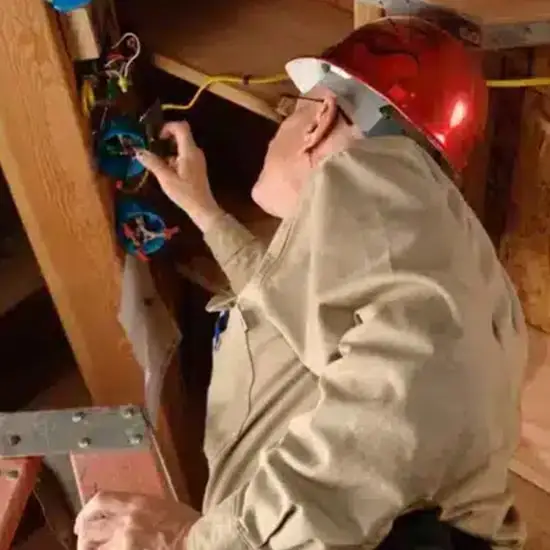

Investing in property is a major financial commitment—a Pre Purchase Building Inspection protects that investment. Our comprehensive reports are prepared by inspectors with extensive knowledge and experience of the local market.
Pre Purchase Building Inspections go beyond basic assessments. Each property receives a thorough evaluation from the foundation through the roof structure. Our trade-qualified inspectors assess structural components, weathertightness systems, electrical installations, and plumbing infrastructure in accordance with AS 4349.1-2007.
Schedule your Pre-Purchase Building Inspection to receive your report within 24-48 hours. Every report includes moisture testing results, structural analysis, and detailed documentation to support confident property negotiations.
Professional and Reliable Inspection reports to AS4349.1 reporting Standards
Same-day onsite testing with your building inspection in all suburbs
On site or over the phone verbal overview for time critical decisions




The 1970 Corridor Plan and its effect on building standards across development waves
Wanneroo's transformation from a rural community of 60 families to a suburban population centre is directly attributable to the 1970 Corridor Plan for Perth, which designated the north-west corridor for large-scale urban expansion. The practical effect for building inspectors is that Wanneroo's housing stock was built in distinct development waves, each reflecting the construction standards, labour market conditions, and building code requirements of its era — and the wave boundaries matter because they correspond to shifts in material quality, foundation detailing, and defect prevalence.
The first significant development wave — the 1970s estates immediately following the Corridor Plan — produced homes built quickly and in volume to meet demand created by the newly released land. These homes typically sit on larger blocks (700 square metres and above), use concrete tile roofing and brick-veneer construction, and were built to the prevailing standard of their time. The key defect patterns in this wave are now age-related: tile roof components nearing the end of their service life, damp-proof courses that may have been compromised by later landscaping, and original stormwater infrastructure that was minimal by current standards — often a single soakwell per downpipe, or no engineered stormwater connection at all.
The second wave — the 1980s and 1990s infill and expansion — shifted toward marginally smaller blocks, more rendered finishes, and in some cases two-storey designs. Still, the roof materials and foundation systems remained broadly similar.
The third wave — the current East Wanneroo development — presents a completely different inspection profile, with modern building standards, engineered foundation systems, and stormwater management designed to current code, but also the quality-control challenges inherent in very large-scale, accelerated delivery across multiple developers and builders.
Wanneroo sits within the Gnangara groundwater mound system, and its defining geographical feature — the chain of lakes and wetlands that form the Yellagonga Regional Park — is a surface expression of that system. The practical consequence for building performance is that the seasonal perched water table in Wanneroo fluctuates significantly, rising to within a few hundred millimetres of the surface in winter and dropping several metres in summer. On the Bassendean Sands that dominate the suburb, this seasonal fluctuation does not produce the slab heave seen on reactive clay, but it creates a different set of problems.
The most significant is the loss of bearing capacity in the sand subgrade when the water table rises. Sands that provide adequate bearing when dry or moderately moist lose that capacity when saturated, and on a slab founded on sandy soil over a seasonal water table, the slab edges — particularly on the side of the house where the natural ground falls toward the lake system — can experience differential settlement as the subgrade softens. This is rarely dramatic enough to produce structural cracking.
Still, it creates the subtle slab-edge movement that manifests as uneven floor tiles in a single room, doors that develop a new bind after a wet winter, and window frames that show slight racking not present at the pre-purchase inspection the previous summer. The inspection challenge is that this movement is moisture-dependent and may not be apparent during a dry-season inspection — a home that shows no signs of slab movement in January may have visible distress by August.
A second effect is the impact on subfloor and slab-edge moisture. In homes with timber flooring or timber-framed extensions, the elevated water table creates persistent moisture in the subfloor environment even where the surface drainage appears adequate.
We find localised timber decay in Wanneroo homes where the subfloor ventilation is inadequate for the site's moisture profile — not because of a leak, but because the seasonal water table is high enough to maintain elevated humidity in the subfloor space for months at a time.
Before its urban development, much of Wanneroo's land was used for market gardening, dairying, and small-scale agriculture. This creates a specific inspection concern: homes built on former agricultural land may be founded on fill, imported topsoil, or re-contoured paddocks rather than undisturbed natural ground. The original soil profile may have been altered by decades of cultivation, drainage works, and farm infrastructure, and the compaction and bearing capacity of the founding material may vary significantly across the site.
We inspect Wanneroo properties where part of the house sits on natural Bassendean Sands, and part sits on fill from an old farm dam or drainage channel. The differential movement between the two foundation zones is visible in both the slab and the wall fabric. This is not a defect in the house itself — it is a consequence of the site's former use, and it underscores the importance of understanding what the land was before the house was built.
The East Wanneroo District Structure Plan, approved in 2021, will eventually deliver up to 50,000 homes across 8,300 hectares on the rural land east of the existing Wanneroo townsite. The first precincts are now under development, and while this growth front is still in its early stages, the scale and pace of delivery pose quality-control risks characteristic of very large greenfield developments. The soils in the East Wanneroo precincts include Bassendean Sands and areas with a higher clay content than the existing Wanneroo townsite, meaning foundation design will need to respond to variable site classifications throughout the development.
The homes built in these precincts will be subject to current NCC requirements, including contemporary stormwater management standards, which is a material improvement over the older Wanneroo stock. However, the inspection issues in these new estates will centre on construction-stage quality — slab and footing compliance on variable soils, waterproofing in wet areas, and the interface between the new dwellings and the stormwater management infrastructure that the development plan commits to delivering in stages rather than all at once.
A 1970s Wanneroo home with seasonal slab movement traced to the perched water table.
We inspected a brick-and-tile home on a large block near Yellagonga Regional Park, featuring updated interiors and established gardens backing onto a bushland reserve. The home had no visible cracking or movement during the inspection in late spring, and the owners reported no issues.
The buyer, concerned about the proximity to the wetland system, requested a follow-up moisture assessment during winter. The winter visit revealed an entirely different picture: the soil along the rear elevation — the side facing the reserve — was saturated to within 200 millimetres of the slab edge, moisture readings at the slab perimeter were elevated across a six-metre section, and while there was no visible internal cracking, the sliding door on that elevation — which had operated freely in spring — was binding at the top of the track.
The subfloor inspection found damp timber joists at the rear of the original house, where the subfloor ventilation was inadequate for the winter moisture profile. The home was not defective in the conventional sense — no structural damage had occurred — but the seasonal movement pattern was established, and the buyer needed to budget for subfloor ventilation improvements and a cut-off drain along the rear boundary to manage the perched water table before it produced permanent timber decay.
The vendor, who had lived in the home for 15 years, had never noticed the seasonal binding of the door and was unaware of the subfloor moisture condition.
Our comprehensive building inspection and the report start from $299, and can go higher depending on the size and nature of the property. The key factor in determining price of your building inspection is your address, so you’ll know upfront the cost you’re looking at.
Our building inspectors will perform a complete building inspection that looks at:
Above the floor, i.e. inside the property, including wall linings, windows and doors, hardware, floors, bathroom fixtures, fittings, tiled areas, kitchen, cabinetry and any waterproofing issues
Sub-floor (if accessible), including foundations, ventilation, pipe-work
Ceilings, including walls, roof and roof space, roof framing, wiring and other electrical items.
Plumbing
Outside the property, including exterior cladding, door and window frames, garages, fences, paving, drives, decking, etc.
Comprehensive Building Inspection Details:
Our building inspection report covers all accessible areas of the property, including the interior, exterior, roof, subfloor, and other structural elements.
Clear and Easy-to-Understand Language in your Building Inspection Report:
We use simple, non-technical language, ensuring the building inspection report you receive is clear and understandable for homeowners, buyers, and real estate agents alike.
Identification of Property Defects:
The building inspection report highlights any visible defects, maintenance issues, or areas of concern, such as leaks, dampness, or structural integrity problems.
Photos and Supporting Evidence:
Our building reports include high-quality photos to provide a visual context for any issues or areas requiring attention.
Recommendations:
Practical advice on repairs, maintenance, or further inspections is provided to help you make informed decisions.
Verbal and Written Summaries:
If requested, we offer a verbal summary immediately after the inspection, followed by a detailed written report.
Tailored Insights for Buyers and Sellers:
Whether you’re buying or selling, our reports provide tailored insights to guide negotiations or improve property presentation.
If you have specific concerns about your property, feel free to discuss them with us before the inspection!
A building inspection is a detailed examination of a property’s condition, conducted by a qualified inspector. It is crucial in Australia due to the diverse property types, weather conditions, and common issues such as dampness and structural movement.
Most building inspections take 2-3 hours, depending on the property size and condition.
Yes, even new builds can have hidden defects or incomplete work. A professional building inspection conducted by our building inspectors provides peace of mind and identifies potential issues before settlement.
Absolutely! We encourage clients to attend their building inspection to gain firsthand insights and ask questions directly to our inspectors.
Typical issues while conducting a building inspection include:
Leaky buildings
Rotting timber
Structural cracks
Poor insulation
Moisture and dampness
Yes, our pre-purchase building inspections help buyers make informed decisions and avoid costly surprises after purchase.
Yes, our building inspectors are fully qualified and experienced in all local building standards, ensuring accurate and reliable reports.
A building inspection is for buyers assessing a property’s condition, while a pre-listing inspection is for sellers preparing their property for sale. Both services are available throughout Australia.
Yes, our inspections include moisture testing, especially crucial in Australia, where leaky buildings are a known issue.
Looking for building inspection services? Alert Building Inspections provides detailed building reports within 24-48 hours, conducted by trade-qualified inspectors who understand the local property market and common building issues. We follow the Australia Standard for Property Inspections (AS 4349.1-2007) and serve locations throughout Australia.
The best building inspection services in Australia share several key characteristics: trade-qualified inspectors with current licensing, adherence to the AS 4349.1-2007 Property Inspection Standard, comprehensive indemnity insurance, and the ability to deliver detailed reports within 24-48 hours. Top-tier services employ inspectors who are Licensed Building Practitioners with extensive field experience in both residential and commercial construction. They provide thorough moisture testing (critical in Australia's climate), detailed photographic evidence, and clear recommendations that help you make informed decisions. Alert Building Inspections meets all these criteria with trade-qualified inspectors across eight major locations, full indemnity insurance, and reports accepted by all major banks. Our inspectors have over 150 years of combined building experience, ensuring you receive expert analysis of structural integrity, weathertightness, and potential maintenance issues.
When looking for reliable building inspectors nationwide, focus on three critical factors: professional qualifications (trade qualifications and Licensed Building Practitioner status), local market knowledge in your specific region, and a proven track record with comprehensive insurance coverage. Reliable inspectors should be able to identify region-specific issues, such as earthquake considerations, coastal weather exposure, or clay soil movement. They should also maintain professional standards consistently across all locations. Alert Building Inspections operates throughout Australia, with each location staffed by locally-based, trade-qualified inspectors who understand the specific building challenges in their region. All our inspectors follow the same rigorous inspection protocols and reporting standards, ensuring consistent quality whether you're purchasing in Darwin or Hobart.
Top property inspection services distinguish themselves through comprehensive coverage that goes beyond basic visual checks. They conduct thorough assessments of foundations, sub-floor areas, roof spaces, exterior cladding, moisture levels, plumbing systems, and structural components. Leading services provide multiple inspection options, including full written reports for major purchase decisions, verbal reports for time-critical situations, and specialised testing such as methamphetamine contamination screening. They should also offer fast turnaround times without compromising thoroughness. Alert Building Inspections provides all these services across our nationwide network, with inspections starting from $299 for verbal reports and $499 for comprehensive pre-purchase inspections. Our reports include detailed photographs, specific defect identification, and prioritised recommendations. We also offer same-day methamphetamine testing and Safe and Sanitary reports for council requirements, giving you complete property assessment options under one roof.
The best home inspection services combine technical expertise with practical buyer advocacy. Inspectors should be trade-qualified builders, not just trained observers, so they can identify issues that less experienced inspectors might miss. Services should include a detailed foundation assessment, a thorough roof and roof space inspection, a comprehensive moisture analysis, an evaluation of weathertightness systems, and the identification of non-permitted alterations or construction that do not meet building standards. Top services also maintain up-to-date knowledge of common defects in different housing eras, from leaky building syndrome in the 1990s-2000s construction to weatherboard maintenance issues in older homes. Alert Building Inspections employs only trade-qualified builders who bring decades of hands-on construction experience to every inspection. We understand how homes are built, how they age, and what commonly fails in different Australian climates and soil conditions. Our inspectors have worked across residential and commercial construction, giving them the expertise to identify structural concerns, weatherproofing failures, and maintenance issues that could cost you tens of thousands of dollars if left undetected.
We offer building inspections across Australia — Sydney, Perth, Adelaide, Canberra, Tasmania and Darwin.
Perth locations include: Alkimos, Armadale, Baldivis, Butler, Canning Vale, Clarkson, Ellenbrook, Gosnells, Halls Head, Harrisdale, Joondalup, Midland, Morley, Piara Waters, Rockingham, Stirling, Thornlie, Willetton, and Yanchep.
Copyright © 2016- Alert Building Inspections