Yanchep is unlike any other Perth suburb from an inspection perspective, and the reason sits below the ground. The suburb is built on the Tamala Limestone formation of the northern Swan Coastal Plain — a karst landscape characterised by pinnacle rock structures, dissolution cavities, and loose sandy fill between limestone pillars that were never compacted by glacial or fluvial processes.
For building inspectors, this geology creates foundation conditions that are genuinely unique within metropolitan Perth: not the seasonal clay heave of the south-eastern suburbs, not the perched water table settlement of the Bassendean Sands, but a foundation story where the bearing capacity under a slab can vary by orders of magnitude within a single metre because one section rests on a limestone pinnacle and the adjacent section sits on loose sand fill above a historic dissolution void. Every other defect category in Yanchep — and there are several — operates in the shadow of this geological reality.
The housing stock in Yanchep spans three distinct eras that reflect the suburb's unusual development history. The first wave — the original Bond Corporation's Yanchep Sun City houses built from 1972 onward — produced a relatively small number of homes concentrated around the Yanchep Lagoon and the original town centre. These are concrete-roofed, brick-veneer homes on larger blocks, now 50 to 55 years old, built during a period when the area's karst geology was not as well understood as it is today.
The second wave — the Tokyu Corporation era from the late 1970s through the 1990s — expanded the residential footprint with a similar construction style but with greater attention to site investigation, reflecting a growing awareness of the area's foundation challenges.
The third wave — the current accelerated growth phase that includes the Capricorn Beach estate, the St Andrew's Project, and the broader East Yanchep expansion — produces modern homes on engineered foundation systems, with geotechnical site classification as a standard requirement, but at a scale and pace that introduces quality-control risks of their own.
Foundation observation dominates every Yanchep inspection, and the findings are not the subtle seasonal movements seen in other Perth suburbs. In Yanchep, we document differential slab settlement that is visible as a measurable slope across a room, wall-to-floor gaps that can admit a finger at the low side and are tight at the high side, door frames that are out of square by 10 millimetres or more, and window frames where the diagonal racking has broken the glass seal.
The homes most affected are those in the areas where the karst pinnacles are closest to the surface — the original Yanchep Sun City precincts near the lagoon —, but we also find variable foundation performance in the later estates where site preparation did not adequately address the variability of the limestone surface. A detailed geotechnical site investigation is not a discretionary extra for a Yanchep property; it is as fundamental to the purchase decision as the building inspection itself.
Coastal salt exposure is the second major inspection category that distinguishes Yanchep from Perth's inland suburbs and from the less exposed northern coastal suburbs further south. Yanchep sits directly on the Indian Ocean, with no offshore islands or reef systems to buffer the salt-laden south-westerly and westerly winds that arrive after travelling thousands of kilometres across open ocean.
The salt deposition rate in Yanchep is materially higher than in suburbs like Butler or Alkimos, which sit 5 to 10 kilometres further inland and benefit from the coastal dune barrier. We find accelerated corrosion on exposed metal roofing, flashings, gutters, and external fixings in homes that are less than 10 years old — fastener washer deterioration on weather-facing slopes, edge corrosion at Colorbond sheet overlaps, valley tray coating breakdown in the flow path, and aluminium joinery pitting on exposed elevations. In the 1970s and 1980s, homes with coastal exposure have been at work for 30 to 50 years.
The cumulative effect on original metal components is often severe — gutters and downpipes that have been repaired multiple times with sealants, roof fixings that have lost pull-out capacity on the western slope, and balcony or deck steelwork that requires replacement rather than repair.
Termite management in Yanchep is shaped by the Yanchep National Park — a 3,000-hectare reserve of bushland, wetlands, limestone caves, and lake systems that surrounds the suburb on three sides. The park is a permanent, untreated termite reservoir on a scale that no other suburb in Perth experiences. Properties that back onto or abut the park boundary have a direct and uninterrupted termite pathway from the reserve into garden vegetation and then to the building.
The park's extensive wetland and lake system — Lake Yanchep, Lake McNess, and the chain of smaller lakes — maintains the moisture levels that termite colonies require regardless of seasonal rainfall. We inspect Yanchep properties where the termite management system consists of a chemical barrier installed at construction that was never renewed, where garden beds and retaining walls installed since handover have bridged the barrier, and where the mature Tuart and Banksia woodlands of the park have root systems extending under house slabs — conditions that are more typical of a semi-rural interface than a metropolitan suburb.
The standout local risk for Yanchep buyers is a foundation condition that cannot be assessed by a standard building inspection alone — where the karst geology of the Tamala Limestone means the bearing capacity under the slab may vary unpredictably, and where coastal salt exposure at the oceanfront accelerates envelope wear at a rate that exceeds every other Perth coastal suburb.
+
+
24-48 Hour Report Delivery Guaranteed
Looking for a Building Inspector in Yanchep? Our trade-qualified inspectors provide thorough building reports within 24-48 hours, combining speed with meticulous attention to detail.
Our building inspection service is perfect for time-sensitive property purchases. Each inspector carries professional indemnity insurance and brings deep knowledge of your local market and common building challenges. All inspections comply with AS 4349.1-2007 standards for comprehensive, reliable assessments.
Property buyers rely on our inspection expertise for accurate, actionable assessments. Every report delivers a complete structural evaluation, weather-tightness analysis, and maintenance requirements—giving you the information you need to make confident purchasing decisions on schedule.
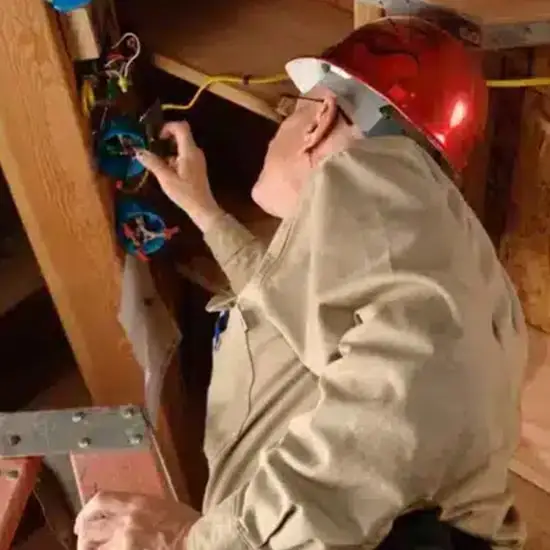

Investing in property is a major financial commitment—a Pre Purchase Building Inspection protects that investment. Our comprehensive reports are prepared by inspectors with extensive knowledge and experience of the local market.
Pre Purchase Building Inspections go beyond basic assessments. Each property receives a thorough evaluation from the foundation through the roof structure. Our trade-qualified inspectors assess structural components, weathertightness systems, electrical installations, and plumbing infrastructure in accordance with AS 4349.1-2007.
Schedule your Pre-Purchase Building Inspection to receive your report within 24-48 hours. Every report includes moisture testing results, structural analysis, and detailed documentation to support confident property negotiations.
Professional and Reliable Inspection reports to AS4349.1 reporting Standards
Same-day onsite testing with your building inspection in all suburbs
On site or over the phone verbal overview for time critical decisions




The karst foundation problem — Yanchep's defining risk
Yanchep sits on the Tamala Limestone formation, a Pleistocene-era deposit of windblown calcareous sand that has lithified into limestone over hundreds of thousands of years. The formation is characterised by what geologists call pinnacle karst. On this irregular limestone surface, dissolution along joints and bedding planes has created a landscape of rock pinnacles rising through loose sand fill, with dissolution cavities and soil pipes extending into the underlying limestone.
This is the geology that caused the widely reported subsidence problems in Yanchep's Ocean Lagoon Estate, where a home built in 2005 experienced differential settlement severe enough to produce wall-to-floor gaps and structural distortion, leading to a decade-long compensation claim.
The practical implication for any Yanchep property buyer is that the foundation conditions beneath a concrete slab cannot be assumed to be uniform, nor can they be adequately assessed by a standard building inspection. A slab may appear level and crack-free at the time of inspection because the foundation forces are currently in equilibrium. Still, that equilibrium can be disturbed by changes in site drainage, seasonal moisture variation, or the gradual dissolution of limestone at depth, occurring at a rate too slow to be visible over a single inspection visit.
The documented cases of foundation failure in Yanchep have involved homes that passed standard building inspections at the time of purchase and developed visible movement only years later, as ongoing dissolution or compaction reached a threshold that the original foundation design did not anticipate.
For buyers, the minimum due diligence for any Yanchep property — regardless of its age, presentation, or location within the suburb — is a geotechnical site investigation that includes test pits or boreholes to establish the depth and variability of the limestone surface beneath the slab.
Yanchep's development history is unlike that of any other Perth suburb. The first houses were built in 1972 as part of Alan Bond's ambitious Yanchep Sun City project — a planned satellite city for 200,000 people that was to include four marinas, a resort, and the infrastructure for a self-contained coastal metropolis. Bond Corporation sold the project to Japan's Tokyu Corporation in 1977 after financial difficulties, and Tokyu continued development through the 1980s and 1990s at a more measured pace, producing higher-quality estate infrastructure and more thoroughly planned subdivisions.
The relevance of this history to the inspection is that the Bond-era homes from the early to mid-1970s were built when the area's karst geology was not yet fully understood by the development and construction industries. The geotechnical investigations that are now standard for new developments in Yanchep were not conducted for those original subdivisions.
The Bond-era homes also predate many of the stormwater management standards now considered essential on karst terrain, where concentrated water discharge from downpipes can accelerate dissolution processes in the underlying limestone. The Tokyu-era homes from the 1980s and 1990s generally benefit from better site investigation and more substantial drainage infrastructure. Still, they are now 25 to 45 years old and subject to the same coastal salt exposure and roof-ageing pressures as the Bond-era stock.
The current wave of development — the Capricorn Beach estate, the St Andrew's Project, and the broader East Yanchep expansion — operates under the current NCC requirements, with geotechnical classification as standard practice. Still, buyers should verify that site-specific foundation engineering has been completed for each property rather than a standard slab design applied across the estate.
Yanchep's position at the northern edge of the Perth metropolitan area, with no landmass between it and the Indian Ocean, places it in a coastal exposure zone more aggressive than that of any other Perth suburb, except perhaps the direct oceanfront parts of Two Rocks and Seabird. The practical consequence is that standard coating systems, fastener specifications, and material selections that perform adequately in the northern coastal corridor suburbs 30 to 40 kilometres south may not achieve their design service life in Yanchep.
We inspect Yanchep homes where Colorbond roofing on the weather-facing slope has required replacement or major restoration within 15 years, where aluminium window joinery on exposed elevations has developed pitting within a decade, and where external steelwork — handrails, balustrades, pergola structures, and fence posts — shows significant section loss where the protective coating was not maintained.
For buyers of newer Yanchep homes, the question is not whether the coastal exposure will affect the property, but whether the specifications and coating systems used in construction were selected for the exposure zone rather than for a generic Perth coastal application.
Yanchep National Park surrounds the suburb, and the interface between residential properties and the park is not a distant boundary but a direct abutment for many homes. The park contains extensive Karri and Tuart woodland, wetland systems, and limestone caves — an ecosystem that supports significant termite populations. For homeowners on the park boundary, standard termite management protocols — a chemical barrier installation with annual inspections — represent the minimum required response, not an optional precaution.
The park also poses a bushfire risk for building inspections, particularly for properties on the eastern and northern edges of the suburb, where park vegetation is dense, and property access is limited to a single road. Buyers considering Yanchep properties on the park boundary should commission a separate bushfire attack level assessment and verify that the property's construction meets the BAL rating requirements for its location.
A Bond-era Yanchep home with foundation movement that predated the current owner's purchase
We inspected a 1970s brick-and-tile home near the Yanchep Lagoon, built during the original Yanchep Sun City phase and presented with recent cosmetic updates, new floor coverings, and freshly painted interiors. The vendor disclosed no foundation issues. At inspection, the slab showed a measurable slope across the main living area — approximately 25 millimetres of fall over five metres, visible as a gap under the skirting board at the low end and a tight fit at the high end.
The sliding door on the western elevation had been planed on the bottom edge and was still binding. The wall-to-ceiling junction in the hallway showed a separation of approximately 8 millimetres that had been filled with flexible sealant and painted over. The owner reported that these conditions were "original settlement" and had been stable for years.
A geotechnical assessment commissioned by the buyer revealed that the slab was founded on variable ground — the high end rested on a limestone pinnacle, and the low end on loose sandy fill over a dissolution void at approximately 2.5 metres depth. The differential movement was ongoing, not settled, and the projected rate of progression was sufficient that structural intervention — potentially including slab underpinning — would be required within five to ten years.
The building inspection identified the visible symptoms. The geotechnical report identified the cause. Together, they told a story that neither could tell alone.
Our comprehensive building inspection and the report start from $299, and can go higher depending on the size and nature of the property. The key factor in determining price of your building inspection is your address, so you’ll know upfront the cost you’re looking at.
Our building inspectors will perform a complete building inspection that looks at:
Above the floor, i.e. inside the property, including wall linings, windows and doors, hardware, floors, bathroom fixtures, fittings, tiled areas, kitchen, cabinetry and any waterproofing issues
Sub-floor (if accessible), including foundations, ventilation, pipe-work
Ceilings, including walls, roof and roof space, roof framing, wiring and other electrical items.
Plumbing
Outside the property, including exterior cladding, door and window frames, garages, fences, paving, drives, decking, etc.
Comprehensive Building Inspection Details:
Our building inspection report covers all accessible areas of the property, including the interior, exterior, roof, subfloor, and other structural elements.
Clear and Easy-to-Understand Language in your Building Inspection Report:
We use simple, non-technical language, ensuring the building inspection report you receive is clear and understandable for homeowners, buyers, and real estate agents alike.
Identification of Property Defects:
The building inspection report highlights any visible defects, maintenance issues, or areas of concern, such as leaks, dampness, or structural integrity problems.
Photos and Supporting Evidence:
Our building reports include high-quality photos to provide a visual context for any issues or areas requiring attention.
Recommendations:
Practical advice on repairs, maintenance, or further inspections is provided to help you make informed decisions.
Verbal and Written Summaries:
If requested, we offer a verbal summary immediately after the inspection, followed by a detailed written report.
Tailored Insights for Buyers and Sellers:
Whether you’re buying or selling, our reports provide tailored insights to guide negotiations or improve property presentation.
If you have specific concerns about your property, feel free to discuss them with us before the inspection!
A building inspection is a detailed examination of a property’s condition, conducted by a qualified inspector. It is crucial in Australia due to the diverse property types, weather conditions, and common issues such as dampness and structural movement.
Most building inspections take 2-3 hours, depending on the property size and condition.
Yes, even new builds can have hidden defects or incomplete work. A professional building inspection conducted by our building inspectors provides peace of mind and identifies potential issues before settlement.
Absolutely! We encourage clients to attend their building inspection to gain firsthand insights and ask questions directly to our inspectors.
Typical issues while conducting a building inspection include:
Leaky buildings
Rotting timber
Structural cracks
Poor insulation
Moisture and dampness
Yes, our pre-purchase building inspections help buyers make informed decisions and avoid costly surprises after purchase.
Yes, our building inspectors are fully qualified and experienced in all local building standards, ensuring accurate and reliable reports.
A building inspection is for buyers assessing a property’s condition, while a pre-listing inspection is for sellers preparing their property for sale. Both services are available throughout Australia.
Yes, our inspections include moisture testing, especially crucial in Australia, where leaky buildings are a known issue.
Looking for building inspection services? Alert Building Inspections provides detailed building reports within 24-48 hours, conducted by trade-qualified inspectors who understand the local property market and common building issues. We follow the Australia Standard for Property Inspections (AS 4349.1-2007) and serve locations throughout Australia.
The best building inspection services in Australia share several key characteristics: trade-qualified inspectors with current licensing, adherence to the AS 4349.1-2007 Property Inspection Standard, comprehensive indemnity insurance, and the ability to deliver detailed reports within 24-48 hours. Top-tier services employ inspectors who are Licensed Building Practitioners with extensive field experience in both residential and commercial construction. They provide thorough moisture testing (critical in Australia's climate), detailed photographic evidence, and clear recommendations that help you make informed decisions. Alert Building Inspections meets all these criteria with trade-qualified inspectors across eight major locations, full indemnity insurance, and reports accepted by all major banks. Our inspectors have over 150 years of combined building experience, ensuring you receive expert analysis of structural integrity, weathertightness, and potential maintenance issues.
When looking for reliable building inspectors nationwide, focus on three critical factors: professional qualifications (trade qualifications and Licensed Building Practitioner status), local market knowledge in your specific region, and a proven track record with comprehensive insurance coverage. Reliable inspectors should be able to identify region-specific issues, such as earthquake considerations, coastal weather exposure, or clay soil movement. They should also maintain professional standards consistently across all locations. Alert Building Inspections operates throughout Australia, with each location staffed by locally-based, trade-qualified inspectors who understand the specific building challenges in their region. All our inspectors follow the same rigorous inspection protocols and reporting standards, ensuring consistent quality whether you're purchasing in Darwin or Hobart.
Top property inspection services distinguish themselves through comprehensive coverage that goes beyond basic visual checks. They conduct thorough assessments of foundations, sub-floor areas, roof spaces, exterior cladding, moisture levels, plumbing systems, and structural components. Leading services provide multiple inspection options, including full written reports for major purchase decisions, verbal reports for time-critical situations, and specialised testing such as methamphetamine contamination screening. They should also offer fast turnaround times without compromising thoroughness. Alert Building Inspections provides all these services across our nationwide network, with inspections starting from $299 for verbal reports and $499 for comprehensive pre-purchase inspections. Our reports include detailed photographs, specific defect identification, and prioritised recommendations. We also offer same-day methamphetamine testing and Safe and Sanitary reports for council requirements, giving you complete property assessment options under one roof.
The best home inspection services combine technical expertise with practical buyer advocacy. Inspectors should be trade-qualified builders, not just trained observers, so they can identify issues that less experienced inspectors might miss. Services should include a detailed foundation assessment, a thorough roof and roof space inspection, a comprehensive moisture analysis, an evaluation of weathertightness systems, and the identification of non-permitted alterations or construction that do not meet building standards. Top services also maintain up-to-date knowledge of common defects in different housing eras, from leaky building syndrome in the 1990s-2000s construction to weatherboard maintenance issues in older homes. Alert Building Inspections employs only trade-qualified builders who bring decades of hands-on construction experience to every inspection. We understand how homes are built, how they age, and what commonly fails in different Australian climates and soil conditions. Our inspectors have worked across residential and commercial construction, giving them the expertise to identify structural concerns, weatherproofing failures, and maintenance issues that could cost you tens of thousands of dollars if left undetected.
We offer building inspections across Australia — Sydney, Perth, Adelaide, Canberra, Tasmania and Darwin.
Perth locations include: Alkimos, Armadale, Baldivis, Butler, Canning Vale, Clarkson, Ellenbrook, Gosnells, Halls Head, Harrisdale, Joondalup, Midland, Morley, Piara Waters, Rockingham, Stirling, Thornlie, Wanneroo and Willetton.
Copyright © 2016- Alert Building Inspections