Thornlie was carved from a single 694-hectare dairy farm in the late 1950s and developed in successive stages over three decades, creating a suburb where the housing stock is almost entirely from the 1960s to the 1980s. This period aligns directly with the service life of original roof coverings, damp-proof courses, and stormwater infrastructure, which are now approaching or past their intended lifespans.
For inspectors, Thornlie's appeal to families seeking established homes on large, leafy blocks means the properties that present best at open homes are often the ones where the most significant defects have been most effectively concealed.
Foundation movement on reactive clay is the dominant finding across all of Thornlie's development stages. The suburb sits on the Guildford Clay formation — a highly reactive clay profile that extends across much of Perth's south-eastern corridor. Seasonal moisture changes cause these clays to swell and shrink, and on Thornlie's typically large blocks — 700 to 900 square metres — the differential between well-watered garden areas near the house and drier exposed soil further out creates uneven moisture conditions around the slab perimeter.
The inspection pattern is distinctive: diagonal cracking at window and door openings on the side of the house where garden irrigation maintains persistent moisture against the slab. In contrast, the opposite elevation shows little or no movement. Sliding doors that bind in winter and free up in summer, recurring plaster cracks at architrave junctions that reopen after each wet season, and garage slab step differentials at the house-to-garage transition are standard findings.
The homes that have been most heavily renovated — new paving, extended alfresco areas, re-landscaped gardens with automatic irrigation — are often the ones where the moisture balance around the slab has been most significantly altered without corresponding drainage adjustments.
The condition of tile roofs is a second major inspection category that reflects Thornlie's development era. The suburb's housing stock is predominantly concrete and terracotta tile, installed from the 1960s through to the 1980s and now typically 40 to 60 years old.
The defects we most commonly record are not dramatic failures but accumulated deterioration: ridge capping bedding mortar that has cracked and separated from the tiles, allowing water entry at the roof apex; sarking that has perished and no longer provides a secondary weather barrier; tile nibs that have broken or worn, reducing wind resistance on exposed roof edges; and valley lining where the protective coating has eroded and corrosion has established in the flow path.
On terracotta roofs, spray-applied acrylic coatings marketed as a renewal solution are frequently encountered and frequently failing — peeling, blistering, and trapping moisture between the coating and the tile body, accelerating rather than postponing tile replacement.
Wet-area defects in Thornlie's established homes are common and often concealed behind recent renovations. The original bathrooms and laundries in 1960s–1980s homes were built to waterproofing standards that would not meet current requirements, and most have been renovated at least once. The inspection finding is that many of these renovations were cosmetic — new tile, new fixtures, new vanity — applied over original waterproofing that was not replaced or upgraded.
We routinely find shower bases where the waterproof membrane was not extended up the walls to current standards, flexi-hose connections behind vanities that have been weeping for years into concealed cabinetry, and laundry trough waste pipes that discharge into wall cavities rather than being connected to the drainage system. In homes where the original polybutylene plumbing is still in service, the risk of sudden fitting failure is a material consideration — particularly in concealed locations behind walls and under the slab.
Termite management in Thornlie is shaped by the Canning River corridor and the suburb's extensive mature tree cover. The river and its associated vegetation run through the northern side of the suburb, creating a permanent termite reservoir adjacent to residential properties in the north-east and Crestwood precincts. The large blocks that define Thornlie's character also create more interface between built areas and garden vegetation than a typical suburban lot, and we frequently inspect properties where the original termite barrier — if one was installed — was never renewed, and where garden beds, retaining walls, mulch, and paving installed over decades have bridged the barrier without the owner's awareness.
The standout local risk for Thornlie buyers is reactive clay foundation movement on large blocks where garden irrigation, paving, and landscaping have altered the slab-edge moisture balance — combined with a 40- to 60-year-old tile roof that may have been recoated rather than renewed, creating concealed liabilities in a suburb that markets on established family appeal.
+
+
24-48 Hour Report Delivery Guaranteed
Looking for a Building Inspector in Thornlie? Our trade-qualified inspectors provide thorough building reports within 24-48 hours, combining speed with meticulous attention to detail.
Our building inspection service is perfect for time-sensitive property purchases. Each inspector carries professional indemnity insurance and brings deep knowledge of your local market and common building challenges. All inspections comply with AS 4349.1-2007 standards for comprehensive, reliable assessments.
Property buyers rely on our inspection expertise for accurate, actionable assessments. Every report delivers a complete structural evaluation, weather-tightness analysis, and maintenance requirements—giving you the information you need to make confident purchasing decisions on schedule.
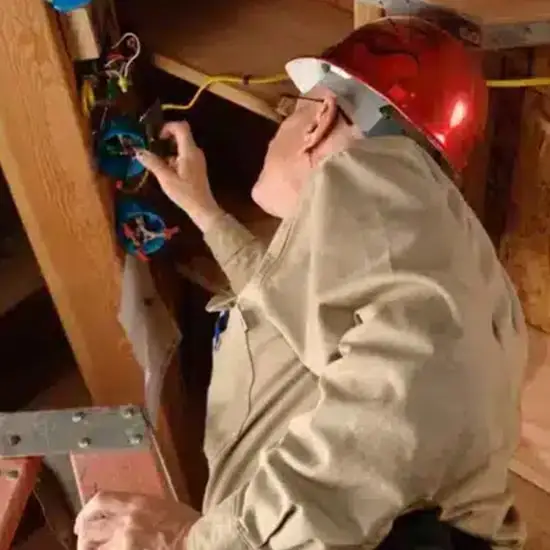

Investing in property is a major financial commitment—a Pre Purchase Building Inspection protects that investment. Our comprehensive reports are prepared by inspectors with extensive knowledge and experience of the local market.
Pre Purchase Building Inspections go beyond basic assessments. Each property receives a thorough evaluation from the foundation through the roof structure. Our trade-qualified inspectors assess structural components, weathertightness systems, electrical installations, and plumbing infrastructure in accordance with AS 4349.1-2007.
Schedule your Pre-Purchase Building Inspection to receive your report within 24-48 hours. Every report includes moisture testing results, structural analysis, and detailed documentation to support confident property negotiations.
Professional and Reliable Inspection reports to AS4349.1 reporting Standards
Same-day onsite testing with your building inspection in all suburbs
On site or over the phone verbal overview for time critical decisions




The Crestwood Radburn design — a suburb within a suburb with its own inspection logic
Crestwood Estate, developed from 1970 on land purchased by Sloan Homes in 1958, is one of Australia's most significant implementations of Radburn planning principles — a design philosophy that separates pedestrian and vehicle traffic, orients houses toward parkland rather than streets, and clusters dwellings around shared open space rather than traditional road frontages. For building inspectors, Crestwood presents a set of access and interface challenges that do not exist in conventional suburban layouts and that many buyers — and their inspectors — do not fully anticipate.
The fundamental issue is that the Radburn layout reverses the typical relationship between house and street. In Crestwood, the front of the house faces a pedestrian path, communal open space, or a cul-de-sac. At the same time, the garage and vehicle access are located at the rear via a service laneway or a separate road network. This means the primary weather-facing elevation — the one with the most roof exposure, the most windows, and the most external wall area — is often not the elevation visible from the street.
The elevation facing the street or service lane is the rear of the property, which may have been altered more extensively (patios, carports, sheds, fencing) and may not reflect the condition of the primary building envelope. Inspectors working in Crestwood must deliberately access the pedestrian-facing elevation, which in many cases requires navigating through shared pathways, across common property, or through neighbouring lots — access that is not always straightforward during a standard inspection appointment.
A second Crestwood-specific issue is the common-property condition. The estate's shared pathways, drainage swales, retaining walls, and parkland interfaces are maintained by the Crestwood Home Owners Association, and their condition directly affects the properties they abut.
We have inspected Crestwood homes where water pooling on common-property pathways has established moisture against the slab edge of adjacent houses, where retaining walls on common land have failed and redirected drainage toward private property, and where mature trees on common parkland have root systems extending under neighbouring house slabs — all conditions that originate outside the property boundary but affect the building within it.
Buyers considering Crestwood need to review the association's maintenance records and sinking fund position with the same attention they give to the building inspection report, because the two are linked.
Thornlie's original selling point — generous blocks of 700 to 900 square metres — has driven a renovation and alteration cycle that spans five decades. The pattern is consistent: a family buys a 1960s or 1970s three-bedroom, one-bathroom home on a large block, and over 10 to 20 years adds a patio, extends the alfresco, builds a shed or workshop, installs paving, constructs retaining walls for garden terracing, and in many cases converts the garage into a living area and builds a carport. Each addition alters the site's drainage profile, introduces new roof-to-wall junctions, and creates slab-edge interfaces where the original foundation detailing did not anticipate these changes.
The inspection challenge is that these alterations were rarely approved as a single coordinated project. They were done in stages, often by different trades, sometimes by the owners themselves, and in many cases without a building permit. The cumulative effect is a property in which the original house sits within a patchwork of additions, each with its own footing system (strip footings, pad footings, on-ground slabs), its own roof drainage arrangements, and its own interface with the original building.
The most common failure point is where a later addition — a paved patio, a retaining wall, a garden shed on a concrete slab — has altered the surface drainage such that water that previously flowed away from the original house is now directed toward it. On Thornlie's reactive clay soils, this means the moisture balance around the original slab changes, and movement cracks that had stabilised years ago begin reopening.
Thornlie's five-stage development history — north-east (1950s–60s), south (1970s–80s), Crestwood (1970s), Castle Glen (1980s), Forest Lakes (1980s onward) — creates a corresponding spread of asbestos-containing materials across multiple eras. The 1950s–60s homes in north-east Thornlie used fibro extensively for eaves, internal wet-area linings, and external cladding. The 1970s Crestwood and south Thornlie homes used asbestos cement for roof underlay, fencing, and bathroom sheeting.
Even the 1980s Castle Glen and Forest Lakes stock may contain asbestos in cement roof sheeting and internal linings. The suburb's sustained renovation activity across all five stages has disturbed, encapsulated, or concealed these materials in ways that are not always obvious during a standard inspection. The practical risk for buyers is that any renovation since original construction — and most Thornlie homes have been renovated — may have involved asbestos disturbance without proper management, leaving residual hazards behind new linings and finishes.
A significant proportion of Thornlie's 1980s housing stock — particularly in the Castle Glen and Forest Lakes stages — was built during the period when polybutylene plumbing was widely installed in Western Australian homes. The material has a known failure mode: reaction with oxidants in the water supply causes gradual embrittlement of the pipe wall, leading to sudden fitting failures and pin-hole leaks typically occurring 15 to 25 years after installation.
In Thornlie homes of this era, the polybutylene may still be in service behind walls and under slabs, and the risk of failure increases over time. A pre-purchase inspection can identify visible polybutylene in the roof space and at fixture connection points. Still, concealed sections within walls and under slabs cannot be assessed without invasive inspection. Buyers of 1980s Thornlie properties should factor the potential cost of re-plumbing into their purchasing decision.
A Crestwood home where common-property drainage failure was driving recurring slab movement
We inspected a 1970s brick-and-tile home in Crestwood Estate, presented with a renovated interior, established gardens, and what appeared to be sound roof and drainage infrastructure. The property had a history of slab movement — previous owners had patched cracks and adjusted doors — but the vendor attributed this to "normal clay movement."
At the pedestrian-facing elevation — the front of the house in the Radburn layout — we found the common-property drainage swale had been altered by a neighbouring property's fence and retaining wall installation, redirecting surface water from the shared pathway toward the subject home's slab edge.
The soil along that elevation was persistently moist. Moisture readings at the slab edge were elevated across a five-metre section corresponding to the area of most active slab movement inside the home — a diagonal crack pattern at the window and door openings of the main living area, a sliding door that had been planed to fit and was still binding, and recurring plaster cracks at the ceiling-to-wall junction.
The owner's association had no record of the swale alteration, and the current owner was unaware that the source of the movement was common-property drainage that had been modified without assessment of the effect on adjacent properties. The remedy required co-ordination between the association and two property owners to restore the swale alignment and to install a cut-off drain at the property boundary — a process that remained unresolved at settlement.
Our comprehensive building inspection and the report start from $299, and can go higher depending on the size and nature of the property. The key factor in determining price of your building inspection is your address, so you’ll know upfront the cost you’re looking at.
Our building inspectors will perform a complete building inspection that looks at:
Above the floor, i.e. inside the property, including wall linings, windows and doors, hardware, floors, bathroom fixtures, fittings, tiled areas, kitchen, cabinetry and any waterproofing issues
Sub-floor (if accessible), including foundations, ventilation, pipe-work
Ceilings, including walls, roof and roof space, roof framing, wiring and other electrical items.
Plumbing
Outside the property, including exterior cladding, door and window frames, garages, fences, paving, drives, decking, etc.
Comprehensive Building Inspection Details:
Our building inspection report covers all accessible areas of the property, including the interior, exterior, roof, subfloor, and other structural elements.
Clear and Easy-to-Understand Language in your Building Inspection Report:
We use simple, non-technical language, ensuring the building inspection report you receive is clear and understandable for homeowners, buyers, and real estate agents alike.
Identification of Property Defects:
The building inspection report highlights any visible defects, maintenance issues, or areas of concern, such as leaks, dampness, or structural integrity problems.
Photos and Supporting Evidence:
Our building reports include high-quality photos to provide a visual context for any issues or areas requiring attention.
Recommendations:
Practical advice on repairs, maintenance, or further inspections is provided to help you make informed decisions.
Verbal and Written Summaries:
If requested, we offer a verbal summary immediately after the inspection, followed by a detailed written report.
Tailored Insights for Buyers and Sellers:
Whether you’re buying or selling, our reports provide tailored insights to guide negotiations or improve property presentation.
If you have specific concerns about your property, feel free to discuss them with us before the inspection!
A building inspection is a detailed examination of a property’s condition, conducted by a qualified inspector. It is crucial in Australia due to the diverse property types, weather conditions, and common issues such as dampness and structural movement.
Most building inspections take 2-3 hours, depending on the property size and condition.
Yes, even new builds can have hidden defects or incomplete work. A professional building inspection conducted by our building inspectors provides peace of mind and identifies potential issues before settlement.
Absolutely! We encourage clients to attend their building inspection to gain firsthand insights and ask questions directly to our inspectors.
Typical issues while conducting a building inspection include:
Leaky buildings
Rotting timber
Structural cracks
Poor insulation
Moisture and dampness
Yes, our pre-purchase building inspections help buyers make informed decisions and avoid costly surprises after purchase.
Yes, our building inspectors are fully qualified and experienced in all local building standards, ensuring accurate and reliable reports.
A building inspection is for buyers assessing a property’s condition, while a pre-listing inspection is for sellers preparing their property for sale. Both services are available throughout Australia.
Yes, our inspections include moisture testing, especially crucial in Australia, where leaky buildings are a known issue.
Looking for building inspection services? Alert Building Inspections provides detailed building reports within 24-48 hours, conducted by trade-qualified inspectors who understand the local property market and common building issues. We follow the Australia Standard for Property Inspections (AS 4349.1-2007) and serve locations throughout Australia.
The best building inspection services in Australia share several key characteristics: trade-qualified inspectors with current licensing, adherence to the AS 4349.1-2007 Property Inspection Standard, comprehensive indemnity insurance, and the ability to deliver detailed reports within 24-48 hours. Top-tier services employ inspectors who are Licensed Building Practitioners with extensive field experience in both residential and commercial construction. They provide thorough moisture testing (critical in Australia's climate), detailed photographic evidence, and clear recommendations that help you make informed decisions. Alert Building Inspections meets all these criteria with trade-qualified inspectors across eight major locations, full indemnity insurance, and reports accepted by all major banks. Our inspectors have over 150 years of combined building experience, ensuring you receive expert analysis of structural integrity, weathertightness, and potential maintenance issues.
When looking for reliable building inspectors nationwide, focus on three critical factors: professional qualifications (trade qualifications and Licensed Building Practitioner status), local market knowledge in your specific region, and a proven track record with comprehensive insurance coverage. Reliable inspectors should be able to identify region-specific issues, such as earthquake considerations, coastal weather exposure, or clay soil movement. They should also maintain professional standards consistently across all locations. Alert Building Inspections operates throughout Australia, with each location staffed by locally-based, trade-qualified inspectors who understand the specific building challenges in their region. All our inspectors follow the same rigorous inspection protocols and reporting standards, ensuring consistent quality whether you're purchasing in Darwin or Hobart.
Top property inspection services distinguish themselves through comprehensive coverage that goes beyond basic visual checks. They conduct thorough assessments of foundations, sub-floor areas, roof spaces, exterior cladding, moisture levels, plumbing systems, and structural components. Leading services provide multiple inspection options, including full written reports for major purchase decisions, verbal reports for time-critical situations, and specialised testing such as methamphetamine contamination screening. They should also offer fast turnaround times without compromising thoroughness. Alert Building Inspections provides all these services across our nationwide network, with inspections starting from $299 for verbal reports and $499 for comprehensive pre-purchase inspections. Our reports include detailed photographs, specific defect identification, and prioritised recommendations. We also offer same-day methamphetamine testing and Safe and Sanitary reports for council requirements, giving you complete property assessment options under one roof.
The best home inspection services combine technical expertise with practical buyer advocacy. Inspectors should be trade-qualified builders, not just trained observers, so they can identify issues that less experienced inspectors might miss. Services should include a detailed foundation assessment, a thorough roof and roof space inspection, a comprehensive moisture analysis, an evaluation of weathertightness systems, and the identification of non-permitted alterations or construction that do not meet building standards. Top services also maintain up-to-date knowledge of common defects in different housing eras, from leaky building syndrome in the 1990s-2000s construction to weatherboard maintenance issues in older homes. Alert Building Inspections employs only trade-qualified builders who bring decades of hands-on construction experience to every inspection. We understand how homes are built, how they age, and what commonly fails in different Australian climates and soil conditions. Our inspectors have worked across residential and commercial construction, giving them the expertise to identify structural concerns, weatherproofing failures, and maintenance issues that could cost you tens of thousands of dollars if left undetected.
We offer building inspections across Australia — Sydney, Perth, Adelaide, Canberra, Tasmania and Darwin.
Perth locations include: Alkimos, Armadale, Baldivis, Butler, Canning Vale, Clarkson, Ellenbrook, Gosnells, Halls Head, Harrisdale, Joondalup, Midland, Morley, Piara Waters, Rockingham, Stirling, Wanneroo, Willetton, and Yanchep.
Copyright © 2016- Alert Building Inspections