Gosnells sits on the Swan Coastal Plain about 20 kilometres south-east of the Perth CBD, where the Canning River meanders through a mix of established suburban streets, native parkland corridors, and newer infill developments. For buyers, the suburb markets on affordability relative to Perth's inner and coastal suburbs, established amenities, and generous block sizes in the older pockets.
Behind that pitched roof and front fence, we inspect homes from three distinct building periods that carry very different defect profiles — from the 1970s–1990s brick-and-tile family homes that dominate the central and northern streets, through to late-1990s and 2000s brick-veneer project homes on the expanding western side, and the modern infill duplexes and villa developments appearing on subdivided lots closer to the town centre and train line.
The housing stock we inspect most often includes brick-veneer and cavity-brick homes from the 1970s to early 2000s, older timber-framed weatherboard and fibro-cement cottages in the original settlement areas, and newer grouped-dwelling and small-lot developments along the Albany Highway corridor and near the train station. Roof types are predominantly concrete tile on the middle and older stock, with Colorbond steel increasingly present on newer builds and replacement roofs on older homes.
Roof condition drives a significant portion of inspection findings in Gosnells — particularly on the 1970s–1990s homes that make up the bulk of the suburb's housing inventory. Concrete tile roofs from this era are now at the stage where pointing, tile replacement, and sarking renewal are approaching or past due. Many of these roofs have received cosmetic spray-on acrylic coatings marketed as a long-term solution.
Still, we regularly find coatings that have failed within 8–12 years, with adhesion loss on northern and western roof planes, moisture tracking beneath the coating film, and staining at ceiling cornices that the homeowner has attributed to condensation. Where original terracotta or concrete tiles remain uncoated, the ageing pattern is more predictable: cracked tiles at ridge and hip lines, perished pointing mortar that has dropped out, and valley tiles with debris accumulation that blocks critical drainage paths.
Site drainage on Gosnells' predominantly flat-to-gently sloping lots is a recurring inspection theme, and here, the suburb's geology matters. Gosnells sits on an area of the Swan Coastal Plain where Bassendean Sands and Guildford Clay formations intersect. The sandier areas drain reasonably well, but the clay zones — particularly toward the Canning River flats and the southern parts of the suburb — are moderately to highly reactive.
At reactive clay sites, seasonal moisture changes produce measurable slab movement: expansion during wet winters and contraction during the hot, dry summer. We see the results as stepped cracking in brickwork, doors that bind in their frames seasonally, hairline cracking at wall-to-ceiling junctions, and the characteristic "ramp" dip in concrete slab floors near the centre of the home. These are often within the AS 2870 serviceability limits, but they unsettle buyers who weren't expecting foundation movement in a Perth home.
Internally, the wet-area condition reflects the stock's age bracket. In homes built in the 1970s–1980s, many bathrooms are original or have received surface-level upgrades — new vanity, fresh tiling over the old substrate — without addressing the underlying waterproofing, drainage falls, or concealed plumbing.
We regularly find shower recesses without a visible waterproofing membrane, floor wastes set above the tile surface (indicating inadequate fall), and flexible tap connectors in vanity cupboards showing early surface corrosion. In newer builds and recent renovations, the risk shifts to modern materials: failing compression-fit waste connections under basins, shower screens that were not adequately sealed at the hinge side, and instantaneous hot water systems with safety tray drains that terminate inside the roof space or against the external wall rather than to a visible discharge point.
Termite pressure in Gosnells is a genuine and practical concern. The suburb lies adjacent to the Canning River regional park corridor and within proximity to several bushland reserves. The City of Gosnells has identified it as an area of elevated termite and European house borer (EHB) activity.
We routinely find conducive conditions on inspection: garden beds mounded against weep holes, timber retaining walls and sleepers that contact cladding, subfloor debris and discarded timber in crawl spaces, and vegetation that overhangs roofs and provides concealed access. Many homes have no visible termite management system in place, or have a barrier installed at construction that has never been inspected or reinstated — leaving the building exposed to what is arguably the most predictable building risk in this part of Perth.
The standout local risk we emphasise for Gosnells buyers is reactive clay foundation movement combined with concrete tile roofing at or approaching the end of its maintenance cycle — a combination where both the structure and the roof demand attention within the first 3–7 years of ownership, and where cosmetic interior upgrades in the sales presentation can mask both issues.
For purchasers, the practical message is that the condition story in Gosnells follows the building era. A 1970s brick-and-tile home on a reactive clay block, a 2000s brick-veneer project home with an ageing concrete tile roof, and a new infill duplex on a former backyard site each present very different maintenance profiles — and the one that photographs best is not always the one that costs least to live in.
+
+
24-48 Hour Report Delivery Guaranteed
Looking for a Building Inspector in Gosnells? Our trade-qualified inspectors provide thorough building reports within 24-48 hours, combining speed with meticulous attention to detail.
Our building inspection service is perfect for time-sensitive property purchases. Each inspector carries professional indemnity insurance and brings deep knowledge of your local market and common building challenges. All inspections comply with AS 4349.1-2007 standards for comprehensive, reliable assessments.
Property buyers rely on our inspection expertise for accurate, actionable assessments. Every report delivers a complete structural evaluation, weather-tightness analysis, and maintenance requirements—giving you the information you need to make confident purchasing decisions on schedule.

Investing in property is a major financial commitment—a Pre Purchase Building Inspection protects that investment. Our comprehensive reports are prepared by inspectors with extensive knowledge and experience of the local market.
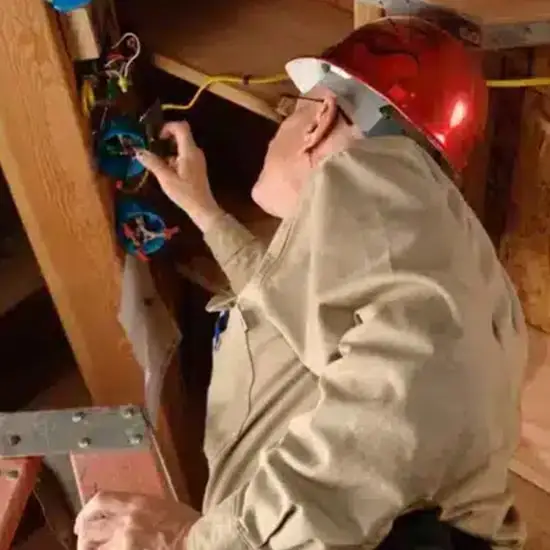
Pre Purchase Building Inspections go beyond basic assessments. Each property receives a thorough evaluation from the foundation through the roof structure. Our trade-qualified inspectors assess structural components, weathertightness systems, electrical installations, and plumbing infrastructure in accordance with AS 4349.1-2007.
Schedule your Pre-Purchase Building Inspection to receive your report within 24-48 hours. Every report includes moisture testing results, structural analysis, and detailed documentation to support confident property negotiations.
Professional and Reliable Inspection reports to AS4349.1 reporting Standards
Same-day onsite testing with your building inspection in all suburbs
On site or over the phone verbal overview for time critical decisions




Gosnells occupies a position on the Swan Coastal Plain where geology, hydrology, and urban development history combine to create a set of building challenges that are distinct from both Perth's coastal suburbs and the newer master-planned estates farther north. For buyers and homeowners, understanding these challenges is the difference between buying a home that needs manageable upkeep and buying one where the envelope has been quietly accumulating costs for years.
The most significant structural challenge in Gosnells sits below ground. The suburb straddles the transition between Bassendean Sands — relatively stable, free-draining sandy soils — and the more problematic Guildford Clay, which underlies large areas of the Canning River floodplain and extends through southern and western Gosnells. This clay is classified as moderately to highly reactive under AS 2870, meaning it expands significantly when wet and contracts as it dries, producing enough movement to affect slab-on-ground foundations.
The practical consequence is that homes on reactive clay in Gosnells — particularly those built on waffle-pod or stiffened raft slabs without site-specific soil classification — can experience differential movement of 30–60mm over the seasonal cycle.
In a typical 1980s brick-veneer home, this shows up as:
- fine vertical cracks in internal plasterboard at sheet joins, especially near door and window openings
- exterior brickwork stepped cracking at mortar joints, most pronounced on the northern and western elevations, where solar drying creates the greatest moisture differential around the slab perimeter
- sliding or hinged doors that become stiff in summer and loose in winter
- tile floor cracking in kitchens and entry halls where the slab movement concentrates at the centre of the longest unsupported span
- gaps opening at architrave-to-wall junctions on external walls
Inspection experience across Gosnells confirms that the presence of these signs does not automatically mean structural failure — AS 2870 allows for defined movement limits — but they do indicate that the foundation was not entirely successful in managing the site's soil reactivity. The homes most at risk are those built in the 1970s–1990s period, when default slab designs were commonly used without site-specific soil testing or with minimal perimeter drainage.
Homes built since the mid-2000s generally benefit from improved footing design and mandatory termite barriers, but slab movement still appears where drainage installation was poor or where landscaping and paving have altered the moisture profile around the slab edge.
Gosnells is not just in a termite-active zone — it sits within a European House Borer (EHB) Restricted Movement Zone, as designated by the WA Department of Primary Industries and Regional Development. This is a regulatory and practical consideration that does not apply to many Perth suburbs and has direct implications for anyone buying, renovating, or extending a home in the area.
EHB is a timber pest that attacks seasoned softwood framing, and the Restricted Movement Zone means that untreated timber cannot be brought into or moved within the zone for structural use. For homeowners, this adds a layer of scrutiny to any renovation: replacement wall framing, roof framing, joinery, and even formwork timber used during extensions must be appropriately treated (minimum H2 treatment for primary elements under the building code).
We occasionally inspect homes where owners have undertaken DIY extensions or alterations using timber sourced from outside the zone or without verifying treatment levels — leaving roof spaces and wall cavities with framing that is vulnerable to borer attack.
Termite management in Gosnells is enforced through the National Construction Code requirement that all new dwellings incorporate a termite management system, with a durable notice permanently fixed to the building (usually inside the meter box) detailing the installation date, system type, life expectancy, and maintenance requirements.
In practice, we find that many Gosnells homes — particularly those built before the current code requirements were tightened — have either no visible barrier or a system that has expired and not been reinstated. Even where a system is present, we frequently see the termite notice missing, faded beyond legibility, or installed in a location that has been painted over or obscured by later work.
For buyers, this creates a practical question: what is the termite and borer defence status of this property, and when was it last inspected? A home in Gosnells with no current management system and no inspection history represents an elevated risk that should be factored into both the purchase decision and the first-year maintenance budget.
The dominant roof material across Gosnells' established housing stock — particularly the 1970s–1990s homes that make up the majority of listings — is concrete tile. These roofs were originally specified as a durable, low-maintenance option, and in many respects, they have performed well. But they are now reaching the stage where maintenance cycles that were deferred for decades are becoming unavoidable.
The specific issues we see on concrete tile roofs in Gosnells include:
- Failed pointing at ridge and hip capping, often allowing water entry that tracks down the underside of tiles and appears as ceiling staining some distance from the original entry point. This is one of the most common sources of "mystery leaks" that homeowners have tried to resolve with internal patch repairs rather than ridge resealing.
- Sarking deterioration, particularly on roofs installed before the mid-1990s, where the reflective foil sarking has become brittle and torn at batten fixings, or has sagged onto ceiling insulation and blocked the airflow path from eaves to ridge vent. This not only reduces thermal performance but also creates condensation conditions in the roof cavity during winter.
- Valley tile and flashing failure in areas where leaf debris from the suburb's mature trees has accumulated, or where the original valley flashing was installed with insufficient lap or inadequate fall. We frequently find valley trays that have been patched with roofing silicone rather than properly replaced.
- Spray-on acrylic coating failure, which is a recurring theme across the suburb. Many homeowners have applied acrylic roof coatings to extend the life of an ageing tile roof, but the adhesion of these coatings on concrete tiles in Perth's climate is often 8–12 years on the northern and western roof planes. Once the coating begins to lift, moisture is trapped between the coating and the tile, accelerating substrate deterioration and making the eventual replacement more complex.
The economic reality for Gosnells homeowners is that a full concrete tile roof replacement on a typical 1970s–1990s home costs between $12,000 and $22,000, depending on tile type, roof pitch, access constraints, and whether underlying sarking and battens need to be replaced. A roof that has been "recently recoated" is not a replacement roof — it is a temporary treatment that defers but does not eliminate the replacement cost.
Gosnells has seen increasing subdivision activity over the past 15 years, with the traditional R20–R30 large lots being subdivided into two or three smaller titles, often with a new dwelling constructed behind the original home. This infill pattern creates specific building challenges that are visible during inspection.
The most common issue is shared or retained drainage infrastructure that was designed for the original single-home configuration. A new dwelling constructed at the rear of a subdivided block may connect to stormwater lines running through the front property, with access and maintenance responsibilities divided between two owners.
We inspect homes where the rear dwelling's stormwater discharge is poorly connected, where the original subsoil drain has been cut during subdivision and never reinstated, or where the new dwelling's slab is lower than the adjacent retaining wall, creating a catchment for surface water that has no lawful discharge path.
Site coverage on subdivided lots also affects moisture exposure at the slab edge. Where a new dwelling is built close to side boundaries — often 900–1500mm clearance — with impermeable paving, retaining walls, and garden beds in the gap, the ability for the slab perimeter to dry evenly through the annual cycle is reduced.
This shows up as chronic moisture at the slab edge, efflorescence on internal and external masonry, and the characteristic pattern of movement cracking concentrated on the side of the home where the retained fill is deepest.
Gosnells's proximity to the Canning River — particularly in the areas between the river corridor and the Albany Highway — introduces seasonal water table behaviour that affects homes differently depending on foundation type and site elevation.
Homes on brick piers and timber floors — a construction type still represented in the older parts of Gosnells, particularly in the original settlement areas — experience elevated subfloor humidity and occasional standing water under the house during the wettest winter months.
Where subfloor ventilation is adequate and the ground surface is graded to shed water, this is manageable. But where later additions, paving, or garden beds have reduced subfloor airflow, the timber floor structure operates in a persistently damp environment that promotes fungal decay and creates conditions conducive to termite activity.
Slab-on-ground homes in the lower-lying areas — particularly those on the riverside of Gosnells Drive and toward the Canning River regional park — show the effects of seasonal water table fluctuations through damp garage slabs and weep-hole staining on external brickwork during winter. Moisture-related paint peeling on internal walls where the slab edge and wall junction are at or near the natural surface.
The inspection question for any Gosnells home within 500 metres of the river or creek corridors is: Does the site drainage separate the building from the seasonal water table? The answer determines whether the foundation is managing moisture or fighting it year after year.
1970s–1980s brick-and-tile homes carry the highest combined risk of foundation movement, roof maintenance, and termite management. These homes are on a reactive clay soil profile that was not always well understood at the time of construction, with concrete tile roofs now in mid-life or beyond, and with termite barriers that have likely expired or were never installed to current standards. The roof and foundation together represent the largest potential capital outlay.
1990s–2000s brick-veneer homes shift the risk profile toward roof pointing renewal, sarking deterioration, and aluminium window joinery seal condition. These homes are generally on improved slab designs but remain susceptible to movement due to perimeter drainage and landscaping. EHB risk applies to any untreated timber in the roof or wall framing as the home enters its third decade.
Newer infill and duplex developments focus on site drainage adequacy on subdivided blocks, retaining wall and boundary clearance issues, and construction quality consistency in volume-built grouped dwellings. Termite management systems in newer builds should be confirmed as present and documented — not just assumed.
Example 1: 1980s brick-veneer home with concealed roof coating failure and seasonal slab movement
We inspected a four-bedroom brick-veneer home on a 720m² block in the established area west of the train line. The home presented well internally, with an updated kitchen and flooring, and the agent described the roof as "recently recoated in 2019, no leaks."
On inspection, the acrylic roof coating exhibited extensive adhesion failure on the western roof plane, with lifting and curling at tile edges and moisture staining visible beneath the coating film on at least six tiles. In the roof cavity, the sarking had torn at multiple batten-fixing points and was pooling over the ceiling insulation, restricting airflow from the eaves.
The brickwork on the northern elevation showed stepped cracking at mortar joints consistent with reactive clay movement, and a sliding door to the rear patio was binding at the head track — closing freely in winter but requiring effort in summer. The termite notice in the meter box was illegible, and no management system could be confirmed.
This home photographed beautifully but carried a minimum estimated envelope cost of $18,000–$28,000 for roof replacement, plus foundation monitoring and termite management installation.
Example 2: Late-1990s project home on a subdivided lot with drainage failure at the retained rear dwelling
We inspected a three-bedroom brick-veneer home constructed around 1998 at the rear of a subdivided block off Corfield Street. The site sloped gently from the rear boundary toward the front dwelling, and the rear home's concrete slab had been built at a level that was below the adjacent retaining wall installed during the subdivision. The stormwater system for the rear dwelling had been tied into the original front property drainage.
Still, the connection at the property boundary was blocked by root intrusion. It had failed — during our inspection, a test of the downpipe outlets on the rear elevation produced ponding against the slab edge within 30 seconds. The retaining wall along the southern boundary showed evidence of lateral movement, with a visible lean of approximately 30mm over the 12-metre length. Inside, the rear bedroom had a persistent musty smell and elevated moisture readings at the skirting line on the southern wall, directly behind the wet retaining wall.
The repair scope involved retaining wall reconstruction and a separate stormwater connection for the rear lot — work that the current owner had not budgeted for and that the subdivision documentation had not clearly allocated responsibility for between the two titles.
In Gosnells, the inspection value lies in understanding how the suburb's soil reactivity, roof age profile, termite and borer management requirements, and subdivision drainage legacy interact. When those four elements are assessed together, the suburb's relative affordability can be evaluated against realistic long-term ownership costs rather than the presentation at the open home.
Our comprehensive building inspection and the report start from $299, and can go higher depending on the size and nature of the property. The key factor in determining price of your building inspection is your address, so you’ll know upfront the cost you’re looking at.
Our building inspectors will perform a complete building inspection that looks at:
Above the floor, i.e. inside the property, including wall linings, windows and doors, hardware, floors, bathroom fixtures, fittings, tiled areas, kitchen, cabinetry and any waterproofing issues
Sub-floor (if accessible), including foundations, ventilation, pipe-work
Ceilings, including walls, roof and roof space, roof framing, wiring and other electrical items.
Plumbing
Outside the property, including exterior cladding, door and window frames, garages, fences, paving, drives, decking, etc.
Comprehensive Building Inspection Details:
Our building inspection report covers all accessible areas of the property, including the interior, exterior, roof, subfloor, and other structural elements.
Clear and Easy-to-Understand Language in your Building Inspection Report:
We use simple, non-technical language, ensuring the building inspection report you receive is clear and understandable for homeowners, buyers, and real estate agents alike.
Identification of Property Defects:
The building inspection report highlights any visible defects, maintenance issues, or areas of concern, such as leaks, dampness, or structural integrity problems.
Photos and Supporting Evidence:
Our building reports include high-quality photos to provide a visual context for any issues or areas requiring attention.
Recommendations:
Practical advice on repairs, maintenance, or further inspections is provided to help you make informed decisions.
Verbal and Written Summaries:
If requested, we offer a verbal summary immediately after the inspection, followed by a detailed written report.
Tailored Insights for Buyers and Sellers:
Whether you’re buying or selling, our reports provide tailored insights to guide negotiations or improve property presentation.
If you have specific concerns about your property, feel free to discuss them with us before the inspection!
A building inspection is a detailed examination of a property’s condition, conducted by a qualified inspector. It is crucial in Australia due to the diverse property types, weather conditions, and common issues such as dampness and structural movement.
Most building inspections take 2-3 hours, depending on the property size and condition.
Yes, even new builds can have hidden defects or incomplete work. A professional building inspection conducted by our building inspectors provides peace of mind and identifies potential issues before settlement.
Absolutely! We encourage clients to attend their building inspection to gain firsthand insights and ask questions directly to our inspectors.
Typical issues while conducting a building inspection include:
Leaky buildings
Rotting timber
Structural cracks
Poor insulation
Moisture and dampness
Yes, our pre-purchase building inspections help buyers make informed decisions and avoid costly surprises after purchase.
Yes, our building inspectors are fully qualified and experienced in all local building standards, ensuring accurate and reliable reports.
A building inspection is for buyers assessing a property’s condition, while a pre-listing inspection is for sellers preparing their property for sale. Both services are available throughout Australia.
Yes, our inspections include moisture testing, especially crucial in Australia, where leaky buildings are a known issue.
Looking for building inspection services? Alert Building Inspections provides detailed building reports within 24-48 hours, conducted by trade-qualified inspectors who understand the local property market and common building issues. We follow the Australia Standard for Property Inspections (AS 4349.1-2007) and serve locations throughout Australia.
The best building inspection services in Australia share several key characteristics: trade-qualified inspectors with current licensing, adherence to the AS 4349.1-2007 Property Inspection Standard, comprehensive indemnity insurance, and the ability to deliver detailed reports within 24-48 hours. Top-tier services employ inspectors who are Licensed Building Practitioners with extensive field experience in both residential and commercial construction. They provide thorough moisture testing (critical in Australia's climate), detailed photographic evidence, and clear recommendations that help you make informed decisions. Alert Building Inspections meets all these criteria with trade-qualified inspectors across eight major locations, full indemnity insurance, and reports accepted by all major banks. Our inspectors have over 150 years of combined building experience, ensuring you receive expert analysis of structural integrity, weathertightness, and potential maintenance issues.
When looking for reliable building inspectors nationwide, focus on three critical factors: professional qualifications (trade qualifications and Licensed Building Practitioner status), local market knowledge in your specific region, and a proven track record with comprehensive insurance coverage. Reliable inspectors should be able to identify region-specific issues, such as earthquake considerations, coastal weather exposure, or clay soil movement. They should also maintain professional standards consistently across all locations. Alert Building Inspections operates throughout Australia, with each location staffed by locally-based, trade-qualified inspectors who understand the specific building challenges in their region. All our inspectors follow the same rigorous inspection protocols and reporting standards, ensuring consistent quality whether you're purchasing in Darwin or Hobart.
Top property inspection services distinguish themselves through comprehensive coverage that goes beyond basic visual checks. They conduct thorough assessments of foundations, sub-floor areas, roof spaces, exterior cladding, moisture levels, plumbing systems, and structural components. Leading services provide multiple inspection options, including full written reports for major purchase decisions, verbal reports for time-critical situations, and specialised testing such as methamphetamine contamination screening. They should also offer fast turnaround times without compromising thoroughness. Alert Building Inspections provides all these services across our nationwide network, with inspections starting from $299 for verbal reports and $499 for comprehensive pre-purchase inspections. Our reports include detailed photographs, specific defect identification, and prioritised recommendations. We also offer same-day methamphetamine testing and Safe and Sanitary reports for council requirements, giving you complete property assessment options under one roof.
The best home inspection services combine technical expertise with practical buyer advocacy. Inspectors should be trade-qualified builders, not just trained observers, so they can identify issues that less experienced inspectors might miss. Services should include a detailed foundation assessment, a thorough roof and roof space inspection, a comprehensive moisture analysis, an evaluation of weathertightness systems, and the identification of non-permitted alterations or construction that do not meet building standards. Top services also maintain up-to-date knowledge of common defects in different housing eras, from leaky building syndrome in the 1990s-2000s construction to weatherboard maintenance issues in older homes. Alert Building Inspections employs only trade-qualified builders who bring decades of hands-on construction experience to every inspection. We understand how homes are built, how they age, and what commonly fails in different Australian climates and soil conditions. Our inspectors have worked across residential and commercial construction, giving them the expertise to identify structural concerns, weatherproofing failures, and maintenance issues that could cost you tens of thousands of dollars if left undetected.
We offer building inspections across Australia — Sydney, Perth, Adelaide, Canberra, Tasmania and Darwin.
Perth locations include: Alkimos, Armadale, Baldivis, Butler, Canning Vale, Clarkson, Ellenbrook, Halls Head, Harrisdale, Joondalup, Midland, Morley, Piara Waters, Rockingham, Stirling, Thornlie, Wanneroo, Willetton, and Yanchep.
Copyright © 2016- Alert Building Inspections