
Joondalup is Perth's northern satellite city, roughly 30 kilometres from the CBD, built from the ground up on former agricultural and bushland as a master-planned regional centre. It was officially opened in 1991, making it one of the youngest city centres in Australia, and the surrounding residential suburbs — Edgewater, Heathridge, Connolly, Currambine, Kinross, and the Joondalup city precinct itself — were developed primarily through the 1980s, 1990s, and early 2000s.
For building inspectors, Joondalup's housing stock is defined by two development waves: the first from the mid-1980s to the late 1990s, when the suburbs immediately surrounding the city centre were established, and the second from the late 1990s through the 2000s, when the northern estates pushed towards Kinross and Burns Beach. Each era shares a common geological foundation — the Spearwood Dune system with its deep sands and underlying Tamala limestone — but the construction standards, roof materials, and termite management expectations differ.
The housing stock we inspect most often in Joondalup includes brick-veneer and cavity-brick homes on concrete slabs from the 1980s–1990s development wave, with concrete tile roofing dominating that era. The second wave into the 2000s introduced more Colorbond metal roofing, rendered finishes, and two-storey project homes, alongside the grouped dwelling and apartment developments that have increased under the City of Joondalup's infill housing strategy in recent years.
The suburb's housing profile skews toward larger family homes — over 62% of dwellings have four or more bedrooms — with 88.6% being separate houses, reflecting the satellite-city model of detached housing on generous lots that defined Joondalup's original planning vision.
Foundation performance in Joondalup presents a different picture from Perth's southern and eastern clay-soil suburbs. The Spearwood Dunes are deep, well-draining sands that sit over an underlying limestone caprock. Under AS 2870, these sands are classified as Class A — stable, non-reactive soils that do not swell and shrink with moisture changes the way clay does. This is a genuine structural advantage.
We do not see the slab heave, seasonal cracking, and differential movement patterns that characterise suburbs on Guildford Clay and Bassendean Sands further south. Foundation movement in Joondalup is rarely about soil reactivity. It is about compaction.
The sandy soils of Joondalup were the original dune surface. When the estate subdivisions were carved out, the building platforms were formed by cutting and filling to achieve consistent lot levels. Where the fill under a slab was not compacted to the required density — minimum 70% density index, verified by Perth Sand Penetrating testing — the weight of the structure produces settlement over the first 5–15 years.
The consequences appear as a slab that dips towards one corner, a tiled floor where the fall is visible to the naked eye, doorframes that have gone out of square, and hairline cracking in brickwork that follows a diagonal pattern from the settled corner upward. These settlement patterns are not progressive in the way clay reactivity is — they stabilise once the fill has fully consolidated — but the finishes are already damaged, and the remedial options are limited.
Roof condition is the more active inspection theme in Joondalup, driven by the age profile of the dominant housing stock. The 1980s–1990s homes that define the suburb's established suburbs, Edgewater, Connolly, and the original Joondalup city precinct estates, are now 25–40 years old, and their concrete tile roofs are entering the period where pointing, tile replacement, and sarking renewal become unavoidable.
We routinely find pointing at ridge and hip cappings that have perished and dropped out, cracked or delaminated concrete tiles on the weather-facing slopes, and sarking — particularly the reflective foil type common in that era — that has become brittle, torn at batten fixings, and sagged onto ceiling insulation where it blocks the drainage channel from ridge to eaves.
On newer estates with Colorbond metal roofing, the issues shift to fastener condition: exposed roofing screws on the weather-facing slopes, showing early signs of corrosion in the coastal environment. In these valley trays, debris accumulation has slowed flow, and roof penetrations from solar panels and air-conditioning units that were not sealed to the manufacturer's specification.
Coastal corrosion is a factor in Joondalup, but it is less aggressive than in the oceanfront suburbs further west. Joondalup sits approximately 3–5 kilometres inland from the Indian Ocean coast, which places it outside the severe marine zone defined by AS 3700. The salt load in the air is lower than in suburbs like Mullaloo, Sorrento, or Hillarys.
We still see surface corrosion on galvanised fixings and aluminium window frames on the 1990s stock. Still, it is a maintenance concern rather than the structural corrosion risk we document in the coastal strip. The more significant external envelope issue is the interaction between coastal humidity and the building's original moisture-management provisions — subfloor ventilation, cavity drainage, and weep hole performance.
Termite pressure in Joondalup is elevated compared with Perth's inner suburbs, driven by the sandy soils that termites move through easily, the proximity of Lake Joondalup, Yellagonga Regional Park, and the chain of wetland reserves that thread through the northern suburbs, and the age of the housing stock. Many of the first-wave homes from the 1980s and early 1990s were built before the current termite management standards became mandatory, or under a regime in which a chemical soil treatment was considered sufficient.
Those chemical barriers have degraded over the intervening decades, and we routinely inspect homes where there is no current termite management system in place, where the termite notice in the meter box is missing or illegible, and where the conducive conditions — garden beds against weepholes, retaining timbers in ground contact, subfloor debris — are present.
The standout local risk we emphasise for Joondalup buyers is the approaching maintenance cycle on 1980s–1990s concrete tile roofs across the established suburbs, combined with settlement risk from variable fill compaction under slabs on the dune sands — two different defect mechanisms that both become visible in the 25–40 year window when many Joondalup homes are being transacted for the first or second time.
For purchasers, the practical message is that Joondalup's housing stock is entering a phase where the original envelope systems — roof covering, foundation fill, termite barriers — require proactive assessment. The sandy soils that give Joondalup a structural advantage over clay-soil suburbs also create specific failure modes that buyers from clay-soil suburbs may not recognise. The inspection question is whether the home's roof, foundation, and termite management have been maintained in a suburb where the original build standards have now been tested by 25–40 years of coastal climate.
+
+
24-48 Hour Report Delivery Guaranteed
Looking for a Building Inspector in Joondalup? Our trade-qualified inspectors provide thorough building reports within 24-48 hours, combining speed with meticulous attention to detail.
Our building inspection service is perfect for time-sensitive property purchases. Each inspector carries professional indemnity insurance and brings deep knowledge of your local market and common building challenges. All inspections comply with AS 4349.1-2007 standards for comprehensive, reliable assessments.
Property buyers rely on our inspection expertise for accurate, actionable assessments. Every report delivers a complete structural evaluation, weather-tightness analysis, and maintenance requirements—giving you the information you need to make confident purchasing decisions on schedule.
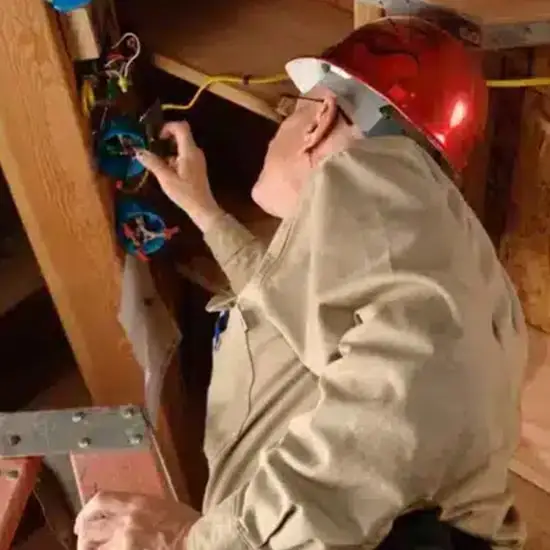

Investing in property is a major financial commitment—a Pre Purchase Building Inspection protects that investment. Our comprehensive reports are prepared by inspectors with extensive knowledge and experience of the local market.
Pre Purchase Building Inspections go beyond basic assessments. Each property receives a thorough evaluation from the foundation through the roof structure. Our trade-qualified inspectors assess structural components, weathertightness systems, electrical installations, and plumbing infrastructure in accordance with AS 4349.1-2007.
Schedule your Pre-Purchase Building Inspection to receive your report within 24-48 hours. Every report includes moisture testing results, structural analysis, and detailed documentation to support confident property negotiations.
Professional and Reliable Inspection reports to AS4349.1 reporting Standards
Same-day onsite testing with your building inspection in all suburbs
On site or over the phone verbal overview for time critical decisions




Joondalup is a city built on sand — deep, well-draining Spearwood Dune sands over Tamala limestone, on former agricultural land and banksia woodland. That geology defines both the strengths and the vulnerabilities of its housing stock.
For building inspectors, Joondalup's distinctive challenges arise from the interaction between sandy foundation soils, an approaching wave of roof maintenance on the suburb's defining housing era, termite pressure through the sand and wetland corridors, and the coastal moisture climate that tests building envelopes in ways that differ from both Perth's clay-soil suburbs and its oceanfront strip.
The Spearwood Dune sands underlying most of Joondalup are stable, non-reactive, and well-draining. Under AS 2870, they are classified as Class A, which is the best outcome for residential slab design. A standard stiffened raft slab properly engineered for Class A soil should perform without the movement issues that plague reactive clay sites.
The problem is that not all of Joondalup's building platforms were formed on natural, undisturbed sand. The suburb was developed over two decades of rapid growth, and the estate subdivisions involved extensive cut-and-fill earthworks to grade the dune landscape into residential lots. On any lot where the slab sits partly on natural sand and partly on imported or redistributed fill, the differential compaction between the two zones determines whether the foundation settles evenly or develops a tilt.
The specific failure mode we see in Joondalup homes is differential settlement, which typically occurs within the first 3–15 years of a building's life.
It presents as:
- a slab that slopes detectably across the main living area, typically from one corner of the building diagonally to the opposite corner. The fall is often 15–40mm across a 10-metre span — visible in a tile floor as a slope that a marble will roll down.
- diagonal cracking in brickwork at the elevation where the settlement is concentrated. Unlike the stepped vertical cracking that characterises clay reactivity, settlement cracks in sand tend to follow a diagonal path from the settled corner upward, widening at the lower end.
- door and window frames that have gone out of square in the settled zone, producing doors that drag at the top corner and windows that bind in their tracks.
- ceiling-to-wall separation at the upper floor level in two-storey homes, where the settlement of the lower slab has rotated the wall frame.
The critical distinction from clay-soil movement is timing and progression. Sand settlement stabilises once the fill has fully consolidated under the building load. The movement is not seasonal and does not cycle — it happens, it stops, and the structure reaches a new equilibrium. This means that a Joondalup home with 15mm of settlement at year 5 is unlikely to have 30mm of settlement at year 25. The damage to finishes is permanent, but the structural risk is generally low, provided the settlement did not exceed the slab's design tolerance.
For buyers, the task is to distinguish between a settlement that has stabilised and one that is still active. The indicators include: crack age (sharp edges on recent cracks, rounded and dusty on old cracks), door adjustment history (doors that have been planed to fit indicate a past response), and comparison of floor levels across the slab (a single consistent slope across multiple rooms suggests a one-time settlement event, while multiple changes of level suggest ongoing movement).
Joondalup's established suburbs are defined by their concrete-tile roofs. The 1980s and 1990s homes that make up the core of Edgewater, Connolly, Heathridge, and the original Joondalup precincts were built with concrete tile as the standard roof covering, and those roofs are now 25–40 years old. They are entering the period when the original installation details are nearing the end of their serviceable life.
The specific issues on these roofs include:
- pointing failure at ridge cappings and hip junctions. The original mortar pointing was never designed to last the life of the roof, and on roofs that have never been repointed, we find loose or missing pointing across a significant proportion of the ridge line. Water entry at the ridge cap is one of the most common sources of ceiling staining in this era, because water tracks down the underside of the tiles and exits at the tile overlap, well away from the entry point — making the leak source difficult to trace from inside the roof cavity.
- tile cracking and delamination on the northern and western elevations, where the combination of UV exposure, thermal cycling, and the tropical northerly sun has accelerated the surface degradation of the concrete substrate. These tiles may photograph as serviceable from the street but show surface spalling and hairline cracking at close range.
- sarking deterioration. The reflective foil sarking used during this period becomes brittle and tears at the batten-fixing points after 20–30 years. Once torn, the sarking sags onto the ceiling insulation, blocking the airflow path from the eaves to the ridge vent. This not only reduces roof cavity ventilation — increasing the risk of condensation in winter — but also creates a thermal bridge that reduces the effectiveness of the ceiling insulation beneath.
- valley tray and flashing condition. The original valley flashings were typically galvanised steel or aluminium. On the 30-year-old roof, the coating at the valley overlap has worn through, and the valley channel may have accumulated enough debris to significantly reduce flow capacity. We frequently find valley trays where the downstream third has a buildup of leaf litter, tile debris, and moss that has created a dam, causing water to back up and overflow at the valley-to-tile junction during heavy rain.
For buyers of an established Joondalup home, the roof question is not whether the roof needs work but whether the current price reflects the approaching renewal cycle. A concrete tile roof that needs repointing, tile replacement, and sarking renewal across a typical 250–350m² roof area will cost $8,000–$18,000, depending on access, tile type, and whether valley flashing replacement is included.
Joondalup's termite risk profile is elevated compared with that of Perth's inner and southern suburbs for three specific reasons.
First, the deep Spearwood Dune sands provide ideal conditions for termite movement. Termites tunnel through sand easily and rapidly; there is no clay barrier to slow their underground foraging. Once a colony establishes on a neighbouring property, in a green waste pile, or in a bushland reserve, the sandy substrate offers no natural resistance to its spread into the residential area.
Second, Joondalup's wetland corridors — Lake Joondalup, Yellagonga Regional Park, the chain of lakes and wetlands that extend through the northern suburbs — create persistent moisture sources and natural termite habitats. Homes within 500 metres of these wetland reserves operate in a higher termite pressure zone than those in the drier central areas, and we find correspondingly more evidence of conducive conditions and historical activity in those precincts.
Third, many of the first-wave 1980s and early 1990s homes were built before the current NCC termite management requirements were in force, or under a regime where a chemical soil treatment was considered adequate. Those chemical barriers — typically organochlorine or synthetic pyrethroid treatments applied to the soil beneath and around the slab — have degraded over 25–40 years. In most cases, they are no longer effective. The homes that relied on them now have no active termite protection unless the barrier has been reinstated.
Common inspection findings include:
- No evidence of a current termite management system, and no termite notice in the meter box. The original chemical treatment was not documented with a durable notice in many cases, and the homeowner has no record of when it was applied or when it expired.
- physical termite barriers — where present on later builds — that have been buried by garden beds, paving, or landscaping that was installed after the house was completed. A buried barrier is a bridged barrier.
- garden beds, retaining walls, and timber decking installed against the slab edge without consideration of the termite barrier line. In the Joondalup sandy soils, a timber retaining wall in ground contact against the slab edge creates a direct termite pathway that no barrier system can defend against.
- subfloor debris and stored timber in crawl spaces, particularly in a minority of homes with timber subfloor construction. The combination of sandy soil (easy tunnelling), stored timber (food source), and damp subfloor conditions (moisture) creates an environment where termite activity is a matter of time rather than chance.
For buyers of a first-wave Joondalup home, please treat establishing the current termite management status and commissioning a new system, if needed, as a non-negotiable first-year cost.
Joondalup sits 3–5 kilometres inland, which places it outside the severe marine corrosion zone. But it experiences higher ambient humidity than Perth's eastern and southern suburbs due to its proximity to the coast and its wetland and lake system. This elevated humidity creates moisture management challenges that do not appear in the same form inland.
The most common finding is subfloor condensation in homes with timber floor framing. The warm, humid coastal air enters the subfloor zone through vents, comes into contact with the cooler underside of the timber floor — particularly in winter, when the ground temperature is lower than the air temperature — and deposits moisture on the timber surfaces.
Over successive winters, this cyclic condensation can produce fungal staining on floor joists, corrosion of nail plates and hanger brackets, and conditions that support dry rot in the subfloor environment. The issue is not groundwater or a leaking pipe; it is the coastal air interacting with the building's underfloor climate.
In slab-on-ground homes — the majority — the humidity-driven issue is less acute. However, we still find surface condensation on tiled floors and glazing during winter, particularly in homes built on the lakeside of the Mitchell Freeway, where the proximity to open water raises local humidity. Some homeowners respond by sealing windows and running dehumidifiers; others attribute the condensation to a roof leak or rising damp and spend money chasing a defect that does not exist.
The practical response is to ensure subfloor ventilation is adequate and unobstructed — particularly in homes where later additions, enclosing patios, or garden growth have reduced the original vent area — and to ensure the vapour barrier under the slab (where present) is continuous and undamaged.
While Joondalup is not in the severe marine zone, the salt load in the air is sufficient to accelerate corrosion on exposed metal components compared with inland Perth. In homes of the 1980s–1990s era, this shows up as:
- corroded aluminium window frames on the weather-facing elevations, where the factory anodised or powder-coated finish has failed after 25–30 years, and the exposed aluminium has developed surface pitting. On frames where the track drainage slots are blocked by corrosion debris, water can pond in the track and enter the frame section, leading to concealed corrosion at the fixing brackets.
- rusted lintel ends above windows and doors, where the galvanised coating on the steel lintel has been compromised by moisture trapped at the brick joint, and the salt load has driven the corrosion rate. Lintel corrosion at the bearing point can reduce the effective section over time and produce cracking in the brickwork above the opening.
- garage door components — bottom rails, hinge brackets, and spring anchor points — where the combination of salt-laden air, ground moisture conducted through the slab, and the absence of marine-grade materials has produced corrosion that reduces the functional life of the door system.
These are maintenance findings rather than structural emergencies, but they accumulate and are ones a buyer purchasing a 30-year-old Joondalup home should expect to address progressively.
Joondalup's demographic profile — high home ownership rates (36.3% owned outright, 45.6% mortgaged), family households, and a mature population with a median age of 41 — supports ongoing renovation activity. The suburb's 1980s–1990s homes are entering the phase where kitchens, bathrooms, and extensions are common renovation targets.
The recurring inspection observation is that renovations in Joondalup tend to prioritise interior presentation and street appeal over the envelope and drainage baseline. A typical pattern is a 1980s brick-veneer home with a renovated kitchen, updated main bathroom, fresh paint throughout, and new flooring — sitting under the original concrete tile roof that has never been repointed, with the original termite barrier (if any) from 1988, and with the site drainage configuration that was established when the house was first landscaped.
The buyers who benefit most from an inspection in this suburb are those who understand that a 30-year-old roof with original tile covering and a 30-year-old chemical termite barrier are not defects — they are life-expired systems that need renewal — and that the cost of that renewal should be part of the purchase evaluation.
Example 1: 1990s brick-veneer home in Edgewater with concealed tile roof pointing failure and settlement cracking
We inspected a three-bedroom brick-veneer home built in 1992 in the Edgewater estate, with original concrete-tile roofing and a well-presented interior that had been updated with new kitchen and bathroom fit-outs approximately five years earlier. The roof was described as "original tiles in good order."
At roof level, we found perished pointing at the ridge capping across approximately 40% of the ridge line, with mortar that crumbled on light finger pressure. Three hip junction cappings were loose, and one had been displaced, leaving an opening at the hip-ridge junction that was admitting water directly onto the top of the ceiling insulation. Inside the roof cavity, staining on the ceiling lining at the hip junction of the main bedroom confirmed active water entry.
On the ground floor, the ceramic tile flooring in the open-plan living area showed a detectable slope of approximately 20mm over 8 metres from the rear western corner toward the front of the house. Diagonal cracking in the brickwork on the western elevation was consistent with settlement of the rear corner of the slab. The termite notice in the meter box was illegible — the printed text had faded to the point where no details could be read — and no evidence of a current termite management system was found.
The roof repair (repointing, tile replacement, and valley tray inspection) was estimated at $9,000–$14,000, and the settlement cracking needed monitoring to confirm it had stabilised.
Example 2: 1980s brick-and-tile home near Lake Joondalup with a bridged termite barrier and aluminium window frame corrosion
We inspected a 1980s brick-and-tile home within 400 metres of the Lake Joondalup foreshore reserve. The home featured mature landscaping, established gardens, and a timber deck installed along the rear elevation approximately 8 years prior. At the slab edge on the rear elevation, the physical termite barrier — a stainless steel mesh system retrofitted during a 1990s renovation — had been buried beneath the timber deck substructure, with deck posts set into the ground outside the barrier line.
The timber deck joists and bearers — untreated pine — were in direct ground contact at the post bases and ran across the barrier line—the combination of a buried barrier and timber bridging created a direct termite pathway to the slab edge. On the western elevation, the aluminium sliding windows exhibited advanced pitting corrosion along the frame tracks, with the anodised finish lost on the exposed surfaces and corrosion debris blocking the frame drainage slots.
The aluminium window frames were original and had reached the point where coating failure was progressive across the weather-facing elevations. The timber deck and retaining wall configuration required modification to eliminate the termite pathway, and the windows on the western elevation needed replacement planning within the next 3–5 years.
A buyer who had focused on the home's location and presentation was facing $15,000–$25,000 in combined termite remediation and window replacement costs that the original sales marketing had not indicated.
In Joondalup, the strongest inspection outcomes come from reading the suburb's foundation geology, roof age profile, termite management history, and coastal moisture climate as one connected picture. When those elements are assessed together, the suburb's appeal as a well-planned, family-oriented northern satellite can be evaluated against the real maintenance cycles that its first-wave housing stock is now entering.
Our comprehensive building inspection and the report start from $299, and can go higher depending on the size and nature of the property. The key factor in determining price of your building inspection is your address, so you’ll know upfront the cost you’re looking at.
Our building inspectors will perform a complete building inspection that looks at:
Above the floor, i.e. inside the property, including wall linings, windows and doors, hardware, floors, bathroom fixtures, fittings, tiled areas, kitchen, cabinetry and any waterproofing issues
Sub-floor (if accessible), including foundations, ventilation, pipe-work
Ceilings, including walls, roof and roof space, roof framing, wiring and other electrical items.
Plumbing
Outside the property, including exterior cladding, door and window frames, garages, fences, paving, drives, decking, etc.
Comprehensive Building Inspection Details:
Our building inspection report covers all accessible areas of the property, including the interior, exterior, roof, subfloor, and other structural elements.
Clear and Easy-to-Understand Language in your Building Inspection Report:
We use simple, non-technical language, ensuring the building inspection report you receive is clear and understandable for homeowners, buyers, and real estate agents alike.
Identification of Property Defects:
The building inspection report highlights any visible defects, maintenance issues, or areas of concern, such as leaks, dampness, or structural integrity problems.
Photos and Supporting Evidence:
Our building reports include high-quality photos to provide a visual context for any issues or areas requiring attention.
Recommendations:
Practical advice on repairs, maintenance, or further inspections is provided to help you make informed decisions.
Verbal and Written Summaries:
If requested, we offer a verbal summary immediately after the inspection, followed by a detailed written report.
Tailored Insights for Buyers and Sellers:
Whether you’re buying or selling, our reports provide tailored insights to guide negotiations or improve property presentation.
If you have specific concerns about your property, feel free to discuss them with us before the inspection!
A building inspection is a detailed examination of a property’s condition, conducted by a qualified inspector. It is crucial in Australia due to the diverse property types, weather conditions, and common issues such as dampness and structural movement.
Most building inspections take 2-3 hours, depending on the property size and condition.
Yes, even new builds can have hidden defects or incomplete work. A professional building inspection conducted by our building inspectors provides peace of mind and identifies potential issues before settlement.
Absolutely! We encourage clients to attend their building inspection to gain firsthand insights and ask questions directly to our inspectors.
Typical issues while conducting a building inspection include:
Leaky buildings
Rotting timber
Structural cracks
Poor insulation
Moisture and dampness
Yes, our pre-purchase building inspections help buyers make informed decisions and avoid costly surprises after purchase.
Yes, our building inspectors are fully qualified and experienced in all local building standards, ensuring accurate and reliable reports.
A building inspection is for buyers assessing a property’s condition, while a pre-listing inspection is for sellers preparing their property for sale. Both services are available throughout Australia.
Yes, our inspections include moisture testing, especially crucial in Australia, where leaky buildings are a known issue.
Looking for building inspection services? Alert Building Inspections provides detailed building reports within 24-48 hours, conducted by trade-qualified inspectors who understand the local property market and common building issues. We follow the Australia Standard for Property Inspections (AS 4349.1-2007) and serve locations throughout Australia.
The best building inspection services in Australia share several key characteristics: trade-qualified inspectors with current licensing, adherence to the AS 4349.1-2007 Property Inspection Standard, comprehensive indemnity insurance, and the ability to deliver detailed reports within 24-48 hours. Top-tier services employ inspectors who are Licensed Building Practitioners with extensive field experience in both residential and commercial construction. They provide thorough moisture testing (critical in Australia's climate), detailed photographic evidence, and clear recommendations that help you make informed decisions. Alert Building Inspections meets all these criteria with trade-qualified inspectors across eight major locations, full indemnity insurance, and reports accepted by all major banks. Our inspectors have over 150 years of combined building experience, ensuring you receive expert analysis of structural integrity, weathertightness, and potential maintenance issues.
When looking for reliable building inspectors nationwide, focus on three critical factors: professional qualifications (trade qualifications and Licensed Building Practitioner status), local market knowledge in your specific region, and a proven track record with comprehensive insurance coverage. Reliable inspectors should be able to identify region-specific issues, such as earthquake considerations, coastal weather exposure, or clay soil movement. They should also maintain professional standards consistently across all locations. Alert Building Inspections operates throughout Australia, with each location staffed by locally-based, trade-qualified inspectors who understand the specific building challenges in their region. All our inspectors follow the same rigorous inspection protocols and reporting standards, ensuring consistent quality whether you're purchasing in Darwin or Hobart.
Top property inspection services distinguish themselves through comprehensive coverage that goes beyond basic visual checks. They conduct thorough assessments of foundations, sub-floor areas, roof spaces, exterior cladding, moisture levels, plumbing systems, and structural components. Leading services provide multiple inspection options, including full written reports for major purchase decisions, verbal reports for time-critical situations, and specialised testing such as methamphetamine contamination screening. They should also offer fast turnaround times without compromising thoroughness. Alert Building Inspections provides all these services across our nationwide network, with inspections starting from $299 for verbal reports and $499 for comprehensive pre-purchase inspections. Our reports include detailed photographs, specific defect identification, and prioritised recommendations. We also offer same-day methamphetamine testing and Safe and Sanitary reports for council requirements, giving you complete property assessment options under one roof.
The best home inspection services combine technical expertise with practical buyer advocacy. Inspectors should be trade-qualified builders, not just trained observers, so they can identify issues that less experienced inspectors might miss. Services should include a detailed foundation assessment, a thorough roof and roof space inspection, a comprehensive moisture analysis, an evaluation of weathertightness systems, and the identification of non-permitted alterations or construction that do not meet building standards. Top services also maintain up-to-date knowledge of common defects in different housing eras, from leaky building syndrome in the 1990s-2000s construction to weatherboard maintenance issues in older homes. Alert Building Inspections employs only trade-qualified builders who bring decades of hands-on construction experience to every inspection. We understand how homes are built, how they age, and what commonly fails in different Australian climates and soil conditions. Our inspectors have worked across residential and commercial construction, giving them the expertise to identify structural concerns, weatherproofing failures, and maintenance issues that could cost you tens of thousands of dollars if left undetected.
We offer building inspections across Australia — Sydney, Perth, Adelaide, Canberra, Tasmania and Darwin.
Perth locations include: Alkimos, Armadale, Baldivis, Butler, Canning Vale, Clarkson, Ellenbrook, Gosnells, Halls Head, Harrisdale, Midland, Morley, Piara Waters, Rockingham, Stirling, Thornlie, Wanneroo, Willetton, and Yanchep.
Copyright © 2016- Alert Building Inspections