Halls Head is a coastal suburb on the island bound by the Mandurah Estuary, the Peel-Harvey Estuary, the Dawesville Channel, and the Indian Ocean — roughly 75 kilometres south of the Perth CBD. It is one of the few Perth-region suburbs where the Indian Ocean meets protected waterways, and that geography shapes its building condition profile in ways that inland and even other coastal suburbs do not share.
Buyers arrive drawn by the combination of beach access, canal frontages, established amenities, and a mature suburban feel; what they often do not anticipate is how aggressively the local environment attacks the building fabric.
The housing stock in Halls Head divides into two broad eras. The first is the 1970s–1990s development that followed the suburb's official naming and initial canal estate construction — predominantly brick-veneer and cavity-brick homes on concrete slabs, with concrete tile or Colorbond metal roofing, on generous blocks.
The second is the later infill and current-generation development, including the Nerimba Estate and other recent releases, where grouped dwellings, smaller-lot family homes, and canal-front prestige builds sit on engineered foundations. The housing stock overall skews toward larger homes — 66% of dwellings have four or more bedrooms — reflecting the suburb's appeal to families and the canal precinct's demand for spacious waterfront living.
Externally, coastal corrosion is the single most prevalent finding across all eras of Halls Head housing. The suburb sits within what Australian Standard AS 3700 classifies as a severe marine environment — homes within one kilometre of the ocean or 100 metres of calm waterways, such as the canals, are exposed to microscopic salt particles that settle on every external surface, attract moisture, and create a saline solution that aggressively corrodes metals and masonry.
On inspection, this shows up as rusted roof fixings and flashings, corroded metal lintels above windows and doors, deteriorating aluminium window frames where the coating has failed on the weather-facing elevations, and garage doors where the bottom rail has corroded through from salt-laden air combined with ground moisture.
In the roof cavity, we regularly find galvanised roof screws and bracket fixings that have corroded to the point where the structural connection is compromised — a finding that is invisible from ground level and often surprising to homeowners who assumed their Colorbond roof was maintenance-free.
Roof condition, more broadly, is a primary focus of first-line inspection. The combination of salt exposure, coastal UV intensity, and the hot-dry summer/wet-winter cycle in the Mandurah region accelerates the aging of both metal and tile roofs. On Colorbond and Zincalume roofs exposed to the severe marine zone, the corrosion rate at cut edges, flashings, and fastener heads can reduce the roof's effective service life by a third or more compared with the same material in inland Perth.
On concrete tile roofs — common on the older housing stock — the issues are similar to what we see across the Perth coastal plain: perished pointing at ridge and hip lines, cracked and displaced tiles on weather-facing slopes, and sarking that has become brittle and torn. But the addition of salt crystallisation in the tile substrate and mortar accelerates the degradation cycle, meaning a concrete tile roof in Halls Head may need pointing renewal 5–10 years earlier than the same roof in a non-coastal suburb.
Site drainage on Halls Head's sandy soils presents a different picture from the reactive clay suburbs of inland Perth. The sandy profile — predominantly Quindalup and Spearwood dune sands — is classified as Class A under AS 2870, meaning it does not swell and shrink with moisture the way clay does. This is genuinely good news for foundation stability.
However, the loose sand structure creates its own drainage and moisture problems: infiltration rates are high, meaning water moves through the soil profile quickly, but the sand's low cohesion means that concentrated water flow — from a downpipe discharging at ground level, a leaking irrigation line, or stormwater running off a paved area — can wash out granular support from around slab edges and footings in as little as one wet season.
We regularly inspect homes where the slab edge on the downpipe side of the house has a measurable void beneath it because sand was washed out over successive winters without anyone noticing.
Internally, moisture and damp issues are common across all housing eras in Halls Head, but the sources differ from those in Perth's inland suburbs. Sea air carries high ambient humidity, and in homes with poor ventilation or inadequate subfloor airflow — particularly in the older housing stock on timber floors or where later additions have enclosed previously open areas — we find elevated moisture readings in wall framing, musty odours in built-in robes on external walls, and surface condensation on south-facing windows and walls during winter that has been misdiagnosed as a roof leak.
In the canal-front homes, the high water table compounds this: groundwater can sit within half a metre of the surface, and where the slab or subfloor drainage does not actively separate the building from that water table, chronic dampness at floor level is a predictable outcome.
Termite risk in Halls Head is elevated relative to Perth's inner and northern suburbs, driven by the suburb's location on the interface between residential development and the estuary and wetland corridors, its mature tree canopy, and the prevalence of sandy soils that termites move through easily.
We routinely find conducive conditions: timber retaining walls and decking posts in ground contact, garden beds mounded above the weep-hole level, subfloor debris, and vegetation touching the external cladding. The canal precincts add another layer — the retaining walls, boardwalks, jetties, and timber decking that define waterfront living create extensive timber-in-ground-conduct pathways that can deliver termites directly to the main building if the termite barrier at the slab edge has been bridged.
The standout local risk we emphasise for Halls Head buyers is the combined effect of severe marine corrosion on roof fixings, metal components, and structural brackets, paired with the tendency for the suburb's sandy soils to wash out from around slab edges. This combination can produce both structural corrosion failure in roof connections and concealed foundation settlement, often beneath a home that looks well-presented from the street.
For purchasers, the practical message is that a Halls Head home requires a maintenance and inspection regime that accounts for its coastal position. The same house built in Gosnells or Armadale will not corrode at the same rate. Builders and homeowners who use marine-grade materials and maintain them properly — including mandatory fresh-water wash-down schedules for external surfaces — can preserve the building envelope.
But on older homes where standard materials were used, and on canal-front homes where the water table and sandy fill interact, the inspection task is to separate what the coastal setting is doing to the building from what ordinary aging would produce.
+
+
24-48 Hour Report Delivery Guaranteed
Looking for a Building Inspector in Halls Head? Our trade-qualified inspectors provide thorough building reports within 24-48 hours, combining speed with meticulous attention to detail.
Our building inspection service is perfect for time-sensitive property purchases. Each inspector carries professional indemnity insurance and brings deep knowledge of your local market and common building challenges. All inspections comply with AS 4349.1-2007 standards for comprehensive, reliable assessments.
Property buyers rely on our inspection expertise for accurate, actionable assessments. Every report delivers a complete structural evaluation, weather-tightness analysis, and maintenance requirements—giving you the information you need to make confident purchasing decisions on schedule.

Investing in property is a major financial commitment—a Pre Purchase Building Inspection protects that investment. Our comprehensive reports are prepared by inspectors with extensive knowledge and experience of the local market.
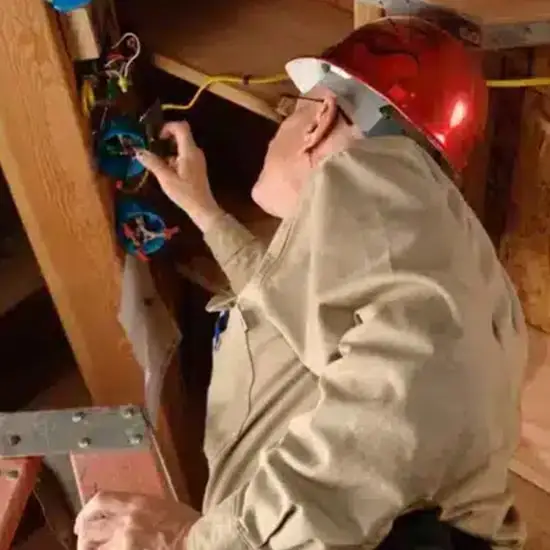
Pre Purchase Building Inspections go beyond basic assessments. Each property receives a thorough evaluation from the foundation through the roof structure. Our trade-qualified inspectors assess structural components, weathertightness systems, electrical installations, and plumbing infrastructure in accordance with AS 4349.1-2007.
Schedule your Pre-Purchase Building Inspection to receive your report within 24-48 hours. Every report includes moisture testing results, structural analysis, and detailed documentation to support confident property negotiations.
Professional and Reliable Inspection reports to AS4349.1 reporting Standards
Same-day onsite testing with your building inspection in all suburbs
On site or over the phone verbal overview for time critical decisions




Halls Head sits on the western side of the Mandurah island, where the Indian Ocean surf meets protected estuary waters and a network of artificial canals. For building inspectors, this is not just another coastal suburb — it is an environment where salt exposure, sand geology, water table behaviour, and canal estate engineering combine to create a defect profile that differs materially from both Perth's clay-soil suburbs and even the neighbouring coastal suburbs of Falcon and Wannanup. Understanding these local challenges is critical for anyone buying into the Halls Head lifestyle.
The defining building challenge in Halls Head is corrosion — not the surface rust that appears on a garden gate after a few years, but the progressive, often concealed deterioration of structural components that standard building materials are not designed to resist.
Under the Australian masonry standard AS 3700, Halls Head's coastal position classifies it as a severe marine environment. The practical implications are comprehensive:
Mortar durability: External brickwork must use M4-class mortar — the highest durability classification — to prevent salt crystallisation that can crumble mortar joints. On older Halls Head homes built before these standards were widely applied, or where standard mortar was used, we regularly find mortar erosion on weather-facing elevations, particularly on the western (ocean-facing) side, where salt-laden onshore winds deposit the highest salt load. The mortar recedes from the brick faces, creating gaps that admit moisture and accelerate thermal cycling damage to the brickwork.
Metal fixings and fasteners: Grade 316 stainless steel is the minimum standard for all external hardware in the severe marine zone — roof screws, flashings, gutter brackets, balustrade fixings, hinge sets, and window frame fixings. On homes where standard galvanised or 304 stainless fittings were installed, we see corrosion that can reduce the effective cross-section of roof fixings by 40–60% within 10–15 years. In the roof cavity, this means ridge capping screws that snap under light pressure, gutter brackets that detach from the fascia under debris loading, and structural hold-down brackets where the corroded surface flakes away when touched.
Aluminium joinery: Aluminium window and door frames in Halls Head face a specific failure mode not seen inland — pitting corrosion where the factory anodised or powder-coated finish has been compromised by salt embedment. In older homes, we see window frames where the coating has failed on the ocean-facing elevations, and the aluminium substrate has developed surface pitting that cannot be cleaned or restored. In advanced cases, the pitting penetrates the frame section at the bottom track, creating a direct pathway for wind-driven rain to enter the wall cavity.
Garage doors and automated components: The bottom rails of panel-lift garage doors are a corrosion hotspot. Salt-laden air settles on the metal surface, moisture from the ground wicks up through the concrete slab, and the combination produces accelerated corrosion at the rail-to-panel interface. We inspect garage doors in which the bottom rail has corroded completely through, leaving the door panel unsupported at the base.
The economic reality is that a home in Halls Head built with standard (non-marine-grade) materials will have a shorter service life for all external metal components. Roof, window, and garage door replacement timelines are compressed by 5–15 years compared with those for an inland home. Buyers who are not budgeting for this accelerated replacement cycle are buying a home with a shorter capital expenditure schedule than they expect.
Halls Head's geology is predominantly sand from the Quindalup and Spearwood dune systems. This profile has genuine advantages over the reactive clay soils of Perth's eastern and south-eastern suburbs. Sand does not swell and shrink seasonally, and most standard residential blocks in Halls Head are classified as Class A under AS 2870, meaning a conventional stiffened raft slab is appropriate. The foundation movement due to soil reactivity is low.
The canal estates change this picture entirely. Halls Head's canal frontages — including the Samphire Cove, Blue Bay, and Polleys Hole canal precincts — were developed by excavating canal systems through the existing dune and wetland landscape, and the land on which the homes sit is often fill material placed during the canal construction. These sites routinely attract a Class P (problem site) classification under AS 2870, for three compounding reasons:
1. Fill material consistency: The fill used to create the building platforms was often variable in composition and compaction. We inspect canal-front homes where differential settlement of 40–80mm has occurred between the front of the house (built over deeper fill near the canal edge) and the rear (over the original dune sand). This shows up as a visible slope in the floor, cracking in the tilework along the line of differential movement, and ceiling-to-wall separation at the junction where the settlement gradient is steepest.
2. Shallow water table: Along the canal edges, the water table can sit as shallow as 500mm below the surface. For slab-on-ground construction, this means the underside of the slab is operating in saturated or near-saturated conditions for most of the year. Where the vapour barrier was not installed correctly — or where it was damaged during construction — capillary moisture rises through the slab, producing persistent dampness at floor level, efflorescence on the slab surface, and conditions conducive to mould growth in floor coverings and skirting boards.
3. Loose saturated sand bearing capacity: Saturated sand has significantly lower load-bearing capacity than dry, compacted sand. The water filling the pore spaces between sand particles reduces effective stress within the soil, meaning the ground beneath a slab can settle under loading that dry sand would support without issue. On canal blocks, this is managed through engineered foundations — screw piles, bored piles, or deep strip footings that transfer loads to competent strata below the fill and water table.
But on older canal homes or where the foundation design was not matched to a proper geotechnical investigation, we see the consequences: differential settlement, cracking in structural walls, and services (stormwater lines, sewer connections) that have broken at the junction between the settled structure and the stable ground.
For buyers considering a canal-front property, the inspection priority is to confirm that the foundation was designed based on a site-specific geotechnical investigation and that the drainage system actively manages the water table to keep it away from the building footprint. A canal-front home with a standard slab on a Class P site is a home where foundation problems are a question of when, not if.
Sandy soils present a specific termite management challenge that is less common in clay-soil suburbs: termites move through sand easily and rapidly, and the loose granular structure does not impede their underground foraging the way denser clay soils do. In Halls Head, this is combined with the suburb's extensive timber infrastructure — canal retaining walls, boardwalks, jetties, timber decking, and timber garden structures — creating a network of pathways that can connect bushland and wetland termite colonies directly to residential buildings.
The canal estates amplify this risk significantly. The timber retaining walls that line the canal edges are often in direct contact with the ground and exposed to continuous moisture from the waterway. Where these retaining walls abut the building slab — or where a timber deck bridges the gap between the retaining wall and the house — the termite barrier at the slab edge is effectively bridged, creating a concealed pathway that standard termite management systems cannot protect against.
We inspect canal-front homes where the termite barrier is intact around the visible perimeter of the house, but has been bypassed by termites travelling up the timber retaining wall and across a deck substructure that sits above the barrier level.
For inland blocks in Halls Head — away from the canals — the termite risk is driven by the suburb's mature tree canopy and proximity to the Peel-Harvey Estuary and wetland corridors. Garden mulching, timber retaining walls, and untreated timber in contact with the ground are common conducive conditions, and we frequently find homes where the termite management system has not been inspected since installation and has no documented history.
The City of Mandurah requires termite management systems for all new dwellings, but ongoing maintenance and inspection are the homeowner's responsibility. In Halls Head, an annual termite inspection is not an optional extra — it is a necessary response to the suburb's specific combination of sandy soils, waterfront timber structures, and proximity to natural termite habitats.
Halls Head's coastal position means ambient humidity is consistently higher than in inland Perth suburbs, creating moisture management challenges that do not arise in the same form elsewhere.
In homes with timber subfloor construction — a minority of the Halls Head stock, but still present in the older pockets — the combination of high ambient humidity, sandy soils that drain freely but do not retain heat, and the seasonal winter water table creates a subfloor environment where relative humidity can exceed 85% for extended periods. Under these conditions, timber floor framing that appears dry on a moisture meter reading may still be operating at a moisture content level that supports fungal spore germination and slow decay.
We find this most often in homes where subfloor ventilation was adequate at the time of construction but has been reduced by later additions, enclosing patios, or garden growth that restricts airflow through the subfloor vents.
In slab-on-ground homes — the majority of the housing stock — the challenge is slab-edge moisture driven by the water table rather than rainfall runoff. In the canal precincts and lower-lying areas, we regularly measure elevated moisture content in skirting boards, particleboard flooring substrates, and wall framing at the base of external walls on the southern and western elevations.
The moisture source is not a leaking pipe or a roof defect; it is capillary rise through the slab from a water table that sits within 600mm of the surface. Homeowners often respond by sealing the interior floor surface, which traps moisture beneath it and accelerates the deterioration of the substrate in timber flooring products.
For any Halls Head home within 200 metres of a waterway, the inspection should include moisture readings at multiple points around the slab perimeter, particularly on the elevations closest to the water. Intermittent dampness that appears during winter and recedes in summer is not necessarily a defect if the site drainage manages the water table. Still, it is a fact of life that homeowners need to plan for.
The roof in a Halls Head home operates in a more demanding environment than the same roof on an inland Perth home, and the failure modes are not always obvious from ground level.
On metal roofs (Colorbond, Zincalume), the primary risk is corrosion at cut edges, fastener heads, and flashings — the points where the protective coating has been disrupted. In the severe marine zone, these points can begin to corrode within 3–5 years if the cut edges are not sealed with a touch-up coating at installation.
We inspect metal roofs where the fasteners have corroded to the point of failure while the roof sheet itself still appears sound from below. In these cases, the roof is effectively unsecured in high wind conditions — a significant concern given Halls Head's exposure to winter storm fronts and the occasional tropical low-pressure system that reaches the Mandurah coast.
On concrete tile roofs — the dominant type on the 1970s–1990s housing stock — the marine environment accelerates the deterioration of the pointing mortar, the tile substrate surface, and the sarking. Salt crystallisation in the pointing mortar causes it to crumble and separate from the tile edges faster than the same mortar in an inland suburb.
On the northern and western roof planes, where UV and salt loading are highest, we commonly find pointing that has disintegrated to the point where individual tiles can be lifted by hand. The sarking — particularly the older reflective foil type — becomes brittle faster in the coastal UV environment and is often torn at batten fixings within 15–20 years.
The practical consequence is that a concrete tile roof in Halls Head that needs re-pointing and sarking renewal at 25 years is performing to expectation. A roof that has not had these maintenance items addressed for 25–30 years is likely admitting water at multiple entry points, and the staining inside the roof cavity may be significantly more advanced than the ceiling appearance suggests.
Example 1: Canal-front home with concealed corrosion of roof structural brackets and slab-edge settlement
We inspected a four-bedroom canal-front home built in the late 1990s in the Samphire Cove precinct. The home presented well: recent interior paint, an updated kitchen, well-maintained landscaping, and a roof the vendor described as "Colorbond, no issues." At roof level, we found extensive corrosion of the galvanised roof screws and ridge capping fixings — approximately 30% of the fasteners on the western roof plane had corroded to less than half their original cross-section, and three ridge capping screws snapped during hand-pressure testing.
The gutter brackets on the western elevation were corroded at the fascia attachment point, with two brackets having detached completely. Internally, we measured differential settlement across the ground-floor slab of approximately 45mm from the canal-side elevation to the street-side elevation, visible as a pronounced slope in the tiled living area and an 8mm gap at the cornice-to-wall junction in the main bedroom.
The settlement was consistent with the canal-side portion of the building being on deeper fill than the rear portion, and there was no evidence that the foundation had been designed based on a site-specific geotechnical investigation.
The roof fasteners alone required urgent remediation, and the foundation settlement required a structural engineering assessment. The combined repair scope was estimated at $35,000–55,000.
Example 2: 1980s brick-veneer home on a standard residential block with mortar erosion and concealed termite activity
We inspected a three-bedroom brick-veneer home built in the mid-1980s on a standard residential block, approximately 800 metres from the ocean. The brickwork on the western elevation showed advanced mortar erosion, with the mortar joints recessed 5–8mm behind the brick face and in some locations reduced to loose granular material.
The aluminium sliding windows on the same elevation had pitted frames with failed coatings, and the bottom tracks were corroding at the drainage slots — a pathway for wind-driven rain to enter during storms. In the roof cavity, we found evidence of termite activity in the roof framing at the western gable end, with mudding on the underside of the roof battens and a termite tube extending from the cavity brickwork up into the roof space.
The termite notice in the meter box was present but dated from 1986, with no evidence of reinstatement. External garden beds along the western elevation had been mounded above weep hole level, and a timber pergola with posts in ground contact was attached to the western wall — creating a direct pathway for termite access to the masonry cavity.
The scope of work included roof cavity termite treatment, brickwork repointing on the western elevation, aluminium window replacement on the weather-facing elevations, and installation of a current termite management system with an ongoing inspection regime — an estimated total of $18,000–28,000 on a home that had been marketed as "solid and well-maintained."
In Halls Head, the strongest inspection outcomes come from treating coastal corrosion, foundation performance on sand and fill, termite pathway management, and the long-term envelope maintenance cycle as one interconnected picture. When those elements are assessed together, the suburb's coastal lifestyle appeal can be measured against the real cost of building and maintaining a home in a severe marine environment.
Our comprehensive building inspection and the report start from $299, and can go higher depending on the size and nature of the property. The key factor in determining price of your building inspection is your address, so you’ll know upfront the cost you’re looking at.
Our building inspectors will perform a complete building inspection that looks at:
Above the floor, i.e. inside the property, including wall linings, windows and doors, hardware, floors, bathroom fixtures, fittings, tiled areas, kitchen, cabinetry and any waterproofing issues
Sub-floor (if accessible), including foundations, ventilation, pipe-work
Ceilings, including walls, roof and roof space, roof framing, wiring and other electrical items.
Plumbing
Outside the property, including exterior cladding, door and window frames, garages, fences, paving, drives, decking, etc.
Comprehensive Building Inspection Details:
Our building inspection report covers all accessible areas of the property, including the interior, exterior, roof, subfloor, and other structural elements.
Clear and Easy-to-Understand Language in your Building Inspection Report:
We use simple, non-technical language, ensuring the building inspection report you receive is clear and understandable for homeowners, buyers, and real estate agents alike.
Identification of Property Defects:
The building inspection report highlights any visible defects, maintenance issues, or areas of concern, such as leaks, dampness, or structural integrity problems.
Photos and Supporting Evidence:
Our building reports include high-quality photos to provide a visual context for any issues or areas requiring attention.
Recommendations:
Practical advice on repairs, maintenance, or further inspections is provided to help you make informed decisions.
Verbal and Written Summaries:
If requested, we offer a verbal summary immediately after the inspection, followed by a detailed written report.
Tailored Insights for Buyers and Sellers:
Whether you’re buying or selling, our reports provide tailored insights to guide negotiations or improve property presentation.
If you have specific concerns about your property, feel free to discuss them with us before the inspection!
A building inspection is a detailed examination of a property’s condition, conducted by a qualified inspector. It is crucial in Australia due to the diverse property types, weather conditions, and common issues such as dampness and structural movement.
Most building inspections take 2-3 hours, depending on the property size and condition.
Yes, even new builds can have hidden defects or incomplete work. A professional building inspection conducted by our building inspectors provides peace of mind and identifies potential issues before settlement.
Absolutely! We encourage clients to attend their building inspection to gain firsthand insights and ask questions directly to our inspectors.
Typical issues while conducting a building inspection include:
Leaky buildings
Rotting timber
Structural cracks
Poor insulation
Moisture and dampness
Yes, our pre-purchase building inspections help buyers make informed decisions and avoid costly surprises after purchase.
Yes, our building inspectors are fully qualified and experienced in all local building standards, ensuring accurate and reliable reports.
A building inspection is for buyers assessing a property’s condition, while a pre-listing inspection is for sellers preparing their property for sale. Both services are available throughout Australia.
Yes, our inspections include moisture testing, especially crucial in Australia, where leaky buildings are a known issue.
Looking for building inspection services? Alert Building Inspections provides detailed building reports within 24-48 hours, conducted by trade-qualified inspectors who understand the local property market and common building issues. We follow the Australia Standard for Property Inspections (AS 4349.1-2007) and serve locations throughout Australia.
The best building inspection services in Australia share several key characteristics: trade-qualified inspectors with current licensing, adherence to the AS 4349.1-2007 Property Inspection Standard, comprehensive indemnity insurance, and the ability to deliver detailed reports within 24-48 hours. Top-tier services employ inspectors who are Licensed Building Practitioners with extensive field experience in both residential and commercial construction. They provide thorough moisture testing (critical in Australia's climate), detailed photographic evidence, and clear recommendations that help you make informed decisions. Alert Building Inspections meets all these criteria with trade-qualified inspectors across eight major locations, full indemnity insurance, and reports accepted by all major banks. Our inspectors have over 150 years of combined building experience, ensuring you receive expert analysis of structural integrity, weathertightness, and potential maintenance issues.
When looking for reliable building inspectors nationwide, focus on three critical factors: professional qualifications (trade qualifications and Licensed Building Practitioner status), local market knowledge in your specific region, and a proven track record with comprehensive insurance coverage. Reliable inspectors should be able to identify region-specific issues, such as earthquake considerations, coastal weather exposure, or clay soil movement. They should also maintain professional standards consistently across all locations. Alert Building Inspections operates throughout Australia, with each location staffed by locally-based, trade-qualified inspectors who understand the specific building challenges in their region. All our inspectors follow the same rigorous inspection protocols and reporting standards, ensuring consistent quality whether you're purchasing in Darwin or Hobart.
Top property inspection services distinguish themselves through comprehensive coverage that goes beyond basic visual checks. They conduct thorough assessments of foundations, sub-floor areas, roof spaces, exterior cladding, moisture levels, plumbing systems, and structural components. Leading services provide multiple inspection options, including full written reports for major purchase decisions, verbal reports for time-critical situations, and specialised testing such as methamphetamine contamination screening. They should also offer fast turnaround times without compromising thoroughness. Alert Building Inspections provides all these services across our nationwide network, with inspections starting from $299 for verbal reports and $499 for comprehensive pre-purchase inspections. Our reports include detailed photographs, specific defect identification, and prioritised recommendations. We also offer same-day methamphetamine testing and Safe and Sanitary reports for council requirements, giving you complete property assessment options under one roof.
The best home inspection services combine technical expertise with practical buyer advocacy. Inspectors should be trade-qualified builders, not just trained observers, so they can identify issues that less experienced inspectors might miss. Services should include a detailed foundation assessment, a thorough roof and roof space inspection, a comprehensive moisture analysis, an evaluation of weathertightness systems, and the identification of non-permitted alterations or construction that do not meet building standards. Top services also maintain up-to-date knowledge of common defects in different housing eras, from leaky building syndrome in the 1990s-2000s construction to weatherboard maintenance issues in older homes. Alert Building Inspections employs only trade-qualified builders who bring decades of hands-on construction experience to every inspection. We understand how homes are built, how they age, and what commonly fails in different Australian climates and soil conditions. Our inspectors have worked across residential and commercial construction, giving them the expertise to identify structural concerns, weatherproofing failures, and maintenance issues that could cost you tens of thousands of dollars if left undetected.
We offer building inspections across Australia — Sydney, Perth, Adelaide, Canberra, Tasmania and Darwin.
Perth locations include: Alkimos, Armadale, Baldivis, Butler, Canning Vale, Clarkson, Ellenbrook, Gosnells, Harrisdale, Joondalup, Midland, Morley, Piara Waters, Rockingham, Stirling, Thornlie, Wanneroo, Willetton, and Yanchep.
Copyright © 2016- Alert Building Inspections