
Building Inspection Liverpool
BUILDING REPORT LIVERPOOL
Residential & Commercial Building Reports
Our Working Process
Book
Confirm
Inspect
Report
An on-site or over-the-phone verbal overview for time-critical decisions. Useful when you need an answer before an auction, a deadline, or a multi-offer situation.
Pre-purchase inspections occur before you make an offer or after acceptance, giving you crucial information about the property’s condition before you finalise your investment.
TESTING
Same-day on-site meth screening at your property. You'll know whether contamination is present before you commit to the purchase.
A pest inspection checks accessible areas of an Australian property for termites, borers, fungal decay and conditions that attract timber pests.
Builders Report Liverpool
What Our Inspectors Typically Find
Liverpool reads as a busy, established centre from the kerb: older cottage grids near the traditional retail spine, long rows of post-war brick-and-fibro detached housing spreading outward, and newer townhouse and dual-occupancy pockets where blocks have been reworked for density. Many properties photograph well after cosmetic updates — fresh paint, staged kitchens, tidy landscaping — but Liverpool’s residential land sits within a landscape shaped by major waterways. The Georges River and Nepean corridors (and their tributaries) mean floodplain pressure and overland flow behaviour show up in buyer conversations for good reason, even when a particular street looks dry on inspection day.
Across the detached stock we most often inspect, construction eras cluster from mid-century expansion through to the 1990s–2000s, with volume-built brick-veneer houses on concrete slabs or conventional footings. Roofing is commonly concrete, terracotta tile, or corrugated steel, with later replacements on only part of the roof plane. Joinery is often aluminium or single-glazed timber; wet areas may have been renovated once or twice, but the plumbing penetrations and concealed membranes behind tiles remain the weak points unless work was completed with meticulous detailing.
Roof and rainwater goods are consistently high on our defect lists. Terracotta ridge bedding and pointing fatigue, valley trays corroding at overlaps, rust bleeding from fasteners, and blocked gutters discharging water against brickwork are all routine findings. In Liverpool’s heavier storm bursts, minor maintenance gaps become expensive quickly — not always because the roof is “due,” but because localised overflows stain ceilings, soften eaves lining, and introduce damp conditions into roof frames that termites will exploit if the moisture persists.
Internally, we see the usual south-western Sydney pattern of slow leaks in bathrooms and laundries: failed silicone junctions, ageing flexis, leaking WC pans, and tiled showers where waterproofing has breached at hob corners or penetrations. Particle board flooring near wet areas often tells the story before vendors notice — spongy tread at door thresholds, swollen jambs, and paint bubbling along skirting lines.
Older asbestos cement materials remain common in Liverpool housing built before the mid-1980s — eaves, external cladding patches, wet-area linings, and sometimes backing boards behind tiles in partially renovated bathrooms. Buyers planning immediate demolition or strip-outs should budget for safe handling and sequencing, because disturbance turns “background material” into a project-management issue.
Timber pest pressure is a standing concern across Greater Sydney; Liverpool is no exception. Subterranean termites travel along damp soil contacts, bridged ant caps, and timber stacked near walls. Our inspectors routinely document conducive conditions — leaking taps at the perimeter, poor surface drainage against steps, timber formwork left under decks — even when live colony activity is not immediately visible.
The standout risk we emphasise for Liverpool buyers is **site moisture behaviour tied to waterway-adjacent landforms and stormwater**: grades that pond near the building after intense rainfall, downpipes discharging onto paths rather than into functioning pits, subsurface drainage that has silted up over decades, and subfloors that stay humid long enough to corrode metal components and soften timber. That moisture signature intersects with footing movement on reactive soils (still common across south-western Sydney) and with termite ecology — three separate problems that often present as one vague “musty smell” or “minor cracking” until someone traces the source.
Maintenance standards vary widely between investor-held stock, multi-generational family homes, and recently flipped properties. Our job is to translate the presentation into a repair scope: what is cosmetic, what is service-life renewal, and what is a moisture or timber pest pathway that will keep costing money after settlement.
+
+
BUILDING INSPECTOR LIVERPOOL
24-48 Hour Report Delivery Guaranteed
Looking for a Building Inspector in Liverpool? Our trade-qualified inspectors provide thorough building reports within 24-48 hours, combining speed with meticulous attention to detail.
Our building inspection service is perfect for time-sensitive property purchases. Each inspector carries professional indemnity insurance and brings deep knowledge of your local market and common building challenges. All inspections comply with AS 4349.1-2007 standards for comprehensive, reliable assessments.
Property buyers rely on our inspection expertise for accurate, actionable assessments. Every report delivers a complete structural evaluation, weather-tightness analysis, and maintenance requirements—giving you the information you need to make confident purchasing decisions on schedule.
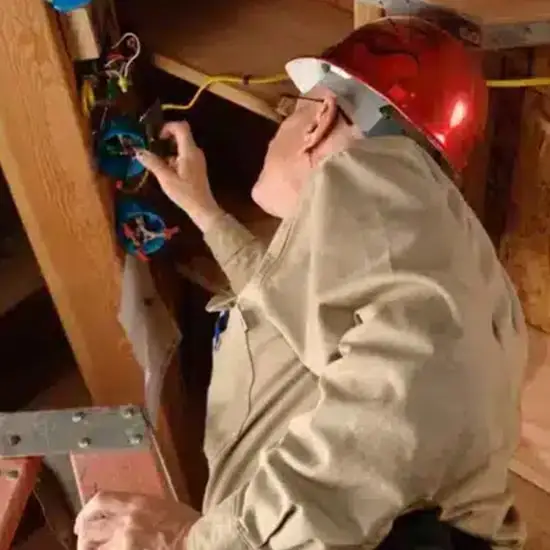

PRE PURCHASE BUILDING INSPECTION LIVERPOOL
Investing in property is a major financial commitment—a Pre Purchase Building Inspection protects that investment. Our comprehensive reports are prepared by inspectors with extensive knowledge and experience of the local market.
Pre Purchase Building Inspections go beyond basic assessments. Each property receives a thorough evaluation from the foundation through the roof structure. Our trade-qualified inspectors assess structural components, weathertightness systems, electrical installations, and plumbing infrastructure in accordance with AS 4349.1-2007.
Schedule your Pre-Purchase Building Inspection to receive your report within 24-48 hours. Every report includes moisture testing results, structural analysis, and detailed documentation to support confident property negotiations.
WRITTEN BUILDING INSPECTION
Professional and Reliable Inspection reports to AS4349.1 reporting Standards
METH TESTING
Same-day onsite testing with your building inspection in all suburbs
VERBAL BUILDING INSPECTION
On site or over the phone verbal overview for time critical decisions




Liverpool's Unique Building Challenges
Liverpool is not “one housing market.” The suburb name anchors a council area where topography, distance from major corridors, and proximity to waterways change the practical risks faster than buyers expect. Two brick-veneer houses of similar age can behave differently if one sits on higher ground with sheet drainage toward the street, while the other is on a subtle low point where stormwater collects behind retaining walls after summer cells cross the region.
Floodplain context: why damp repeats without a “flood event”
Even where properties have not experienced obvious inundation, living on or near floodplain-influenced land often shows up as chronically damp subfloors, efflorescence on masonry, saturated garden beds against brick walls, and recurring mildew in cupboards along the cooler side of the house. Buyers sometimes interpret those signs as poor ventilation alone; on site, we frequently find coupled causes — overflow from blocked pits, broken ag lines, reverse fall paving toward the slab edge, and planter beds built above the damp-proof course.
Council flood mapping and related studies exist to guide planning decisions; for purchasers, the inspection takeaway is narrower and more immediate: understand where water wants to go across the block during heavy rain, and whether the building has been detailed to shed it reliably.
During conveyancing, buyers sometimes obtain flood-related paperwork where it applies to a property’s setting; that paperwork does not replace walking the site with drainage eyes. We commonly find practical defects — spoon drains buried under garden mulch, paved thresholds trapping water against brick vents, and displaced agg pipe outlets — that predict repeat damp episodes without any commentary from a map.
Reactive soils still matter — especially after moisture biases one side
South-western Sydney’s clay soils swell and shrink through wet and dry cycles. Liverpool shares that baseline geology with many neighbouring centres. What changes the pattern is asymmetrical moisture — for example, a neighbour’s paved driveway shedding toward your side fence, a broken sprinkler soaking one corner of the façade, or a large camphor laurel drinking on one boundary while the opposite side bakes. Inspectors look for crack patterns, binding doors, and lifted patios that correlate with drainage observations rather than dismissing everything as “normal settling.”
Older allotments that were levelled, trimmed, or expanded over time can also hide subtle fill transitions that influence drainage decades later — particularly where rear additions step downslope and create new catchments against retaining walls.
Roof complexity on altered footprints
Liverpool has a strong renovation history: patio enclosures, second-storey additions, rear studios, and carport-to-garage conversions. Each alteration introduces new hips, valleys, penetrations, and internal box gutters if designers chase internal drainage shortcuts. Buyers love the extra space; inspectors focus on whether flashings were rebuilt as a system or patched until the next storm. Staining confined to one ceiling bay often traces to a single penetration detail — slower and nastier than obvious sheet leaks because framing can be affected before paint fails.
Retrofitted rooftop services increase the leak inventory: solar rack penetrations, antiquated skylight curbs, and added vent terminals crowded into narrow roof pitches all tend to age faster than the field tiles or sheets around them. When Liverpool catches summer thunderstorms followed by wind-driven rain, those clustered penetrations are frequent first-failure points.
Era-specific stock notes
Post-war through 1970s cottages frequently combine hardwood framing (good when dry) with fibro cement cladding and smaller wet areas that were never designed for modern shower enclosures. Repeated partial bathroom renovations leave layered finishes — new tiles over old, altered floor levels — where leaks travel laterally along sleeper walls.
1980s–2000s brick-veneer homes often present as “modern enough,” yet still retain original roof planes, original clay drainage runs at the rear, and decks bolted to the brick veneer without adequate clearance and drainage. Secondary dwellings (where present) add extra kitchens and bathrooms — more leaks, more roof junctions, more electrical and plumbing services penetrating the envelope.
Renovations, documentation, and practical verification
Active renovation markets reward speed; houses reward patience. Where structural walls were removed for open-plan living, buyers benefit when paperwork exists showing how lintels and posts were resolved — not because paperwork replaces inspection, but because discrepancies between stated scope and visible workmanship flag risk of improvised detailing.
Where additions step across old and new slab levels, inspectors watch for threshold drainage, door weather seals, and membrane continuity at the junction — common leak incubators.
Recent Inspection Examples
Example 1 — Low-lying street near a major watercourse
We inspected a single-storey brick veneer house set slightly below the apparent crown of the road. The vendors had recently repointed garden beds against the front wall “to freshen the street appeal.” Rain simulation wasn’t possible on the day, but the evidence trail was clear: silt lines on the garage slab, corroded ant caps in the subfloor on the downstream side of the house, and jarrah bearers with historical watermark staining, although timber integrity remained serviceable in most bays.
Roof gutters were completely clogged with granules from aging tiles, with overflow staining at one corner. The buyer prioritised pit cleaning, subsurface drainage review, gutter replacement scope, and subfloor ventilation improvements rather than treating the musty note as “just Sydney humidity.”
Example 2 — 1990s home with a rear addition stepping down toward the yard
A two-level rear extension created a generous living space but left a complex junction between original roof tiles and a lower metal skillion. Ceiling lining showed concentric staining limited to the transition zone; roof space inspection revealed deteriorated flexible flashing at a concealed penetration and ponding debris in a narrow gutter segment that could not self-clean.
Internally, the renovated ensuite looked immaculate, but moisture mapping suggested historical leakage at the hob penetration — not active flooding, but enough past wetting to justify targeted invasive checks before the purchaser committed to immediate cosmetic upgrades elsewhere in the house.
We offer building inspections across Australia — Sydney, Melbourne, Perth, Adelaide, Canberra, Tasmania and Darwin.
Sydney locations include: Parramatta, Blacktown, Penrith, Campbelltown, Bankstown, Castle Hill, Baulkham Hills, Kellyville, Ryde, Hornsby, Bondi, Coogee, Randwick, Chatswood, Newtown, Marrickville, Leichhardt, Ashfield, Manly, Dee Why, Hurstville, Burwood, Strathfield, Epping and Auburn.
