
Building Inspection Penrith
BUILDING REPORT PENRITH
Residential & Commercial Building Reports
Our Working Process
Book
Confirm
Inspect
Report
An on-site or over-the-phone verbal overview for time-critical decisions. Useful when you need an answer before an auction, a deadline, or a multi-offer situation.
Pre-purchase inspections occur before you make an offer or after acceptance, giving you crucial information about the property’s condition before you finalise your investment.
TESTING
Same-day on-site meth screening at your property. You'll know whether contamination is present before you commit to the purchase.
A pest inspection checks accessible areas of an Australian property for termites, borers, fungal decay and conditions that attract timber pests.
Builders Report Penrith
What Our Inspectors Typically Find
Penrith presents confidently from the street: brick veneers lining cul-de-sacs, tidy townhouse clusters nearer activity centres, and older grids closer to the traditional CBD fringe where cottages and modest bungalows still survive amid redevelopment pressure. Marketing shots favour bright interiors and low-angle façade photography — they rarely advertise what inspectors worry about first in Penrith: how dramatically western Sydney’s climate loads ageing envelopes, and how seriously buyers must respect Hawkesbury–Nepean valley drainage realities once storm bursts arrive after heatwaves.
Detached houses we inspect are dominated by mid-century growth housing through to 1990s–2000s brick-veneer builds — slab-on-ground or conventional strip-footing layouts, depending on era and builder — alongside pockets of fibro cottages and weatherboard finishes typical of older stock near railway-aligned neighbourhoods. Roofing commonly cycles between concrete terracotta tiles (often original but nearing renewal timelines), corrugated metal generations with localised Colourbond replacements, and skylights from eras when flashing detailing was less forgiving than buyers assume.
Western Sydney sun is not abstract advice here; Penrith often clocks among Greater Sydney’s higher temperature readings during heatwave sequences. That matters on inspection because sealants embrittle, plumbing vents and flashings fatigue in roof spaces that behave like ovens, and bituminous membranes age faster than identical details would in cooler coastal suburbs. Summer storm fronts add the second punch: wind-driven rain finds penetrations that “never leaked before,” gutters overflow where debris has accumulated after dry spells, and older valley trays reveal rust that heat expansion had previously disguised.
Internally, Penrith follows the broader south-western pattern of slow wet-area failures: breached shower membranes at hob corners, failed flexis behind vanities, WC pans leaking at the seal, and laundry plumbing stressed by decades of vibration in slab-adjacent cabinetry. Particle board swelling at door thresholds and bubbled paint along skirting often precede vendor awareness — particularly in rental portfolios, where turnover can mask deferred maintenance.
Asbestos cement products remain common in homes built before the mid-1980s (eaves, external cladding, wet-area linings, old laundry linings). Buyers planning strip-outs should treat incidental disturbance as a planning item, not a footnote.
Timber pests remain a persistent reality in Sydney; Penrith is no exception. Subterranean termites exploit damp soil contacts, bridged ant caps, timber stored under decks, and chronic leaks that keep bearers humid. Our inspectors routinely document conducive conditions even when activity is not immediately visible.
The standout risk we stress for Penrith buyers is the interaction of western Sydney thermal loading, intense storm bursts, and Nepean valley floodplain-related drainage behaviour: older roof detailing that fails under combined heat-and-rain cycling; surface grades and pits that manage “normal” storms until one cell overwhelms marginal maintenance; and chronic damp signatures in subfloors and slab edges where overland flow paths, neighbour runoff, or retained cut-and-fill landscaping bias moisture against one side of a house. Those forces stack — buyers often interpret the outcome as “a few cracks” or “a bit of mould” until the repair scope is priced.
Ownership patterns vary between long-term locals, investor stock, and recent interstate arrivals chasing relative value — maintenance quality diverges accordingly. Our reports aim to separate presentation from lifecycle costs: roof renewal scope, drainage performance against the building, wet-area integrity, subfloor condition, and timber pest pathways.
+
+
BUILDING INSPECTOR PENTRITH
24-48 Hour Report Delivery Guaranteed
Looking for a Building Inspector in Penrith? Our trade-qualified inspectors provide thorough building reports within 24-48 hours, combining speed with meticulous attention to detail.
Our building inspection service is perfect for time-sensitive property purchases. Each inspector carries professional indemnity insurance and brings deep knowledge of your local market and common building challenges. All inspections comply with AS 4349.1-2007 standards for comprehensive, reliable assessments.
Property buyers rely on our inspection expertise for accurate, actionable assessments. Every report delivers a complete structural evaluation, weather-tightness analysis, and maintenance requirements—giving you the information you need to make confident purchasing decisions on schedule.
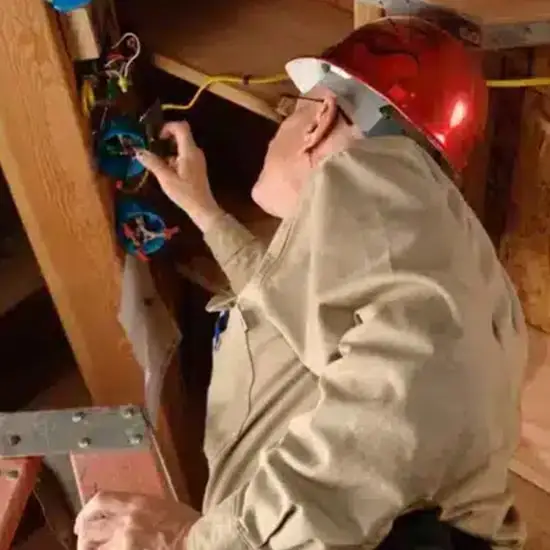

PRE PURCHASE BUILDING INSPECTION PENRITH
Investing in property is a major financial commitment—a Pre Purchase Building Inspection protects that investment. Our comprehensive reports are prepared by inspectors with extensive knowledge and experience of the local market.
Pre Purchase Building Inspections go beyond basic assessments. Each property receives a thorough evaluation from the foundation through the roof structure. Our trade-qualified inspectors assess structural components, weathertightness systems, electrical installations, and plumbing infrastructure in accordance with AS 4349.1-2007.
Schedule your Pre-Purchase Building Inspection to receive your report within 24-48 hours. Every report includes moisture testing results, structural analysis, and detailed documentation to support confident property negotiations.
WRITTEN BUILDING INSPECTION
Professional and Reliable Inspection reports to AS4349.1 reporting Standards
METH TESTING
Same-day onsite testing with your building inspection in all suburbs
VERBAL BUILDING INSPECTION
On site or over the phone verbal overview for time critical decisions




Penrith's Unique Building Challenges
Penrith is both an established city centre and a gateway municipality where flatter floodplain-adjacent land sits uncomfortably close to steeper foothill transitions toward the Blue Mountains fringe. That geography changes what “normal” looks like on a building inspection: a slab house on a near-level allotment can face entirely different moisture physics than a split-level house three kilometres away, where stormwater is deliberately piped behind retaining structures.
Hawkesbury–Nepean context: storms, runoff, and chronic damp
The Hawkesbury–Nepean valley’s flood behaviour is well known at the valley scale — and it rightly shapes buyer awareness of planning overlays and evacuation thinking in affected precincts. For day-to-day building inspections, the more frequent issue is what intense rainfall does to ordinary suburban drainage: pits surcharge, spoon drains choke, downpipes discharge across paths, and garden beds trap moisture against brick walls.
We commonly inspect houses where vendors insist flooding “never reached the living floor,” yet subfloors remain humid, ant caps corrode, and soil contacts stay stained — signatures that oversized gutters alone will not fix if runoff routing remains flawed.
Purchasers sometimes arrive with planning overlays and hazard briefing paperwork already in hand; useful context, but it rarely captures leaking tilt-door thresholds on garages, ponding behind boundary sheds, or neighbour sheds diverting sheet flow toward your sidewall — defects inspectors trace through staining patterns and grading cues rather than through headline flood narratives alone.
Foothill edge allotments: cut, fill, and retaining walls
Penrith’s topography pushes many estates toward engineered fills, trimmed benches, and terracing retained by concrete sleeper walls or older masonry structures. Inspectors watch for blocked drainage aggregates behind walls, displaced agg outlets dumping toward neighbouring fences, and paths poured against vents without falls away from the building.
Split-level footprints amplify leak complexity because roof planes change elevation mid-plan — valleys concentrate debris after windy storms, and penetrations cluster where plumbers chased shortcuts across intersecting pitches.
Where garages tuck under main roofs at grade changes, we frequently find concealed parapet-style junctions and tray intersections that trap litter — fine until Penrith’s storm bursts coincide with blocked pits downhill.
Heat cycling and roof-space deterioration patterns
Penrith’s temperature extremes punish junction detailing: skylight upstands crack at the corners; silicone seals shrink away from the tiles; flexible flashing folds and fatigues after seasons of expansion and contraction. Buyers comparing roofing quotes should recognise that replacement proposals vary enormously depending on whether the failure is field-sheet ageing versus clustered penetration faults — the latter can stain ceilings locally while the roof looks “young” from the kerb.
Older insulation that has slipped off ceiling joists also matters in western Sydney: ineffective ceiling blankets increase discomfort in occupied spaces and can contribute to condensation-driven staining at duct boots and downlight penetrations when indoor humidity spikes after storms.
Western suburbs also accumulate airborne grit between storms — roof valleys and gutters can harbour abrasive sediment that accelerates tray wear once galvanising expires locally.
Timber pest conducive habits worth repeating
Termites don’t read suburb brochures; they read moisture. Penrith buyers benefit from treating mundane leaks — irrigation sprays wetting slab edges, condensate lines draining beside subfloor vents, dishwasher wastes dripping onto buried drainage trenches — as timber pest prepayment plans. Inspection findings often cluster around corners where landscaping hides ventilation openings, while irrigation controllers stay programmed on autopilot through cooler seasons.
Era-specific stock risks
Post-war through 1970s cottages near older corridors often combine hardwood framing with fibro-cement cladding and modest wet areas ill-suited to frameless showers retrofitted without fully rebuilding the falls and membranes. Renovations sometimes bury multiple historical bathroom failures under newer tiles — leaks travel laterally along plates before appearing below.
1980s–2000s brick-veneer houses frequently have partially renewed roofs, dated clay drainage at the rear, and patios enclosed without rebuilding the flashing continuity. Secondary dwellings — where present — add kitchens, bathrooms, and extra roof junctions; each penetration is another latent leak path.
Renovations, approvals documentation, and verification habits
Penrith’s renovation volume is high: decks replaced after weathering, garages converted, second-storey additions crowding original truss layouts. Paperwork helps buyers understand intended structural resolutions — particularly where load-bearing walls were removed for open-plan living — but inspectors still verify what was executed in vulnerable junctions: deck ledger flashing, wall tie continuity after openings, and wet-area rebuild sequencing.
Where additions step across slab levels, threshold drainage and membrane continuity become decisive — flat thresholds trap water during wind-driven rain even when interiors look premium.
Outdoor entertaining upgrades amplify drainage scrutiny when pavers lift, perimeter vents are lifted, or step flashing terminates behind cladding trim — places sellers can confidently repaint before campaigns launch.
Recent Inspection Examples
Example 1 — Split-level home backing onto a retained terrace
We inspected a 1980s brick-veneer residence where the rear living space stepped down toward a paved entertaining area, retained by a concrete sleeper wall. Recent landscaping refreshed garden beds along the low wall line — visually appealing, but it buried the visible ends of subsurface drainage outlets.
Inside, timber-framed doors along the lower elevation boundary intermittently; subfloor access revealed a chronically damp-soil smell in one corner bay, with superficial fungal growth on joist undersides and corrosion spotting on ant caps — not wholesale collapse, but enough moisture history to justify drainage remediation before cosmetic flooring upgrades.
Example 2 — Near-level allotment after a run of summer storms
A single-storey brick veneer house presented with “minor ceiling spotting”, discounted by the agent as old staining. Roof space inspection showed rust bleed along a valley tray overlap and displaced bedding near the upstream end, where debris repeatedly collected after dry summers; externally, gutter straps had pulled slightly with seasonal expansion cycles and one downpipe discharged across a path toward the garage slab edge.
Moisture mapping at an ensuite wardrobe wall suggested intermittent leakage at a shower nib penetration — separate from the roof defect, but economically painful if the buyer assumed one repair would solve everything.
We offer building inspections across Australia — Sydney, Melbourne, Perth, Adelaide, Canberra, Tasmania and Darwin.
Sydney locations include: Parramatta, Blacktown, Liverpool, Campbelltown, Bankstown, Castle Hill, Baulkham Hills, Kellyville, Ryde, Hornsby, Bondi, Coogee, Randwick, Chatswood, Newtown, Marrickville, Leichhardt, Ashfield, Manly, Dee Why, Hurstville, Burwood, Strathfield, Epping and Auburn.
